
Product Kit Solution
Automotive Cable Tie Kit for Wire Harness Routing
A practical kit for harness assembly, engine bay routing, chassis wiring and service repair work where buyers need heat-stabilized nylon cable ties, releasable ties, mountable ties, bases, clips and clean trimming tools in one repeatable selection.
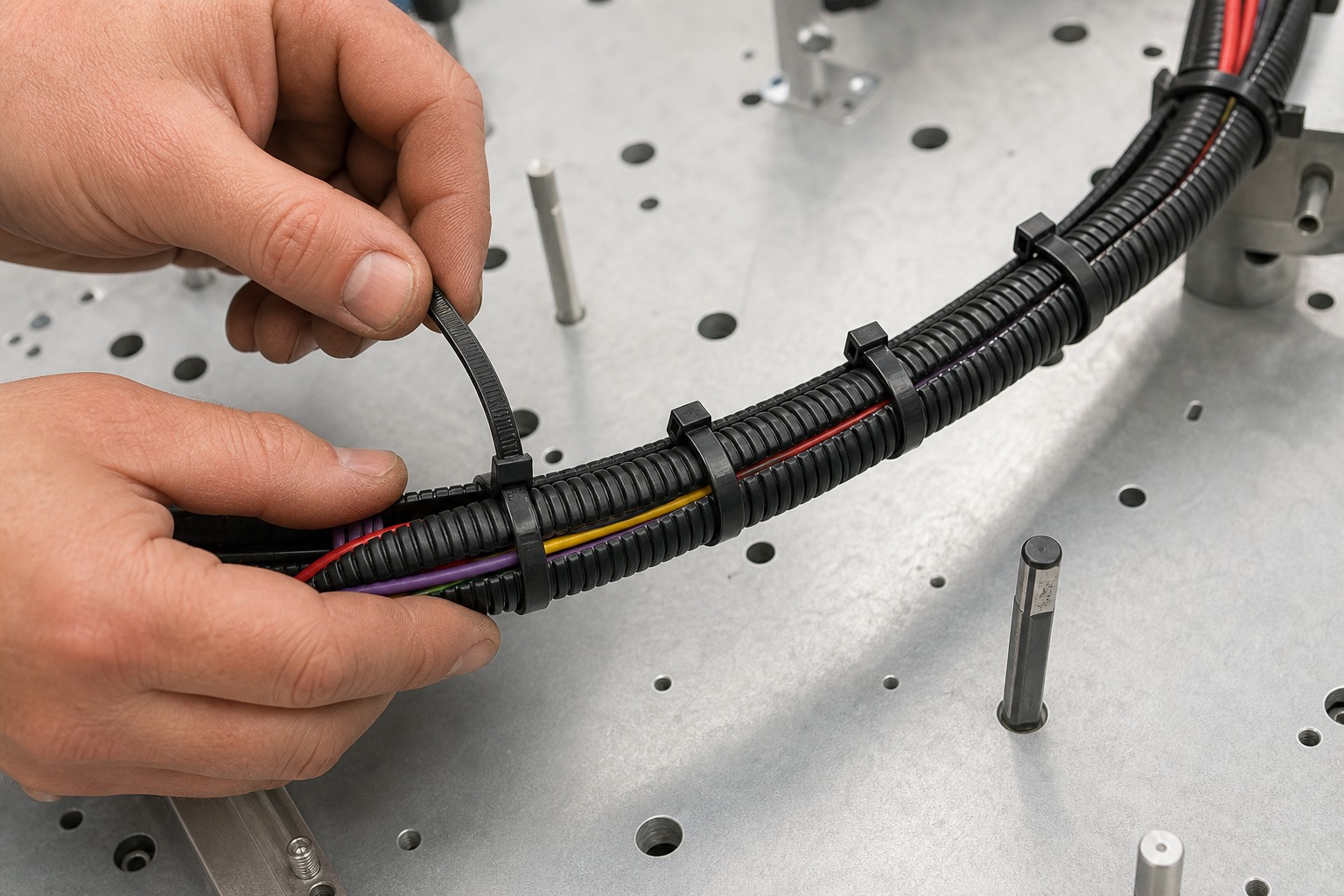
Kit Introduction
Automotive wire harness work is rarely solved by one universal tie. A useful Automotive Kit combines standard PA66 ties, heat-stabilized black ties, releasable ties, push-mount or screw-mount options, mounting bases, edge clips, marker ties and a flush cutter.
The purpose is simple: keep wire looms routed, reduce vibration movement, prevent abrasion against brackets, and make assembly or repair teams faster without guessing the right fastener on every job.
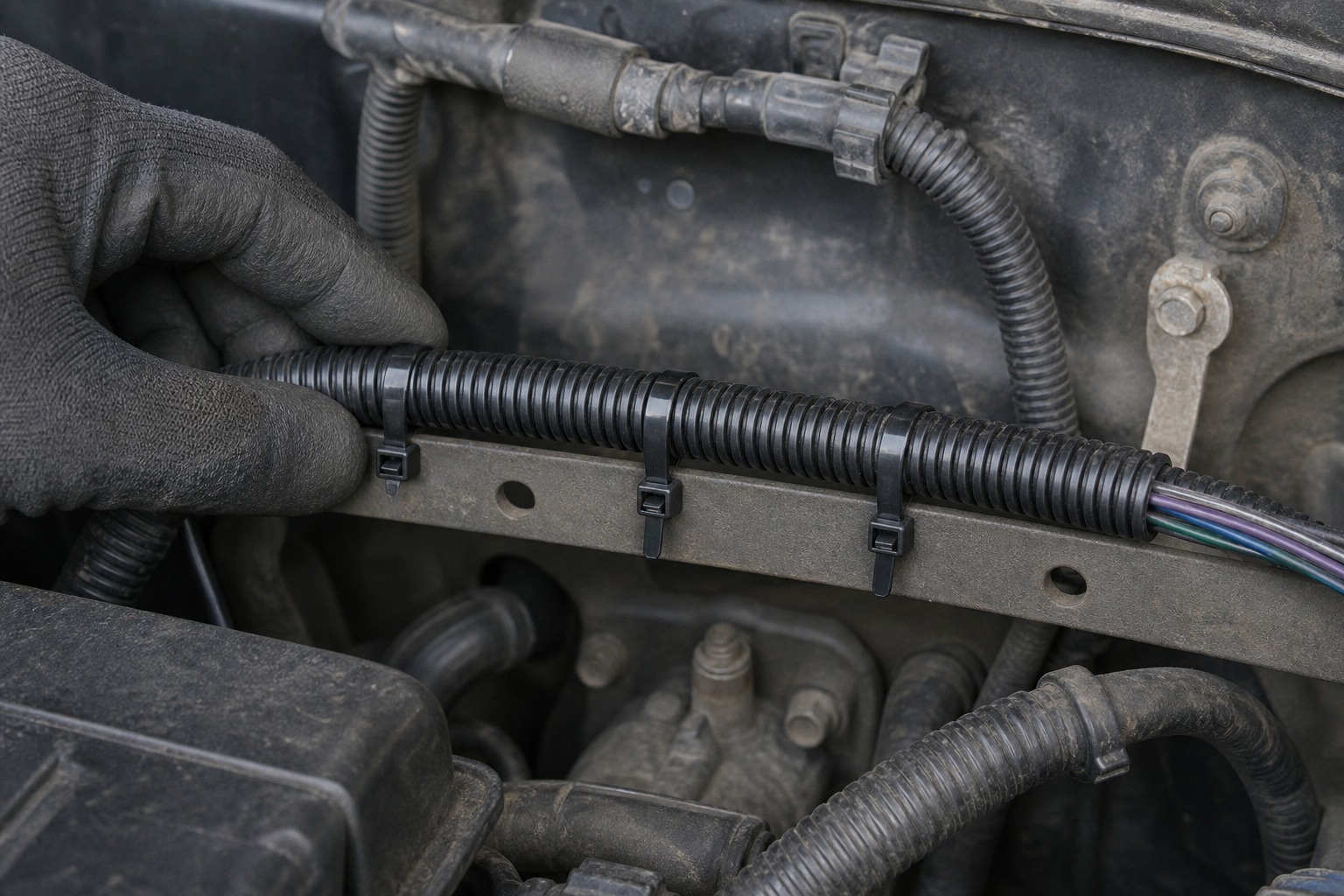
Field Pain Points
Loose Harness Sections
Unsecured loom can move under vibration and make noise, wear or service checks harder.
Heat Exposure
Engine bay and under-hood zones need material choices that tolerate temperature and aging.
Abrasion Risk
Harness routes near brackets, chassis edges and metal holes need stable spacing and clean contact points.
Mixed Repair Parts
Workshops often need several tie types, mounts and clips together instead of a single SKU.
On-Site Problem Analysis
Before selecting an Automotive Kit, check the harness route, bundle diameter, operating temperature, vibration level, mounting hole type and whether the area must be reopened for service. The fastening method should match the vehicle zone, not only the cable diameter.
- Harness board assembly: standard ties help build repeatable spacing before the harness enters the vehicle.
- Engine bay routing: heat-stabilized black PA66 ties are usually the starting point.
- Bracket or panel fixing: screw-mount, push-mount or mounting base options create stronger anchor points.
- Service areas: releasable ties help inspection and repair teams reopen routes without cutting every tie.
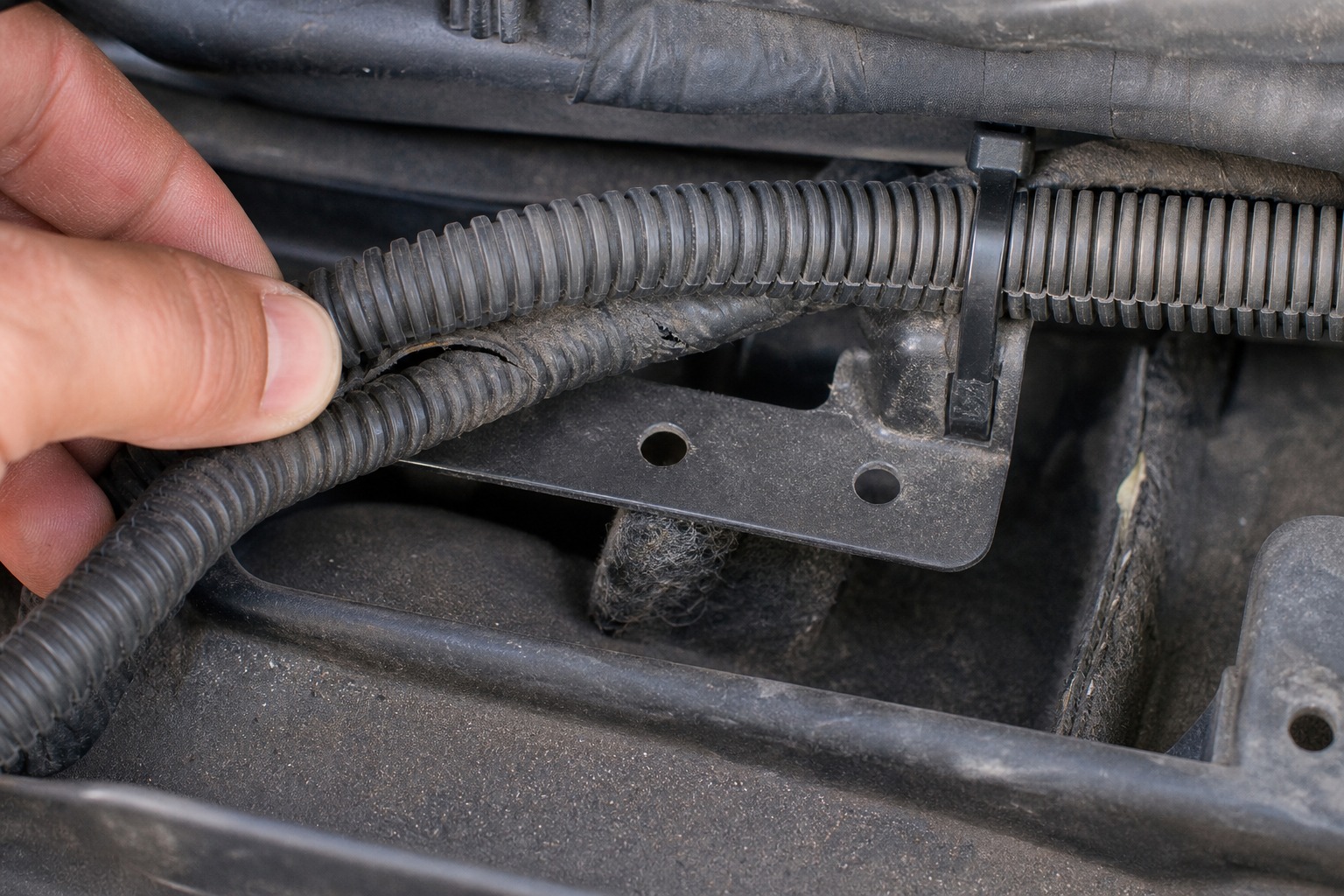
Recommended Automotive Kit Configuration
Start with the main harness route, then add specialized mounting parts only where the vehicle structure requires them. This keeps the kit practical, economical and easy to reorder.
| Kit Item | Main Function | When to Use |
|---|---|---|
| Heat-stabilized black PA66 cable ties | General bundling and loom support in higher-temperature vehicle zones | Engine bay, under-hood routes, chassis-adjacent harness work. |
| Standard PA66 cable ties | Routine harness bundling and temporary assembly board fixing | Interior harnesses, bench assembly, repair kits and low-heat zones. |
| Releasable cable ties | Allow reopening, inspection and rerouting without cutting the tie | Service areas, test harnesses, prototype vehicles and maintenance kits. |
| Push-mount / fir-tree ties | Fix harness routes into panel holes or vehicle body openings | Panel holes, stamped brackets, trim zones and repeated factory mounting points. |
| Screw-mount ties and mounting bases | Create controlled anchor points on brackets, rails or equipment plates | Workshop repair, aftermarket routing, custom harness work and equipment builds. |
| Flush cutter / cable tie tool | Trim tails cleanly and improve repeatability | Harness assembly lines, repair benches and distributor sample kits. |
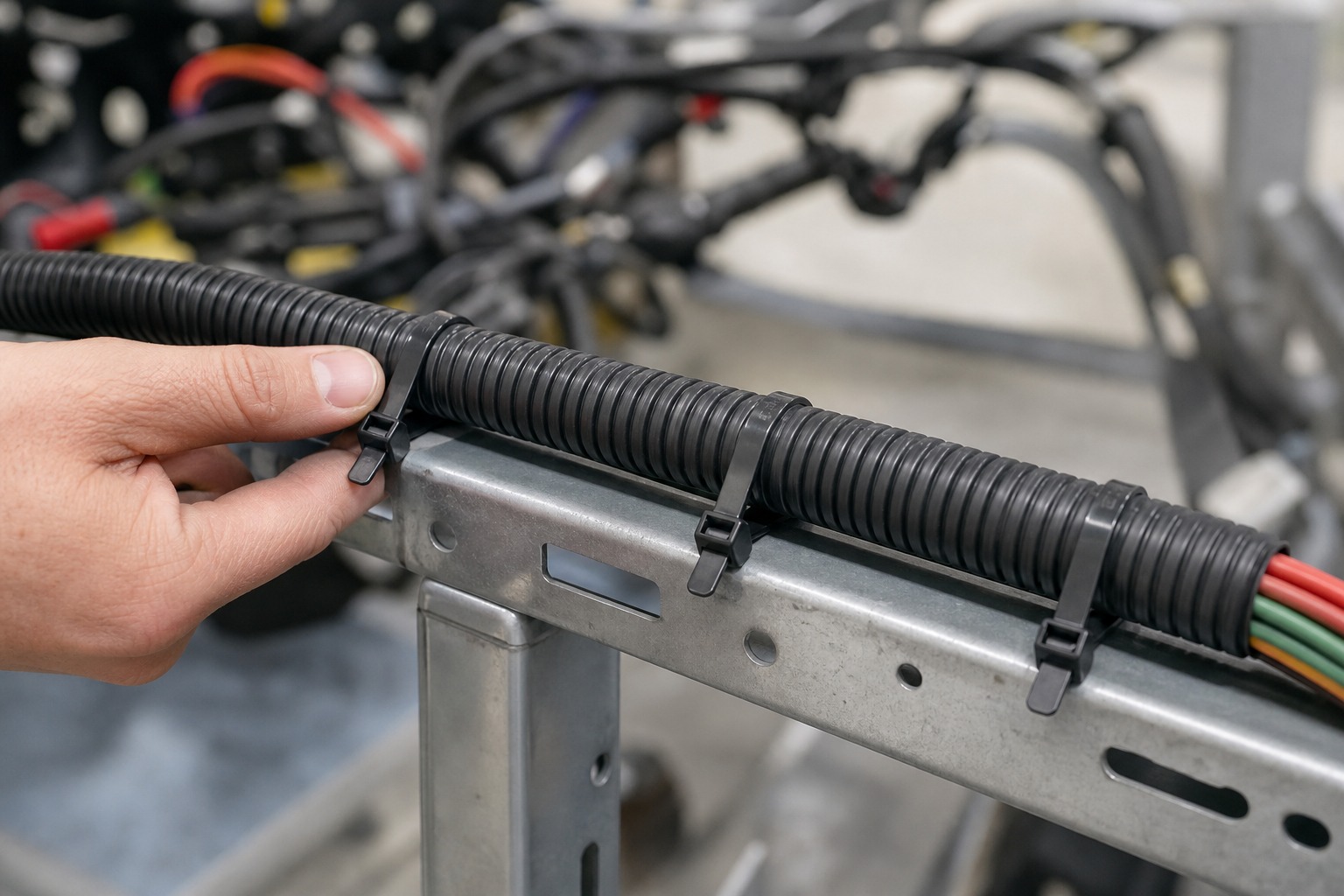
Selection Principle
Use standard or heat-stabilized ties for bundling, releasable ties where service access matters, and mountable ties or bases where the loom must be anchored to a fixed vehicle point.
The application images on this page are representative photo-style visuals, not claimed customer case photos.
Product Combination
An Automotive Kit can be built as a workshop starter kit, harness assembly sample kit, aftermarket repair kit or distributor product bundle. The mix should reflect the vehicle zones your buyers serve most often.
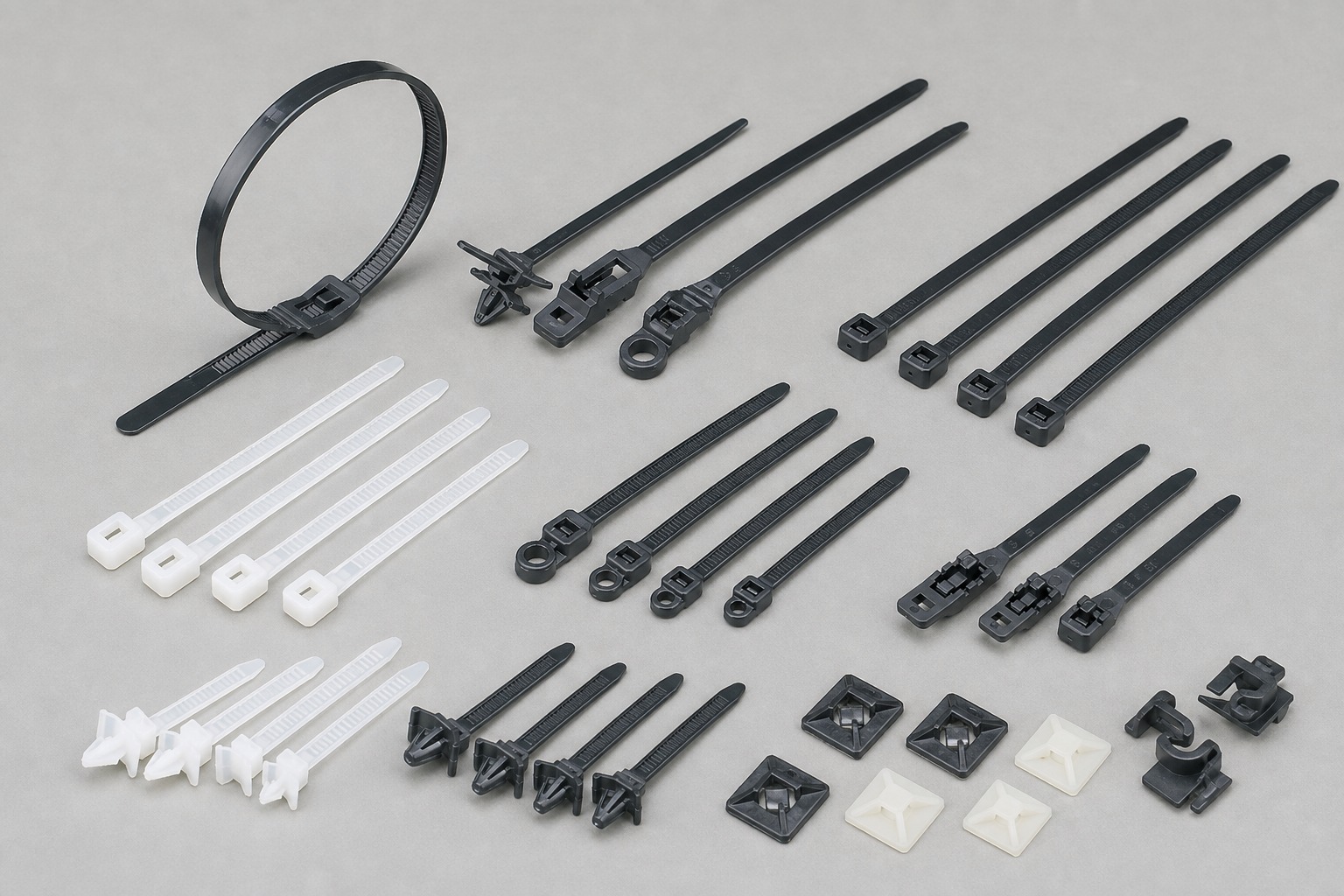
Harness Assembly Kit
Standard and heat-stabilized ties for loom grouping, spacing and assembly board work.
Service Repair Kit
Releasable ties, common lengths and a flush cutter for workshop maintenance.
Mounting Kit
Push-mount ties, screw-mount ties and bases for bracket or panel fixing.
Distributor Kit
Mixed SKUs for sampling, customer demonstrations and repeatable RFQs.
Product Parameters
| Component | Key Parameters | Recommended Check | Typical Automotive Use |
|---|---|---|---|
| Heat-stabilized nylon tie | Material grade, length, width, tensile strength, temperature range | Bundle diameter, engine bay temperature and required service life | Under-hood loom routing and warm vehicle zones |
| Standard nylon tie | PA66 grade, tensile strength, color, length and packing quantity | Harness diameter, assembly frequency and cost target | Interior wiring, bench assembly and low-heat repair use |
| Releasable tie | Release tab design, reuse cycle, length, width and tensile strength | Whether the route must be reopened during testing or service | Prototype harnesses, diagnostic routes and workshop kits |
| Push-mount / fir-tree tie | Panel hole diameter, panel thickness range, tie size and material | Actual hole size, insertion force and retention requirement | Vehicle body holes, trim panels and stamped brackets |
| Mounting base / screw-mount tie | Base size, screw hole diameter, tie width range and mounting surface | Bracket material, screw availability and cable load | Aftermarket equipment, service routing and custom builds |
Installation Steps
- Confirm the harness route before tightening any tie.
- Select a tie length that closes around the loom without excessive tail waste.
- Wrap the flat strap around the loom and support point where fixing is required.
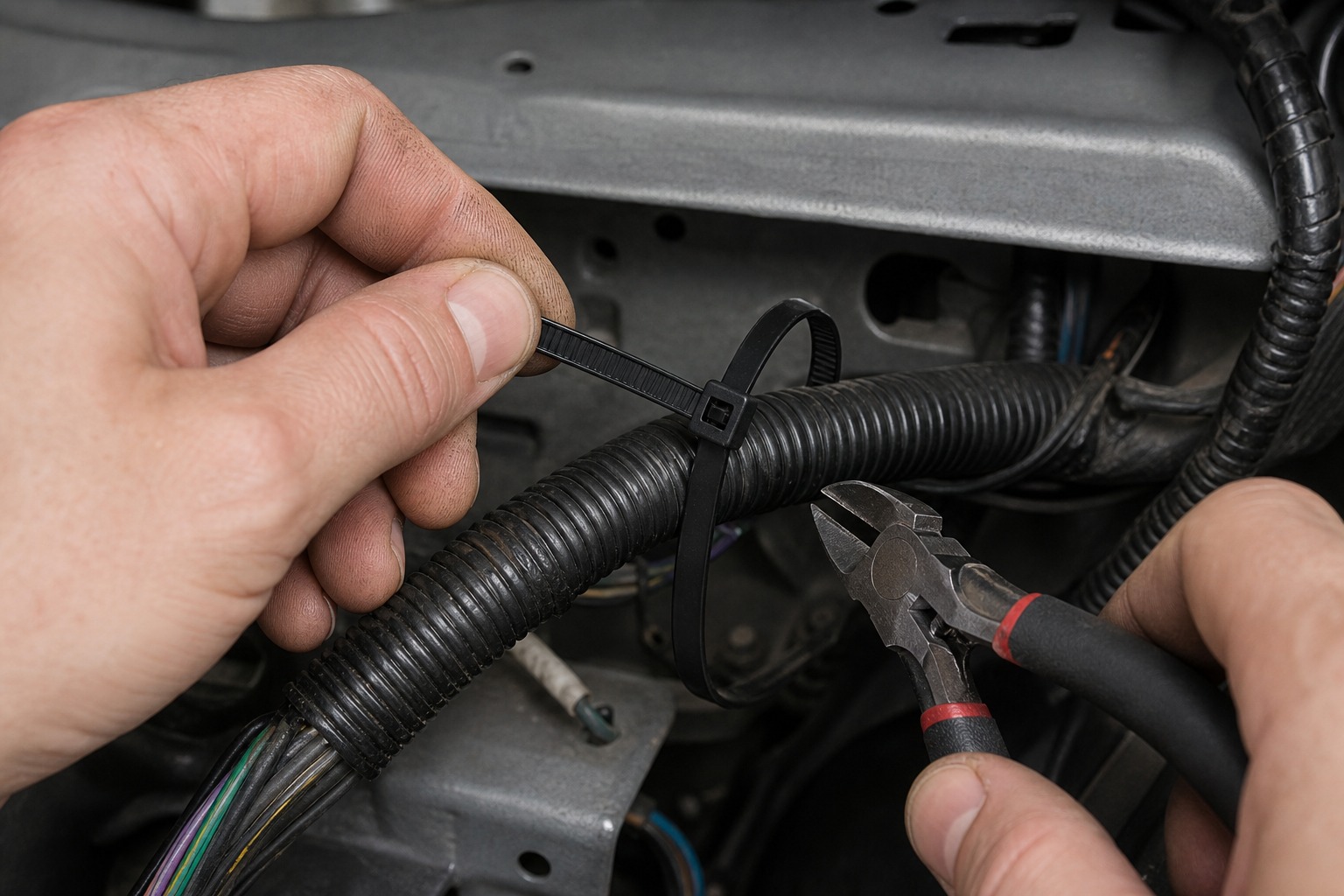
- Thread the tapered tail through the single locking head and pull to controlled tension.
- Keep the locking head away from sharp edges, moving parts and high-heat contact points.
- Trim the tail flush with a cutter so the cut end does not scratch the harness or technician.
- Inspect spacing, movement and service access before releasing the vehicle or harness.
Field Case
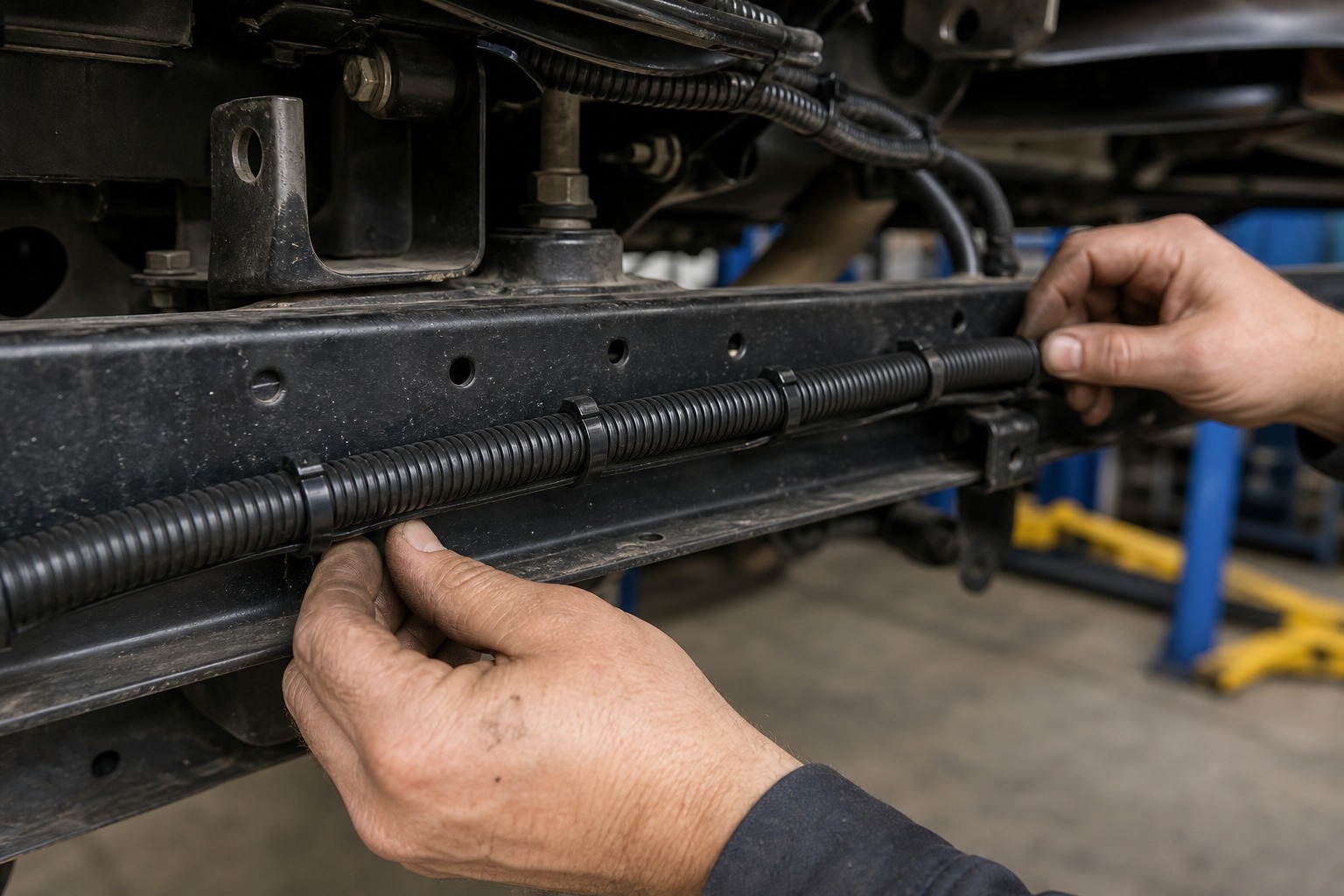
Representative harness route after kit-based selection
Application: Chassis-side corrugated loom routing for an automotive service or assembly area.
Problem: Loose routing and mixed fasteners made the harness harder to inspect and less repeatable.
Solution: CableTiesMFG configured a kit with heat-stabilized ties, standard PA66 ties, releasable choices, mountable options and cutting tools.
Result: The route becomes cleaner, easier to inspect and easier for buyers to convert into a repeatable RFQ list.
Why Choose CableTiesMFG
Kit-Based Quotation
We convert harness diameter, vehicle zone, mounting style and environment into a practical kit list.
Material Options
Standard nylon, heat-stabilized nylon, releasable ties, mountable ties, bases and clips for different vehicle areas.
B2B Supply Support
Sample kits, bulk packaging, OEM choices and product documentation for distributors, workshops and harness buyers.
FAQ
Which tie should I choose for engine bay wiring?
Start with heat-stabilized black PA66 cable ties, then confirm actual temperature, chemical exposure and required retention.
When should I use releasable ties?
Use releasable ties for prototype harnesses, diagnostic areas and service routes where the loom may need to be reopened.
Can one kit cover different vehicle zones?
Yes, but the kit should separate standard bundling, hot-zone routing, service areas and fixed mounting points.
Can CableTiesMFG customize kit contents?
Yes. We can adjust tie length, width, color, mount type, packing quantity and sample mix based on your RFQ.
Need an Automotive Cable Tie Kit for Your Harness Project?
Send us your harness diameter, vehicle zone, fixing method, expected temperature and quantity target. We can help build a sample kit or project quotation.