
Product Kit Solution
Solar Cable Management Kit for PV Cable Routing
A practical kit approach for solar installers, EPC buyers and distributors who need UV-resistant cable ties, PV cable clips, stainless steel options, mounts and identification parts for clean under-panel cable management.
Kit Introduction
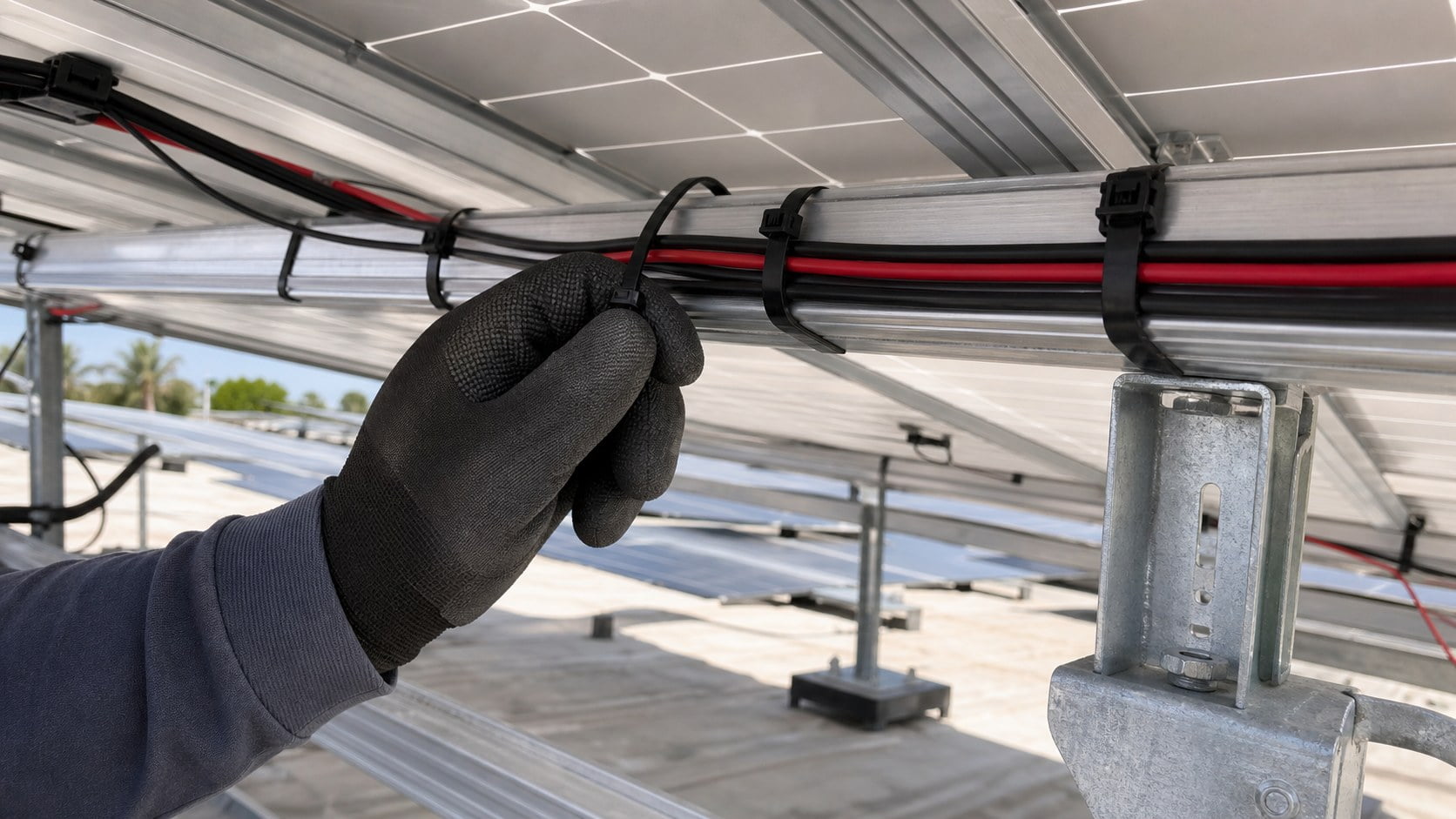
Solar cable management is not solved by one cable tie size. A complete PV cable management kit usually combines UV-resistant nylon cable ties, PV cable clips, edge clips, mounting bases, stainless steel ties for harsh points and simple identification parts.
The goal is to keep PV cables close to module rails and support structures, reduce loose loops, avoid abrasion against aluminum edges and make future inspection easier. For distributors, a kit also helps customers test the right mix before ordering by project volume.
Field Pain Points
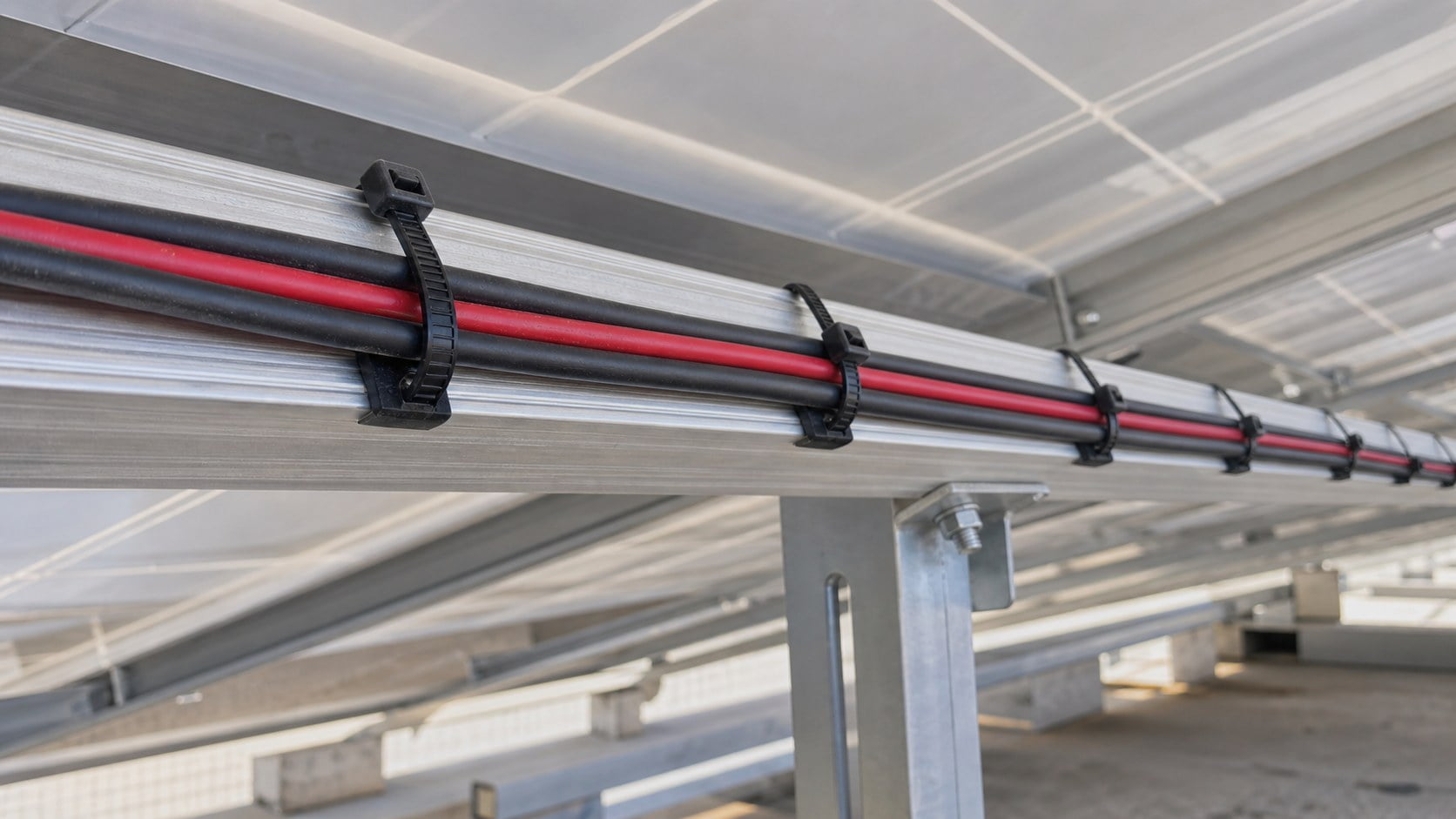
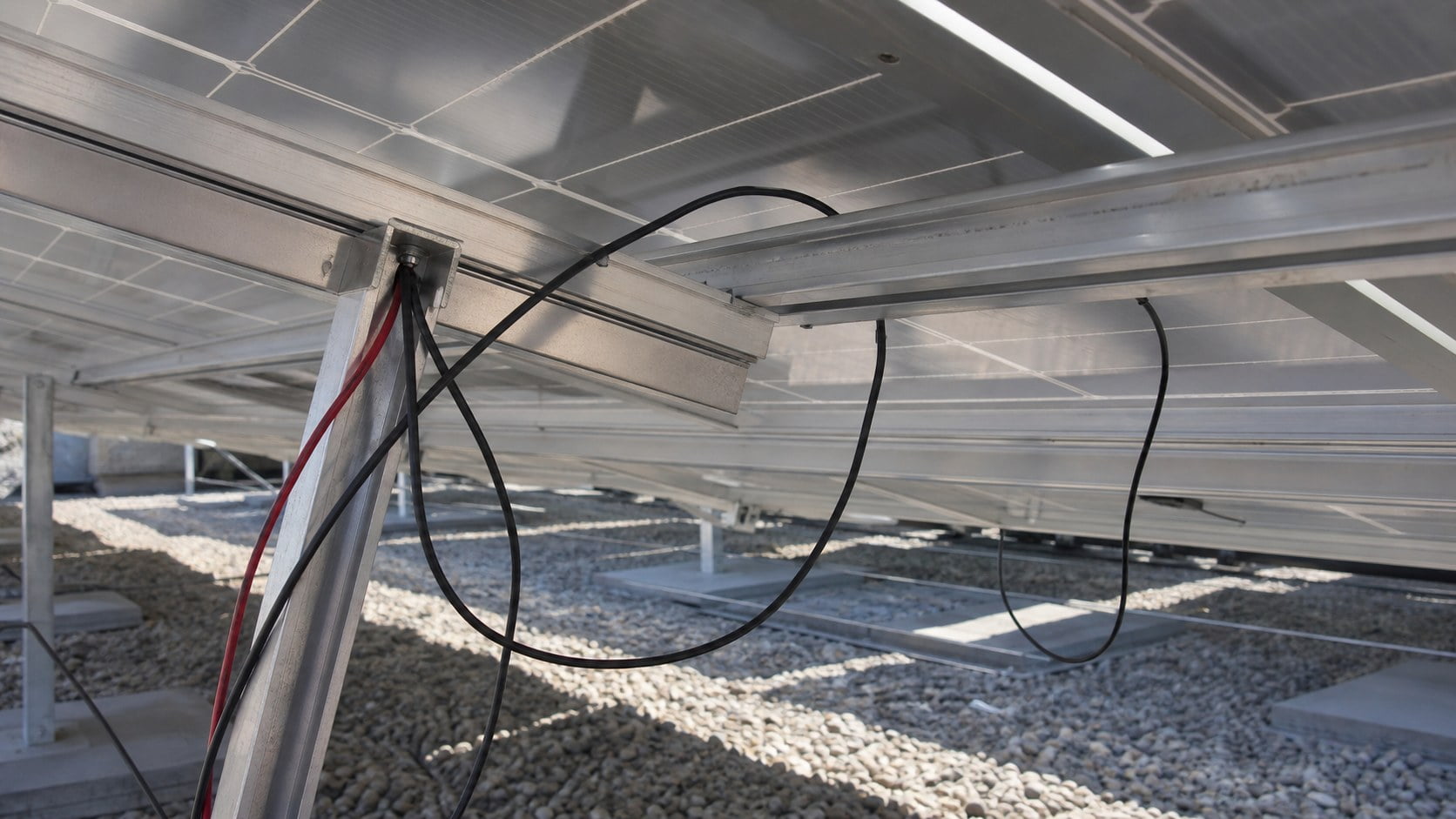
Loose PV Cables
Unsupported cables can hang below modules, move in wind and create inspection or maintenance issues.
Rail Edge Abrasion
Cables that rub against aluminum edges or brackets may develop jacket wear over time.
Wrong Material
Indoor-grade ties may crack outdoors; harsh roof or coastal points may require stainless steel choices.
Slow Site Matching
Installers often need clips, ties and mounts together, but purchasing only one SKU slows trial and approval.
On-Site Problem Analysis
Before selecting a Solar Kit, check the module frame, rail shape, cable diameter, fixing spacing, exposure level and whether the route needs future service access. The kit should support both the common route and the high-risk points.
- Under-panel routing: PV cable clips and UV black ties help keep cables against rails instead of hanging below modules.
- Long outdoor exposure: black UV-stabilized PA66 is the normal starting point for plastic cable ties.
- High heat or corrosion risk: stainless steel ties can be added for exposed brackets, coastal roofs or severe service points.
- Maintenance clarity: marker ties or simple blank tags help identify strings, routes and service groups.
Recommended Solar Kit Configuration
Start with the common PV cable route, then add harsher-environment components only where needed. This keeps the kit practical, affordable and easy to reorder.
| Kit Item | Main Function | When to Use |
|---|---|---|
| UV-resistant black nylon cable ties | General bundling and rail-side fixing for PV cable groups | Most rooftop and ground-mount PV cable routes with outdoor exposure. |
| PV cable clips / edge clips | Hold PV cables against module frame or rail without drilling | Module edges, aluminum rails and repeated under-panel cable support points. |
| Stainless steel cable ties | High-retention fixing for hot, coastal or exposed metal brackets | Coastal solar sites, high-temperature rooftops, utility-scale exposed routes. |
| Screw-mount bases or tie mounts | Create fixed anchor points where rail clipping is not enough | Combiner boxes, support frames, cable tray transitions and equipment edges. |
| Marker ties / blank tags | Route or string identification during installation and maintenance | Combiner box entries, string grouping, service routes and inspection points. |
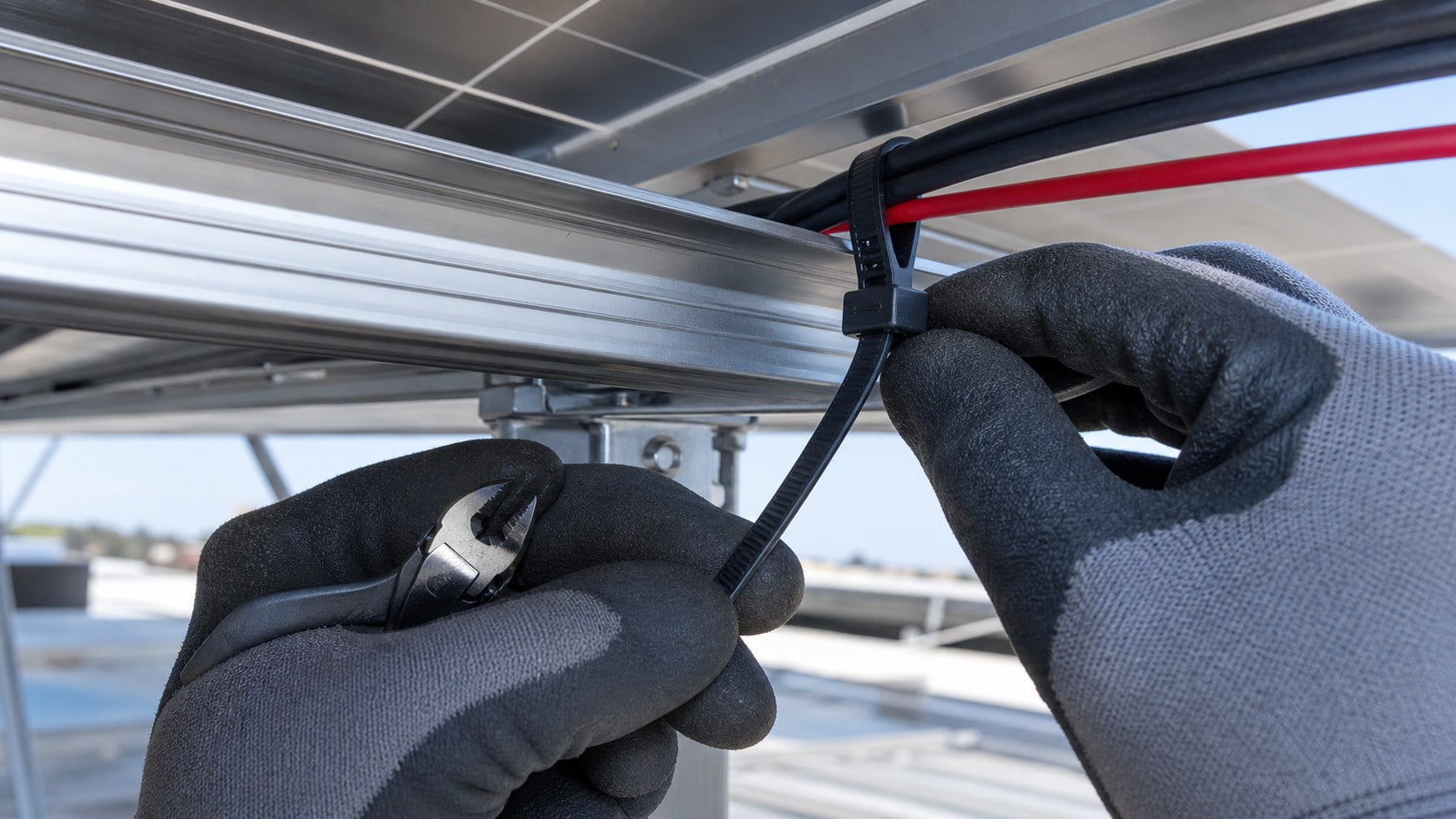
| Flush cutter or cable tie tool | Trim tails cleanly and improve installation consistency | Installer kits, repeated site work and distributors selling complete field packs. |
Selection Principle
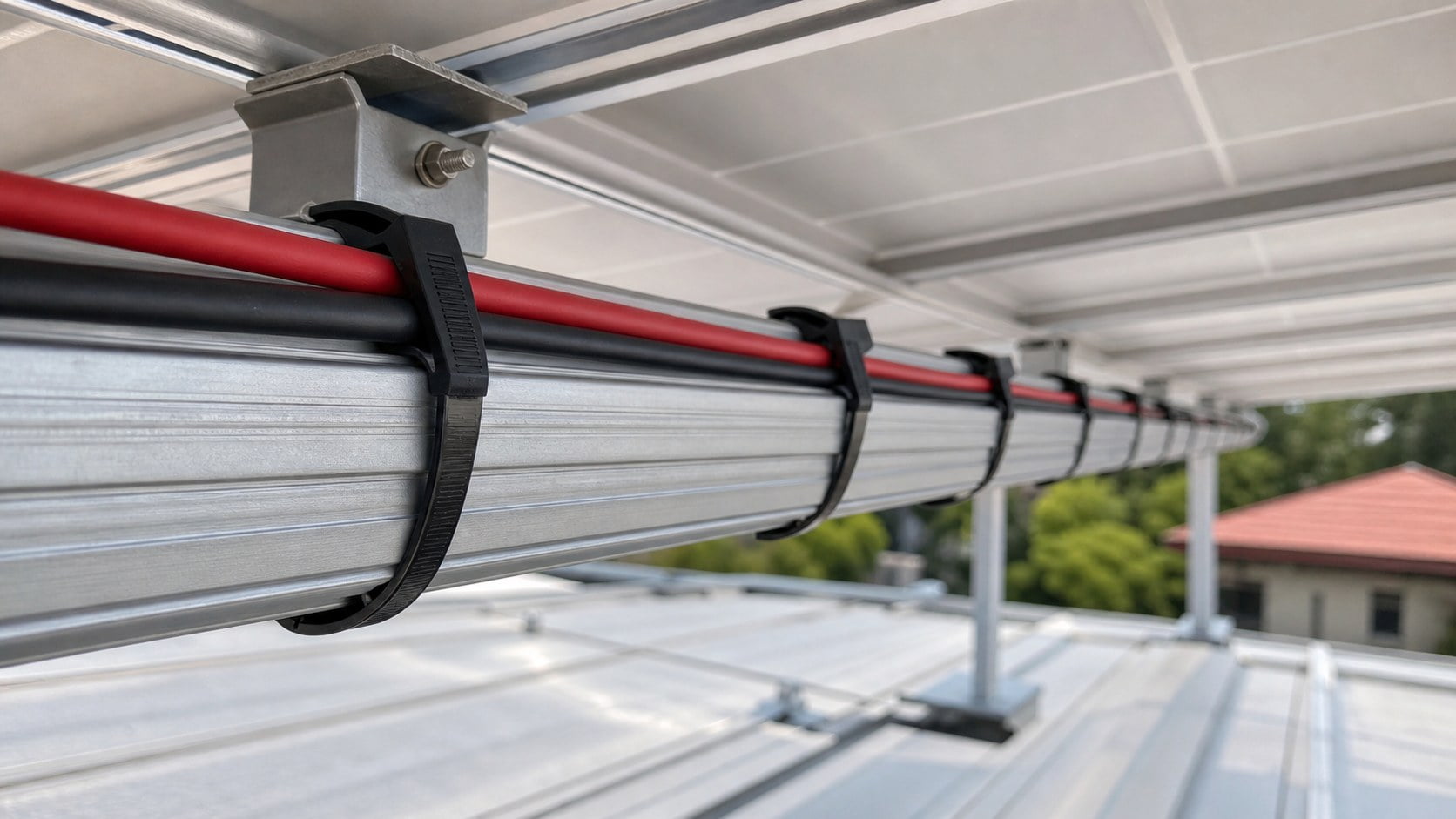
Use clips for fast rail or module-frame routing, nylon ties for flexible bundling, stainless steel ties for severe exposure points, and marker ties when maintenance teams need route identification.
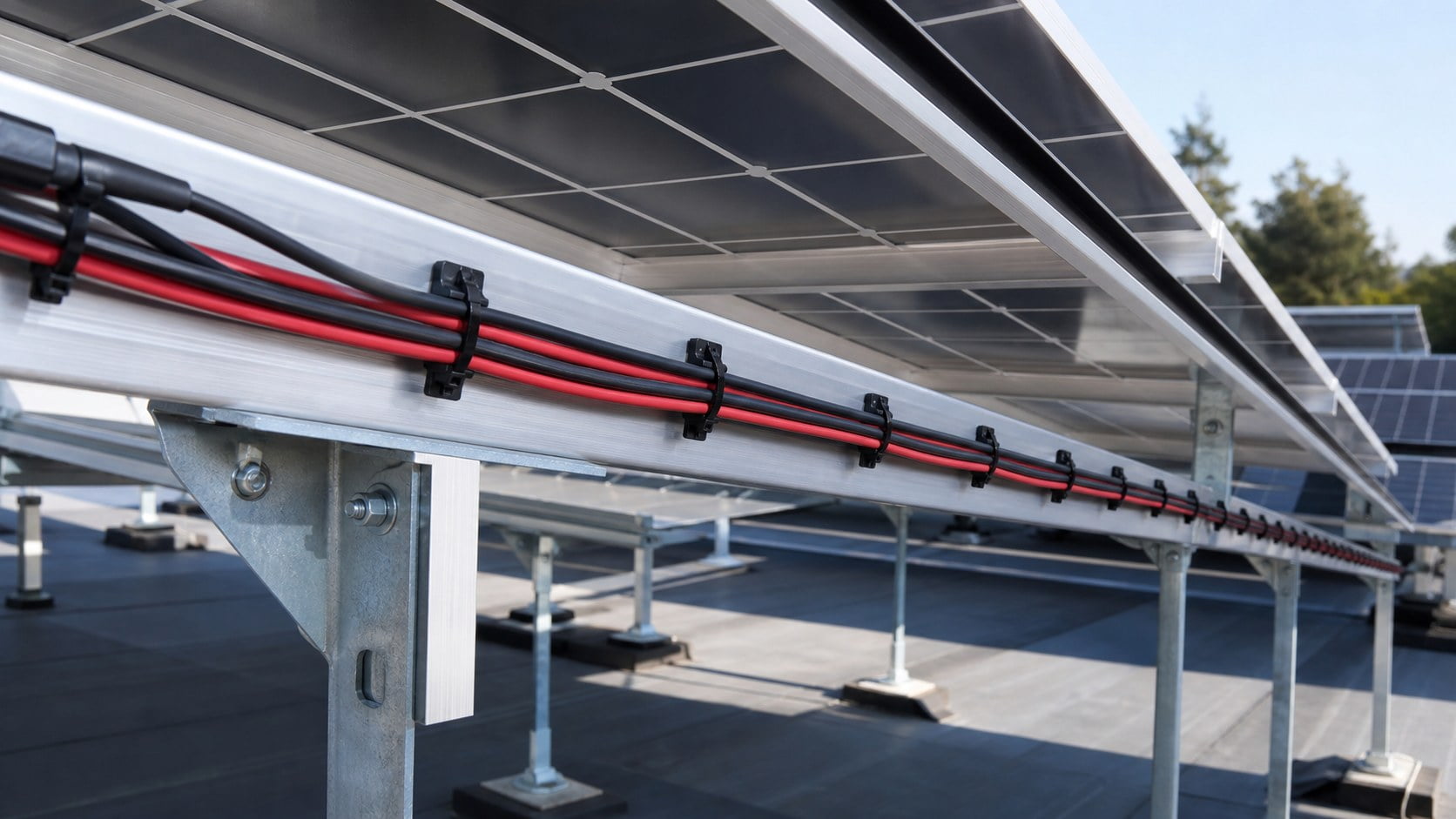
The image is a representative photo-style application visual, not a claimed customer case photo.
Product Combination
The Solar Kit can be built as a sample kit, project kit or distributor starter pack. Components should match the rail profile, cable diameter, environment and installation volume.
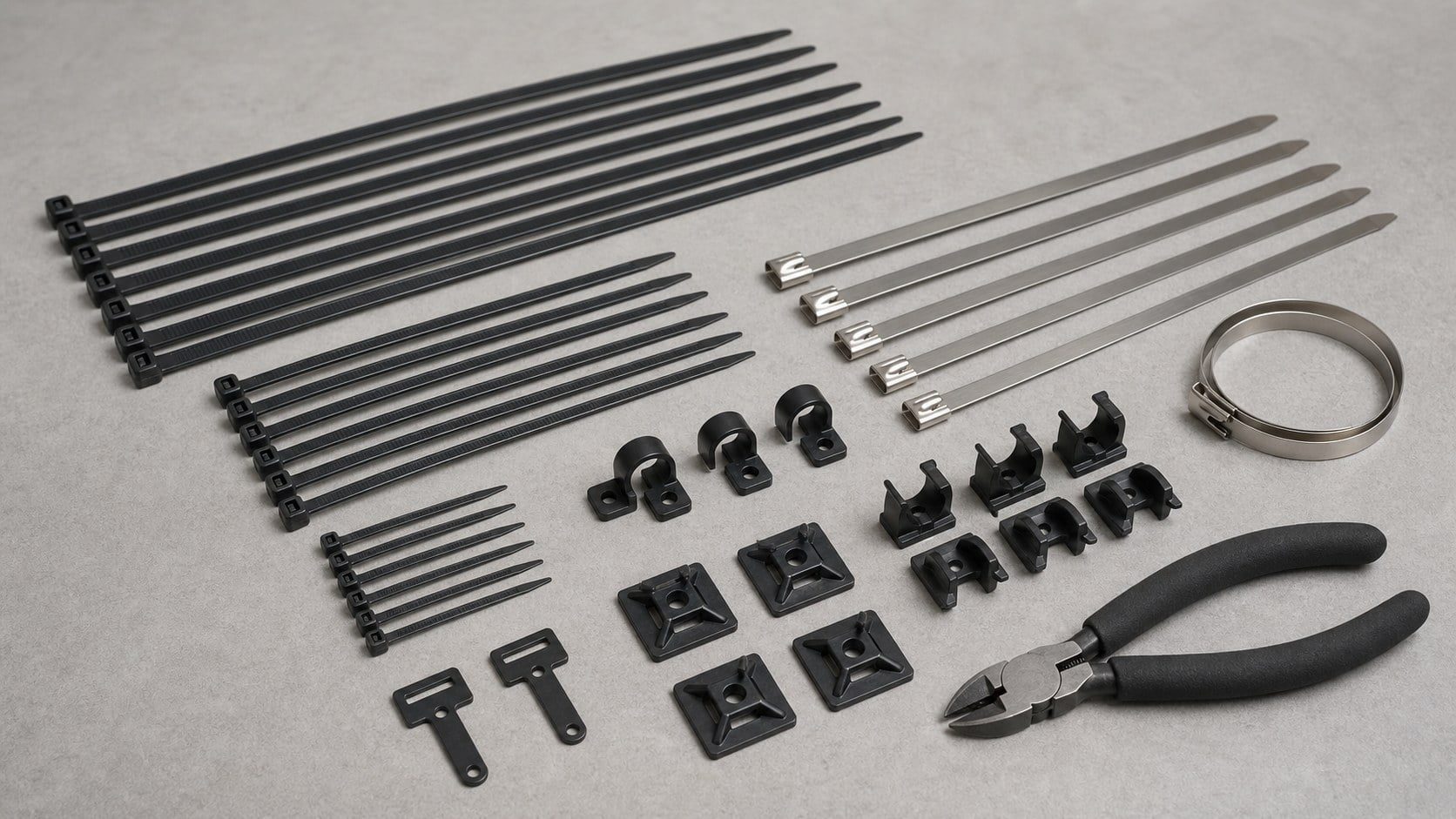
Sample Kit
Small quantities of several tie lengths, clips and mounts for installer testing.
Project Kit
Configured around cable count, rail type, fixing spacing and installation volume.
Distributor Kit
Repeatable SKU mix for PV installers and rooftop maintenance customers.
Harsh Site Add-On
Stainless ties and high-retention parts for coastal, hot or exposed routes.
Product Parameters
| Component | Key Parameters | Recommended Check | Typical Solar Use |
|---|---|---|---|
| UV black PA66 cable tie | Length, width, tensile strength, UV grade, temperature range | Bundle diameter, fixing spacing and expected outdoor life | General PV cable bundling and under-panel route support |
| PV cable clip | Clip opening, cable diameter range, frame/rail compatibility, material | Module frame thickness and cable outside diameter | Fast cable support on module edges and aluminum rails |
| Stainless steel cable tie | SS304/SS316, width, thickness, locking head type, tool compatibility | Coastal exposure, heat, vibration and retention requirement | Severe outdoor points, metal brackets and utility-scale exposed routes |
| Mounting base | Adhesive/screw type, base size, tie width range, surface compatibility | Surface material and whether drilling is allowed | Combiner boxes, frame transitions and equipment-side routes |
| Marker tie / tag | Label area, material, color, tie length, writing/printing method | String ID, inspection method and sunlight exposure | Route identification near combiner boxes and service points |
Installation Steps
- Confirm the PV cable path before tightening any tie or clip.
- Keep cables close to the module frame or rail, without forcing a sharp bend.
- Use PV clips where the rail or module edge provides a natural fixing point.
- Use UV nylon ties for grouped cables, with one head per tie and a closed loop under light tension.
- Add stainless steel ties only where heat, corrosion or retention risk justifies them.
- Trim nylon tie tails cleanly and check that no cut edge contacts the cable jacket.
- Mark string or route groups where maintenance teams need fast identification.
Field Case
Representative PV cable route after kit-based selection
Application: Rooftop PV array cable routing below module frames and aluminum rails.
Problem: Loose cable loops, mixed fastening methods and unclear replacement parts made future maintenance harder.
Solution: CableTiesMFG configured a Solar Kit with UV black nylon ties, PV clips, selected stainless steel ties, mounting bases and simple route identification parts.
Result: The finished route is easier to inspect, easier to repeat and simpler to convert into a project RFQ list.
Why Choose CableTiesMFG
Kit-Based Quotation
We help convert cable diameter, rail type, fixing spacing and environment into a practical kit list.
Outdoor Material Options
UV-resistant nylon, stainless steel, clips, mounts and identification options for solar cable management.
B2B Supply Support
Sample kits, bulk packaging, OEM choices and project documentation for distributors and PV installers.
FAQ
Can standard indoor cable ties be used on solar panels?
For exposed outdoor PV routes, UV-resistant black PA66 or a more suitable outdoor material is the normal starting point. Indoor-grade ties may crack faster in sunlight.
When should stainless steel ties be added?
Use stainless steel ties for harsh exposure points, coastal environments, high heat zones or brackets where plastic tie replacement would be difficult.
Do PV cable clips replace cable ties?
Not always. Clips are fast for rail and module-frame support, while cable ties help bundle or secure cable groups where clips alone are not enough.
What information is needed for a Solar Kit quote?
Send cable diameter, rail or frame style, site environment, fixing spacing, expected quantity, required material and packaging method.
Related Product and Technical Links
How to Specify a Solar Cable Management Kit
Choose a solar kit by working through the points below for the PV installation you are equipping. Confirm each item so the kit composition, materials and packing match the cable route before a quote is prepared.
PV cable type and dimensions
Confirm the PV cable outside diameter the route uses, so the correct clip opening and tie size can be selected.
Material
Select UV-resistant black PA66 nylon for general outdoor routes, and SS304/SS316 stainless steel for harsh points.
UV exposure
Confirm the exposure level along the route, because indoor-grade ties may crack faster in sunlight.
Temperature and environment
Note high heat, coastal sites and corrosion-prone brackets that call for stainless or high-retention parts.
Bundle routing
Describe the under-panel route, the rail or module frame, and the fixing spacing between support points.
Mounting and installation method
Confirm whether PV clips, edge clips, screw-mount bases or ties are used, and whether a flush cutter or cable tie tool is needed.
Quantity and packaging
Confirm the component mix and packing for a sample kit, project kit or distributor starter pack.
Solar Cable Management Kit FAQ
What should a solar cable management kit include?
A practical kit usually combines UV-resistant black nylon cable ties, PV cable clips or edge clips, mounting bases, stainless steel ties for harsh points, and simple identification parts such as marker ties or blank tags, with a flush cutter or cable tie tool where installers need one.
Which PV cable dimensions should I confirm?
Provide the PV cable outside diameter, the module frame or rail profile, and the fixing spacing along the route. These determine the clip opening and the tie length and width needed for the under-panel route.
How does UV exposure affect cable tie selection?
For exposed outdoor PV routes, UV-resistant black PA66 is the normal starting point, and indoor-grade ties may crack faster in sunlight. Confirm the exposure level along the route so an outdoor-rated material is selected.
What material and temperature conditions should I specify?
Note high heat zones, coastal sites and corrosion-prone brackets, where SS304/SS316 stainless steel ties add retention. State the temperature conditions and whether the route is inland, coastal or close to hot equipment.
How should mounting and routing requirements be described?
Describe the module frame or rail shape, whether drilling is allowed, and the support points where PV clips, edge clips or screw-mount bases will be used. Confirm whether the ties are applied by hand or with a flush cutter or cable tie tool.
How can a kit specification support repeat solar projects?
A confirmed kit specification records the component mix, material, clip and tie sizes, fixing spacing and packing, so the same configuration can be referenced for later sites. The kit can be defined as a sample kit, project kit or distributor starter pack for repeat purchasing.
Need a Solar Kit recommendation?
Send cable diameter, PV module frame or rail type, outdoor exposure, annual quantity and packaging preference. CableTiesMFG can help prepare a Solar Kit list for sampling or bulk purchase.