
Application Solution
Tree Support Tie Solutions for Nursery, Landscaping and Garden Staking
Soft tree ties, hook-and-loop garden ties, and support-structure cable tie kits for young tree staking, nursery maintenance, landscape installation, plant training, and outdoor garden support work.
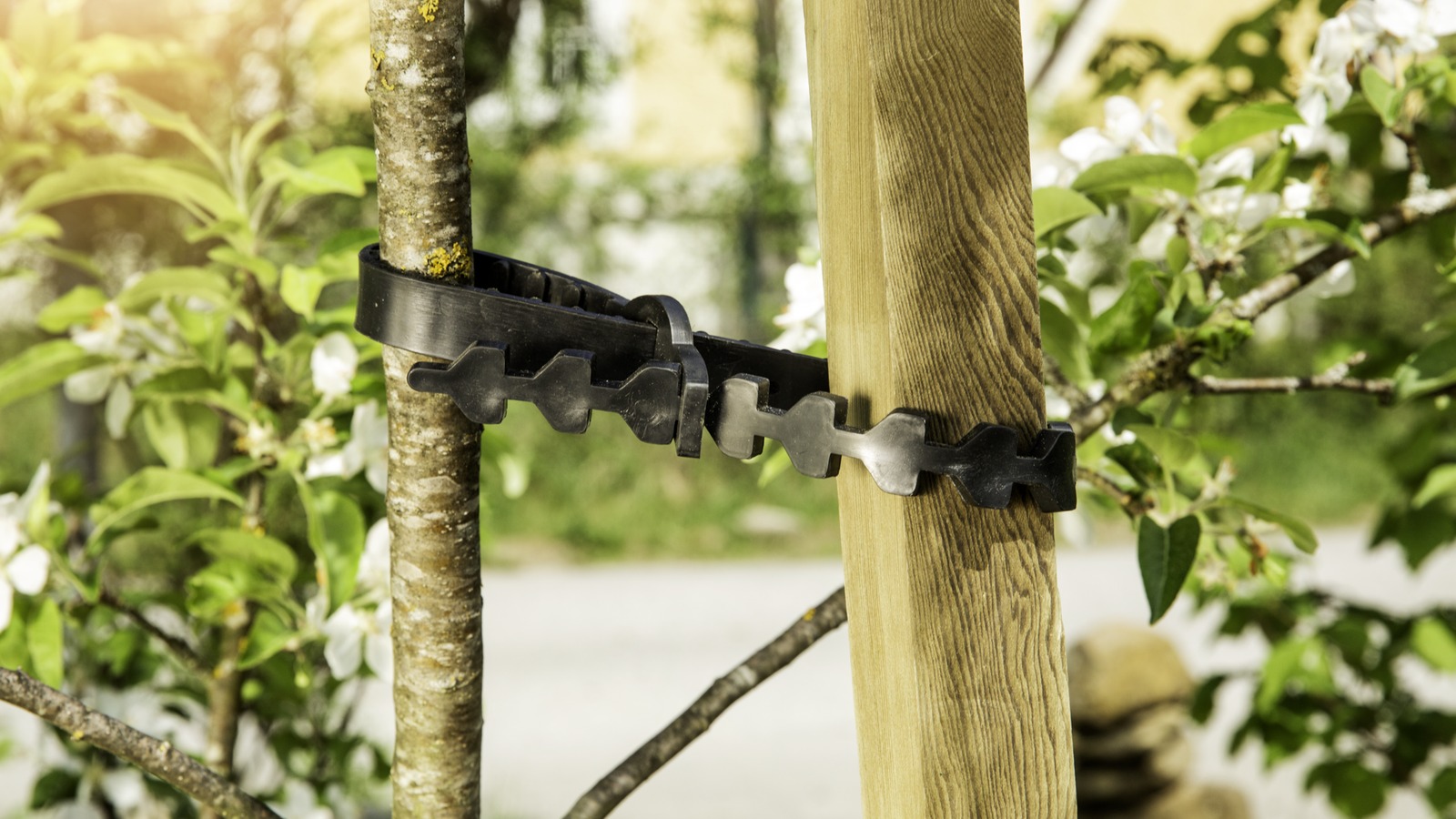
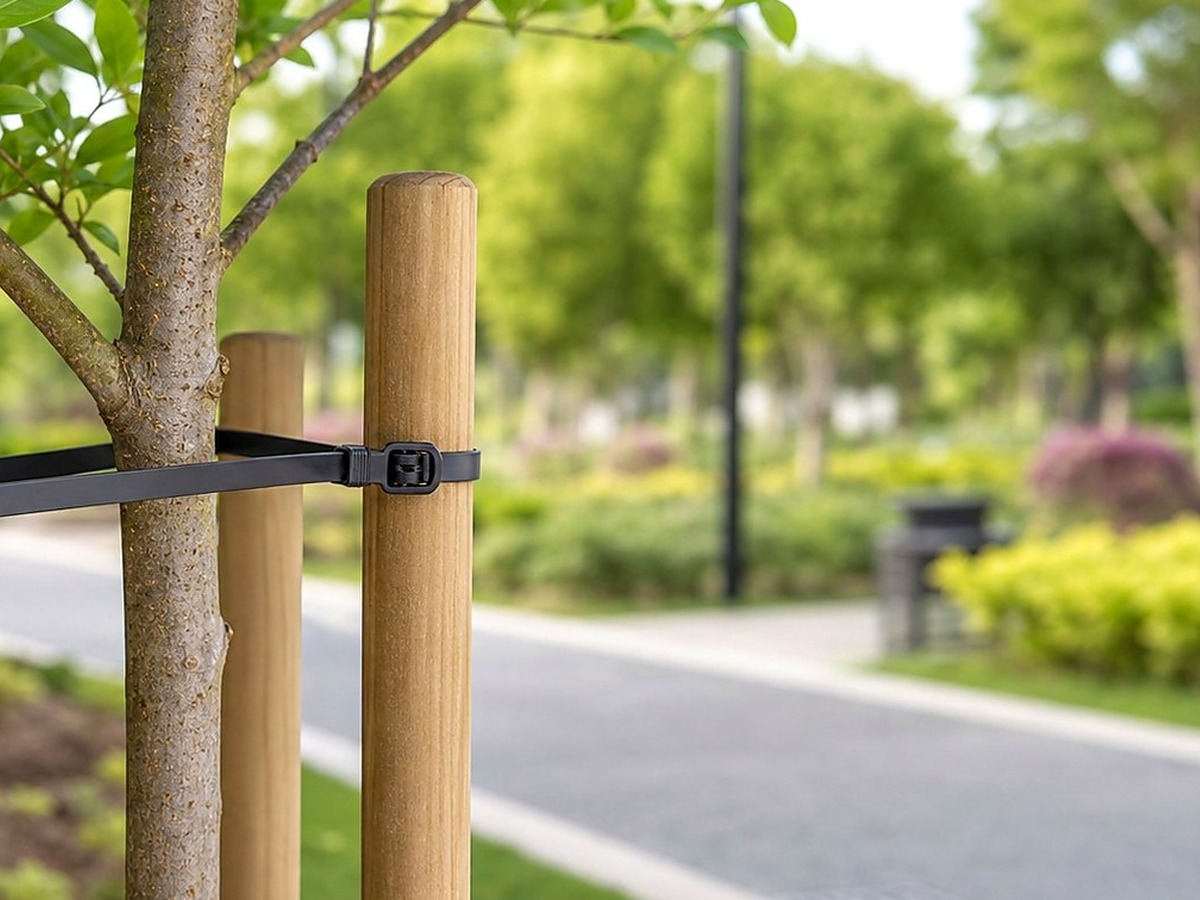
Application visual: tree support should protect bark and allow controlled movement, not choke the trunk.
Procurement Snapshot
Best Fit Buyers
Nursery suppliers, landscape contractors, garden distributors, municipal greening teams, tree growers, orchard maintenance teams, and outdoor hardware buyers.
Main Decision Factors
Tree diameter, bark sensitivity, expected growth, wind exposure, stake material, UV exposure, adjustability, and installation season.
Documents to Request
Material type, UV resistance, tie width, reusable design, tensile guidance, packaging, RoHS/REACH, and sample set.
Common Order Format
Soft tree tie rolls, hook-and-loop packs, garden tie assortments, nursery label tie kits, and landscaping bulk cartons.
Application Introduction
Tree support tie selection is different from ordinary cable bundling. Young trees need stable support, but the tie must not cut into bark or stop the trunk from moving naturally in wind.
The best solution is usually a wide soft tree tie, rubber tree tie, or hook-and-loop garden tie where the product touches the trunk. Standard nylon cable ties are better reserved for support structures, labels, mesh, irrigation tubes, or temporary fixing points away from tender bark.
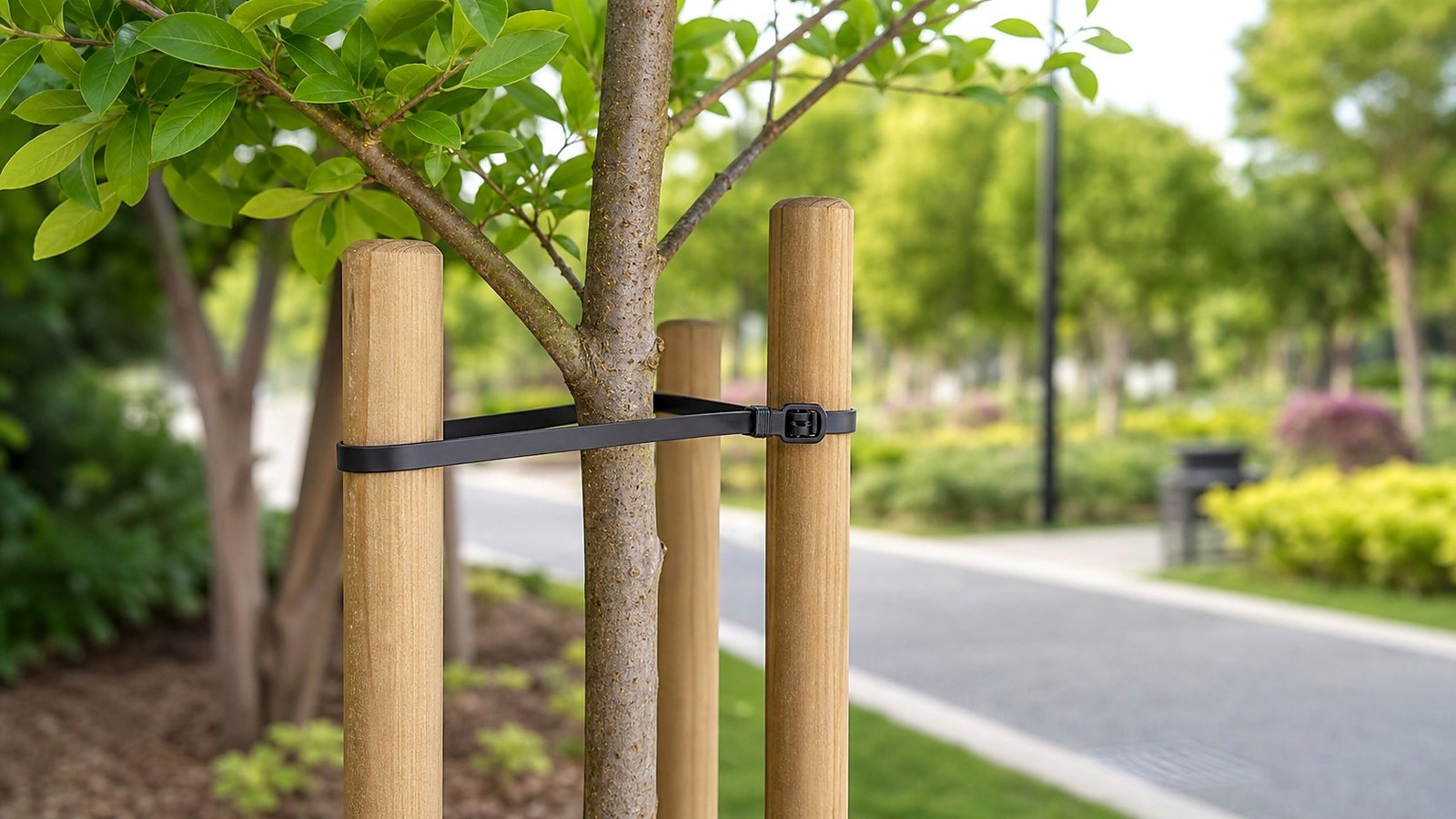
Tree staking scene: the tie should connect the trunk and stake while leaving enough room for bark and seasonal growth.
Application Pain Points
Bark Damage
Narrow or over-tightened ties can cut into bark, restrict growth, or create long-term tree wounds.
Wind Movement
Loose or poorly placed ties let the trunk rub against stakes, while overly rigid tying can weaken natural trunk development.
Outdoor Aging
Sunlight, rain, heat, and seasonal inspection cycles affect soft ties, nylon ties, and reusable products differently.
Wrong Product Use
One cheap tie used everywhere creates poor results: soft trunks, nursery labels, stakes, mesh, and irrigation lines need different choices.
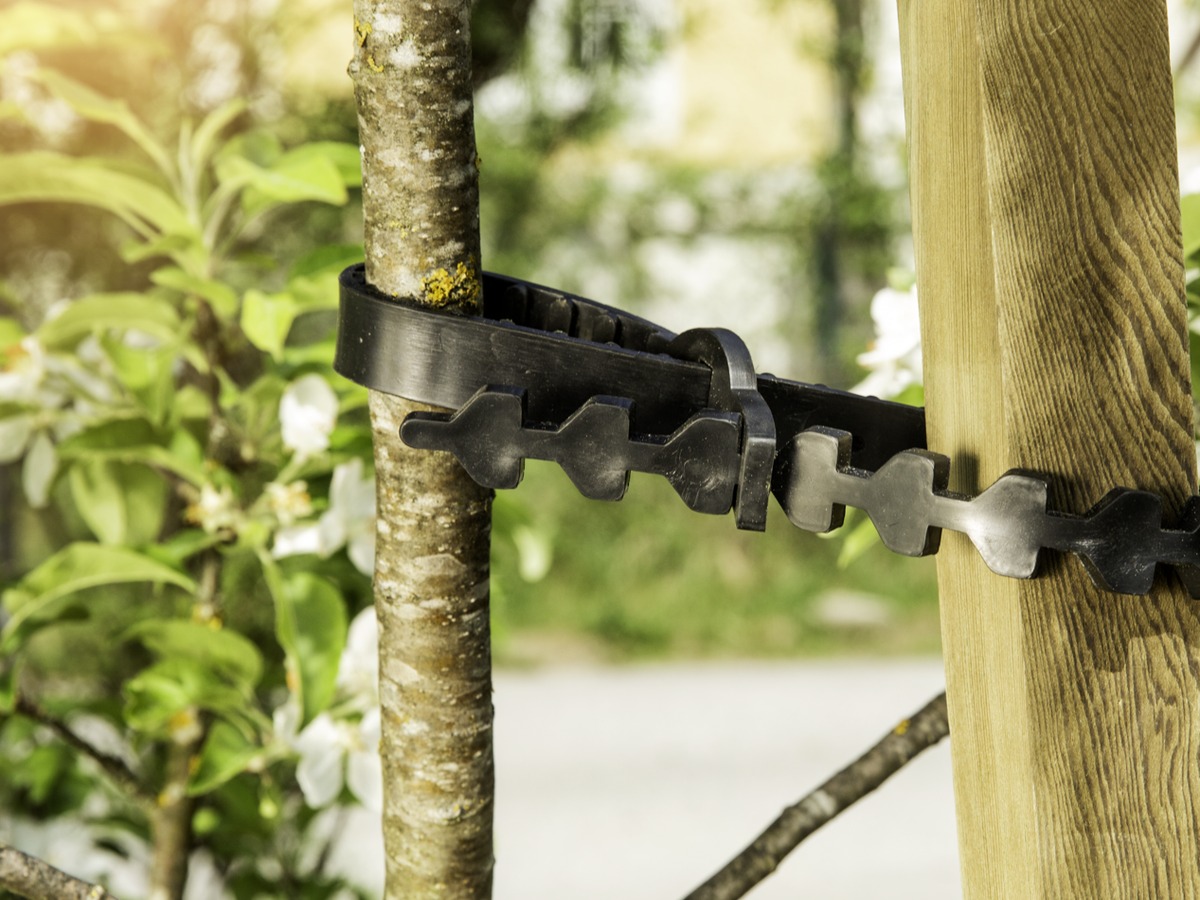
Detail visual: broad contact and adjustability matter more than maximum tightening force.
On-Site Problem Analysis
Most tree support failures happen because installers treat living trunks like pipes or cable bundles. A tree changes diameter, moves in wind, and has a bark surface that can be damaged by pressure.
- Young tree trunks: choose soft, wide, adjustable ties with growth allowance.
- Wooden stakes: use ties that hold securely without cutting into bark.
- Nursery labels: use marker ties or gentle fastening around branches, with room to grow.
- Garden structures: standard UV nylon ties can fix mesh, tubes, frames, and support hardware.
Recommended Solution
Build the tree support kit around the contact point. If the tie touches bark, use soft tree ties, rubber ties, or hook-and-loop garden ties. If the tie fixes a stake, frame, mesh, irrigation line, label, or support accessory, UV nylon ties and mountable ties can be used where appropriate.
Tree Trunk Contact
Wide soft tree tie or rubber tree tie with adjustable growth clearance.
Nursery Adjustment
Reusable hook-and-loop ties for seasonal checks and quick repositioning.
Support Structures
UV black nylon ties for stakes, frames, mesh, irrigation tubes, and labels.
Bulk Supply
Mixed garden support kits for contractors, nurseries, and distributors.
Solution Selector
Use this table to choose the right support tie based on what the tie touches.
| Field Requirement | Recommended Choice | When to Use |
|---|---|---|
| Young tree trunk to stake | Wide soft tree tie / rubber tree tie | Use where bark contact, trunk movement, and growth allowance matter. |
| Seasonal nursery support | Hook-and-loop garden tie | Use when workers need to adjust, reopen, and reuse the tie. |
| Stake, frame, mesh or irrigation support | UV-resistant nylon cable tie | Use on support structures, not tightly around tender living bark. |
| Nursery labeling and light routing | Marker tie / releasable tie / soft loop tie | Use where identification, gentle contact, and easy removal are important. |
Product Combination
Product images below are for product identification and material selection. Application visuals are selected/re-exported from project assets and are not presented as customer case photos.
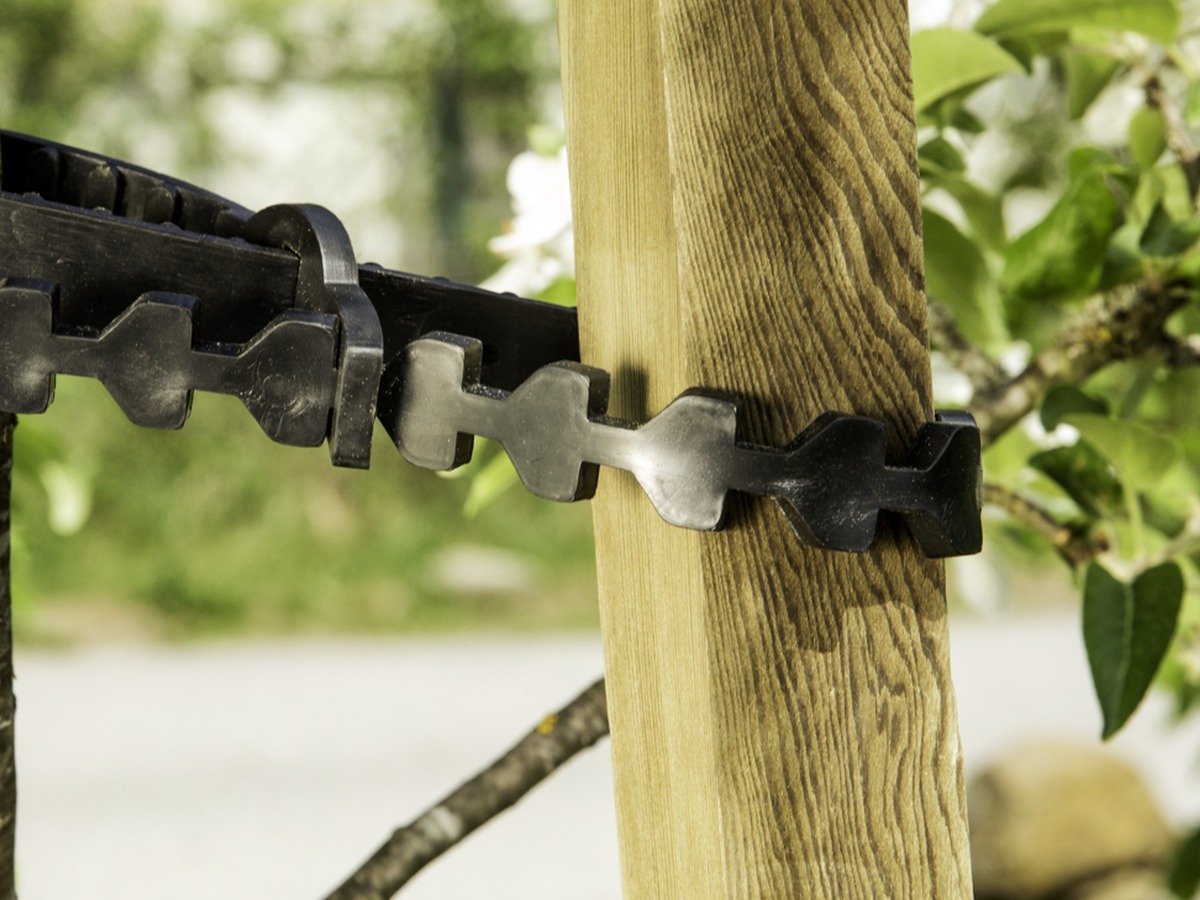
Wide Rubber Tree Tie
Best starting point where the tie contacts bark and needs flexibility.
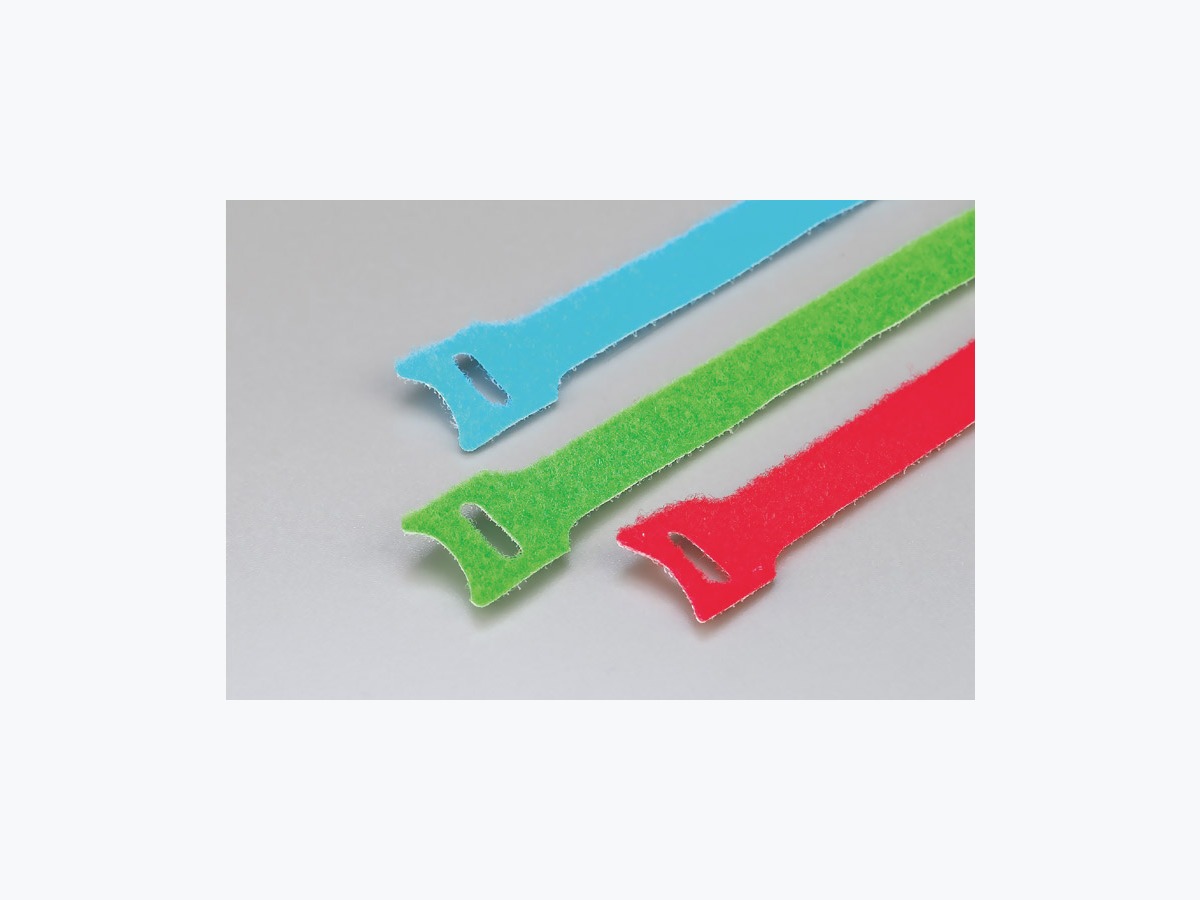
Hook-and-Loop Garden Tie
Reusable choice for nursery support, seasonal adjustment, and light plant training.
Soft Loop Tie
Adjustable soft tie for gentle support and temporary garden fixing.
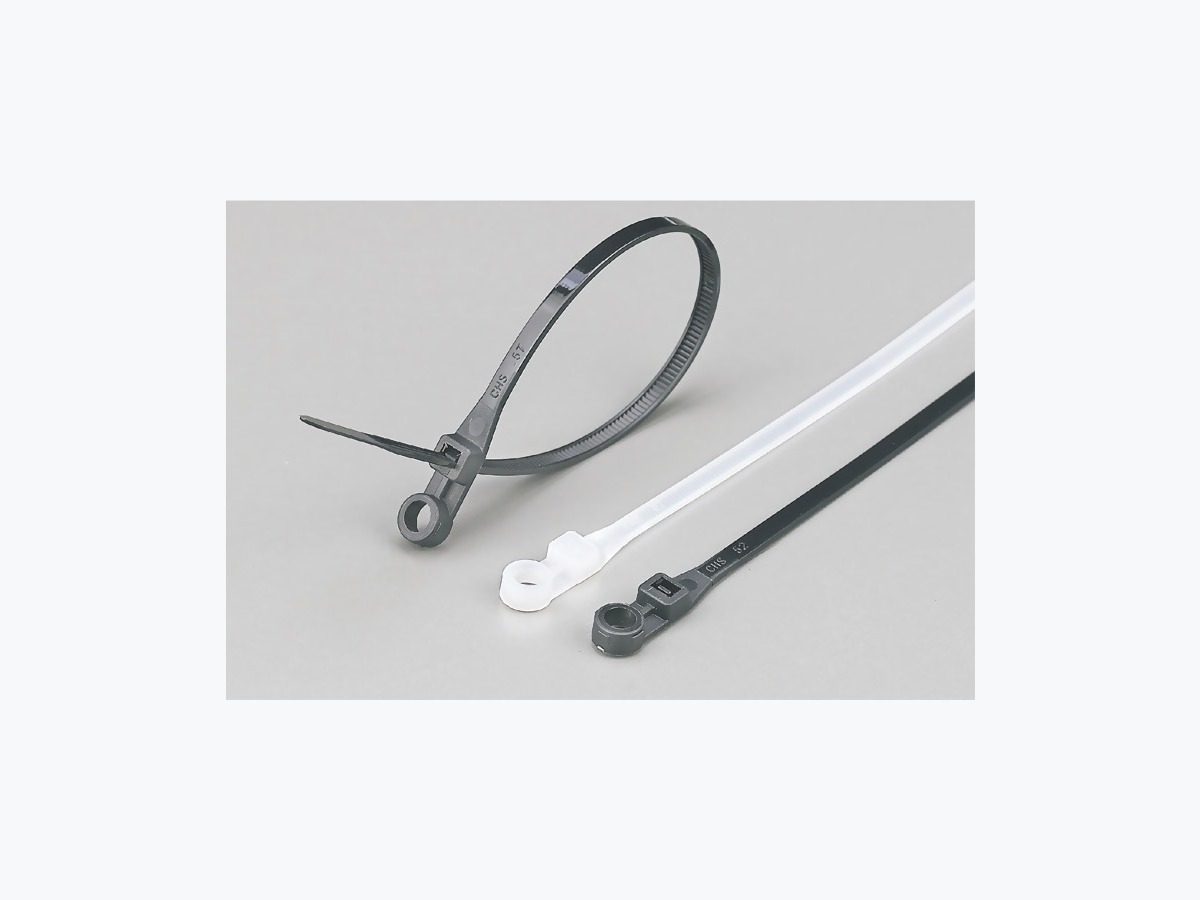
Mountable Nylon Tie
For stakes, tags, rails, frames, and non-bark support points.
| Application Zone | Recommended Products | Purpose |
|---|---|---|
| Young tree staking | Wide soft tie, rubber tree tie | Hold tree upright while protecting bark |
| Nursery maintenance | Hook-and-loop tie, soft loop tie | Fast seasonal adjustment and reuse |
| Landscape structures | UV nylon tie, mountable tie | Fix mesh, stakes, frames, tubes and labels |
| Retail / distributor pack | Mixed garden support kit | Cover tree support, labels, frames and light routing |
Product Parameters
| Product Type | Material / Design | Performance Focus | Typical Use |
|---|---|---|---|
| Wide tree support tie | Soft rubber or flexible garden material | Bark protection and growth clearance | Young tree staking and landscaping |
| Hook-and-loop garden tie | Reusable fabric fastening surface | Adjustable, reusable, soft contact | Nursery, seasonal plant support, light training |
| Soft loop tie | Flexible soft garden tie | Gentle holding and quick adjustment | Branches, light tree support, plant organization |
| UV nylon tie | PA66 UV black option | Outdoor structure fixing | Stakes, frames, mesh, irrigation and labels |
| Mountable nylon tie | PA66 tie with hole or mount point | Fixed support position | Nursery tags, frames, stakes and hardware |
Final specification should confirm tree diameter, tie width, support method, UV exposure, inspection cycle, and packaging requirements.
Recommended SKU Set
| Suggested SKU | Product Role | Typical Spec Direction | Recommended Use |
|---|---|---|---|
| CT-TREE-SOFT | Primary tree support tie | Wide flexible soft tie, outdoor grade | Young tree trunk to stake support |
| CT-TREE-HL | Reusable garden tie | Hook-and-loop, cut-to-length or pre-cut pack | Nursery maintenance and seasonal adjustment |
| CT-TREE-LOOP | Soft loop support tie | Reusable soft loop design | Light branches, labels, plant support |
| CT-TREE-UV | Structure fixing tie | UV black PA66, selected length | Stakes, mesh, irrigation, rails and frame points |
Installation Steps
- Identify the contact point: confirm whether the tie touches bark, a stake, a frame, mesh, tube, or label.
- Choose soft contact for bark: use wide soft or rubber ties when fastening around the tree trunk.
- Leave growth allowance: secure the tree without choking it; allow movement and diameter growth.
- Set support height: place support where the trunk needs guidance, not at every possible point.
- Trim or tidy safely: avoid sharp tails or hard edges near bark and walkways.
- Inspect seasonally: loosen, replace, or remove ties before they restrict growth.
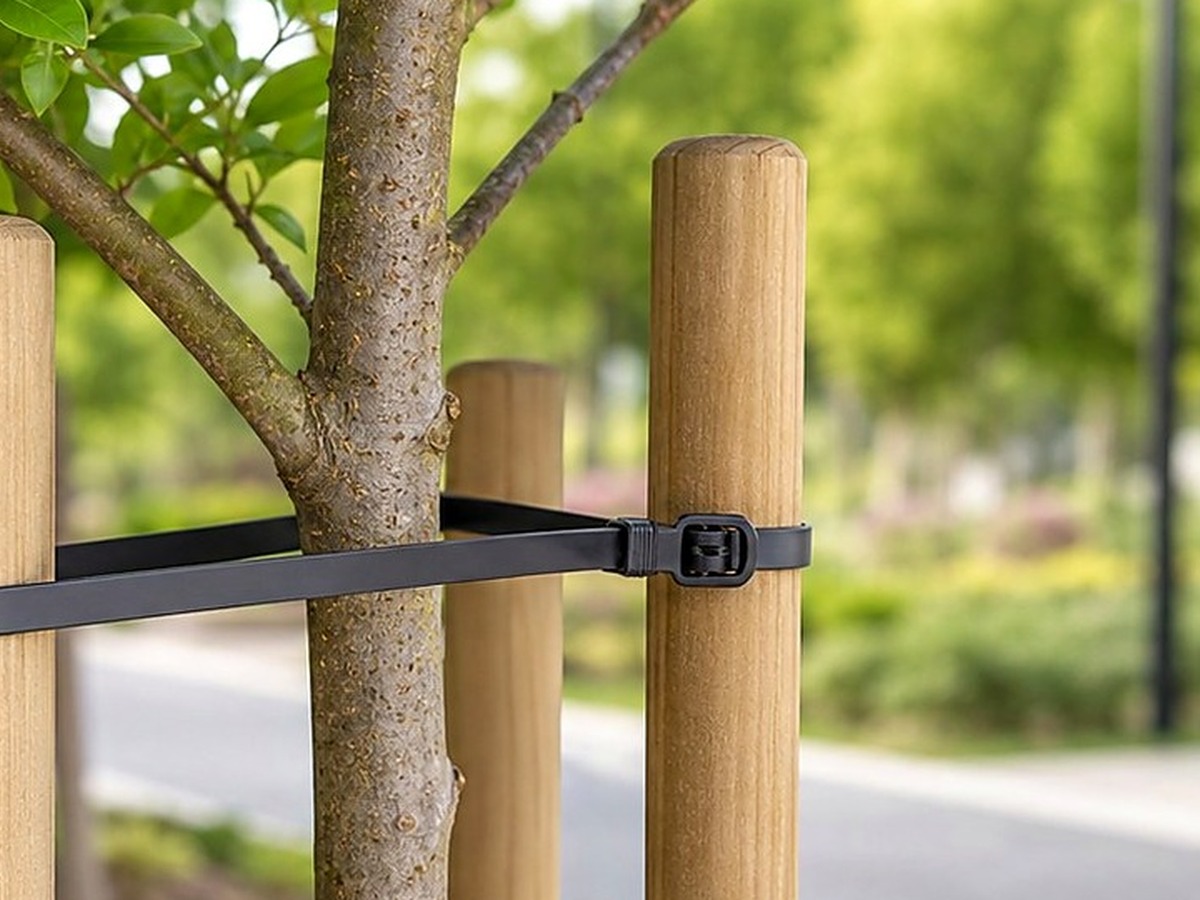
Installation visual: tie tension should support the tree while preserving bark and growth clearance.
Application Case Direction
Standardizing Tree Support Kits for Nursery and Landscaping Projects
Application: Young tree staking, nursery support, landscaping maintenance, and outdoor support-structure fixing.
Problem: Workers used narrow plastic ties for every task. Some ties were too harsh for trunks, while others failed outdoors or were difficult to adjust during seasonal inspection.
Solution: CableTiesMFG recommended a mixed tree support kit: wide soft tree ties for bark contact, hook-and-loop ties for reusable adjustment, and UV nylon ties only for stakes, labels, mesh, and support structures.
Result: The product choice became easier to explain, installation looked more professional, and maintenance teams had clearer rules for what touches the tree and what only fixes the structure.
Why Choose CableTiesMFG
Application-Aware Selection
We separate bark-contact ties from structure-fixing ties so the recommendation fits real garden work.
Mixed Kit Supply
Soft ties, hook-and-loop ties, UV nylon ties, mountable ties, and label tie options can be supplied together.
Distributor Packaging
Bulk cartons, retail packs, private-label bags, and seasonal landscaping kits are available.
Sample Support
Samples help buyers compare width, flexibility, adjustability, and outdoor performance before ordering.
FAQ
Can standard nylon cable ties be used directly around a young tree trunk?
They are not the best choice for tight trunk contact. Use wide soft tree ties, rubber ties, or hook-and-loop garden ties where the tie touches bark. Nylon ties are better for stakes, frames, mesh, irrigation tubes, and labels.
What is the safest product for tree staking?
A wide soft or rubber tree tie is usually the safest starting point because it spreads pressure and can allow movement and growth clearance.
Can the ties be reused?
Hook-and-loop garden ties and some soft loop ties can be reused or adjusted. Standard nylon cable ties are usually single-use unless a releasable design is selected.
Can you supply a mixed garden support kit?
Yes. CableTiesMFG can supply mixed kits for tree support, nursery labeling, garden structures, irrigation support, and landscaping maintenance.
Quality & Documentation
Tree support products should be specified by material, width, flexibility, UV exposure, packaging, and intended contact surface.
- Material statement
- UV option
- Width guidance
- Reusable options
- Sample kit support
RFQ Information Needed
Application Details
Tree diameter, stake type, garden or nursery use, whether the tie touches bark, and expected inspection cycle.
Environment
Outdoor exposure, UV, rain, wind, season, temperature, and whether reuse or adjustment is required.
Commercial Details
Quantity, pack type, color, private label, sample request, documentation needs, and delivery schedule.
Related Product and Technical Links
How to Specify Cable Ties for Tree Support and Plant Fixing
Use the seven fields below as a checklist when you specify a tie for tree support, plant fixing or nursery support work. Confirm or request each item against the exact SKU and project specification, and review the current SKU document rather than applying one product to every fixing point.
- Plant or tree type and growth stage — confirm the species or plant type and whether it is newly planted, establishing or mature, and review the fixing against the exact project.
- Support method and contact points — review what the tie connects (trunk to stake, branch to frame, plant to mesh or support accessory) and where each contact point sits.
- Stem or branch diameter — request the current stem or branch diameter at the fixing point and the growth expected over the support period, and confirm the size for the exact SKU.
- Material and outdoor exposure — confirm the material and finish stated for the SKU and review it against UV, rain, wind, temperature and the inspection cycle at the site.
- Adjustability and releasability — review whether the fixing must be loosened, reopened or repositioned as the plant grows, and confirm the adjustment range for the exact SKU.
- Mounting or anchoring method — confirm whether the tie wraps a trunk, stake, frame, mesh, rail or anchor, and review the anchoring method against the project specification.
- Exact SKU, quantity, packaging and documentation — request the part reference, quantity, packaging format and current document, and confirm the document revision matches the SKU and order under consideration.
Tree Support and Plant Fixing FAQ
What information should I provide for tree support or plant fixing?
State the plant or tree type and growth stage, the stem or branch diameter, the support method and contact points, the outdoor exposure, the inspection cycle, and the expected quantity. Confirm these against the exact SKU and project specification before ordering.
Which stem, branch or support dimensions matter?
Record the current diameter at the fixing point, the growth expected over the support period, and the width of the contact surface. Review them against the dimensional and width data for the exact SKU.
How should contact points be checked as the plant grows?
Review each contact point at the seasonal inspection and confirm the tie still leaves growth clearance and is not restricting the stem or branch. Loosen, replace or remove the fixing before it constricts the plant, for the exact project specification.
When should adjustable or releasable fixing be specified?
Specify an adjustable or reusable fixing where the support will be loosened, reopened or repositioned as the plant grows, or where seasonal maintenance is planned. Confirm the adjustment range and access for the exact SKU.
What should accompany a quote for a nursery or garden fixing project?
Request the part reference, quantity and packaging format, the material or UV option statement, the tie width, and the current document you need for the SKU. Confirm the scope so the quote matches the exact project specification.
Contact Us
Send us your tree diameter, stake style, contact surface, outdoor exposure, packaging needs, and quantity. Our team will recommend the right tree support tie set for your nursery or landscaping project.