
Application Solution
Wire Harness Cable Tie Solutions for Automotive, Machinery and Electrical Assemblies
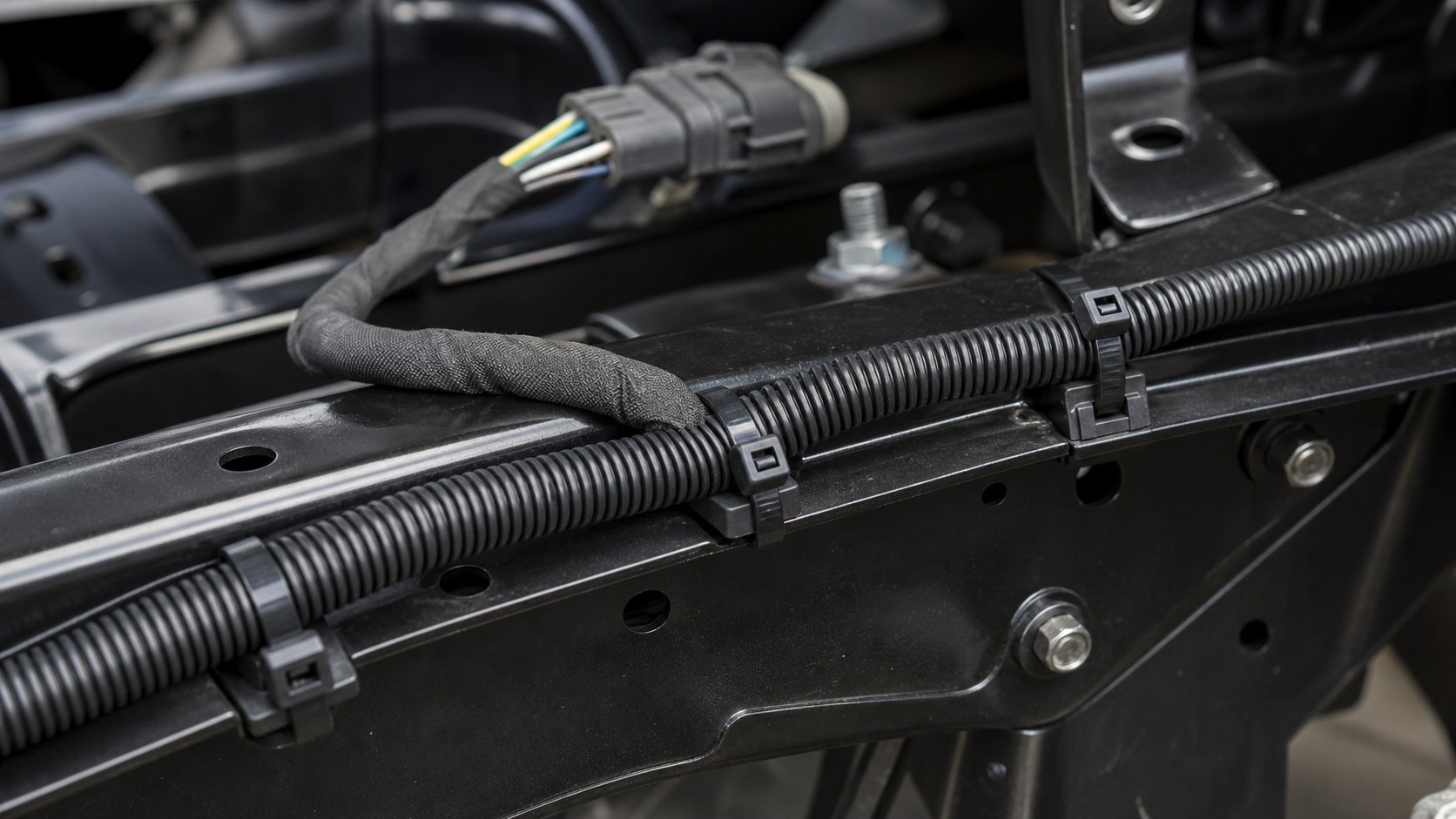
Route-based cable tie selection for wire harness assembly boards, corrugated loom, branch transitions, connectors, machine frames and vehicle equipment bays where the harness must stay fixed without crushed insulation.
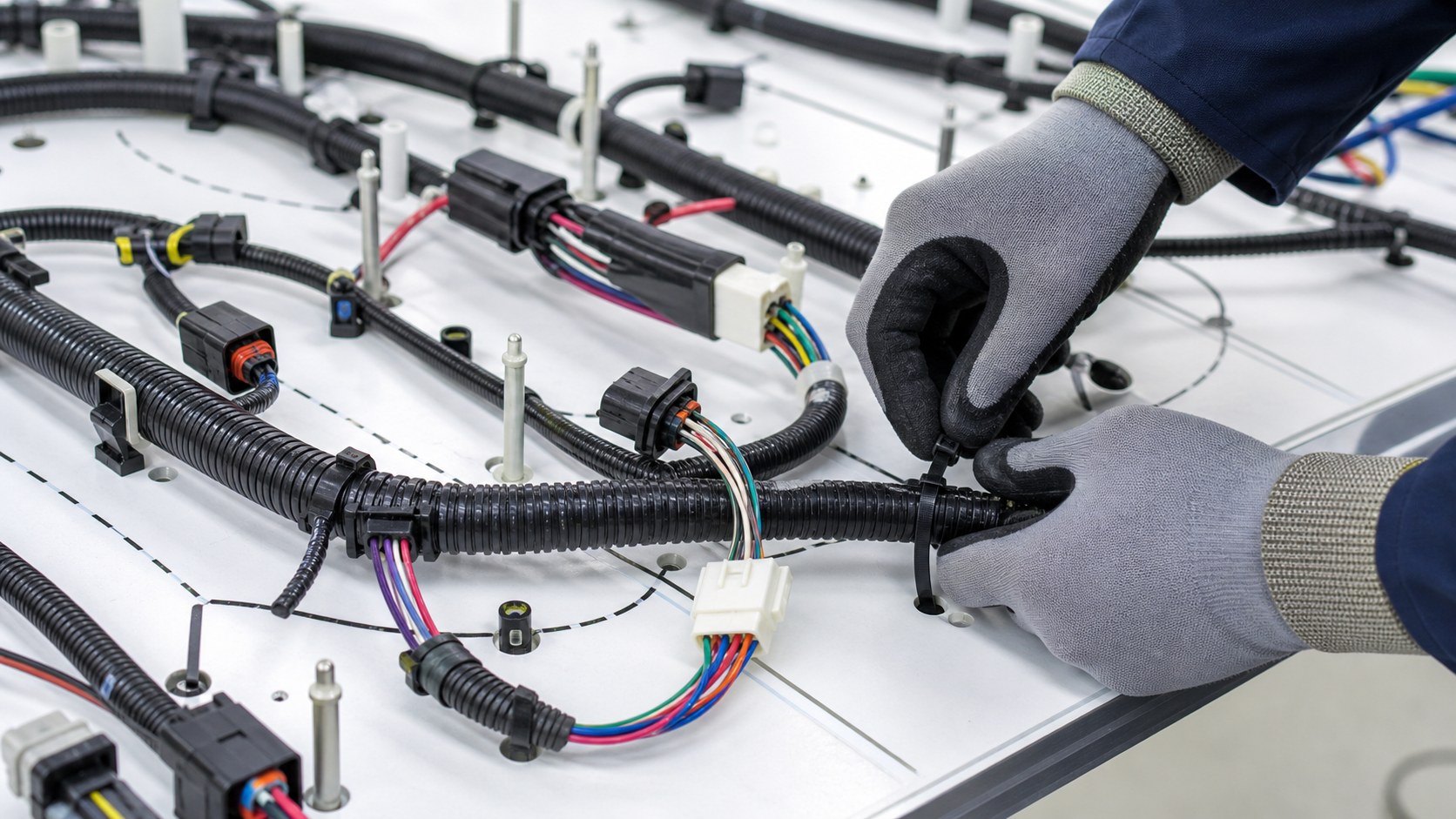
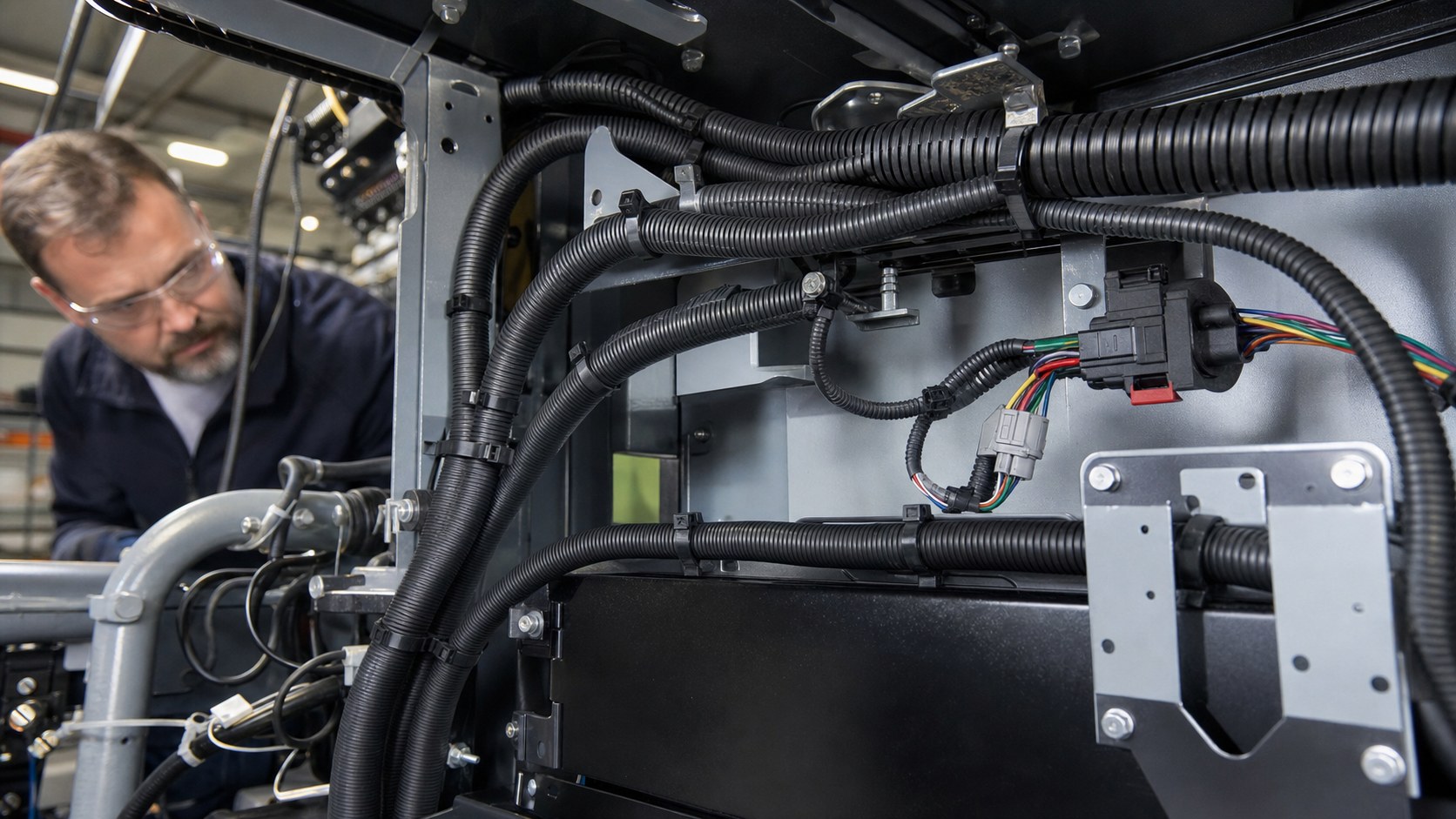
Application visual: harness assembly needs clear routing, branch support, connector clearance and controlled cable tie tension.
Industry Introduction
Wire harness production is a controlled routing job, not a loose cable bundling job. A harness has drawing-defined paths, branch points, connector ends, corrugated loom, clips, mounting holes and service clearances. The cable tie must support the route without deforming the loom or stressing the wires.
Automotive suppliers, machinery OEMs, EV equipment builders and control cabinet teams usually need a mix of standard PA66 ties, push-mount ties, fir-tree ties, marker ties, releasable ties and mounting bases. The correct choice depends on bundle diameter, fixing hole, temperature zone, vibration and assembly process.
Industry Pain Points
Loose Branches
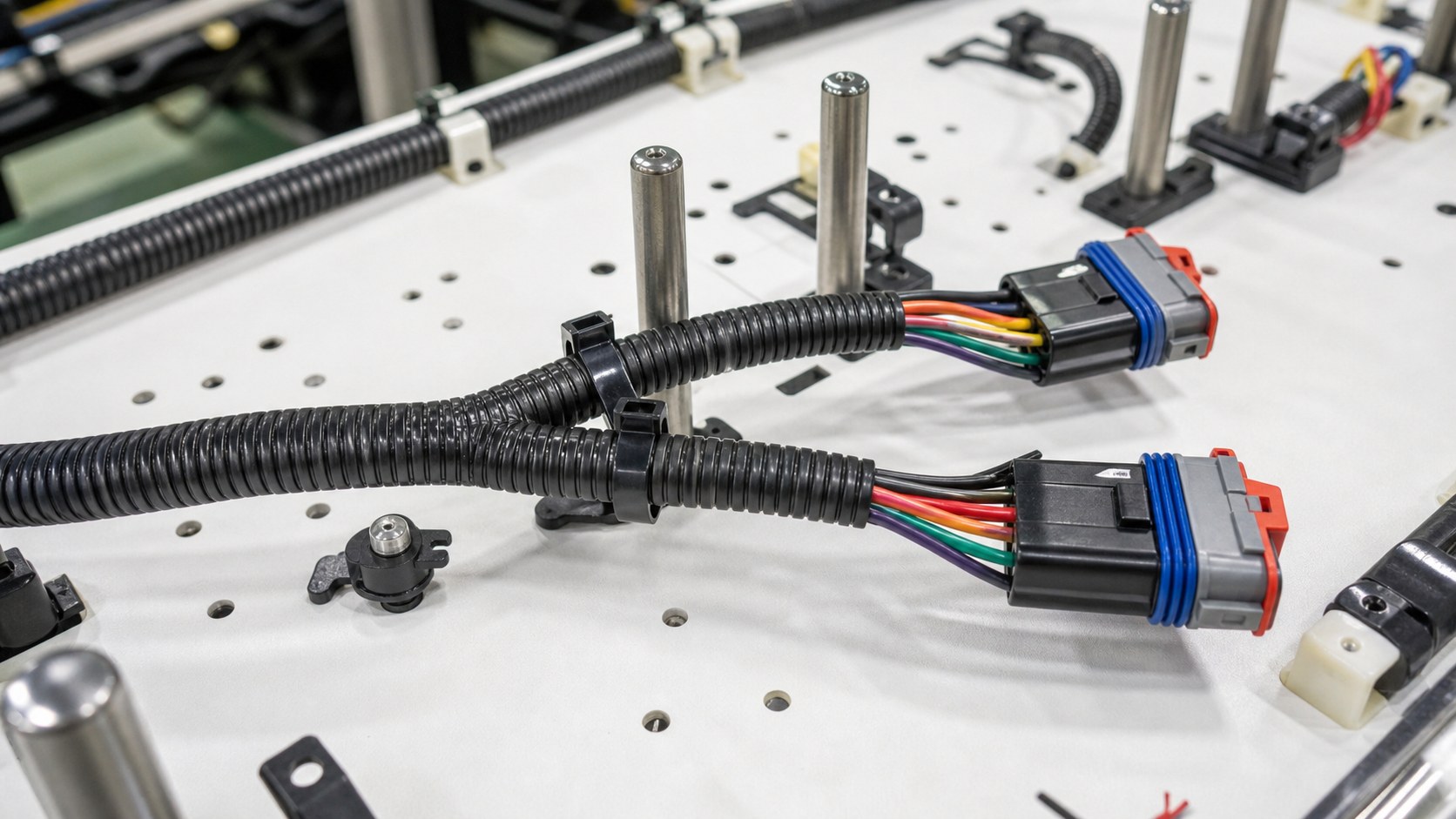
Unsupported branch transitions can move under vibration and pull against connector seals or terminals.
Abrasion Risk
Harnesses routed near metal edges need stable support and spacing, not only a stronger tie.
Wrong Mounting Style
A standard wrap tie cannot replace push-mount, fir-tree, edge-clip or screw-mount designs where the route must lock to a fixed point.
Inconsistent Assembly
Different operator tension, tie spacing and tail trimming create rework, noise risk and inspection failures.
What Buyers Usually Want to Avoid
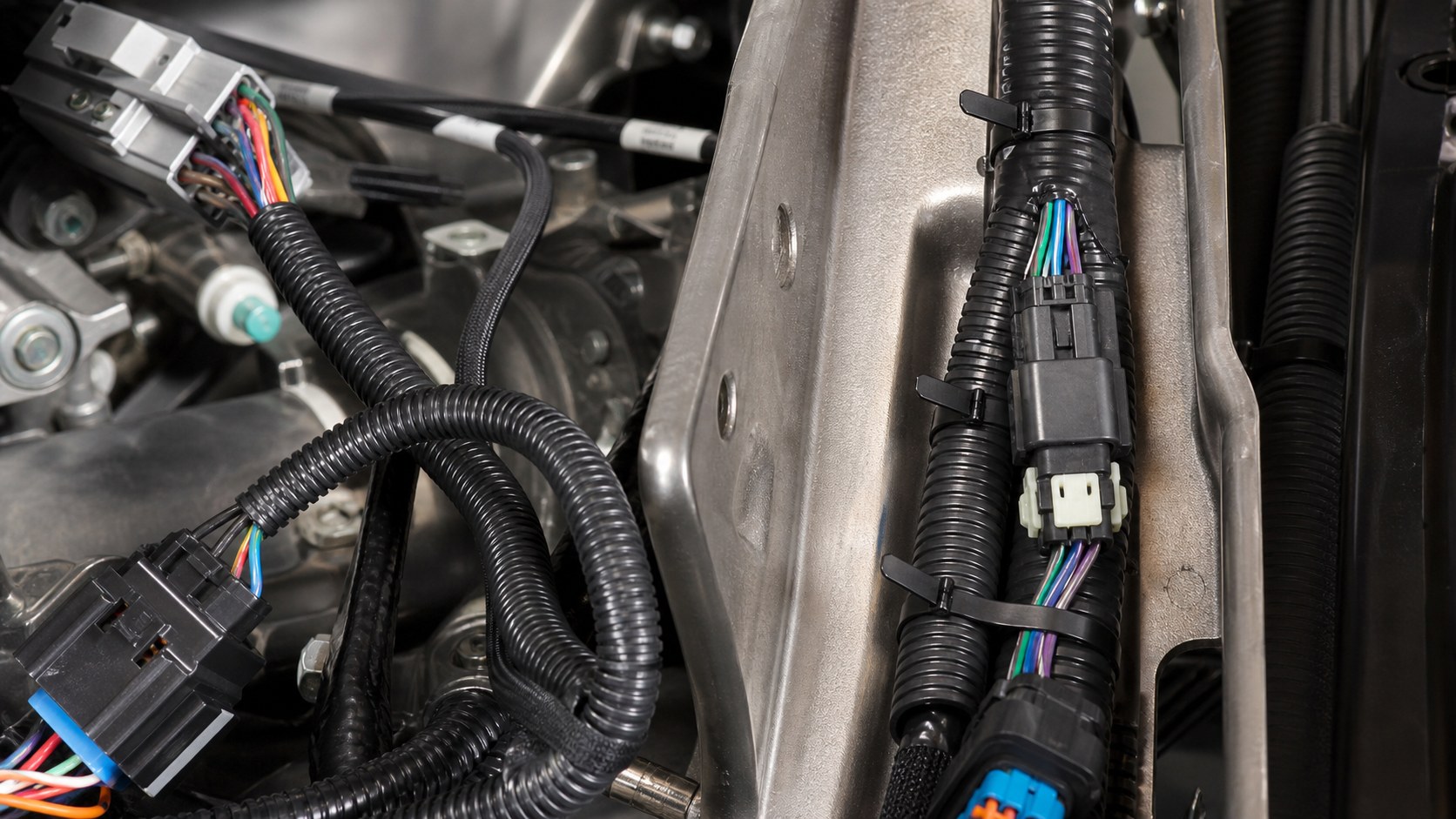
- Harness movement near connectors or branch splits.
- Ties placed too tight around soft insulation or corrugated loom.
- Generic ties used where drawings require a fixed mounting anchor.
- Product images placed on application sections, making the page less credible.
On-Site Problem Analysis
Start by dividing the harness route into zones. Assembly board sections need fast handling and repeatable tie spacing. Vehicle or machinery frame sections need stable anchors. Warm zones need material selection. Service zones may need releasable or marker ties.
- Bundle diameter: select tie length and width so the tie closes cleanly without excessive leftover tail.
- Mounting hole: match push-mount or fir-tree stem to the panel hole and thickness.
- Route stress: keep bend radius and connector clearance before tightening.
- Inspection: confirm tie head direction, tail trimming and accessibility.
Recommended Solution
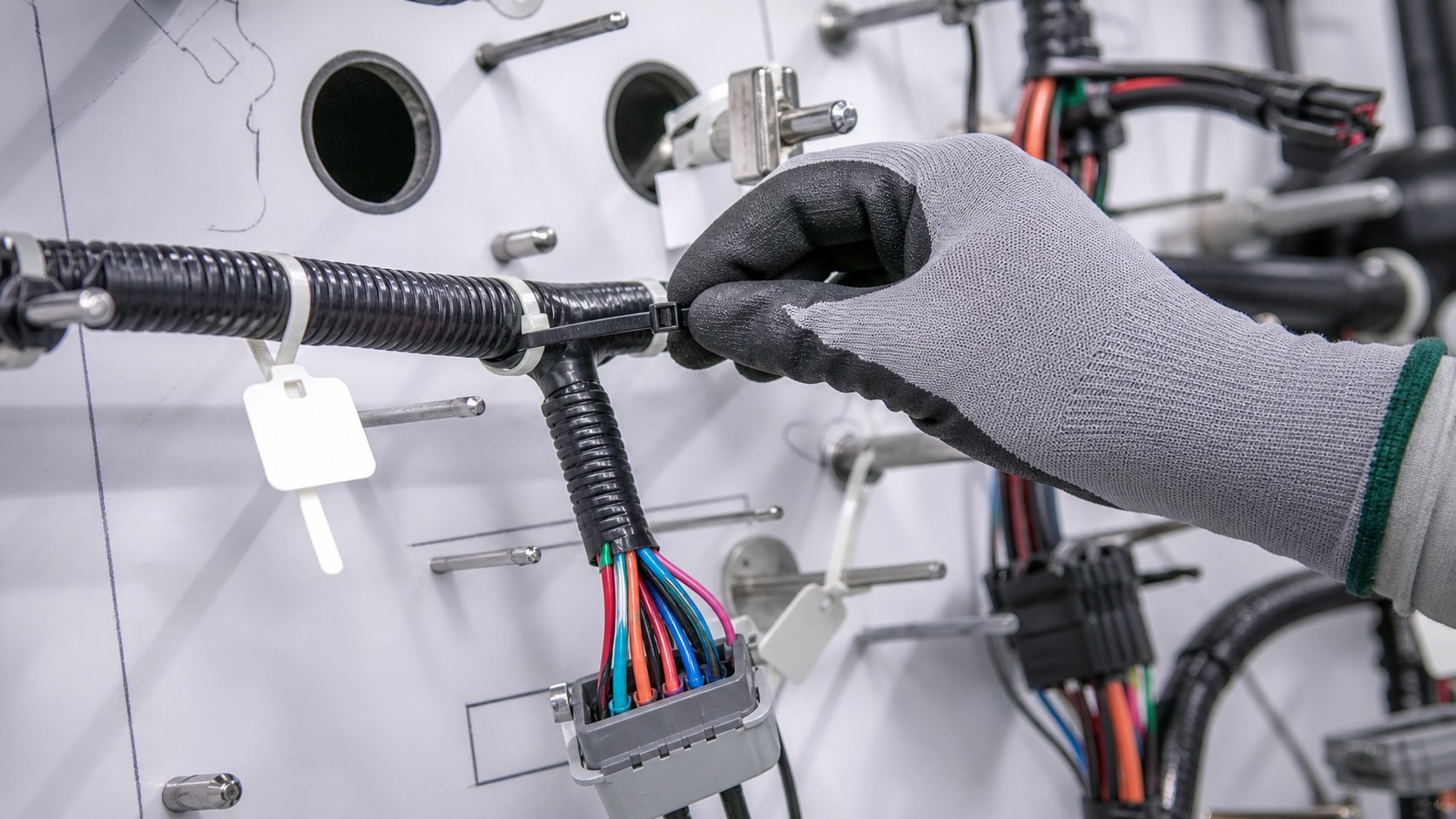
Use a route-based product set instead of one universal tie. Pair standard PA66 ties with mounted tie styles, then upgrade material only where the environment requires it. This keeps cost controlled while improving routing reliability.
Assembly Board
Standard PA66 ties and color ties for controlled bundling and variant identification.
Fixed Body Points
Push-mount, fir-tree and screw-mount tie styles for holes, brackets and panels.
Warm Zones
Heat-stabilized PA66 for engine bays, motors, pumps and machinery heat areas.
Service Routes
Releasable and marker ties for inspection, rework and harness identification.
Solution Selector
Use this table to convert harness route conditions into a practical product starting point.
| Route Requirement | Recommended Choice | When to Use |
|---|---|---|
| General harness bundling | PA66 standard cable tie | Interior harness sections, assembly board bundling and normal machinery wiring. |
| Fixed panel hole or bracket | Push-mount, fir-tree or screw-mount tie | When the harness must lock to a defined hole, bracket or panel location. |
| Connector branch transition | Medium-width tie with controlled tension | When the branch needs support but the tie must not deform the corrugated loom. |
| Maintenance or variant marking | Releasable, marker or colored tie | Use for service loops, inspection points, harness variants and traceability. |
| Warm engine or machinery zone | Heat-stabilized PA66 tie | Use near engines, motors, pumps, heaters and other warm equipment areas. |
Product Combination
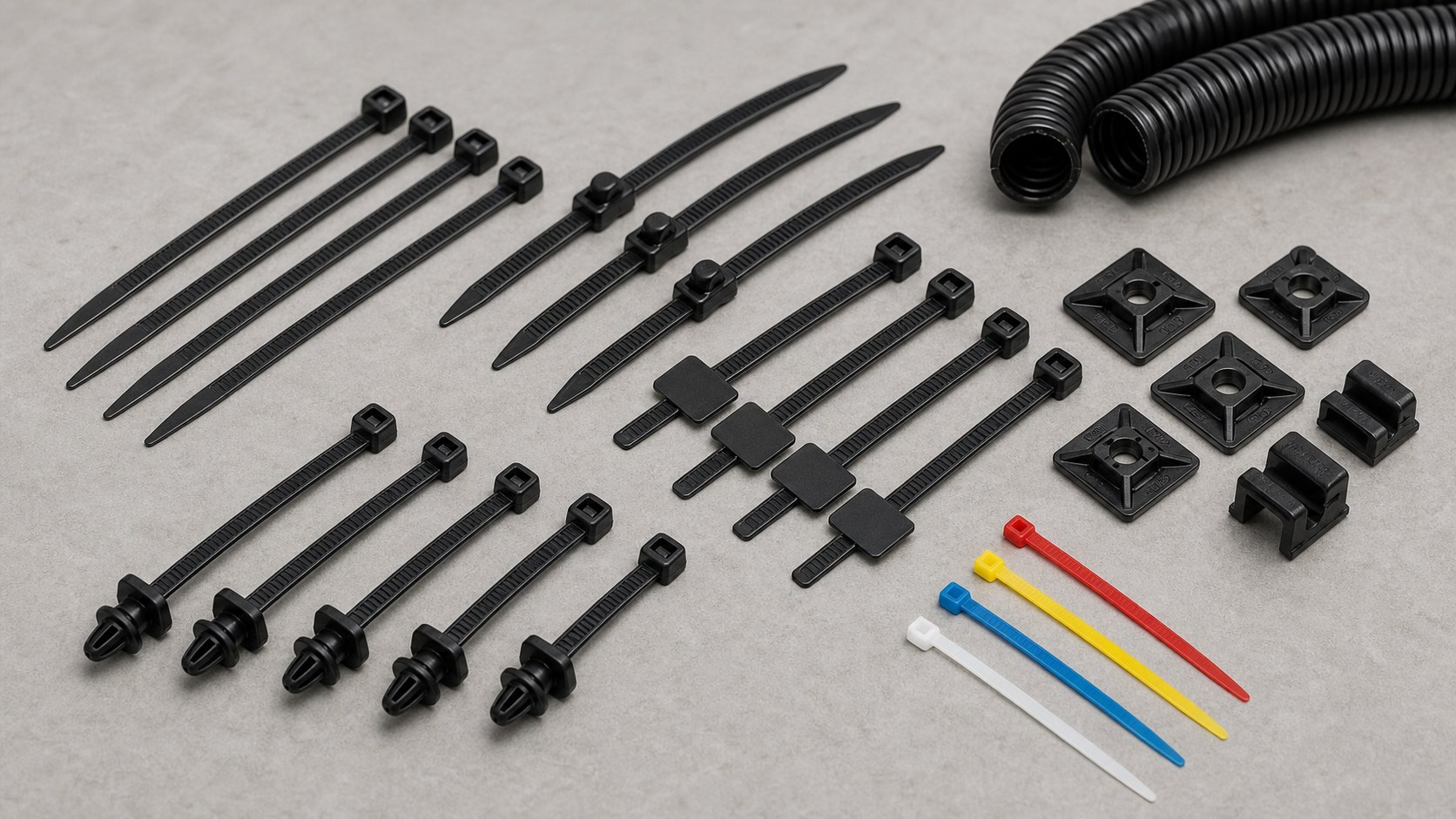
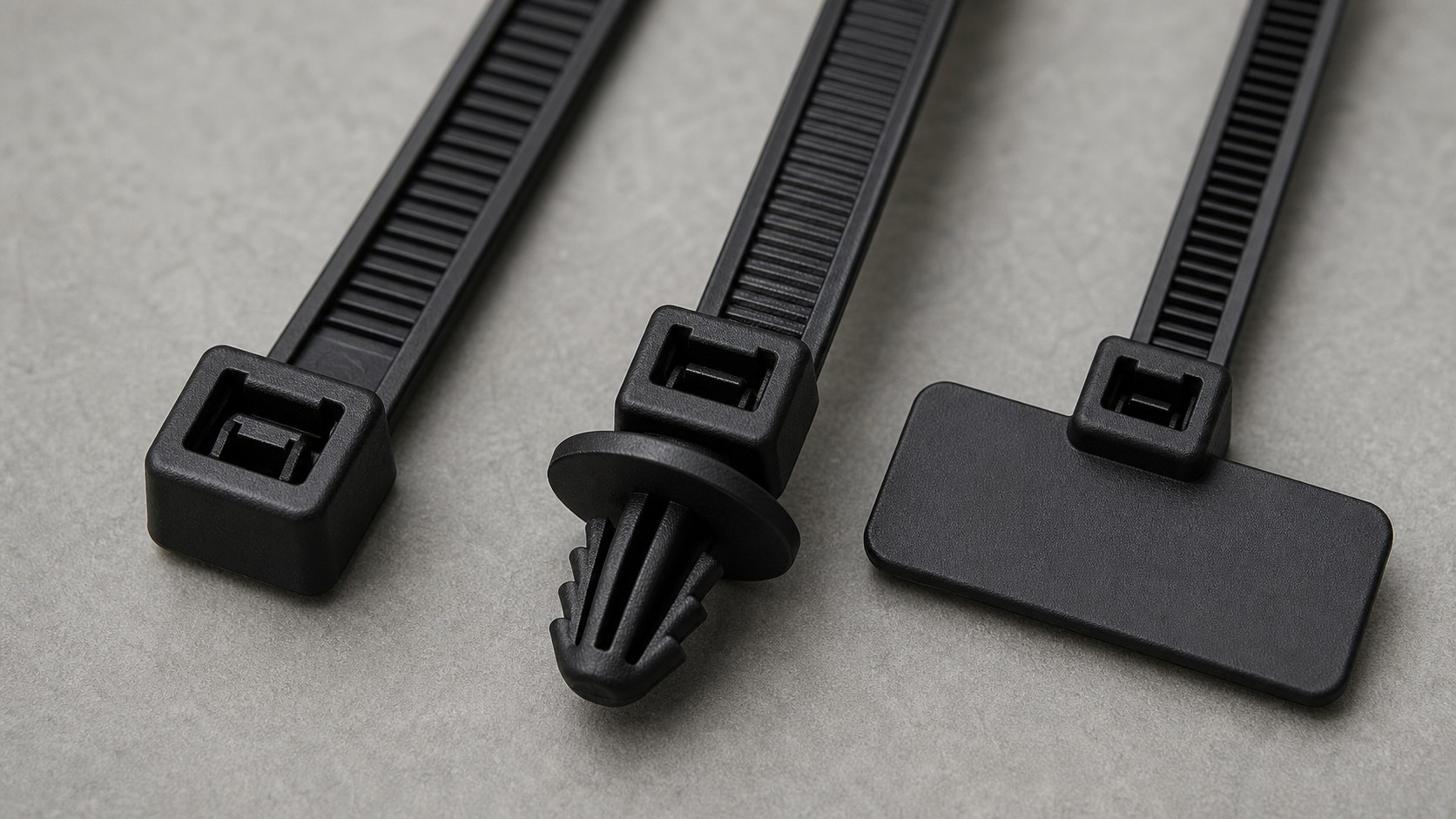
A wire harness kit usually combines several fastening styles. Product images here are for product identification and selection, while application visuals above show where each style belongs on a route.
| Product Group | Role in Harness Work |
|---|---|
| Standard PA66 cable ties | General bundling and fixture board assembly. |
| Push-mount / fir-tree ties | Snap into fixed holes and sheet-metal or plastic panels. |
| Marker and colored ties | Variant identification, inspection points and route marking. |
| Mounting bases and edge clips | Add support points where the harness route needs separation or clearance. |
Product Parameters
| Type | Material / Design | Selection Focus |
|---|---|---|
| Standard harness tie | PA66, black/natural/color | Length, width, tensile strength and bundle diameter. |
| Push-mount tie | PA66 with integrated panel anchor | Hole diameter, panel thickness and insertion retention. |
| Fir-tree / clip tie | PA66 snap-in stem or clip body | Stem style, clip engagement, bracket fit and vibration control. |
| Marker tie | PA66 tie with blank label plate | Identification area, print method and route visibility. |
| Heat-stabilized tie | Heat-stabilized PA66 | Operating temperature and exposure duration. |
Confirm final dimensions against bundle diameter, drawing hole size, panel thickness, expected temperature and required documentation.
Installation Steps
- Confirm the route drawing: mark branch points, connectors, holes, brackets and service access.
- Select tie style by zone: standard wrap ties for bundling, push-mount or fir-tree ties for fixed points, marker ties for identification.
- Check bundle diameter: choose a tie length that closes cleanly with enough tail for installation.
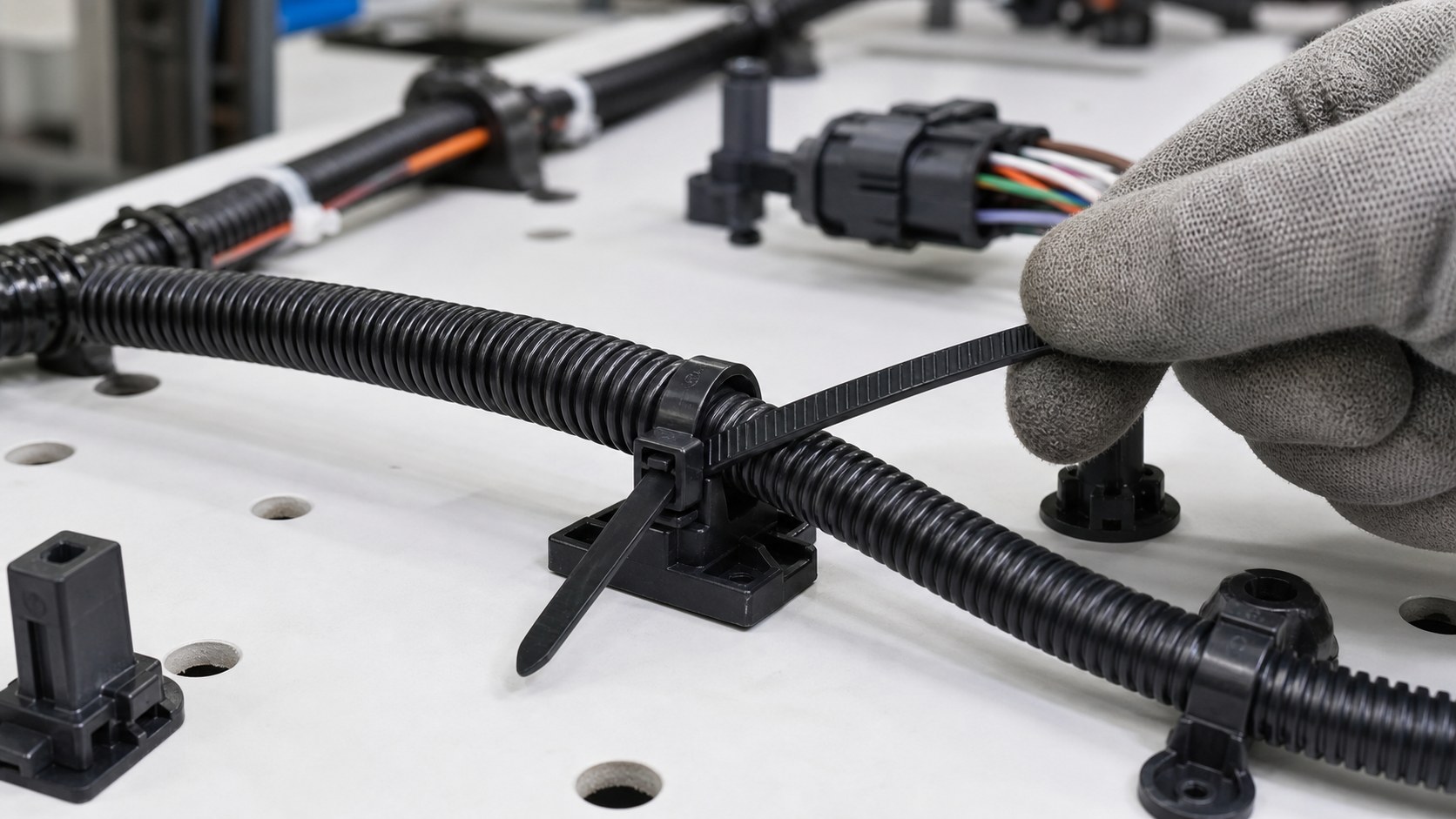
- Apply controlled tension: secure the loom without crushing insulation or flattening corrugated conduit.
- Trim safely: cut the tail flush enough to avoid sharp edges but without damaging the locking head.
- Inspect spacing: verify bend radius, connector clearance, tie head direction and rework access.
Field Scenario
Machinery Harness Route With Corrugated Loom and Mounted Tie Points
Application: Industrial machine or vehicle equipment bay with repeated harness runs, connectors, brackets and service inspection points.
Problem: Using only loose wrap ties can leave long unsupported runs, inconsistent tie spacing and poor access around connectors.
Solution: Combine standard PA66 ties with push-mount, fir-tree, mounting bases and heat-stabilized material where the route requires fixed support or warmer-zone durability.
Result: The harness route becomes easier to inspect, less likely to move against metal edges, and clearer for maintenance teams.
Why Choose CableTiesMFG
Harness-Specific Range
Standard, push-mount, fir-tree, screw-mount, marker, releasable and heat-stabilized tie options.
Route-Based Advice
Selection support by bundle diameter, mounting hole, bracket style, temperature and assembly method.
Production Packaging
Bulk cartons, counted bags, color packs, sample kits and private-label supply options.
Documentation Support
Material information, tensile data, compliance statements and project selection records.
FAQ
What cable tie is best for wire harness assembly?
For general harness board assembly, standard PA66 nylon ties are common. For fixed panel holes or brackets, use push-mount, fir-tree, clip or screw-mount cable ties.
Can one cable tie type be used across the full harness?
Usually not for complex harnesses. Different zones may require standard ties, mounted ties, heat-stabilized ties, releasable ties or marker ties.
How do I avoid damaging wire insulation?
Use the correct tie width and length, apply controlled tension, avoid sharp metal edges, preserve bend radius and trim tails safely.
What information should I send for a wire harness RFQ?
Send bundle diameter, drawing route, mounting hole size, panel thickness, temperature zone, expected quantity, packaging need and documentation requirements.
Quality and Documentation
- Material data sheet
- Tensile strength data
- RoHS / REACH support
- Heat-stabilized options
- Sample approval support
Contact Us
Send your harness drawing, bundle diameter, mounting hole size, panel thickness, temperature zone, packaging requirement and expected quantity. We will recommend a wire harness cable tie set for your application.