Marine Solution
Marine Cable Tie Solutions for Shipboard, Offshore and Coastal Cable Management
Corrosion-resistant cable tie and mounting solutions for ship engine rooms, deck equipment, cable trays, offshore platforms, coastal facilities, and wet or salt-spray environments.
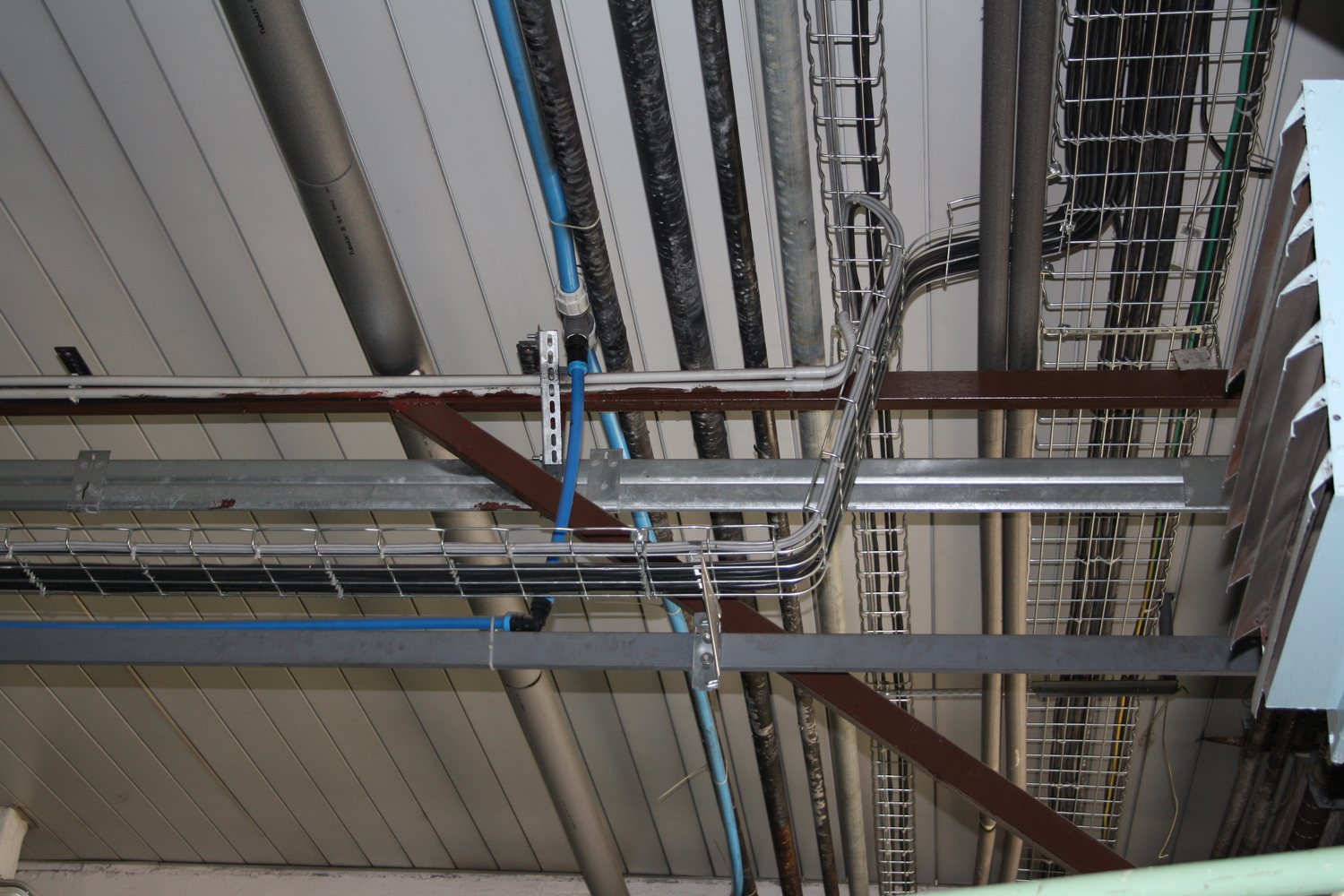
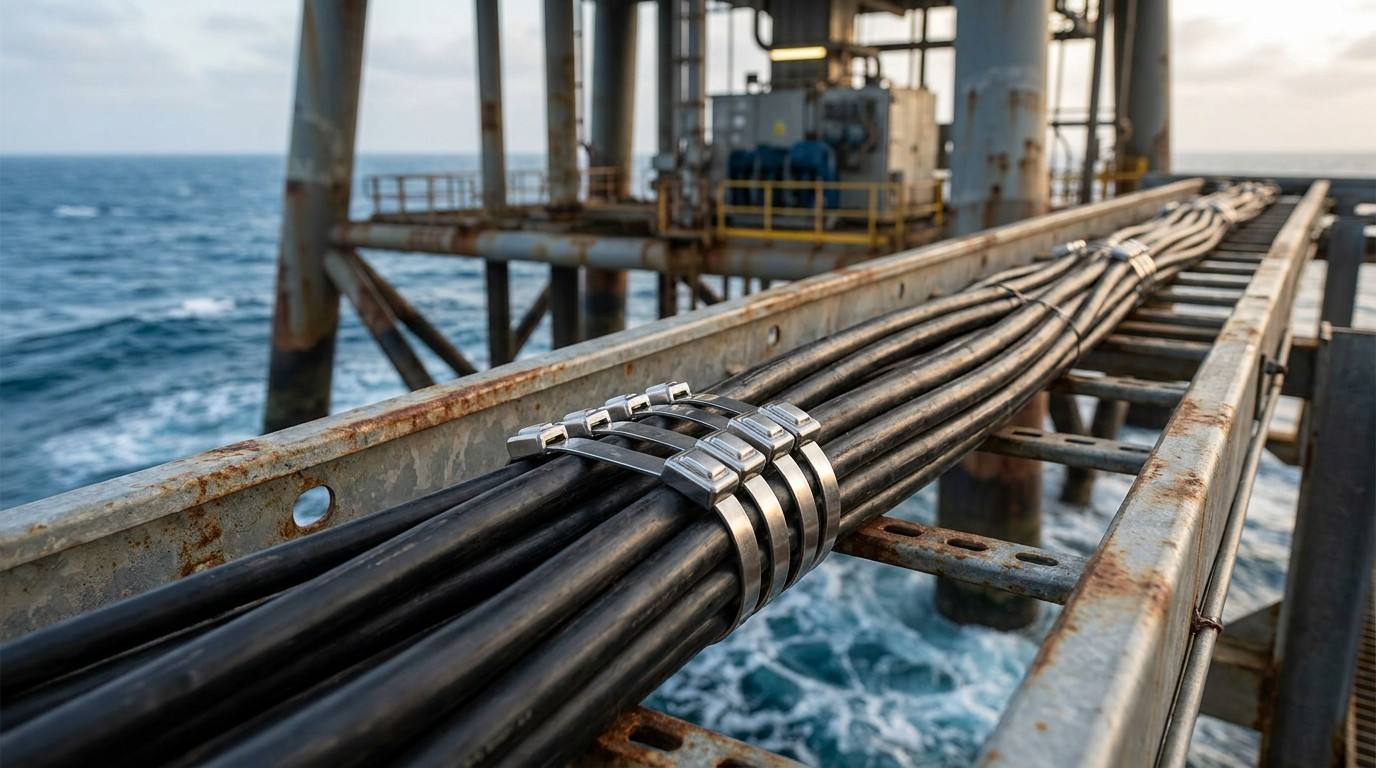
Application reference: marine cable tray routes need organized spacing, corrosion-aware materials, and inspection access.
Procurement Snapshot
Best Fit Buyers
Shipyards, marine electricians, offshore contractors, yacht builders, port facilities, coastal infrastructure teams, and marine maintenance distributors.
Main Decision Factors
Salt spray, chloride exposure, vibration, cable tray type, fire and smoke requirements, classification documentation, and service-life target.
Documents to Request
Material grade statement, tensile data, salt-spray/corrosion guidance, RoHS/REACH, batch records, and available class approval documents.
Common Order Format
Marine project cartons, maintenance kits, SS316 tie assortments, coated stainless options, or distributor/private-label packaging.
Industry Introduction
Marine and offshore cable routes pass through wet, vibrating, confined, and salt-laden environments. Cable ties are used on cable trays, pipe supports, deck equipment, control panels, communication lines, lighting routes, and maintenance areas.
In these environments, standard indoor nylon ties or low-grade metal fasteners can fail because of UV exposure, humidity, chloride attack, crevice corrosion, and continuous vessel movement. Marine cable tie selection should start from the exposure zone, not from price alone.
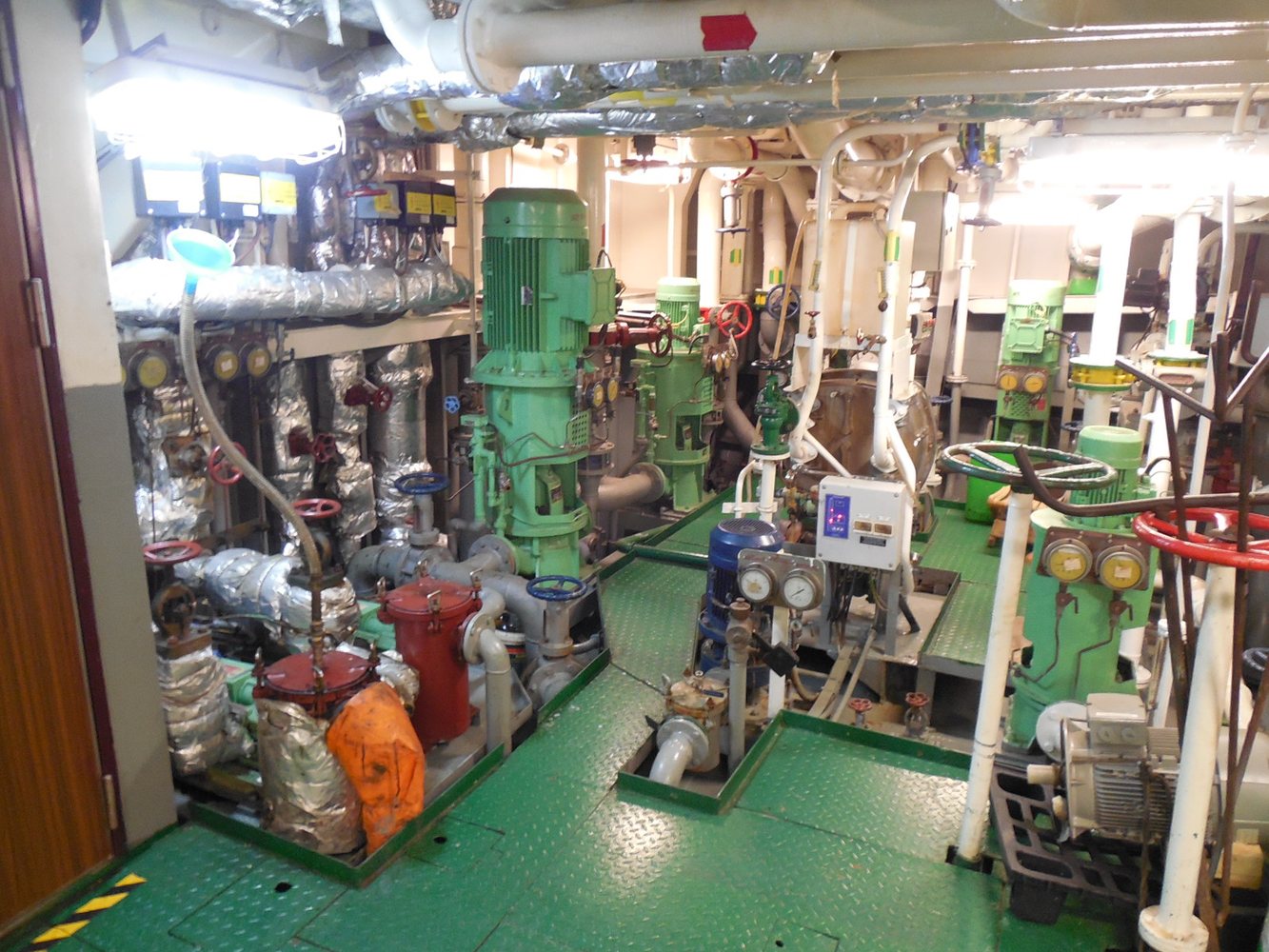
Ship engine-room reference: dense equipment spaces need durable cable management matched to humidity, vibration, heat, and access requirements.
Industry Pain Points
Salt-Spray Corrosion
Chloride-rich air can cause pitting and crevice corrosion on unsuitable stainless or plated fasteners.
Vibration Loosening
Engine rooms, deck equipment, and offshore platforms require fasteners that stay secure under vibration.
Wet Cable Trays
Moisture, condensation, and oil mist can accelerate aging and make cable inspection more difficult.
Slow Maintenance
Poorly organized cable routes increase inspection time and make replacement work harder in confined spaces.
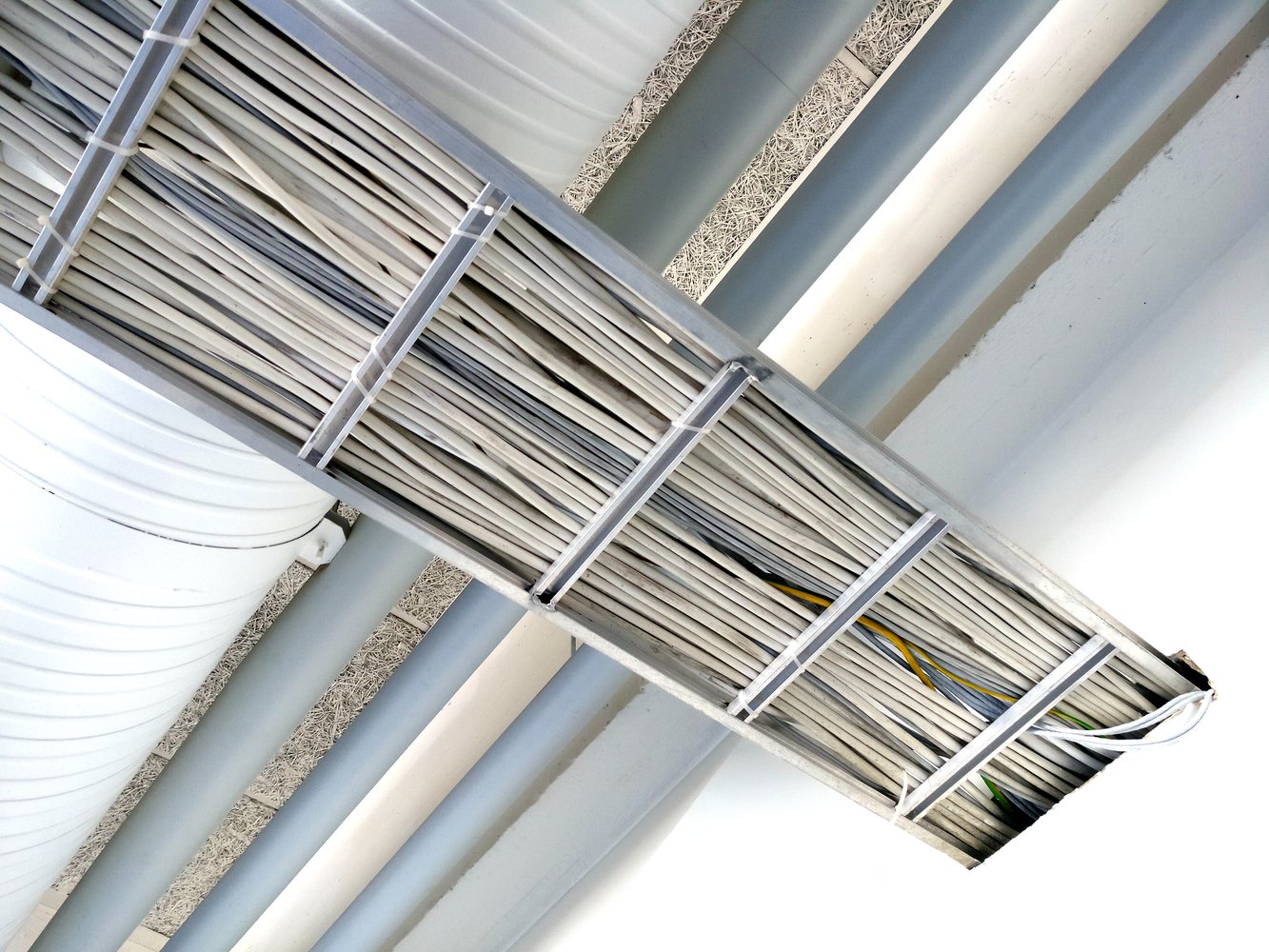
Cable-tray context: tray style, cable weight, support spacing, and service access determine whether stainless, coated stainless, or nylon options are suitable.
On-Site Problem Analysis
Marine cable tie failures usually come from using one general-purpose fixing method across all zones. Engine rooms, deck routes, bridge electronics, offshore platforms, and protected cabinets have different exposure levels.
- Engine room: needs vibration resistance, temperature tolerance, and oil/humidity durability.
- Deck and topside: needs UV, salt spray, wind, and rain resistance.
- Offshore platforms: often require SS316 or coated stainless ties for long-life severe exposure.
- Cabinets and protected interiors: may use UV-stabilized nylon or Nylon 12 where metal is not required.
Recommended Solution
We recommend a zone-based marine cable fixing system. Use 316 stainless steel cable ties for salt-spray, offshore, topside, and severe-duty exposure. Use coated stainless steel ties where cable jacket protection or galvanic contact control is important. Use UV-stabilized nylon or Nylon 12 only in protected or lower-exposure areas where project rules allow non-metallic ties.
SS316 Severe Duty
For offshore, coastal, deck, splash-zone, and chloride-heavy environments.
Coated Stainless
For cable jacket protection, pipework, vibration routes, and metal-contact control.
Marine Nylon
For protected cabinets, interiors, temporary routing, and non-metallic requirements.
Mounting Accessories
For tray spacing, cable grouping, identification, and service-friendly routing.
Solution Selector
Use this decision table before requesting samples or quotations. It converts marine exposure conditions into a practical product starting point.
| Field Condition | Recommended Choice | When to Use |
|---|---|---|
| Offshore or salt-spray exposure | CT-MARINE-SS316 stainless steel cable tie | Use for deck, topside, splash-zone, offshore, and coastal cable tray routes. |
| Cable jacket protection required | CT-MARINE-COATED coated stainless steel tie | Use when metal edges, cable jacket abrasion, or galvanic contact must be controlled. |
| Protected interior cabinet routing | CT-MARINE-N12 or UV nylon tie | Use for protected, lower-exposure interiors where non-metallic ties are allowed. |
Product Combination
Product images below are used for material and part identification. Marine field installation should be confirmed against cable diameter, tray geometry, exposure zone, and project documentation requirements.
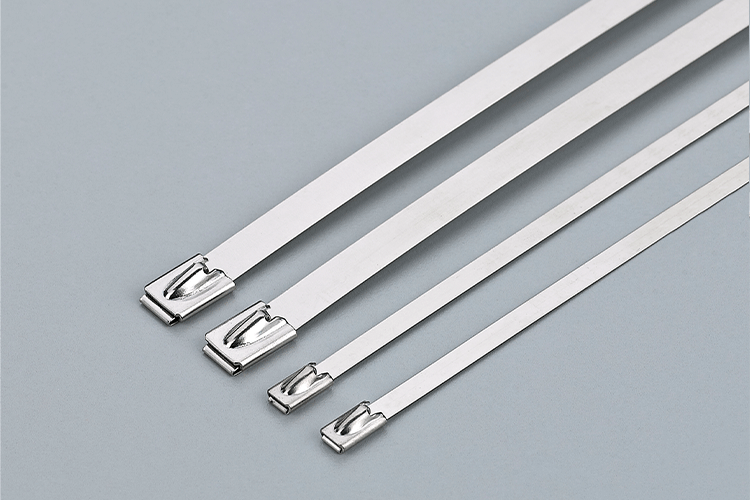
316 Stainless Steel Tie
Baseline choice for offshore, deck, coastal, and severe marine exposure.
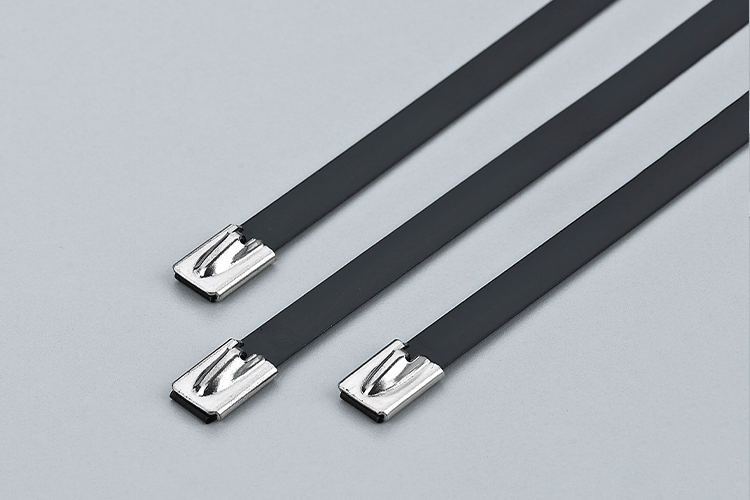
Coated Stainless Tie
For jacket protection, metal-contact control, and harsh cable tray routes.
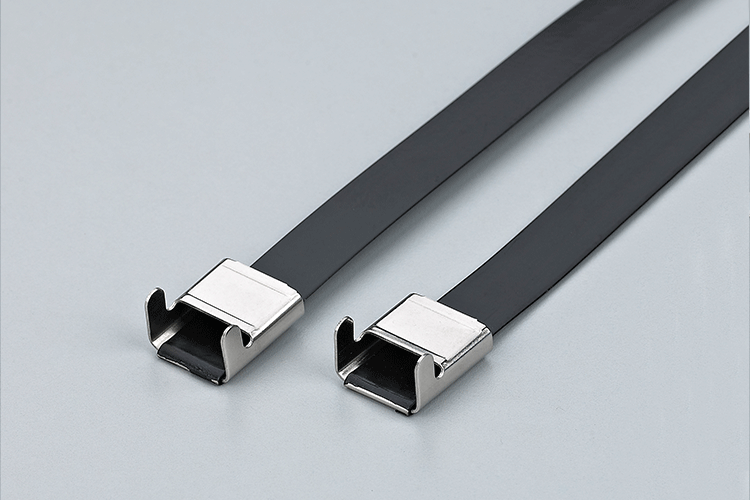
Buckle Detail
For procurement teams checking locking style, coating, and metal construction.
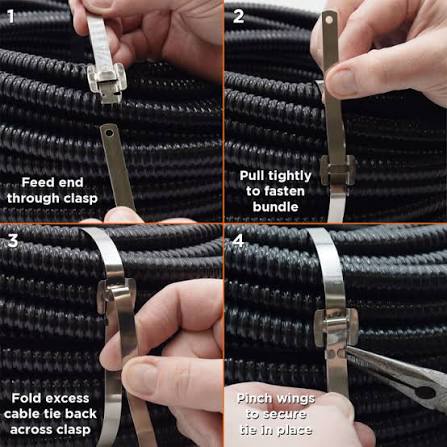
Installation Set
For installers using stainless ties around conduit, cable bundles, or pipework.
| Application Zone | Recommended Products | Purpose |
|---|---|---|
| Deck / topside | 316 stainless steel ties, coated stainless ties | Resist salt spray, UV, wind, and rain exposure |
| Engine room | SS316 ties, coated ties, high-temperature options | Handle vibration, heat, oil mist, and maintenance access |
| Cable tray routes | SS316 ties, mounts, identification ties | Keep cables grouped, inspectable, and service-friendly |
| Protected interiors | Nylon 12 / UV nylon ties where allowed | Reduce metal use in lower-exposure zones |
Product Parameters
| Product Type | Material | Performance Focus | Typical Use |
|---|---|---|---|
| Marine stainless steel tie | 304 / 316 stainless steel | Corrosion, vibration, and mechanical strength | Deck, engine room, cable tray, offshore platform |
| Coated stainless steel tie | Stainless steel with protective coating | Jacket protection and reduced metal contact | Pipework, cable tray, equipment routes |
| Marine nylon tie | Nylon 12 / UV-stabilized PA options | Moisture and UV resistance in protected zones | Cabinets, interiors, lower-exposure areas |
| Mounting accessory | Nylon / stainless options | Controlled spacing and installation repeatability | Tray, panel, cabinet, and bracket routes |
Final selection should consider chloride exposure, cable diameter, tray profile, vibration level, service temperature, classification requirements, and inspection access.
Recommended SKU Set
| Suggested SKU | Product Role | Typical Spec Direction | Recommended Use |
|---|---|---|---|
| CT-MARINE-SS316 | Severe-environment tie | 316 stainless steel, ball-lock or self-locking style | Offshore, deck, salt-spray, splash-zone routes |
| CT-MARINE-COATED | Cable protection tie | Coated stainless steel, selected length and width | Pipework, jacket-sensitive cables, equipment routes |
| CT-MARINE-N12 | Non-metallic marine tie | Nylon 12 / UV-stabilized option | Protected interior and cabinet cable routing |
| CT-MARINE-KIT | Maintenance kit | Mixed SS316 ties, coated ties, mounts, labels | Shipyard, offshore maintenance, and distributor supply |
Installation Steps
- Classify the route: identify engine room, deck, offshore, cable tray, cabinet, or protected interior use.
- Choose material: match SS316, coated stainless, or marine nylon to salt spray, vibration, and cable jacket risk.
- Set spacing: keep consistent support intervals and avoid loose cable movement in tray routes.
- Control contact: avoid sharp tray edges and use coated ties or protection where jacket abrasion is possible.
- Lock and trim: pull to controlled tension, lock the clasp correctly, and trim sharp excess safely.
- Document inspection: record material grade, batch, route zone, and maintenance access notes.
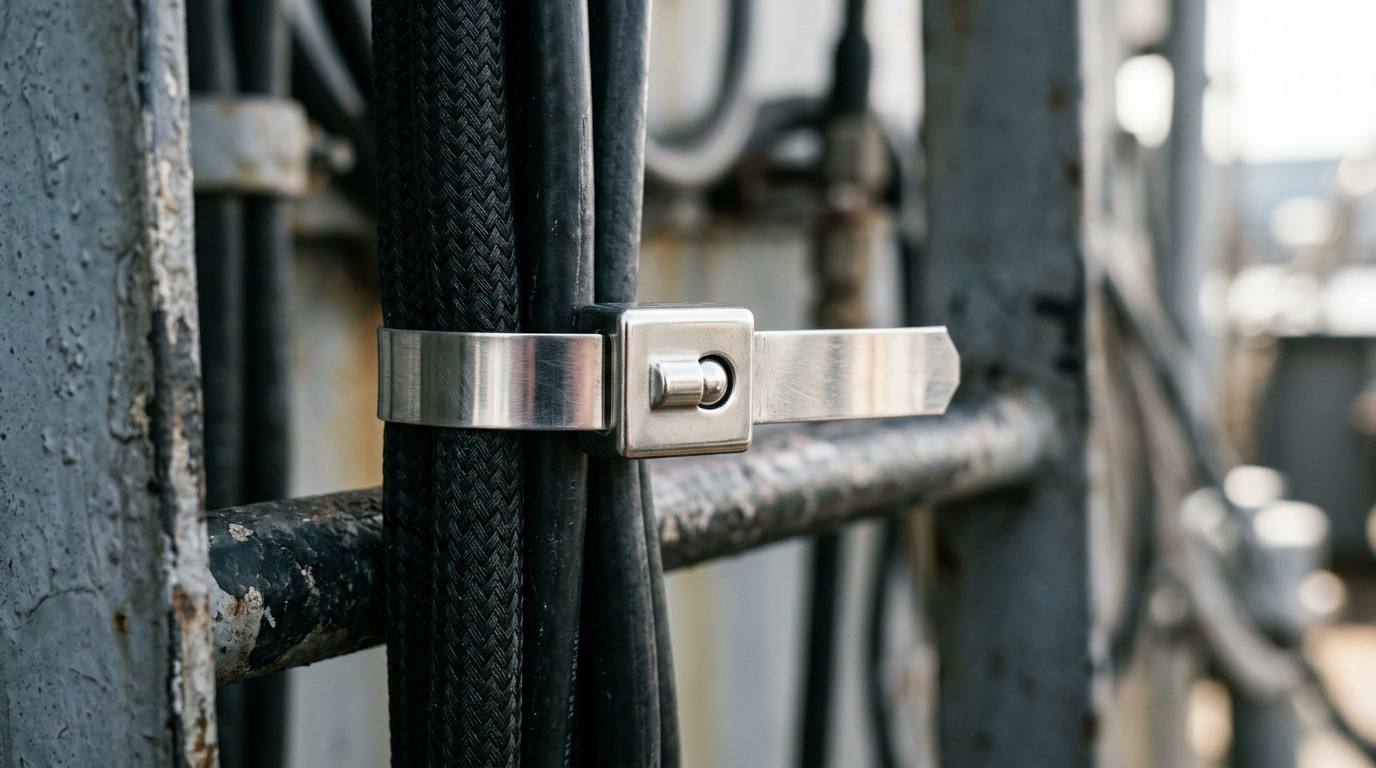
Installation reference: stainless steel ties should form a continuous band around the bundle and lock at the clasp with controlled tension.
Field Case
Standardizing Cable Tie Selection for a Marine Cable Tray Route
Application: Offshore and shipboard cable tray management for cable and pipe routes.
Problem: Mixed indoor ties and low-grade metal ties created inconsistent route quality, uncertain corrosion resistance, and slower inspection work.
Solution: CableTiesMFG recommended SS316 ties for exposed and wet routes, coated stainless ties near jacket-sensitive cables, and marine nylon options only for protected interior areas.
Result: The project created a clearer material rule by zone, improved cable route consistency, and made future maintenance checks easier.
Why Choose CableTiesMFG
Marine Material Options
SS316, SS304, coated stainless, Nylon 12, UV nylon, mounts, labels, and installation accessories.
Zone-Based Support
Recommendations by engine room, deck, offshore, cable tray, cabinet, and protected interior route.
Documentation Ready
Material statements, batch records, RoHS/REACH, tensile data, and corrosion guidance for procurement review.
One-Stop Supply
Cable ties, cable glands, heat shrink tubing, clips, mounts, markers, and cable protection accessories.
FAQ
What cable ties are best for marine environments?
For exposed marine, offshore, coastal, and salt-spray environments, 316 stainless steel cable ties are usually the first choice. Protected interiors may use Nylon 12 or UV-stabilized nylon if project rules allow non-metallic ties.
Is 304 stainless steel enough for marine cable management?
304 stainless steel can be suitable for some protected or lower-exposure areas, but 316 stainless steel is preferred for chloride-rich, coastal, splash-zone, or offshore environments because of better pitting resistance.
When should coated stainless steel ties be used?
Use coated stainless steel ties where cable jacket protection, abrasion control, or reduced direct metal contact is important.
Can you provide marine cable tie kits?
Yes. CableTiesMFG can recommend mixed kits with SS316 ties, coated stainless ties, protected-zone nylon ties, mounts, labels, and documentation for marine projects.
Quality & Documentation
Marine projects often need documentation that supports procurement, installation, inspection, and future maintenance records.
- Material grade statement
- Tensile and dimensional data
- Salt-spray guidance
- RoHS / REACH statement
- Batch and packing records
RFQ Information Needed
Application Zone
Engine room, deck, offshore platform, coastal site, cable tray, cabinet, or maintenance kit.
Technical Needs
Cable diameter, bundle weight, tray profile, exposure level, vibration, temperature, coating need, and documentation requirement.
Commercial Details
Quantity, sample request, packaging, delivery window, private label needs, and target service life.
Image Use Note
Marine application images on this page are used as shipboard, cable tray, engine-room, and offshore cable-management references. Product photos are used for product identification. These images are not presented as verified customer case photos.
Contact Us
Send us your marine route type, cable diameter, salt-spray exposure, tray profile, material requirement, documentation needs, and estimated quantity. Our team will recommend the right marine cable tie combination for your project.