Problem Solution
Cable Wear Prevention Solutions for Abrasion and Edge Protection
Reduce cable jacket damage caused by sharp metal edges, vibration, tight bends, and poor support spacing by combining cable ties, mounting bases, edge guards, split loom, and correct route planning.
Application Introduction
Where Cable Wear Starts
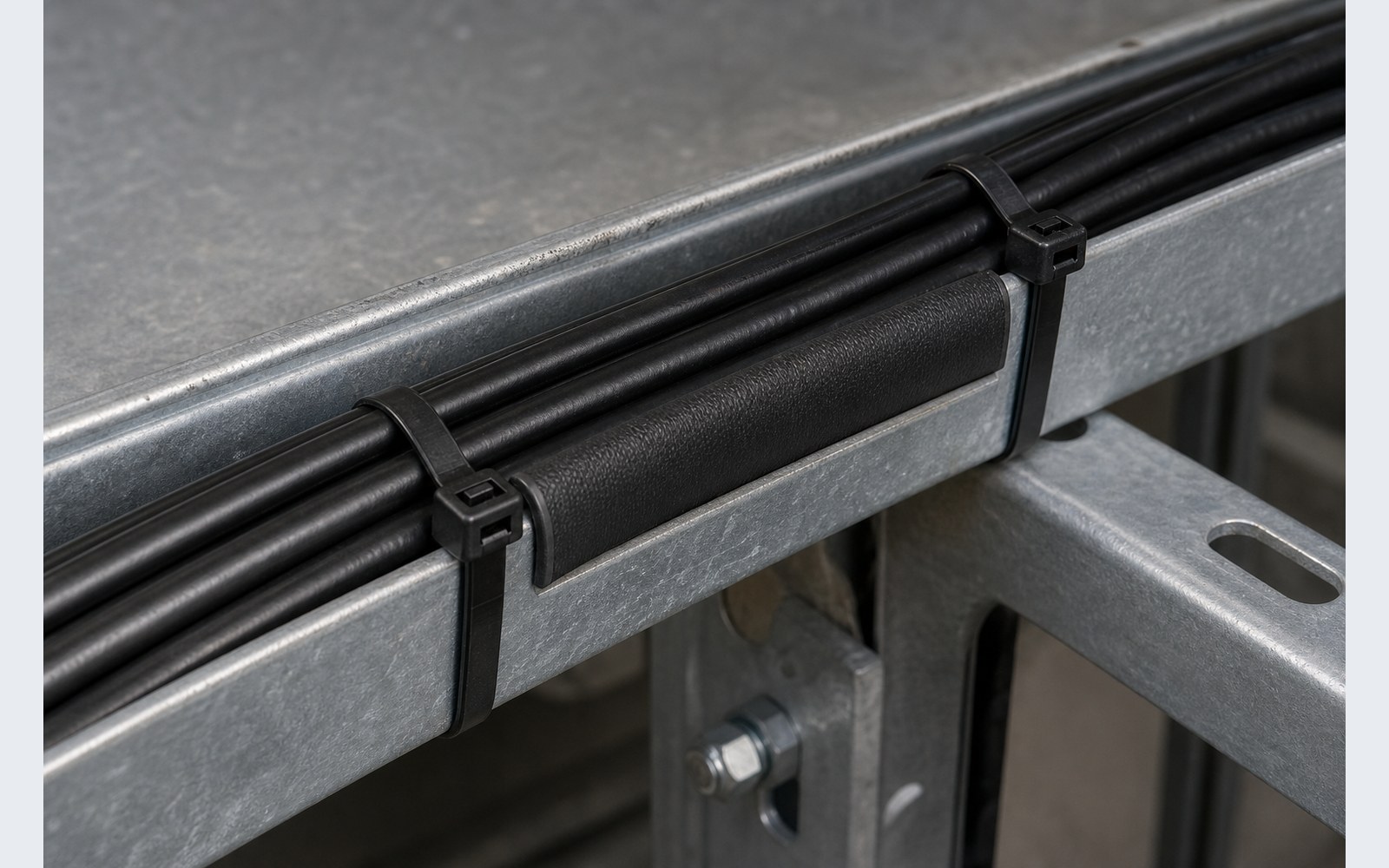
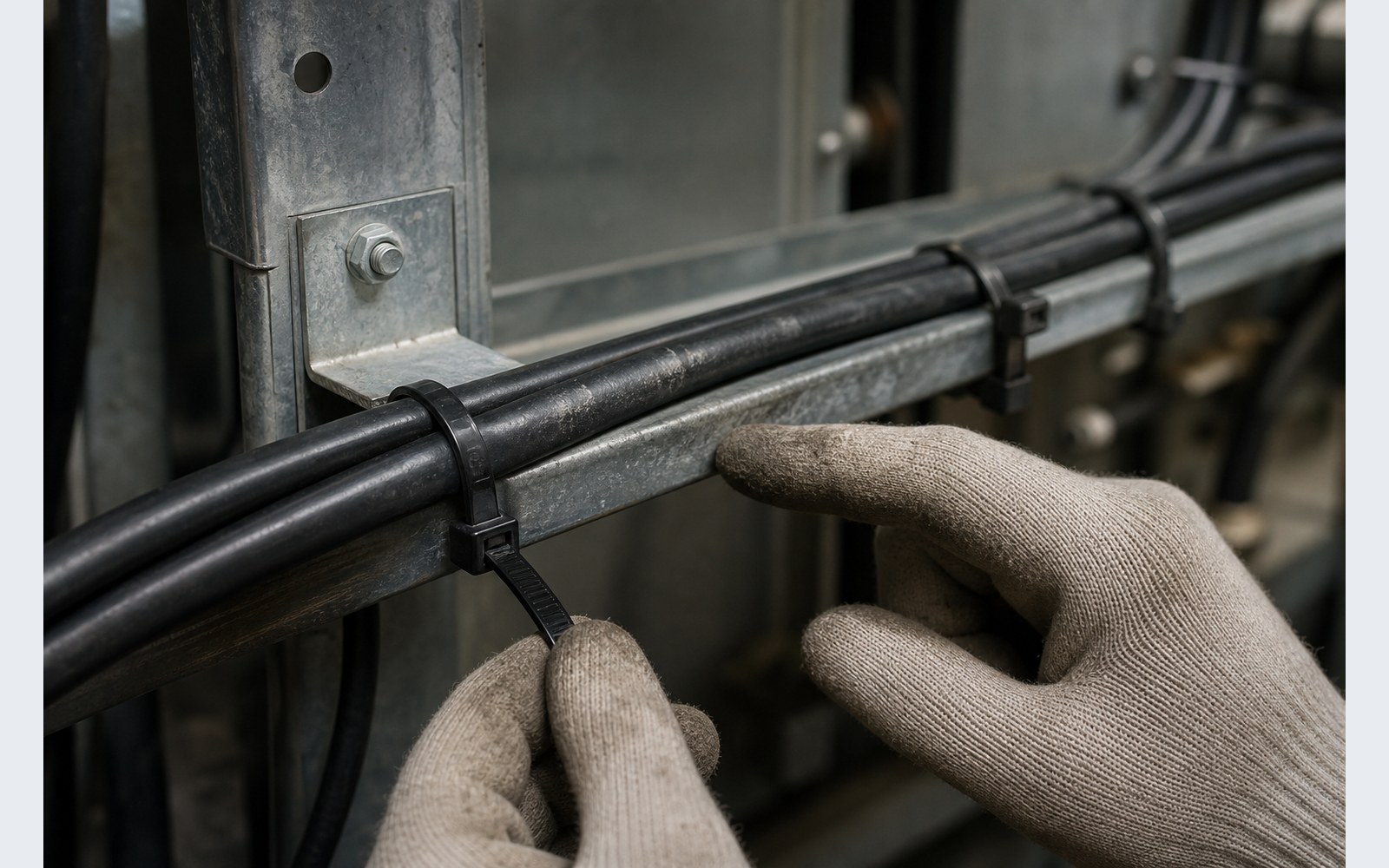
Cable wear often begins at a single contact point: a punched metal opening, tray sidewall, bracket edge, frame corner, or unsupported bend. At first the cable may only show light scuffing. With vibration, heat cycling, outdoor movement, or repeated maintenance access, the jacket can wear through and expose the route to failure.
A correct solution separates three decisions: how the cable is supported, how the contact edge is protected, and which cable tie material can survive the environment.
Common Field Pain Points
Sharp Edge Contact
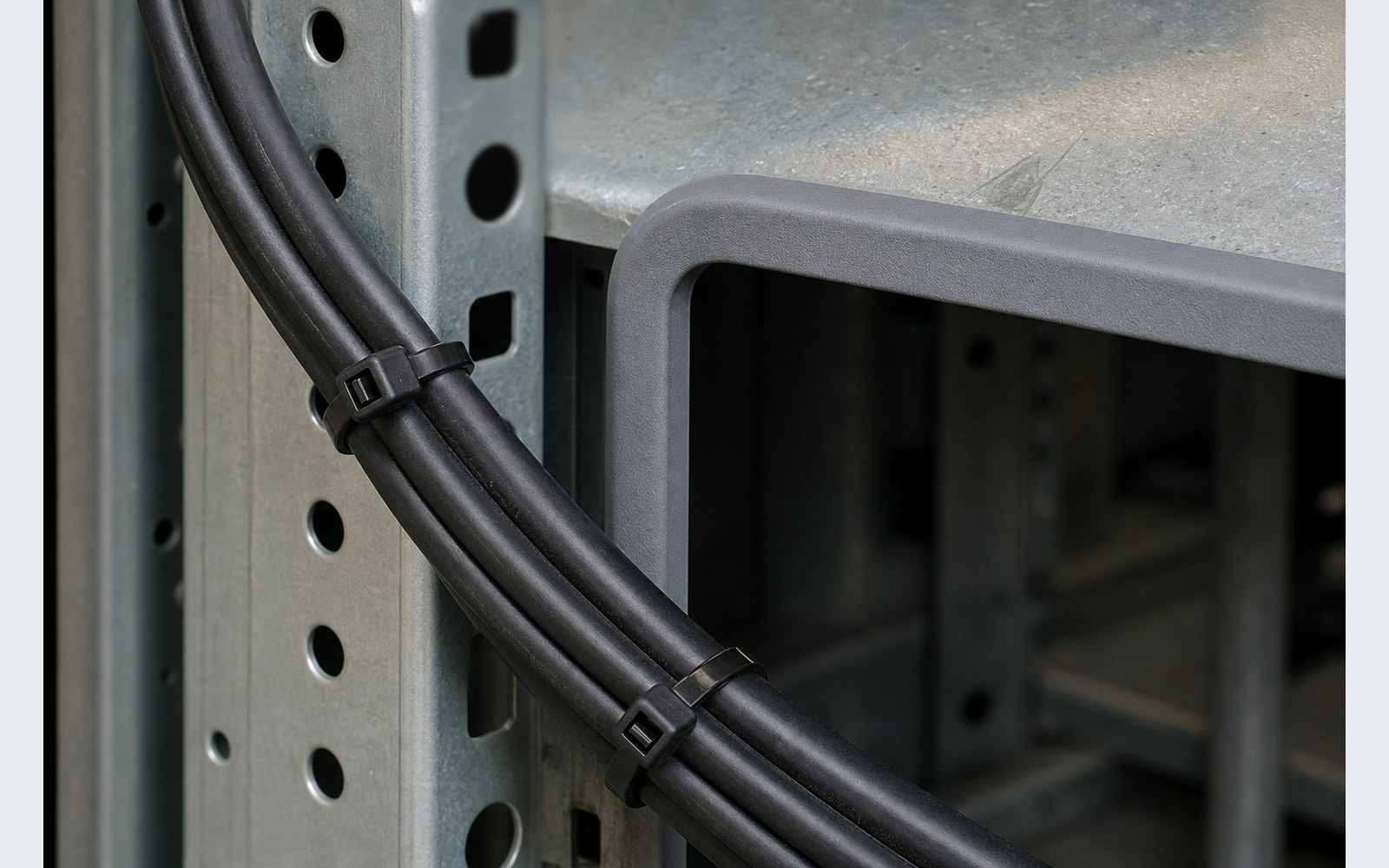
Galvanized tray lips, panel cutouts, and bracket corners can scrape cable jackets when the route is pulled tight or left unsupported.
Vibration Movement
Machines, rooftop wind, telecom towers, vehicles, and HVAC equipment can make cables rub at the same point for months.
Over-Tight Ties
Narrow or over-tightened ties can crush insulation, create pressure marks, or hold a cable against the wrong surface.
Recommended Solution
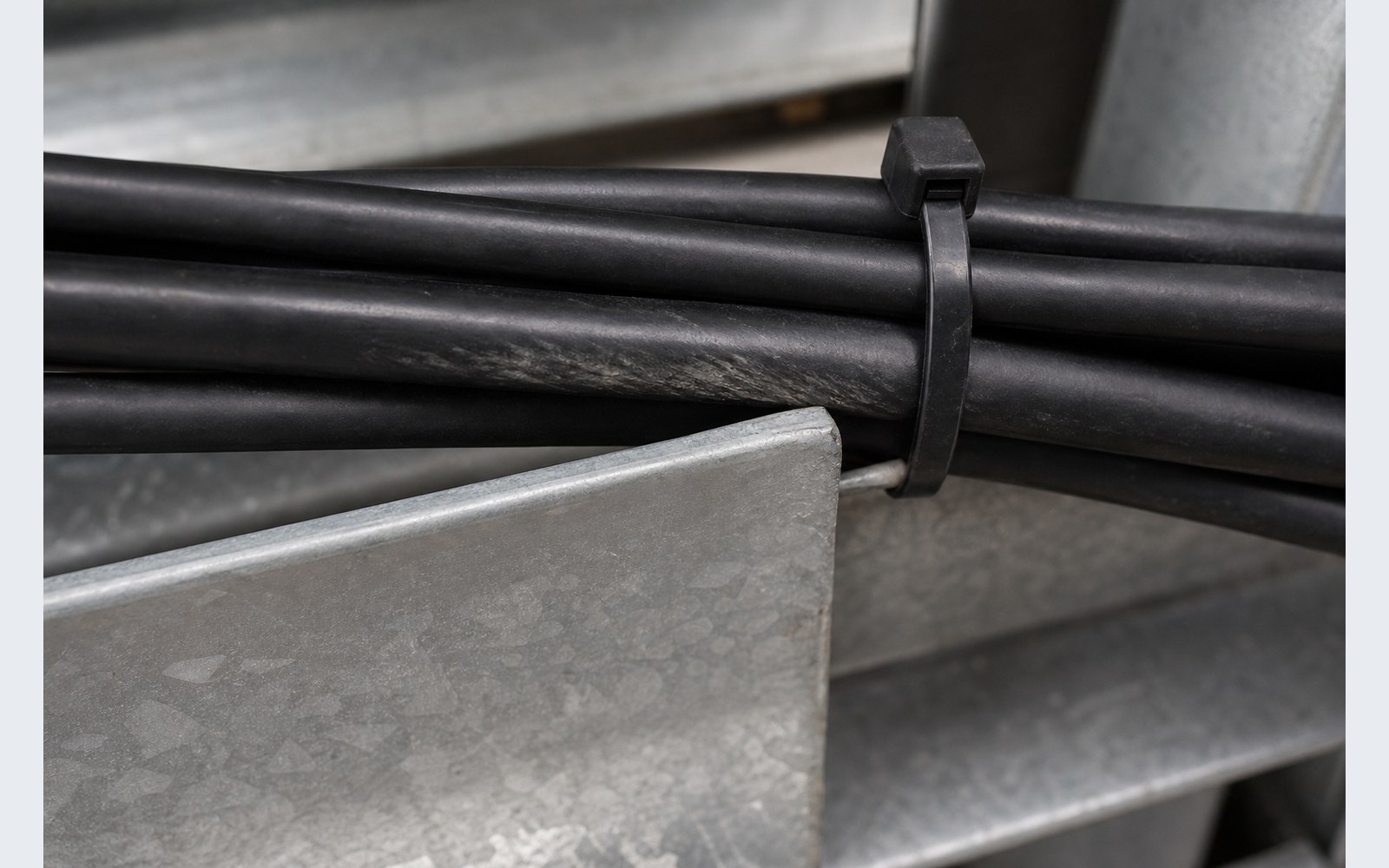
For cable wear prevention, do not rely on a stronger tie alone. Start with the rubbing point, then select the fastening system that keeps the cable path stable without crushing the jacket.
- Metal edges and cutouts: add edge guard, grommet, or protective strip before tying the cable route.
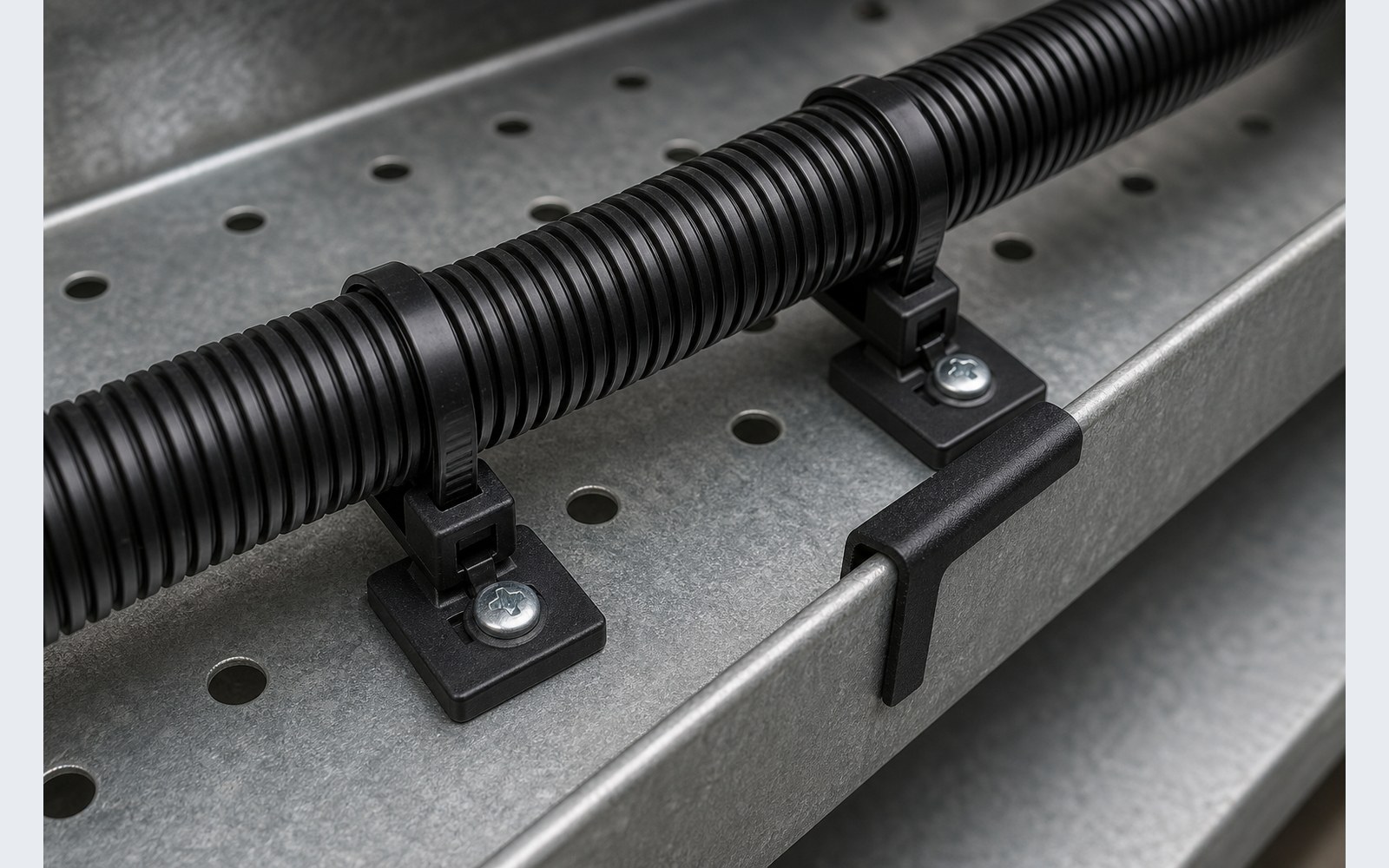
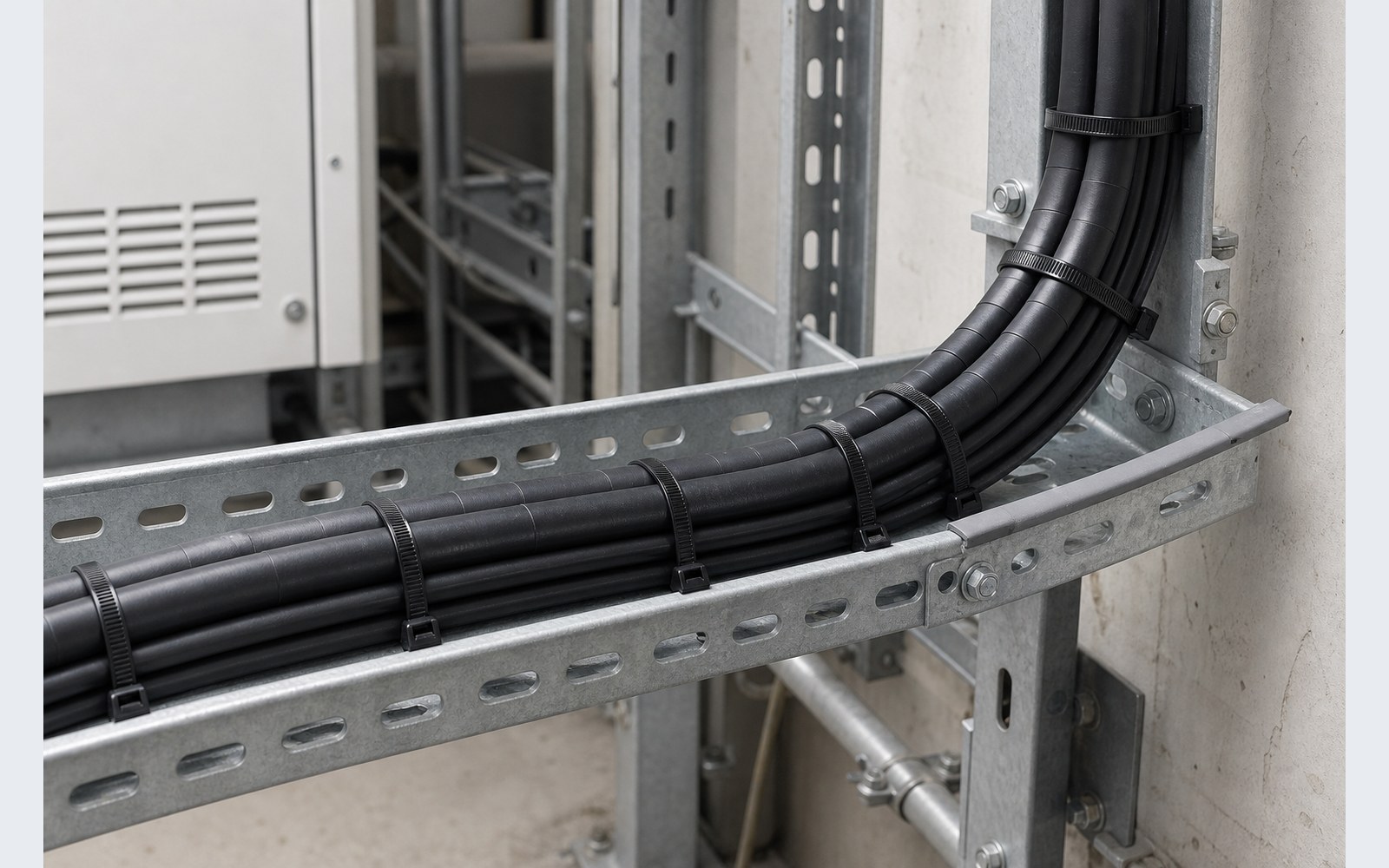
- Tray and bracket routes: use cable ties with saddle mounts, screw bases, or tray holes so the cable is held away from the edge.
- Vibration-prone routes: use proper spacing, wider ties, split loom, and flexible strain relief near bends.
- Outdoor, hot, chemical, or coastal exposure: match the cable tie material to UV, temperature, chemical, and corrosion risk.
Product Combination
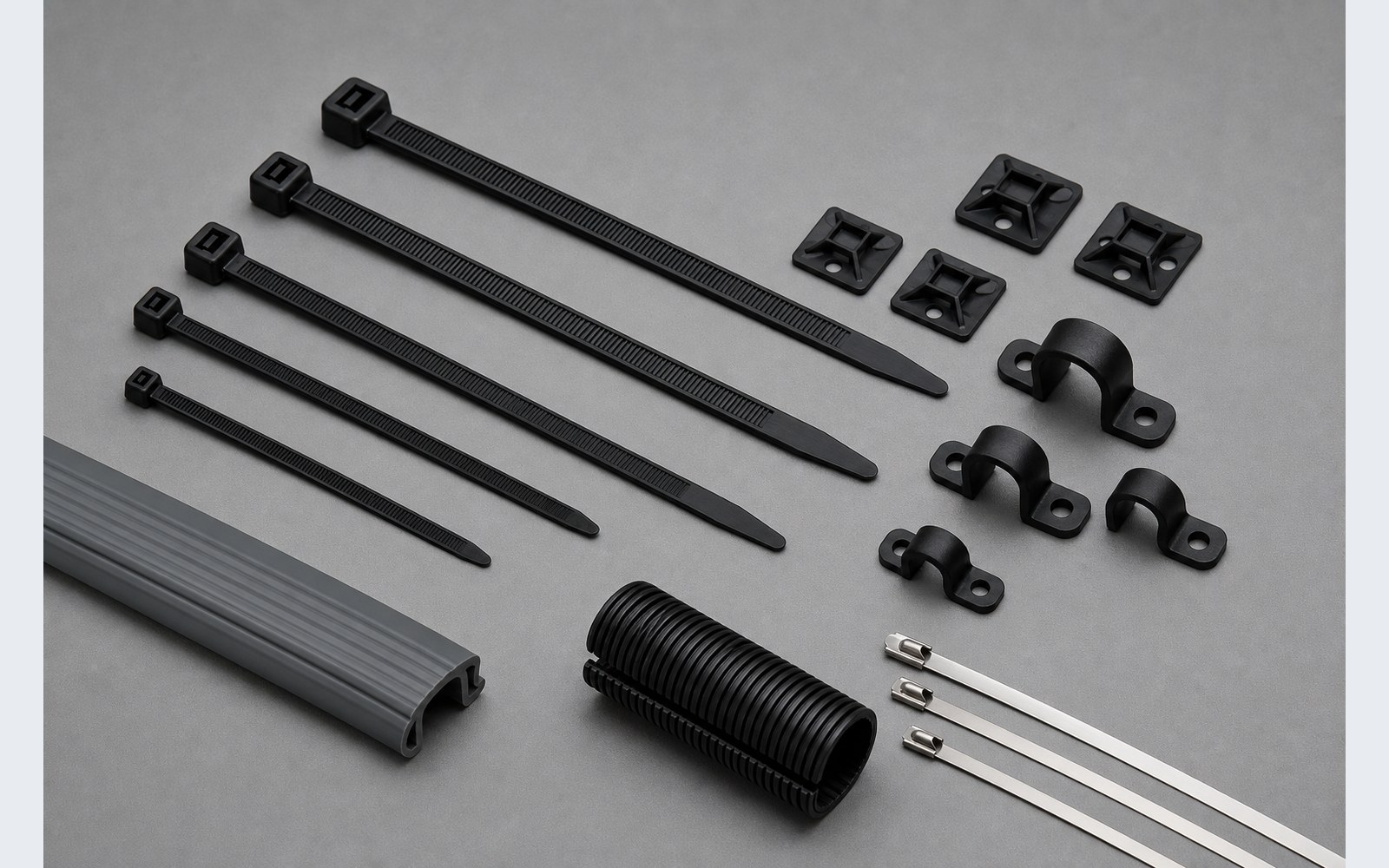
The product set depends on the contact point and environment. For most cable-wear projects, combine fastening products with protective routing accessories.
UV Nylon Ties
For outdoor cable routes, rooftop installations, telecom brackets, and other sunlight-exposed areas.
Mounting Bases
For fixed tie points on tray sides, equipment panels, rails, and structural frames.
Edge Protection
For punched holes, cut metal, tray lips, and places where the cable cannot avoid contact.
Stainless Steel Ties
For high-temperature, chemical, marine, or fire-safety environments where nylon is not enough.
Product Parameters To Confirm
Choosing a cable tie for abrasion prevention is about more than length. Confirm route pressure, edge condition, bend radius, and the protection layer before finalizing the tie.
| Parameter | What To Check | Why It Matters |
|---|---|---|
| Tie width | Standard, wide, or heavy-duty tie contact area | Wider ties reduce local pressure on the cable jacket. |
| Tie length | Cable diameter plus sleeve, mount, tray, or support path | The tie must close naturally without forcing a sharp bend. |
| Material | PA66, UV PA66, heat-resistant nylon, stainless steel | Material must survive the site environment after installation. |
| Support method | Tray holes, screw bases, saddle mounts, edge clips, or brackets | The tie must control position, not simply compress the bundle. |
| Protection layer | Edge guard, split loom, sleeve, grommet, or spiral wrap | The cable jacket should not be the part touching the abrasive edge. |
Installation Steps
- Trace the route and mark every point where the cable touches a sharp edge, frame opening, bracket, or moving surface.
- Add edge guard, grommet, split loom, sleeve, or other protection wherever contact cannot be removed.
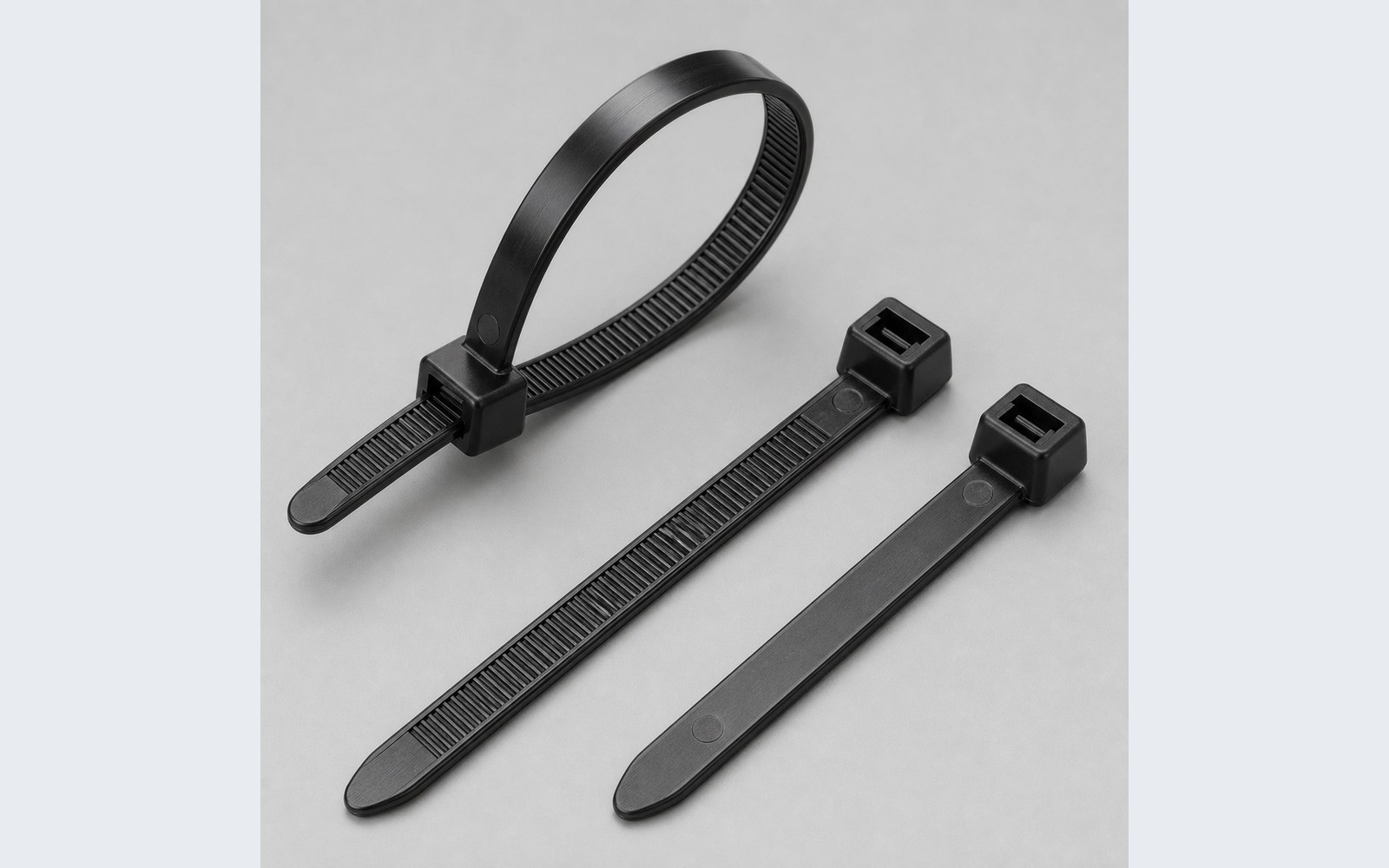
- Choose the cable tie length and width after accounting for the cable diameter, protection layer, and mounting base.
- Fasten the tie around the protected cable and support point, then tighten until stable without crushing the cable jacket.
- Trim the tail if required and recheck the route for bend radius, movement, and clearance from abrasive edges.
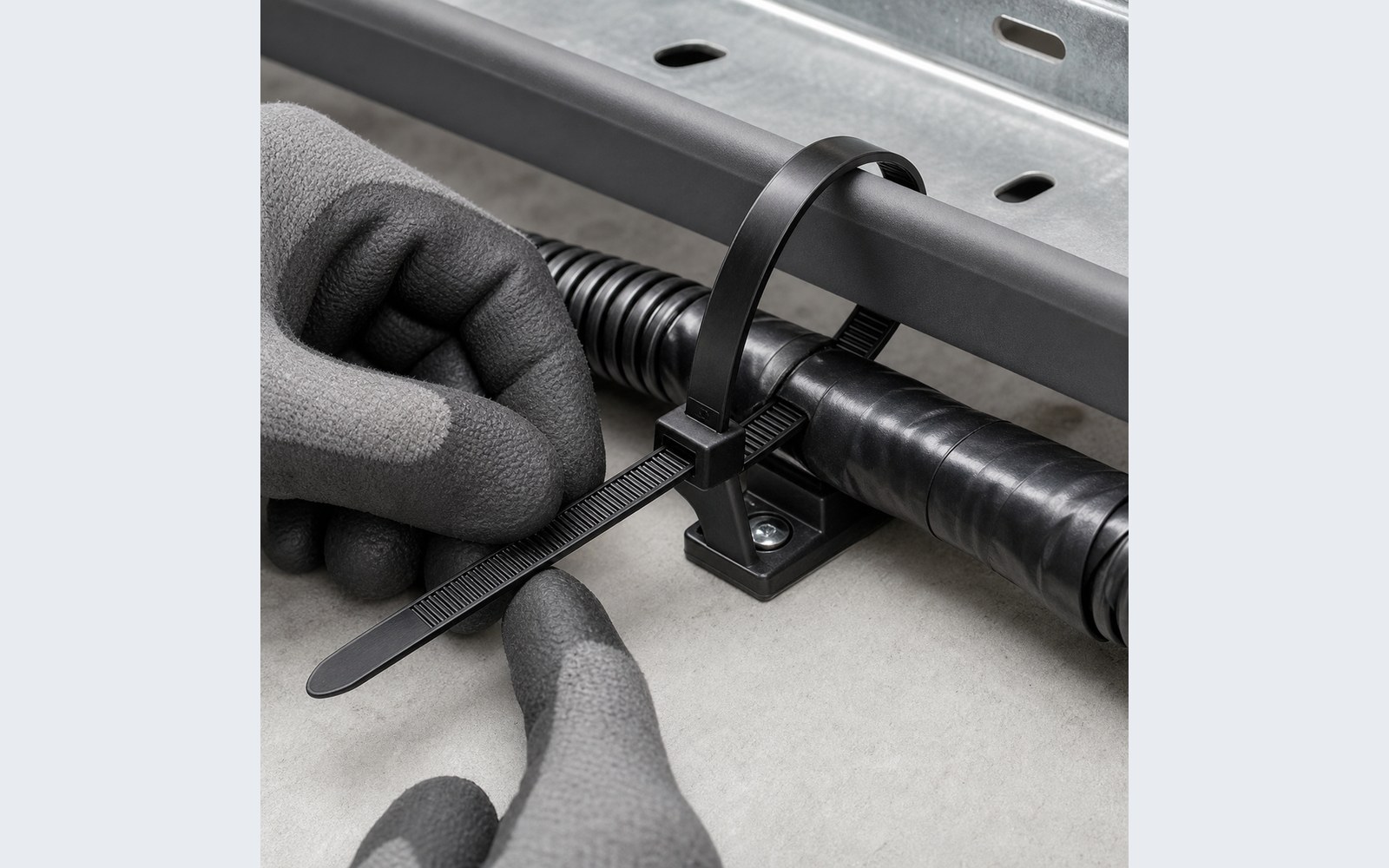
Field Scenario
From Jacket Scuffing To Protected Cable Routing
Application: industrial equipment-room cable tray and frame opening route.
Problem: cables were tied into a neat bundle but still rubbed against the tray edge and bracket corner during vibration.
Solution: CableTiesMFG recommended edge protection, split loom at the contact area, fixed mounting bases, and corrected cable tie spacing.
Result: the route became easier to inspect, cable movement was controlled, and the cable jacket no longer served as the wear surface.
Why Choose CableTiesMFG
Application Matching
We help match cable tie size, material, support spacing, and protection accessories to the actual contact point.
Complete Product Range
Options include PA66 ties, UV-resistant ties, heavy-duty ties, mounting bases, saddle mounts, edge protection, sleeves, and stainless steel ties.
Practical Installation Focus
We consider cable route, support structure, bend radius, and maintenance access so the solution can be installed in real sites.
FAQ
Can a cable tie itself cause cable wear?
Yes. A narrow or over-tightened tie can create pressure marks. Use the correct width, avoid crushing the jacket, and add sleeve or padding when the cable is sensitive.
When should I use edge guard?
Use edge guard whenever the cable route passes a cut metal edge, punched hole, tray lip, cabinet opening, or other surface that can scrape the jacket.
Are stainless steel ties always better?
No. Stainless steel ties are useful for heat, chemical, coastal, or fire-safety areas, but they must be installed with proper tension and protection to avoid jacket damage.
What information should I provide for selection?
Share cable diameter, bundle weight, route photos, edge condition, temperature, UV exposure, chemical exposure, and whether the support point is tray, rail, panel, or equipment frame.
Need Help With A Cable Wear Problem?
Send cable route photos, cable diameter, support type, and environment details. CableTiesMFG can recommend a tie, mount, and protection set for your site.