
Problem Solution
Loose Bundles Cable Tie Solutions for Stable Cable Routes
Control loose cable bundles before they sag, rub, block maintenance access, or pull on terminals. CableTiesMFG helps match cable ties, mounting bases, tie spacing, and branch separation to real cabinet, tray, and equipment routes.
Application Introduction
Where Loose Bundles Become A Site Problem
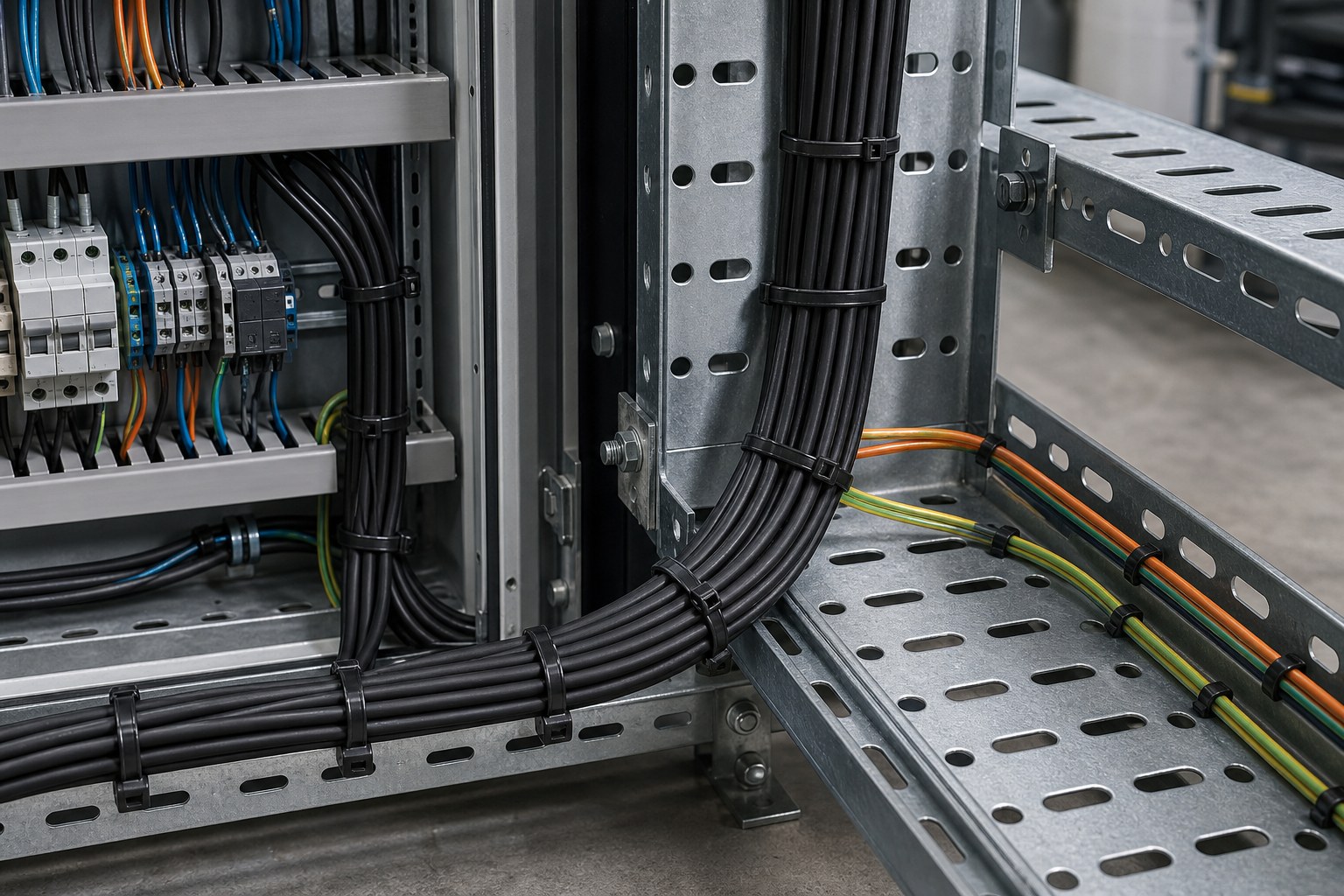
Loose cable bundles are common in control cabinets, industrial wiring panels, machine frames, cable trays, HVAC units, telecom rooms, and equipment skids. The issue is not only appearance. A bundle that is left unsupported can shift, sag, rub against metal edges, pull on terminals, or hide a future maintenance fault.
A good cable tie solution defines the route first, then fixes the bundle at practical intervals while leaving enough space for heat, bend radius, branch exits, and service access.
Common Field Pain Points
Sagging Loops
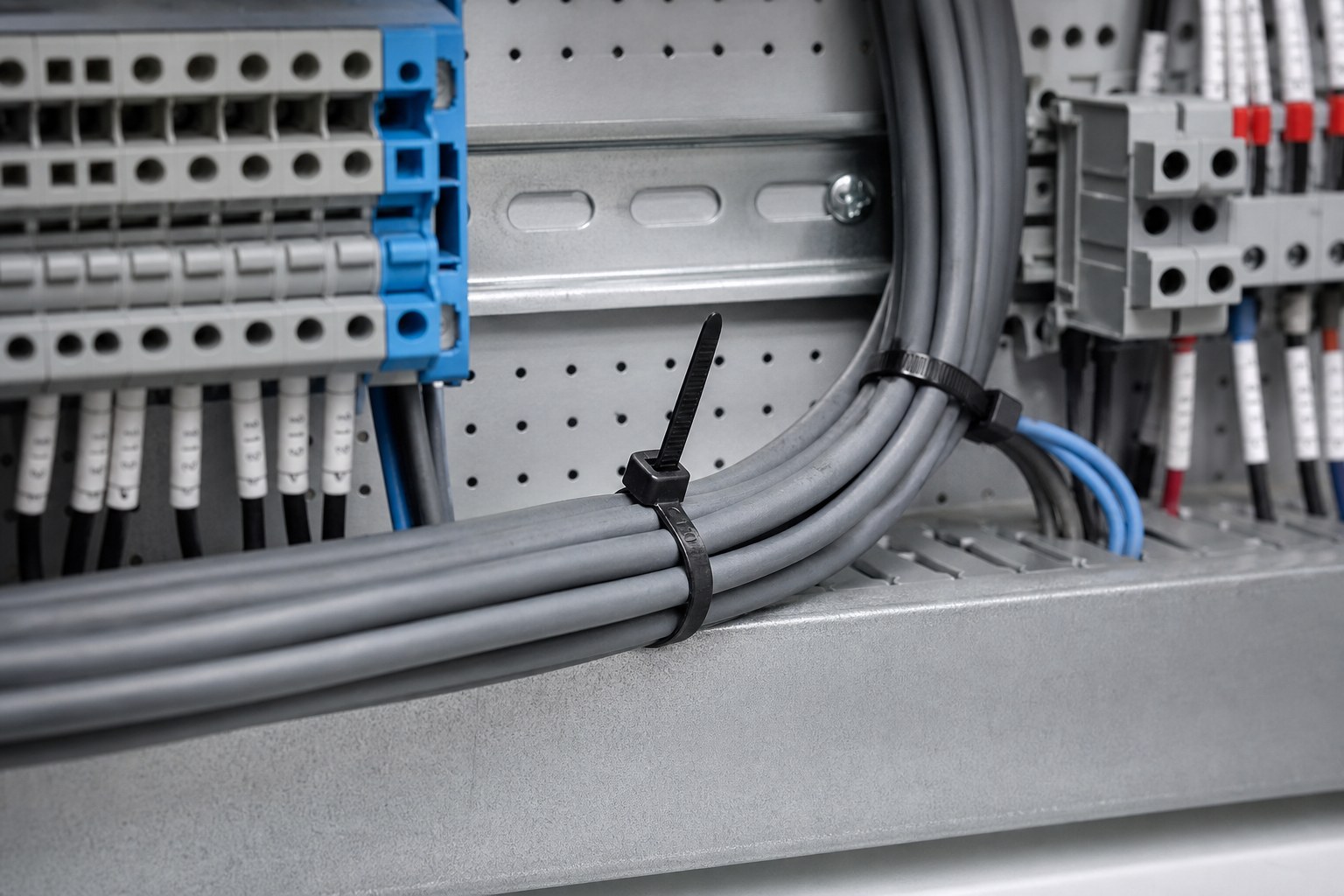
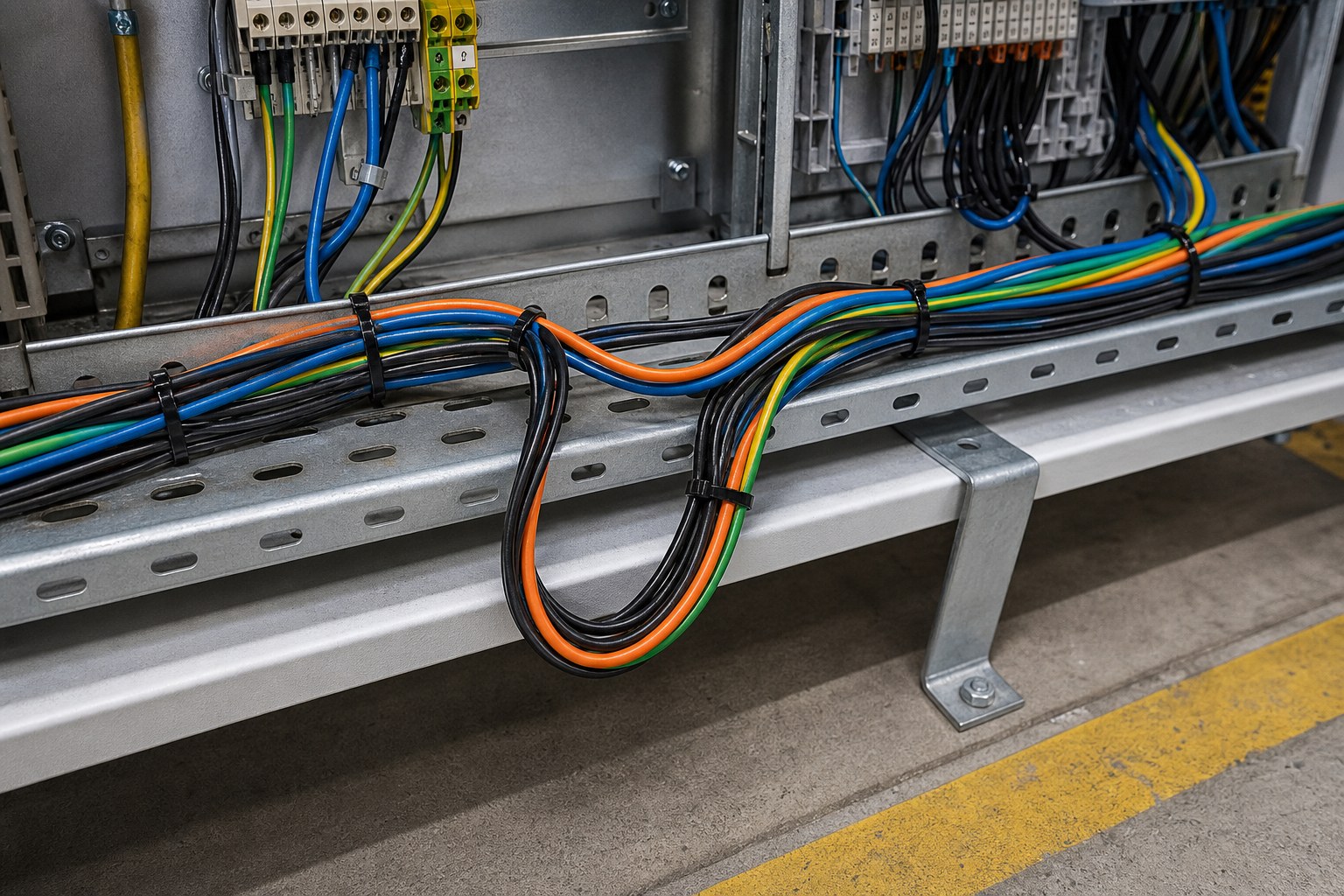
Long unsupported loops can hang below the tray or cabinet route, creating rubbing points and blocking maintenance access.
Mixed Branch Exits
Signal, power, ground, and sensor wires may cross each other when branch exits are not separated and secured.
Irregular Tie Spacing
Too few ties, uneven spacing, or wrong support points can leave part of the route controlled and another part loose.
Recommended Solution
Loose-bundle correction starts by deciding where the bundle should sit, then selecting the tie, mount, and spacing that keep it there without crushing the cables.
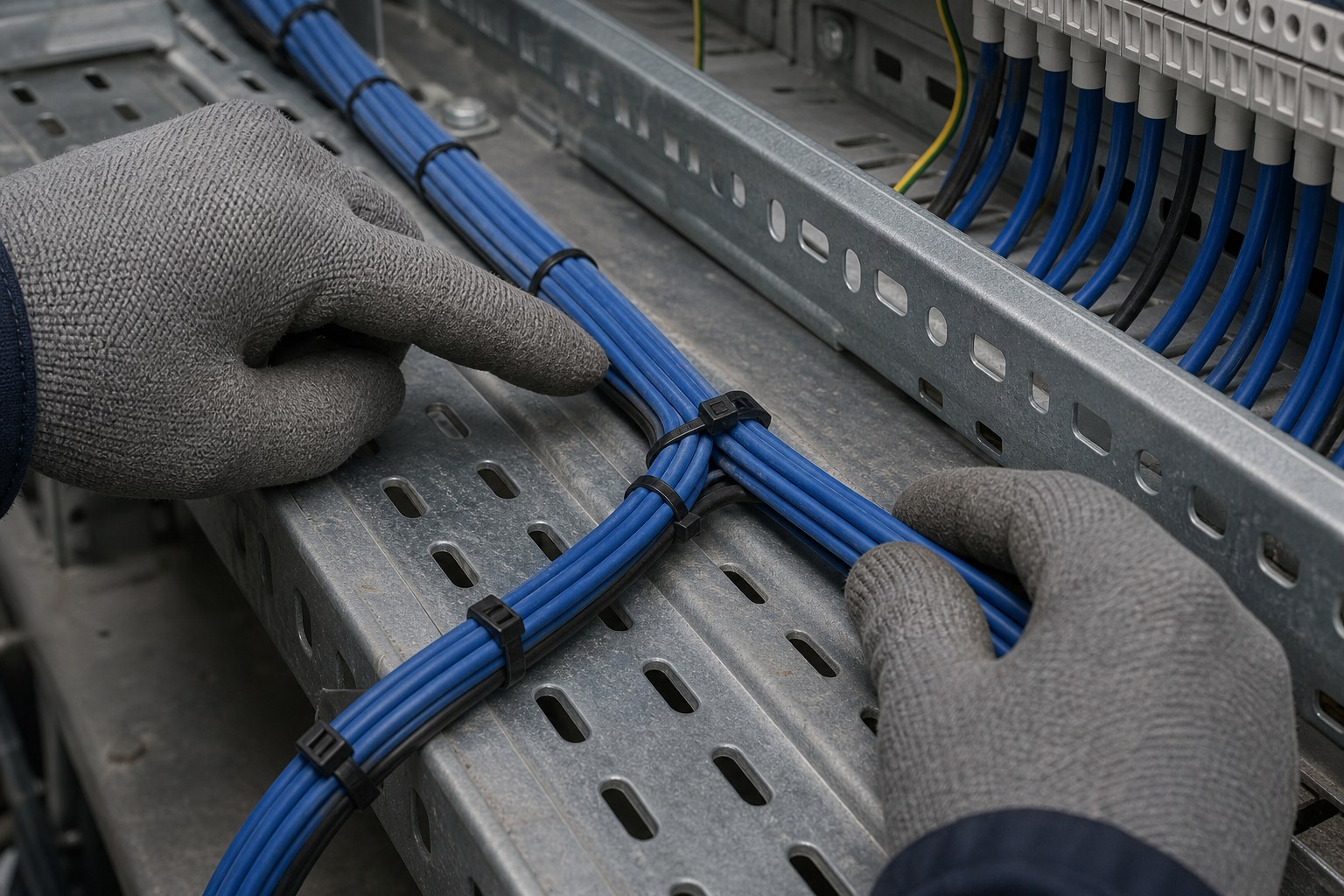
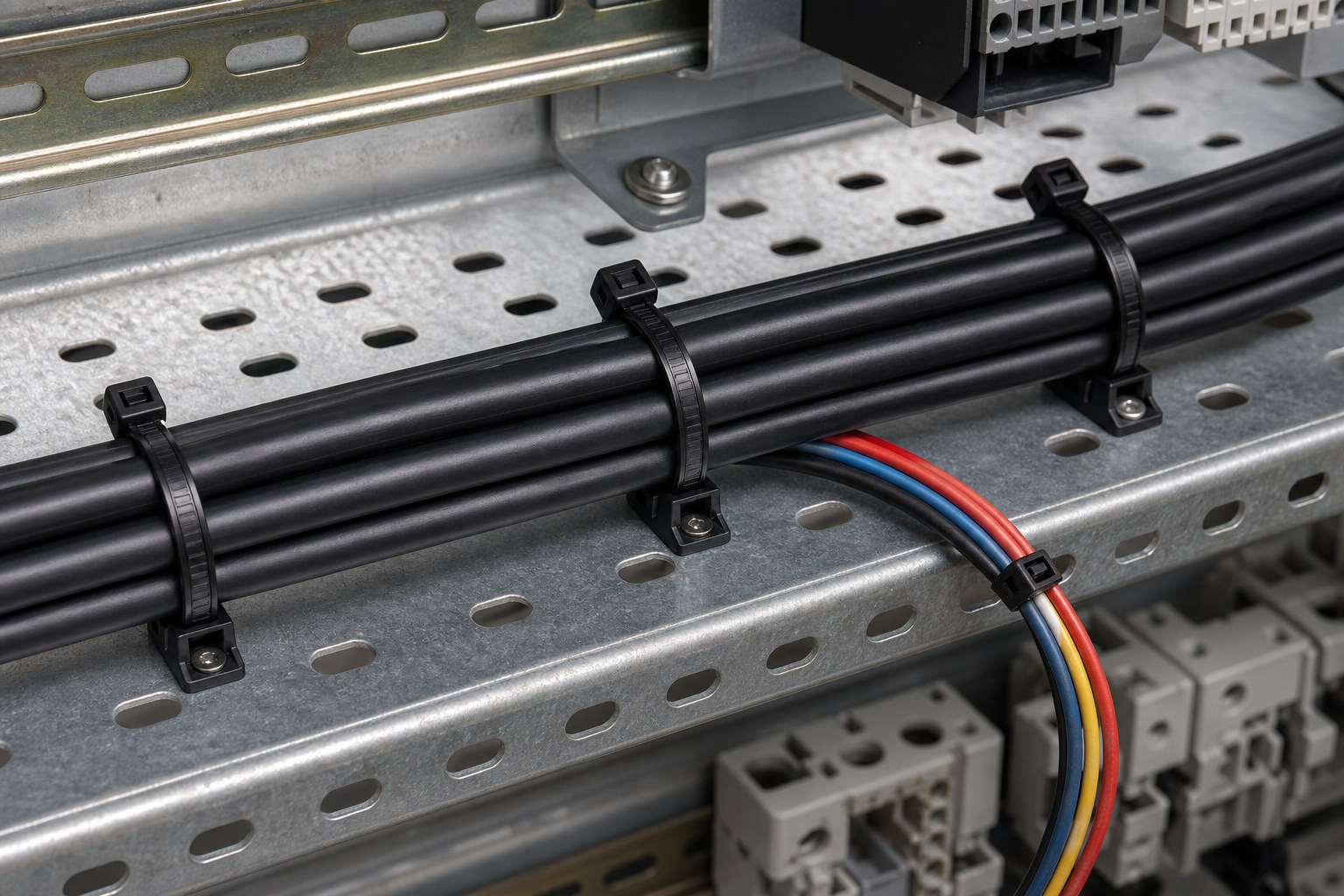
- Main tray route: use UV nylon or heavy-duty nylon ties with repeated spacing, tray holes, or saddle mounts.
- Control cabinet route: use smaller ties, adhesive or screw bases, and clean branch separation near terminal blocks.
- Service-access route: use releasable ties where inspection, cable replacement, or rework is expected.
- Heavy or harsh route: add screw-mount bases, wider ties, or stainless steel ties when load, heat, chemicals, or outdoor exposure require it.
Product Combination
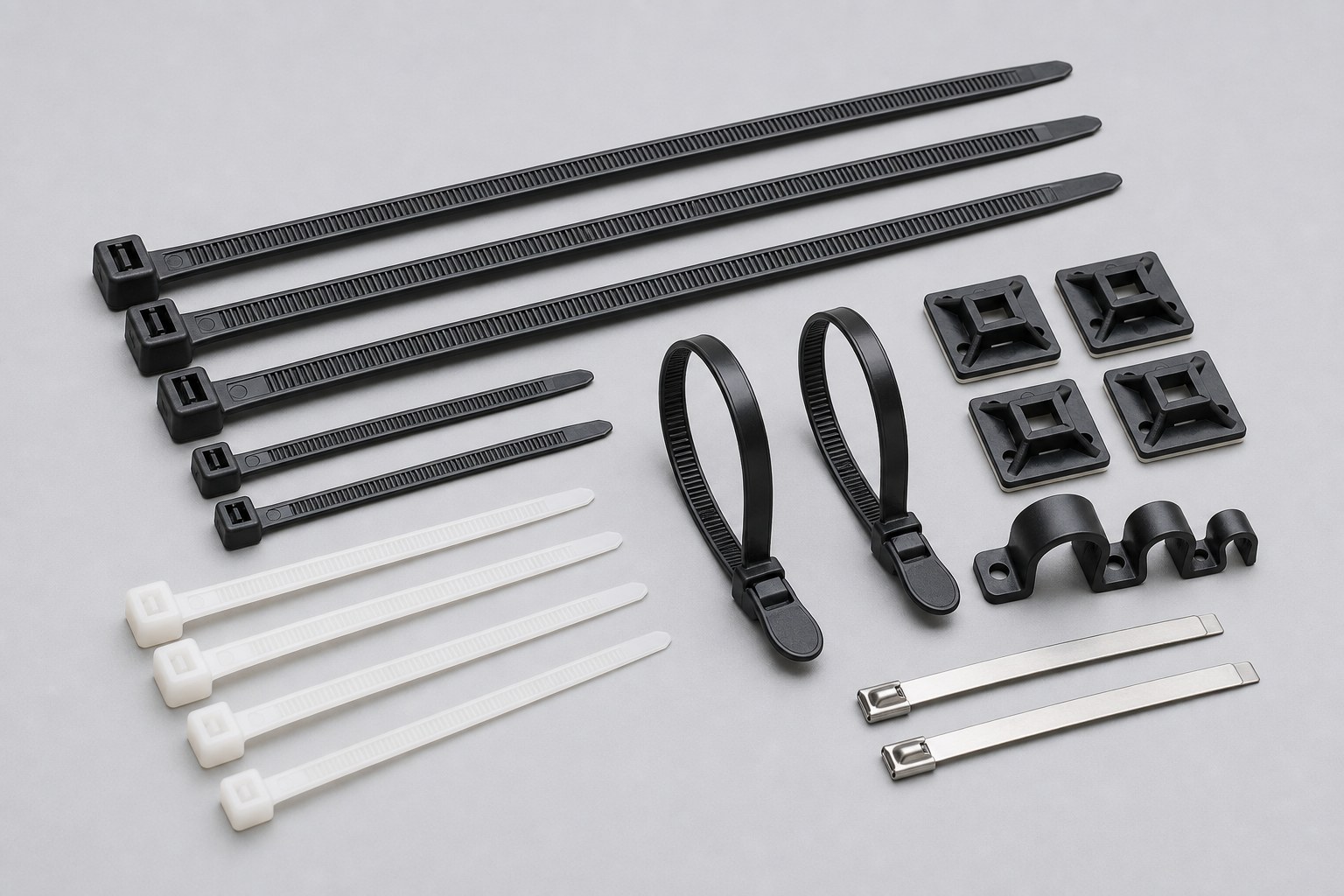
A loose-bundle solution usually combines several fastening products. The right mix depends on bundle diameter, cable weight, environment, and how often the route will be reopened.
Standard Nylon Ties
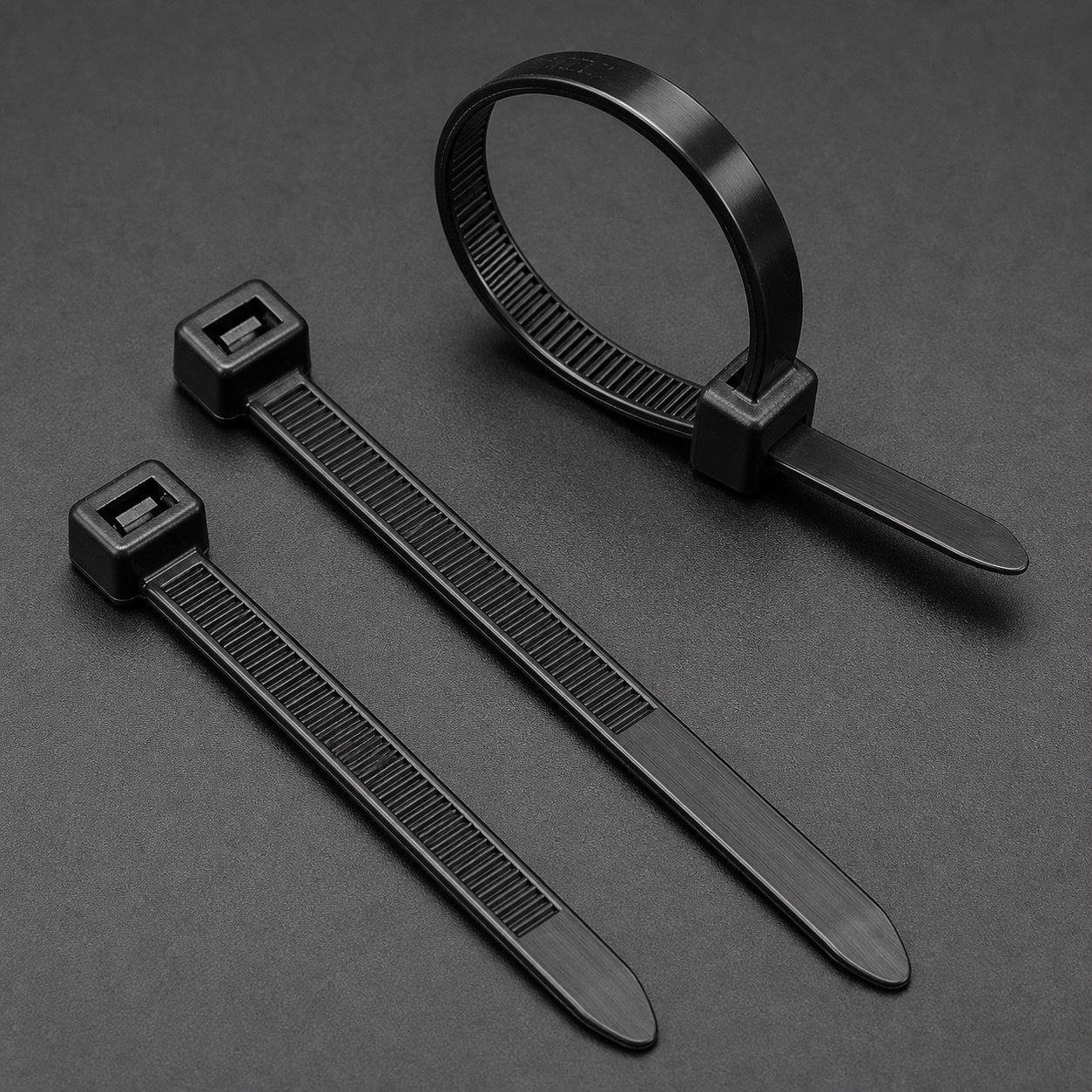
For light to medium bundles inside cabinets, panels, and protected indoor cable runs.
Heavy-Duty Ties
For larger cable groups, longer spans, and routes where bundle weight needs stronger restraint.
Mounting Bases
For creating fixed tie points on trays, panels, rails, equipment frames, and branch exits.
Releasable Ties
For maintenance zones where the bundle may need to be opened, inspected, or reworked.
Product Parameters To Confirm
Before selecting a tie, confirm the physical route and maintenance expectation. Loose-bundle failures usually come from wrong spacing, wrong support point, or a tie that does not match the bundle size.
| Parameter | What To Check | Why It Matters |
|---|---|---|
| Bundle diameter | Maximum cable group diameter at straight route and branch exit | Selects tie length and prevents forced bending during installation. |
| Bundle weight | Cable count, cable type, horizontal span, and vertical drop | Determines tie width, tensile strength, and whether a mounting base is required. |
| Tie spacing | Distance between tie points along the cable tray, cabinet route, or equipment frame | Controls sagging loops and keeps the bundle from leaving the route. |
| Support point | Tray hole, DIN rail, screw base, saddle mount, panel hole, or frame bracket | The tie should transfer load to a real support, not only squeeze the wires together. |
| Environment | Indoor, outdoor, UV, heat, oil, chemical, vibration, or coastal exposure | Matches material choice to site life and prevents early tie failure. |
Installation Steps
- Trace the loose route and mark sagging loops, unsupported spans, and uncontrolled branch exits.
- Choose support points first: tray holes, screw bases, saddle mounts, panel holes, rails, or frame brackets.
- Select tie length and width after checking bundle diameter, cable count, and expected service access.
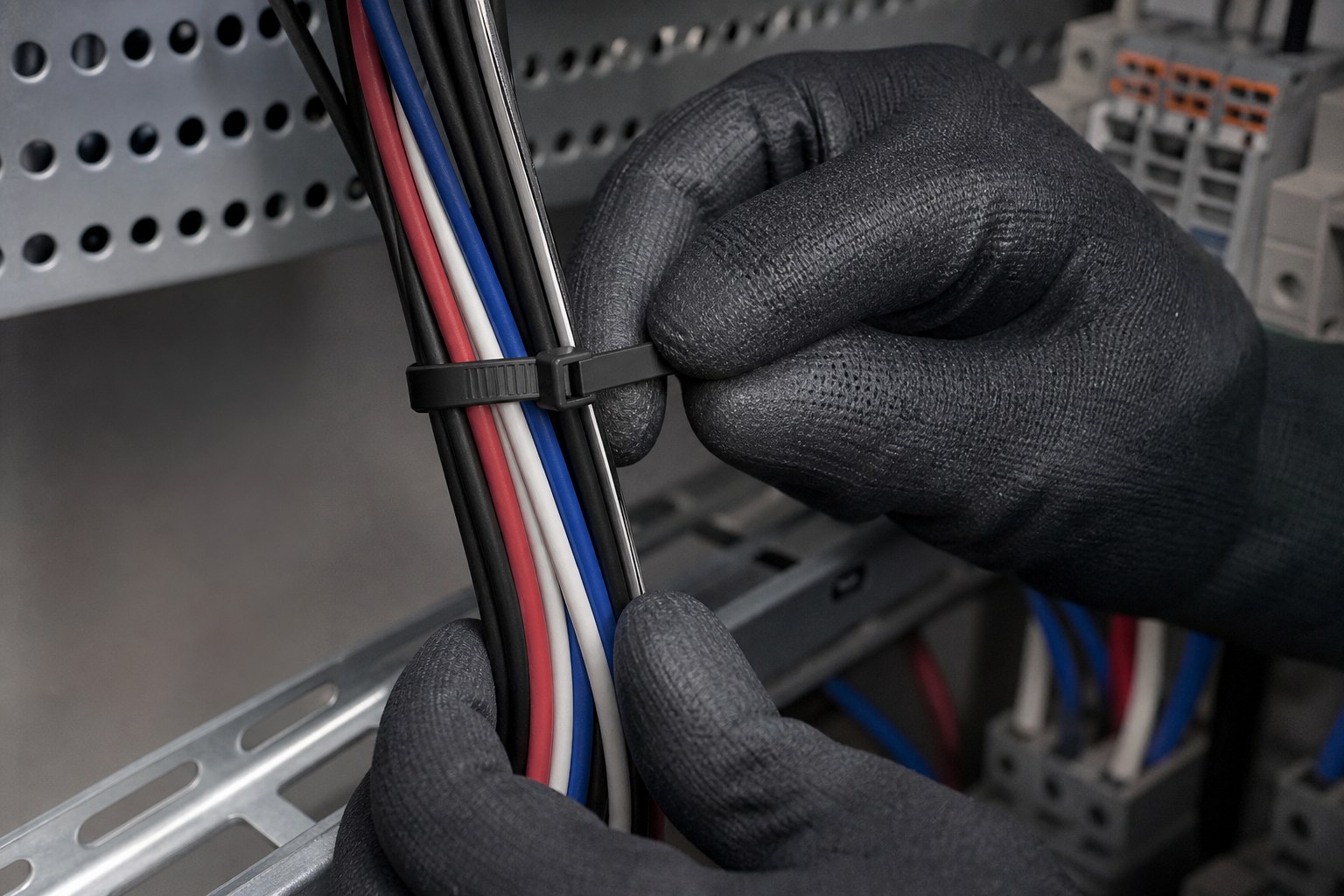
- Group the cable bundle by route direction, then fasten ties at consistent spacing without crushing the cable jacket.
- Trim or manage the tail, check bend radius, and confirm that branches remain clear for future maintenance.
Field Scenario
From Loose Wiring To A Stable Inspection Route
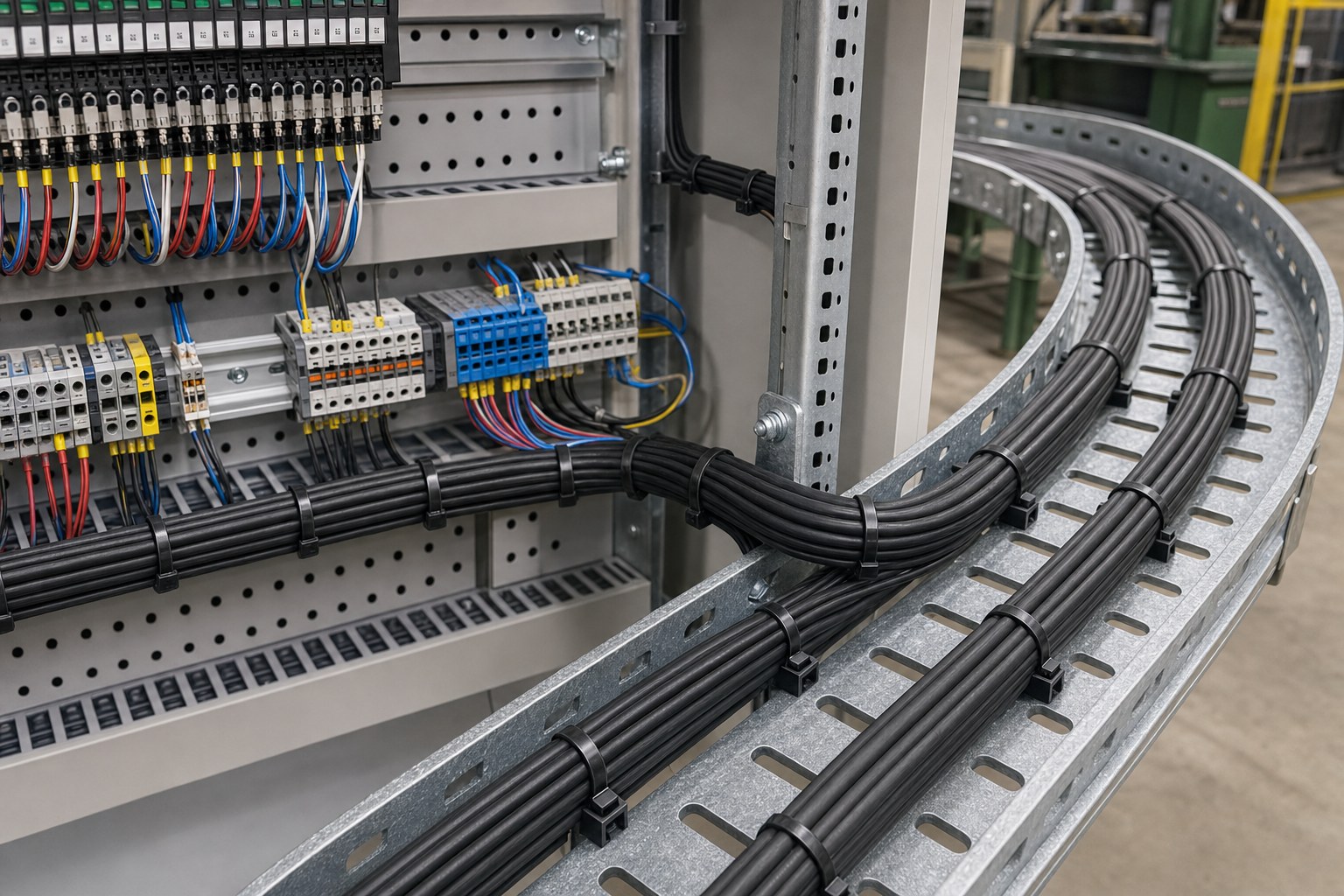
Application: industrial control cabinet connected to a galvanized cable tray route.
Problem: mixed cable bundles sagged between support points, branch wires crossed the service area, and maintenance teams had difficulty tracing cables.
Solution: CableTiesMFG recommended repeated tie spacing, screw-mount bases, separated branch exits, and releasable ties where rework was expected.
Result: the route became easier to inspect, cable movement was reduced, and branch wiring stayed clear of maintenance access.
Why Choose CableTiesMFG
Route-Based Selection
We help select ties by cable route, support point, spacing, bundle diameter, and environment, not by length alone.
Complete Fastening Set
Options include PA66 ties, UV ties, heavy-duty ties, releasable ties, marker ties, mounting bases, saddle mounts, and stainless steel ties.
Practical Installation Focus
We consider service access, branch exits, bend radius, and cable jacket pressure so the solution can work in real panels and trays.
FAQ
How close should cable ties be spaced?
Spacing depends on cable weight, bundle diameter, route direction, and vibration. Heavier or vertical routes usually need shorter intervals and fixed support points.
Can over-tightening create problems?
Yes. Over-tight ties can deform cable jackets and make rework difficult. Tighten enough to hold position without crushing the cable bundle.
When should I use mounting bases?
Use mounting bases when the tie must hold the bundle to a panel, tray, rail, or frame instead of simply bunching wires together.
What information should I send for selection?
Send route photos, bundle diameter, cable count, support type, indoor or outdoor environment, temperature, and whether the route requires future maintenance.
How to Specify Cable Tie Spacing for Loose Cable Bundles
Use the seven fields below as a checklist when you specify tie spacing for a loose cable bundle. Confirm or request each item against the exact SKU and project specification, and review the current SKU document rather than applying one spacing rule to every route.
- Cable count and bundle diameter — confirm the number of cables and the maximum bundle diameter at straight runs and branch exits, and review them against the dimensional data for the exact SKU.
- Bundle grouping and geometry — review how the bundle is grouped by route direction and how branches leave the main run, and confirm the geometry for the exact project.
- Spacing and support points — request the tie interval and the support points along the route, and review them against the tray, rail, panel or frame that carries the load.
- Material — confirm the material family and grade stated for the SKU and review it against the indoor or outdoor, temperature, UV or chemical exposure on the route.
- Mounting surface and route — confirm whether the fix is to a tray hole, DIN rail, panel hole, bracket or equipment frame, and review the surface and route direction for the exact SKU.
- Service access and releasability — review whether inspection or rework requires a releasable tie, and confirm the access and space needed for the exact project.
- Exact SKU, quantity, packaging and documentation — request the part reference, quantity, packaging format and current document, and confirm the document revision matches the SKU and order under consideration.
Loose Cable Bundle Routing FAQ
What information should I provide for a loose cable bundle?
State the cable count and bundle diameter, the route direction and support surface, the tie spacing or support points you plan, the environment, and the expected quantity. Confirm these against the exact SKU and project specification before the route is released.
How should bundle diameter and cable grouping be recorded?
Record the maximum bundle diameter at straight runs and at branch exits, the number of cables and their type, and how groups are separated by route direction. Review these against the dimensional data for the exact SKU.
How do spacing and support points affect the specification?
Confirm the tie interval and where each support point sits — tray hole, DIN rail, panel hole, bracket or frame. Review that the tie transfers load to a real support rather than only bunching the cables, for the exact project specification.
When should service access or releasable ties be included?
Include a releasable or serviceable route where inspection, cable replacement or rework is expected along the bundle. Confirm the release access and the space required for the exact SKU and project specification.
What should accompany a quote for a loose-bundle routing project?
Request the part reference, quantity and packaging format, the planned spacing and support points, the current drawing or datasheet, and any material statement you need for the SKU. Confirm the scope so the quote matches the exact project specification.
Need Help With Loose Cable Bundles?
Send route photos, bundle diameter, cable count, support type, and environment details. CableTiesMFG can recommend a tie, mount, and spacing plan for your site.