Problem Solution
Corrosion Resistant Cable Tie Solutions for Marine, Chemical and Outdoor Sites
Specify fastening materials that survive salt spray, chemicals, humidity, UV exposure, and weathered metal supports. CableTiesMFG helps match stainless steel ties, coated ties, UV nylon ties, chemical-resistant nylon, and mounting accessories to real corrosion-prone cable routes.
Problem Introduction
Where Corrosion Becomes A Fastening Problem
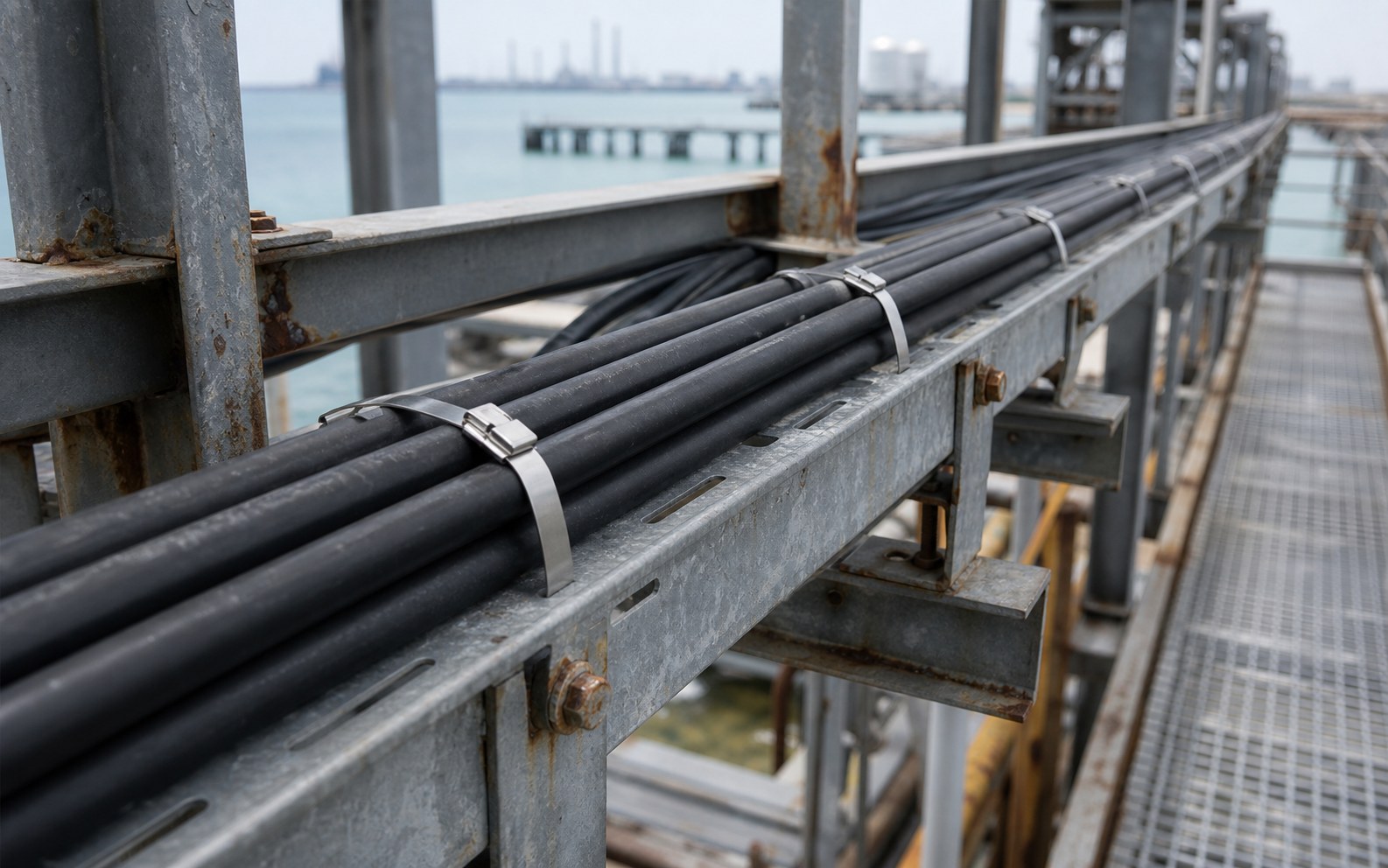
Corrosion-prone cable routes are common on ships, offshore platforms, coastal plants, chemical processing lines, outdoor utility frames, wastewater facilities, rooftop equipment, and exposed pipe racks. Standard indoor cable ties may look acceptable during installation but fail early when salt, oil, fuels, acids, alkalis, humidity, heat, or UV exposure attack the material.
The correct solution starts with the site environment, not only the bundle diameter. A tie that works in a dry cabinet may not survive a coastal cable tray, chemical washdown area, or wet outdoor bracket.
Typical Pain Points
Early Tie Cracking
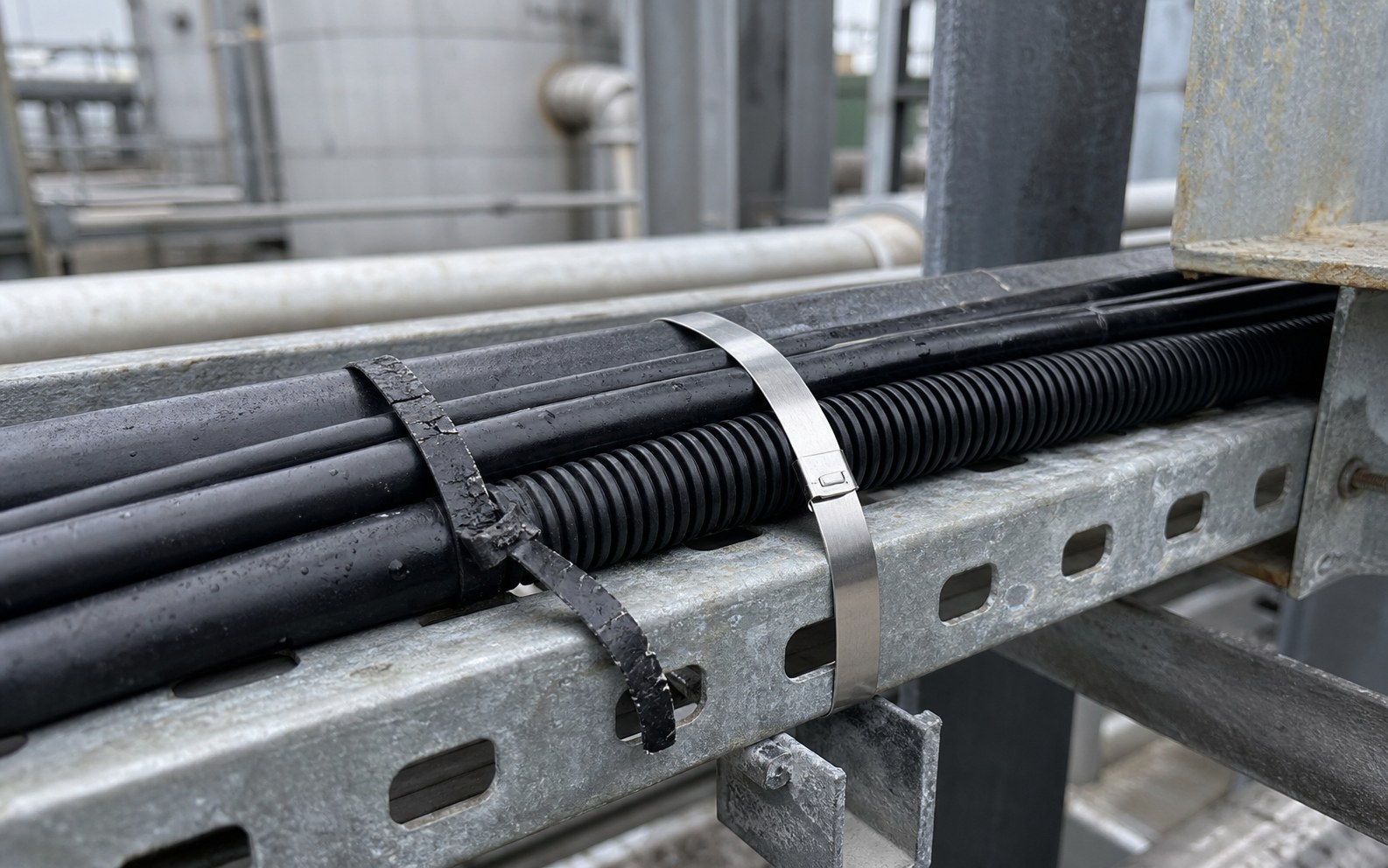
Indoor-grade nylon can become brittle under UV, heat, salt spray, or chemical exposure, leaving cable groups loose.
Rust And Staining
Unsuitable metal hardware or unprotected support points can create rust stains, sharp edges, and cable jacket wear.
Loose Routes
When the fastening material loses strength, cables and conduit can shift out of tray routes and increase maintenance risk.
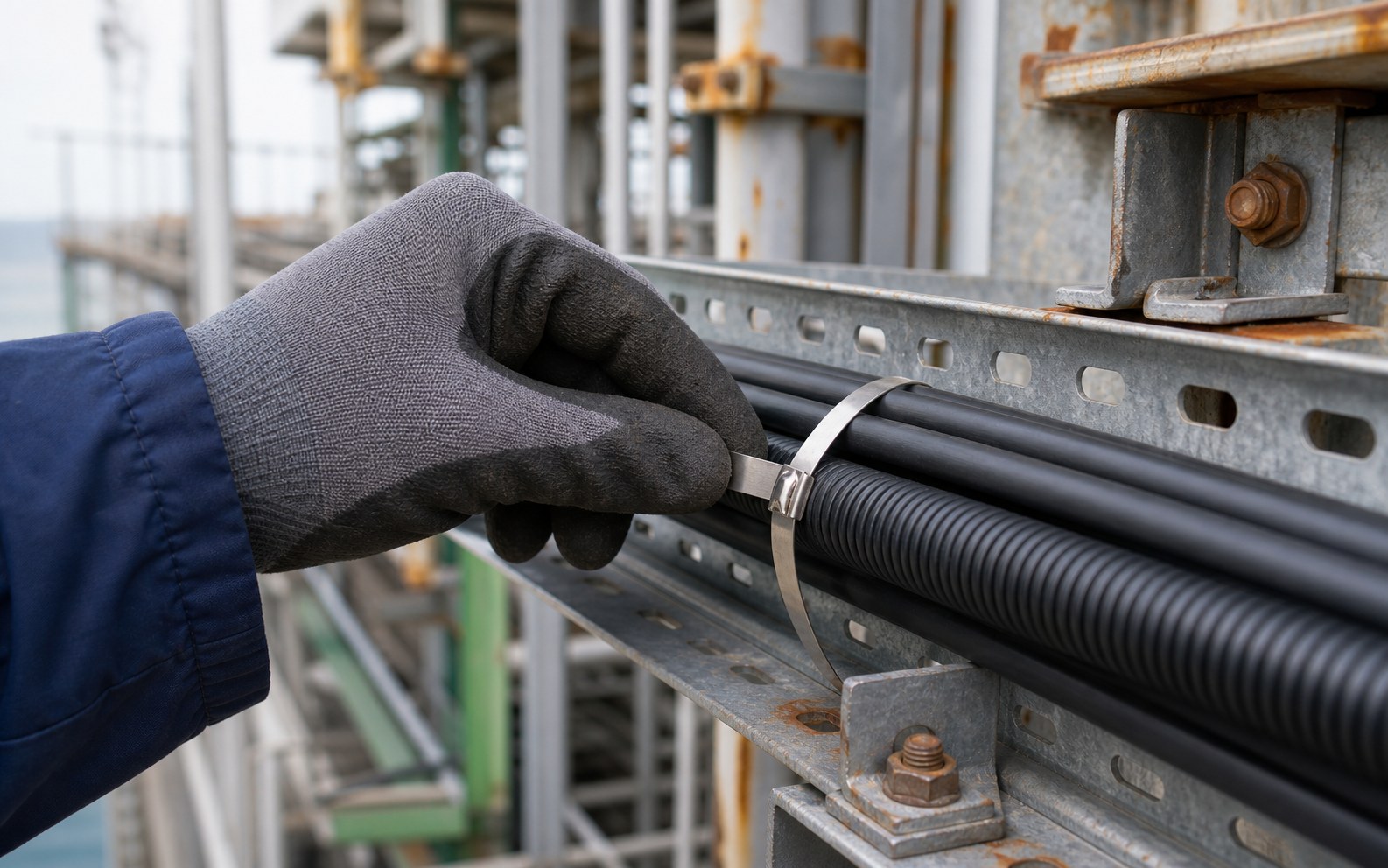
Recommended Solution
For corrosion-prone environments, the recommended product is selected by exposure severity, load, temperature, support condition, and service access.
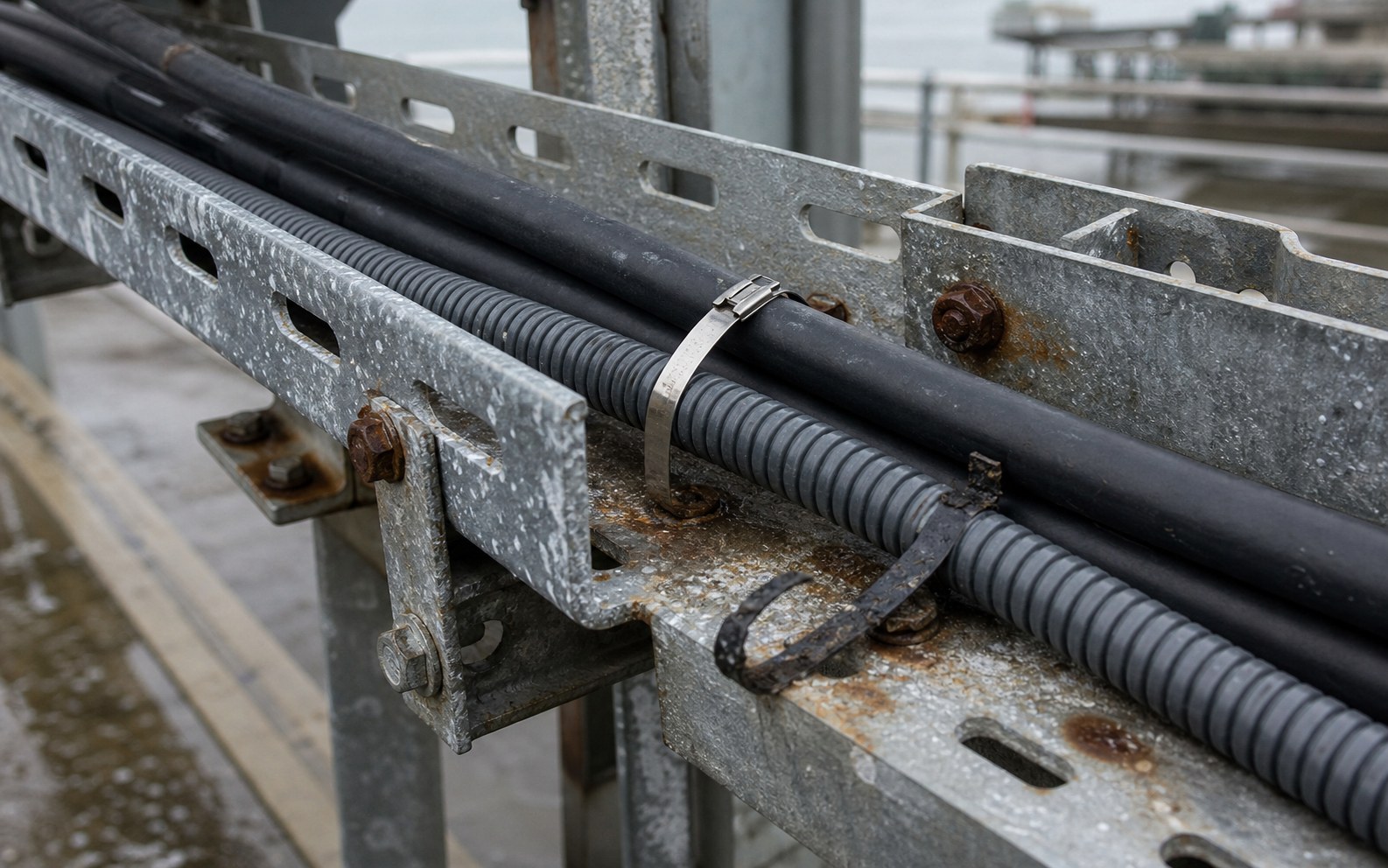
- Salt spray and marine routes: use 316 stainless steel cable ties or coated stainless steel ties where cable jackets need extra protection.
- Chemical or washdown areas: choose chemical-resistant nylon for lower exposure zones, or stainless steel ties for harsher contact and higher temperature areas.
- Outdoor UV routes: use UV-resistant black nylon ties only where corrosion risk is lower and temperature/load stay within nylon limits.
- Sharp or rusted supports: add edge protection, coated ties, mounting bases, or route correction before tying the cable down.
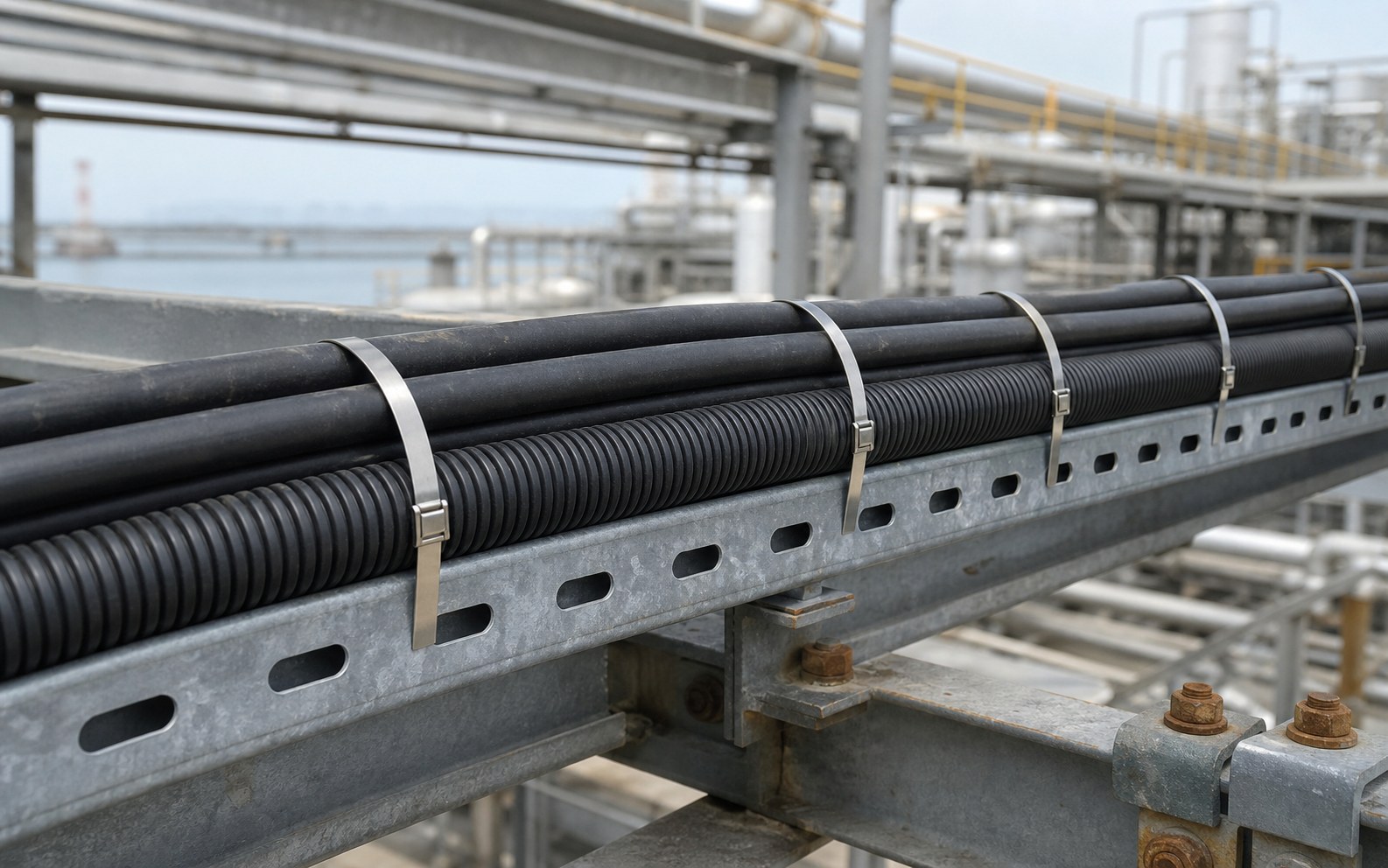
Product Combination
A corrosion-resistant fastening plan may combine stainless steel ties, coated ties, UV nylon ties, chemical-resistant nylon, mounting bases, protective sleeves, and installation tools. The product set should match site exposure instead of relying on one general-purpose tie for every route.
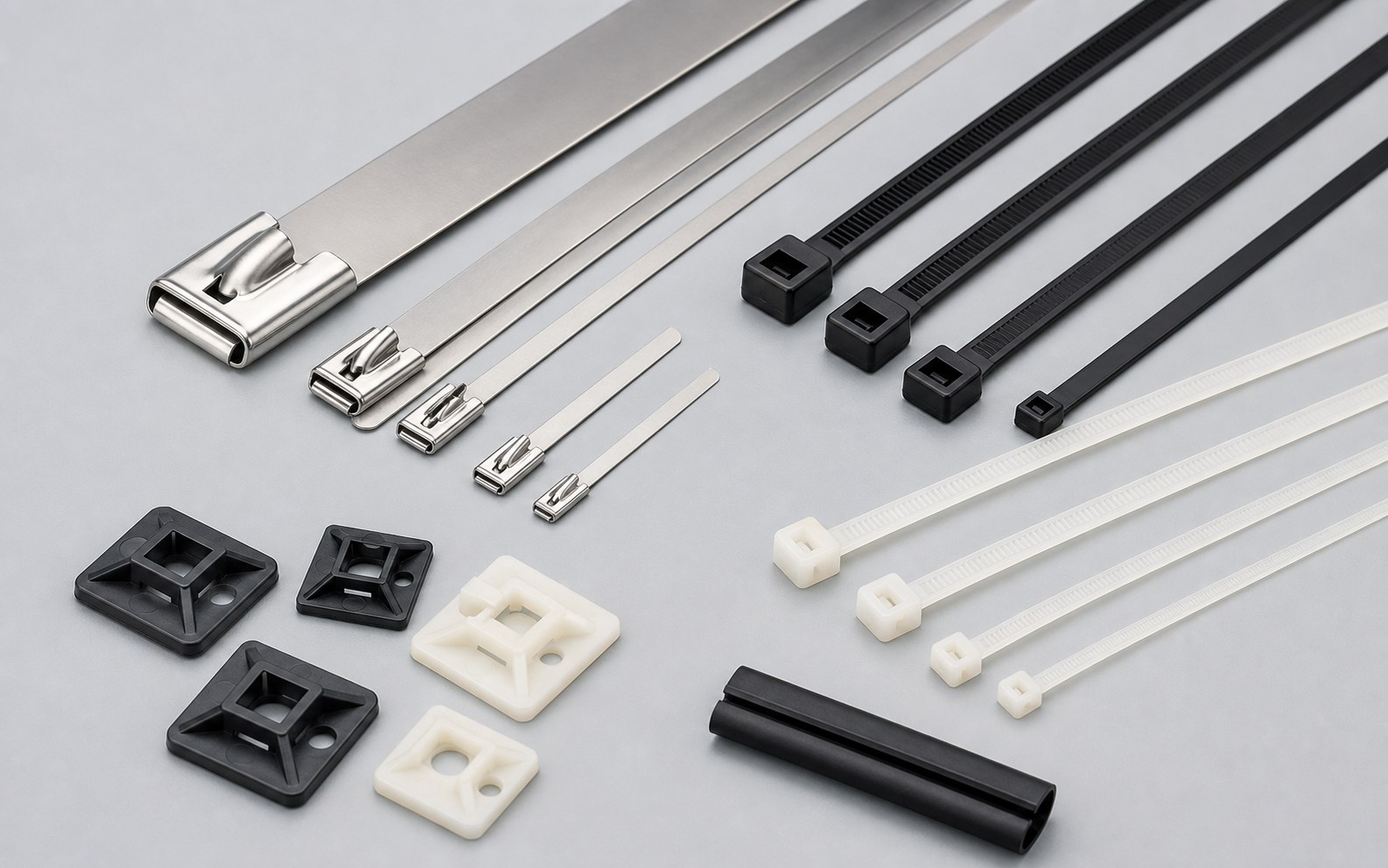
Stainless Steel Ties
For marine, offshore, high UV, high temperature, and severe outdoor corrosion exposure.
Coated Steel Ties
For metal strength with added cable-jacket protection where abrasion or galvanic contact is a concern.
UV Nylon Ties
For lower-risk outdoor cable routes that need weather resistance but not full stainless steel performance.
Chemical-Resistant Nylon
For selected chemical, oil, or washdown zones when verified against the actual exposure.
Product Parameters To Confirm
Corrosion-resistant selection should confirm environment, material, tie strength, temperature, support condition, and installation method before purchase.
| Parameter | What To Check | Selection Guidance |
|---|---|---|
| Exposure type | Salt spray, UV, oil, fuel, acid, alkali, humidity, heat, or mixed exposure | Use stainless steel or coated steel for severe routes; use nylon only where compatible. |
| Material grade | PA66, UV PA66, chemical-resistant nylon, 304 stainless, 316 stainless, coated stainless | 316 stainless is preferred for marine and strong corrosion exposure. |
| Bundle diameter | Cable/conduit outside diameter plus route spacing | Select tie length that closes without forcing the cable bend radius. |
| Tensile strength | Bundle weight, span, vibration, vertical drop, and support interval | Use wider or metal ties when load, vibration, or outdoor life requirements increase. |
| Support contact | Tray edge, strut hole, bracket, pipe, frame, or panel hole | Protect cable jackets from sharp metal, rust, and concentrated pressure points. |
| Installation method | Manual tightening, tensioning tool, trim style, inspection access | Use proper tool tension so ties are secure without cutting into cable jackets. |
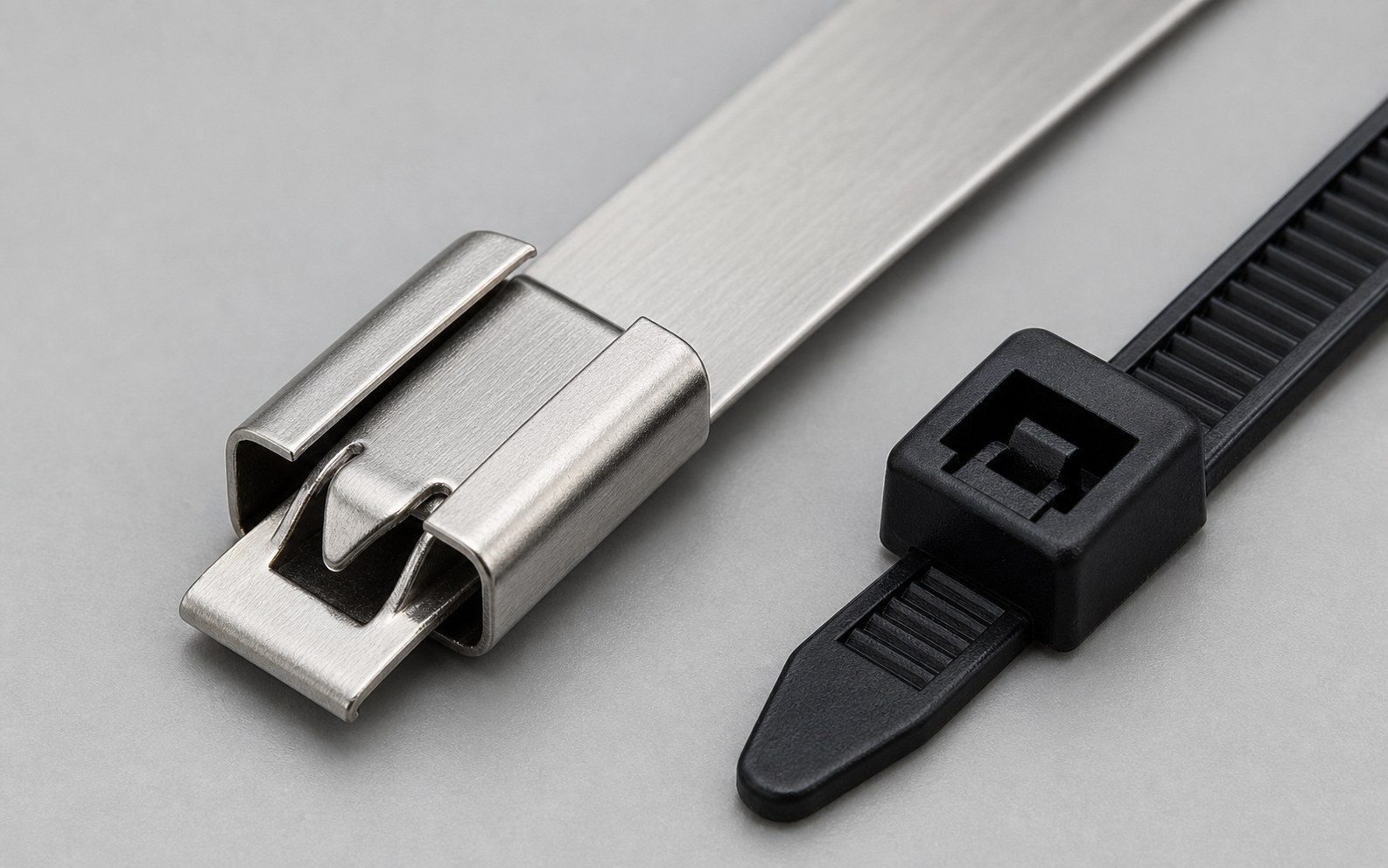
Installation Steps
- Inspect the route and identify salt, chemical, UV, heat, moisture, rust, vibration, and sharp-edge risks.
- Choose the tie material and support method before cutting or moving the cable route.
- Clean or correct the support point; add edge protection if the tray or bracket could damage the cable jacket.
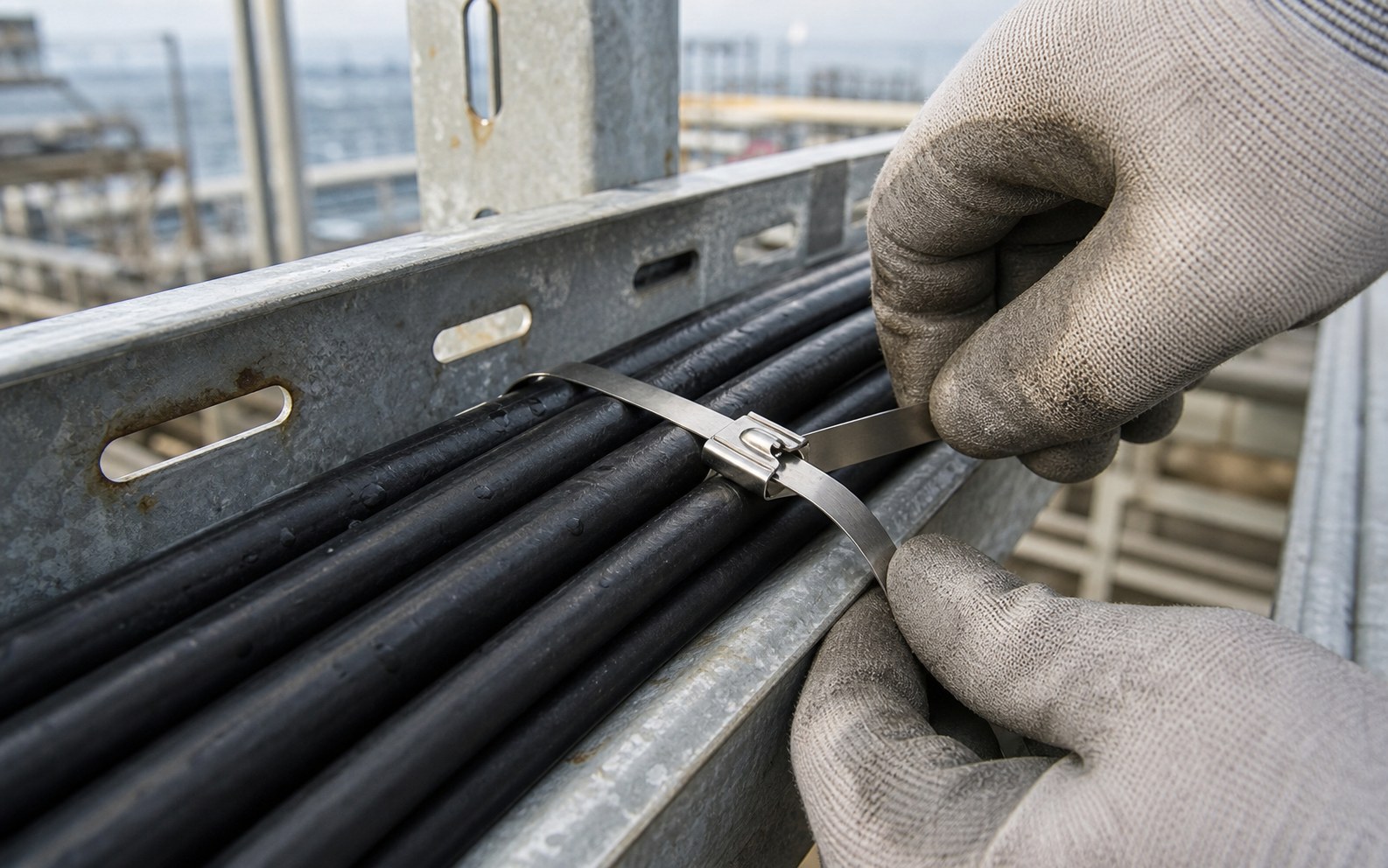
- Wrap the tie around both the cable/conduit and the support point, then feed the band or tail through the correct single locking clasp/head.
- Tighten with appropriate tool tension, trim or fold the tail, and inspect spacing, cable jacket pressure, and service access.
Field Scenario
From Early Rust Risk To Stable Corrosion-Resistant Routing
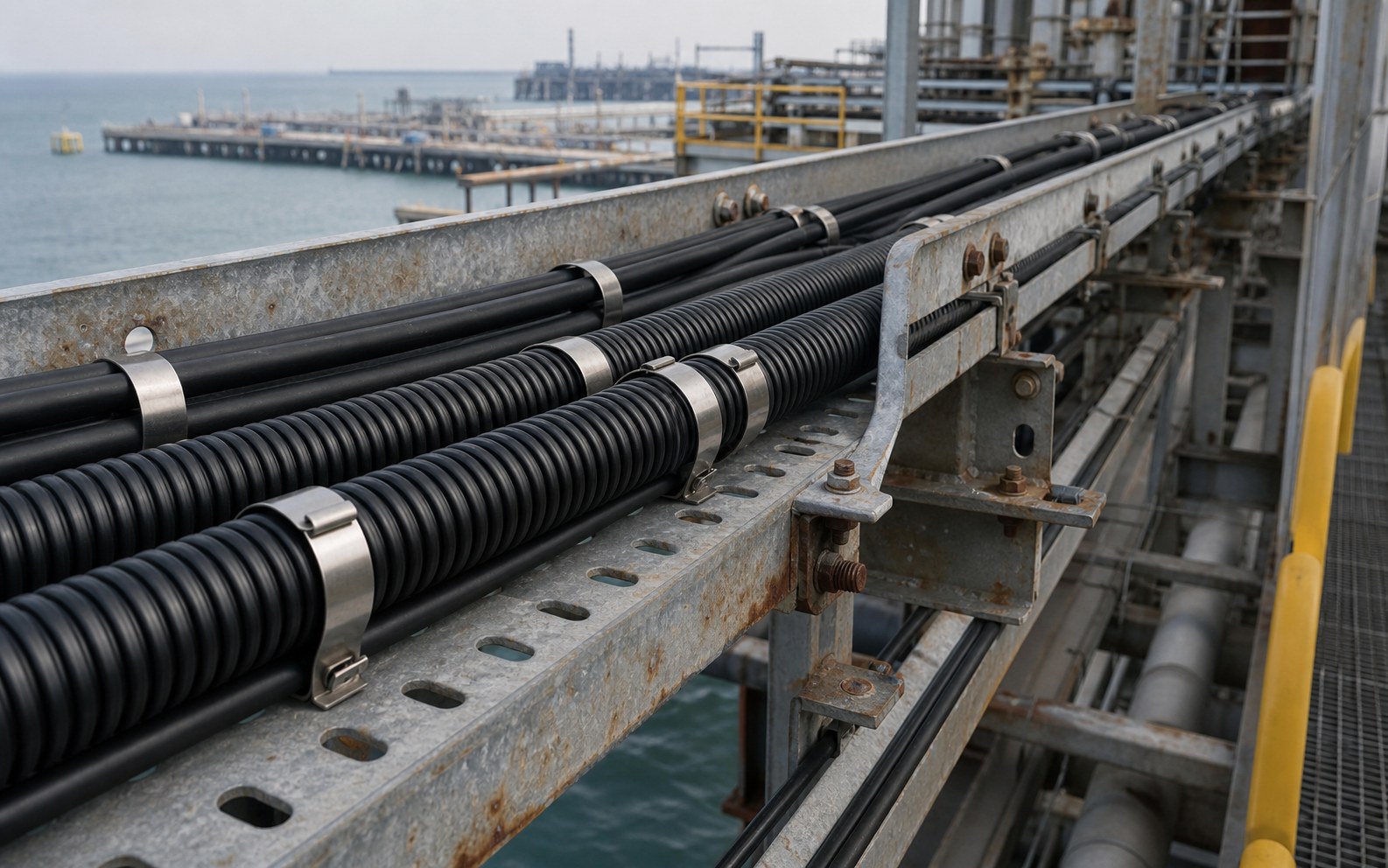
Application: exposed coastal or chemical plant cable tray carrying power cables and corrugated conduit.
Problem: ordinary ties and weathered support points created loose cable sections, rust staining, and repeated inspection work.
Solution: CableTiesMFG recommended 316 stainless steel ties for the exposed route, coated ties where jacket protection was needed, edge protection at sharp points, and repeated tie spacing along the tray.
Result: the route stayed fixed to the support, cable jacket contact became more controlled, and maintenance teams gained a cleaner inspection path.
Why Choose CableTiesMFG
Environment-Based Selection
We help choose products by salt, chemical, UV, heat, humidity, and support condition rather than using one tie for every route.
Complete Material Options
Options include stainless steel ties, coated stainless ties, UV-resistant nylon ties, chemical-resistant nylon, bases, sleeves, and installation support.
Practical Field Focus
We consider cable jacket pressure, edge contact, spacing, service access, and real installation constraints in harsh sites.
FAQ
Are stainless steel cable ties always required for corrosion?
No. Lower-risk outdoor routes may use UV-resistant nylon, and selected chemical areas may use compatible nylon. Severe salt spray, high temperature, vibration, and long-life exposed routes usually need stainless steel or coated stainless steel ties.
When should I use 316 stainless steel ties?
Use 316 stainless steel for marine, offshore, coastal, chemical, wastewater, and other strong corrosion environments where ordinary nylon or 304 stainless may not provide enough life.
Can metal ties damage cable jackets?
They can if over-tightened or installed on sharp support points. Use controlled tool tension, coated stainless ties, edge protection, or route correction where jacket damage is a risk.
What information helps you recommend the right tie?
Share the environment, cable diameter, bundle weight, support type, temperature, chemical exposure, required service life, and whether the route needs future rework.
Need Help Choosing Corrosion Resistant Cable Ties?
Send your application environment, cable size, support type, and required service life. CableTiesMFG can recommend the right tie material, size, mounting accessory, and installation method.