
Wind Solution
Wind Turbine Cable Tie Solutions for Tower, Nacelle and Offshore Cable Management
Heavy-duty cable tie and mounting solutions for wind turbine towers, nacelles, control cabinets, sensor cables, hydraulic lines, and exposed onshore or offshore cable routes.
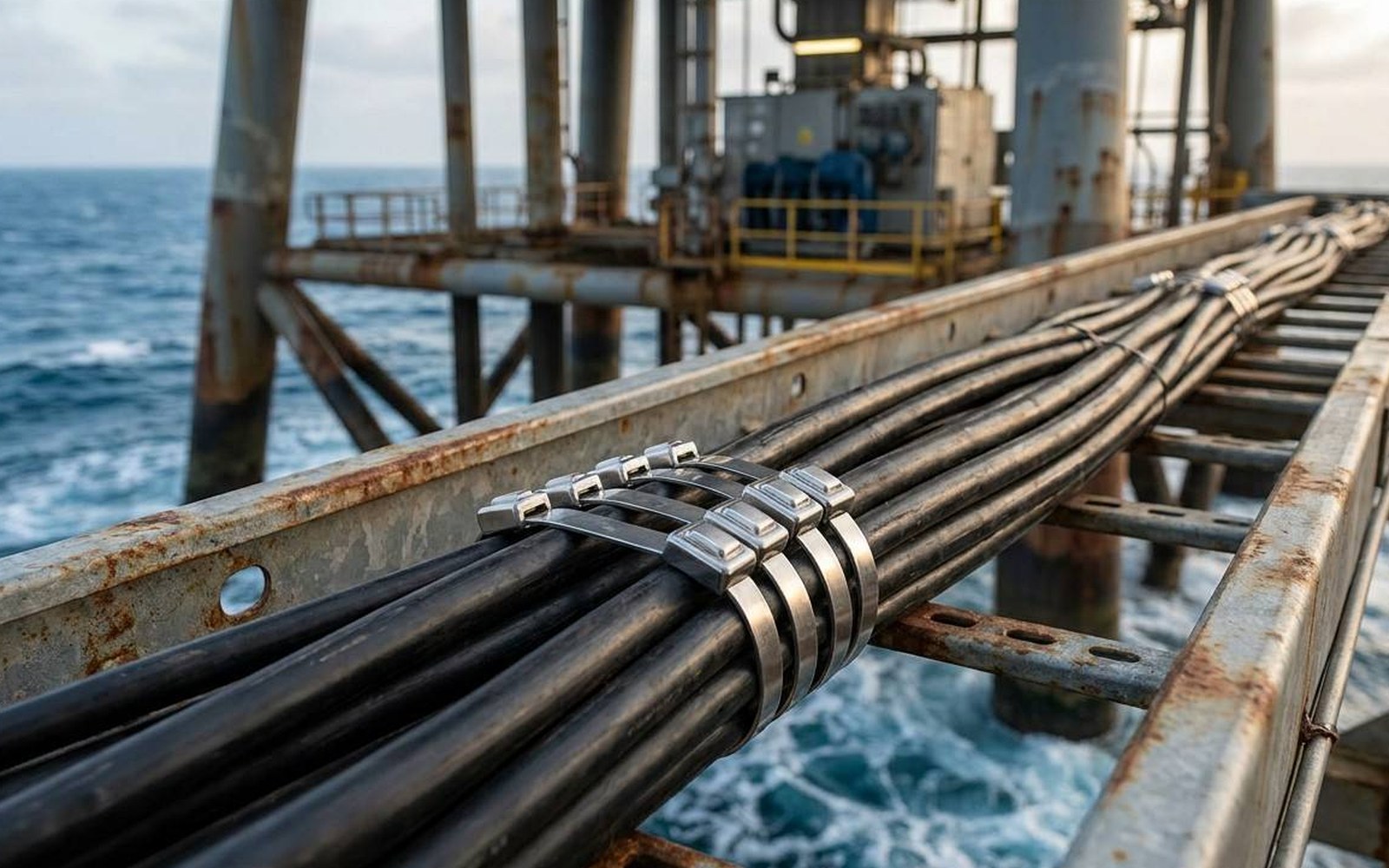
Procurement Snapshot
Best Fit Buyers
Wind turbine OEMs, tower manufacturers, offshore wind contractors, maintenance teams, electrical cabinet builders, and renewable energy distributors.
Main Decision Factors
Vibration resistance, UV exposure, salt spray risk, installation access, cable weight, service interval, and documentation support.
Documents to Request
Material sheet, tensile data, salt-spray or corrosion statement, RoHS/REACH statement, and batch test documentation.
Common Order Format
Project cartons, maintenance kits, mixed stainless/nylon fixing kits, or private-label distributor packaging.
Industry Introduction
Wind turbines contain long cable routes through the tower, nacelle, hub, power conversion system, control cabinets, sensors, lighting, grounding, and auxiliary equipment. Cable ties help keep these routes organized during assembly, commissioning, and service.
Unlike simple indoor cable bundling, wind applications face vibration, repeated service access, high elevation installation, UV exposure, temperature cycling, moisture, and possible salt-spray environments. A weak fixing point can become a maintenance issue when cables sag, rub, or loosen inside the tower or nacelle.
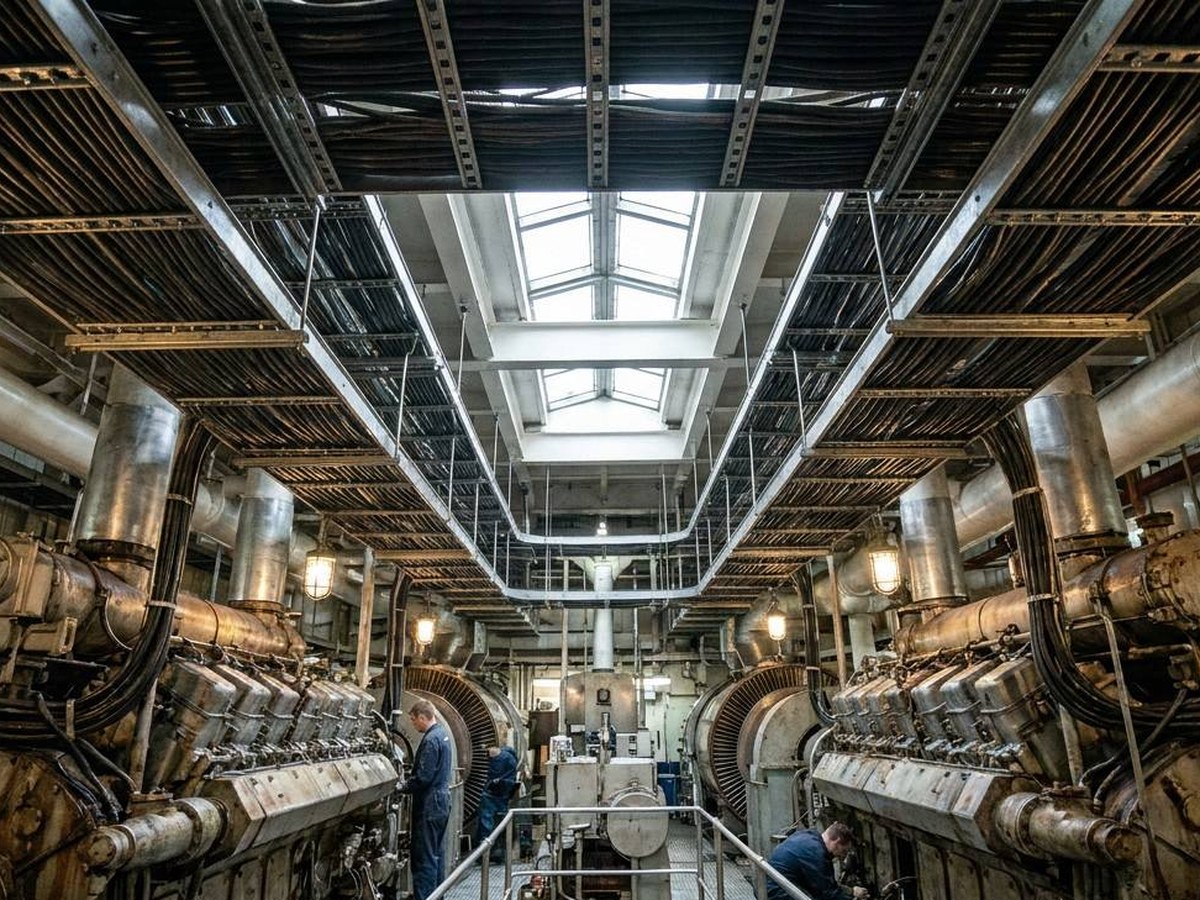
Application reference: enclosed turbine service areas require organized tray routing, inspection access, and stable fixing points.
Industry Pain Points
Vibration Loosening
Continuous tower and nacelle vibration can loosen unsuitable ties and allow cable movement.
Cable Abrasion
Loose routes may rub against metal edges, brackets, or cabinet structures during turbine operation.
Corrosion Risk
Offshore and coastal wind sites need materials that tolerate moisture, salt spray, and outdoor exposure.
Slow Service Work
Poorly organized routes make inspection, replacement, and maintenance access slower inside towers and nacelles.
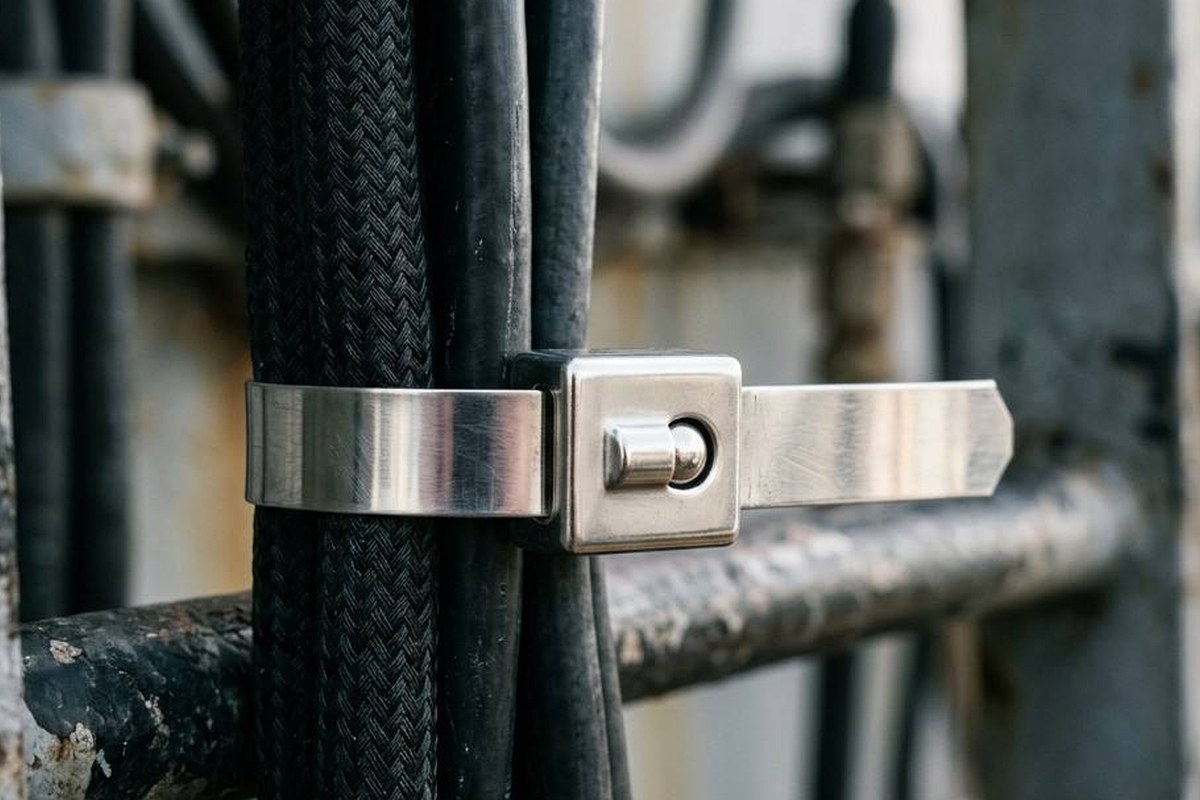
Application detail: stainless steel ties are suitable for severe-duty exposed points when nylon may not provide enough corrosion or heat resistance.
On-Site Problem Analysis
Wind turbine cable tie selection should be based on the route location and service environment, not one general-purpose tie for the whole machine.
- Tower cable routes: need stable spacing, anti-sag support, and inspection-friendly grouping.
- Nacelle and hub zones: need vibration-resistant fixing and controlled cable clearance.
- Control cabinets: need tidy routing, service access, and releasable or mountable options.
- Offshore sites: often require stainless steel ties or corrosion-resistant material choices.
Recommended Solution
We recommend a zone-based wind cable fixing system. Use UV-stabilized nylon ties for protected tower and cabinet routes, screw-mount ties or bases where repeated spacing is needed, and stainless steel ties for offshore, coastal, high-vibration, or severe-duty exposed points.
Tower Routing
UV-resistant and heavy-duty nylon ties for organized vertical cable runs and support spacing.
Nacelle Fixing
High-vibration tie and mount options for control, sensor, and auxiliary cable routes.
Control Cabinets
Releasable ties, mounts, and identification ties for service-friendly wiring layouts.
Offshore Exposure
304/316 stainless steel cable ties for salt spray, moisture, and severe outdoor service.
Solution Selector
Use this quick decision table before requesting samples or quotations. It converts wind turbine field symptoms into a practical product starting point.
| Field Problem | Recommended Choice | When to Use |
|---|---|---|
| Tower cable sagging | CT-WIND-UV-HD heavy-duty UV-resistant nylon tie | Use for protected tower cable routes and repeatable support spacing. |
| Nacelle vibration movement | CT-WIND-MOUNT screw-mount tie or mounting base | Use near brackets, cabinets, sensors, and serviceable cable routes. |
| Offshore corrosion exposure | CT-WIND-SS316 stainless steel cable tie | Use for offshore, coastal, wet, high-vibration, or severe-duty fixing points. |
Product Combination
Product images below are used for material and part identification. Final wind turbine selection should be confirmed against cable diameter, vibration zone, installation drawings, salt-spray risk, and service-life target.
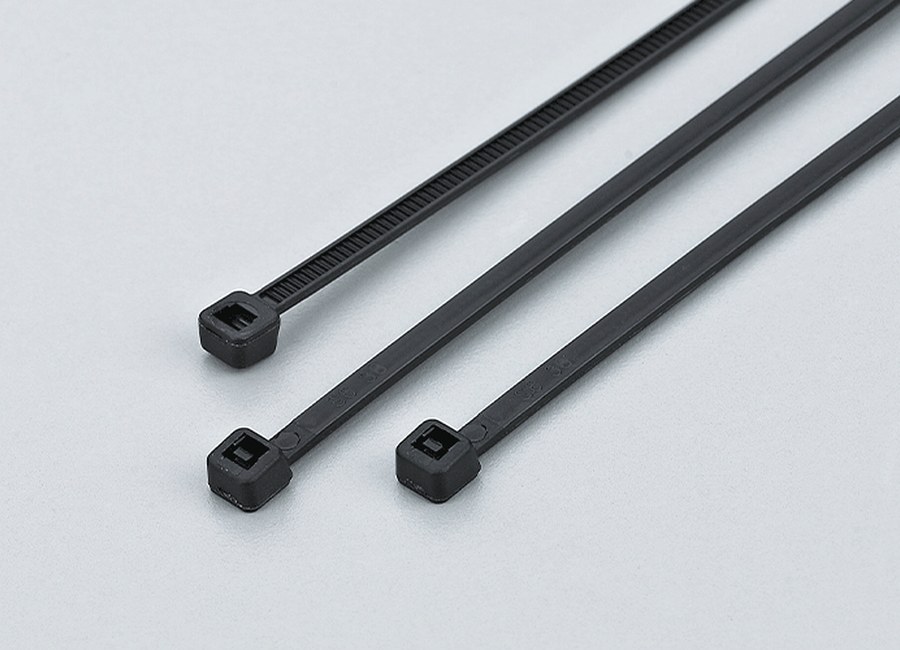
UV Black Nylon Tie
For protected tower routes, cabinet wiring, and general wind turbine cable organization.
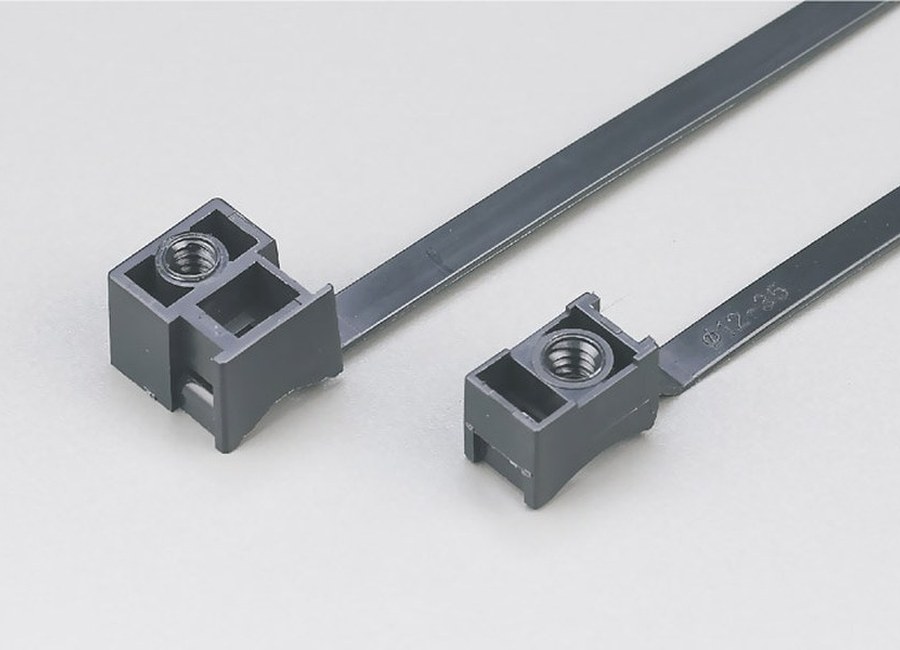
Screw-Mount Tie
For brackets, sensor routes, cabinet points, and repeatable serviceable fixing locations.
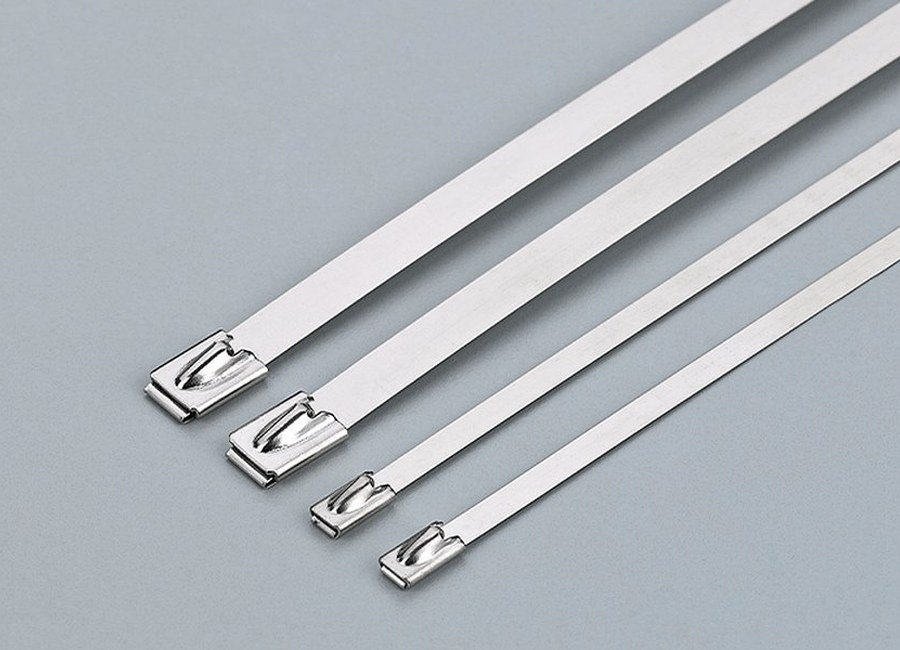
Stainless Steel Tie
For offshore, coastal, high-vibration, wet, or severe-duty exposed points.
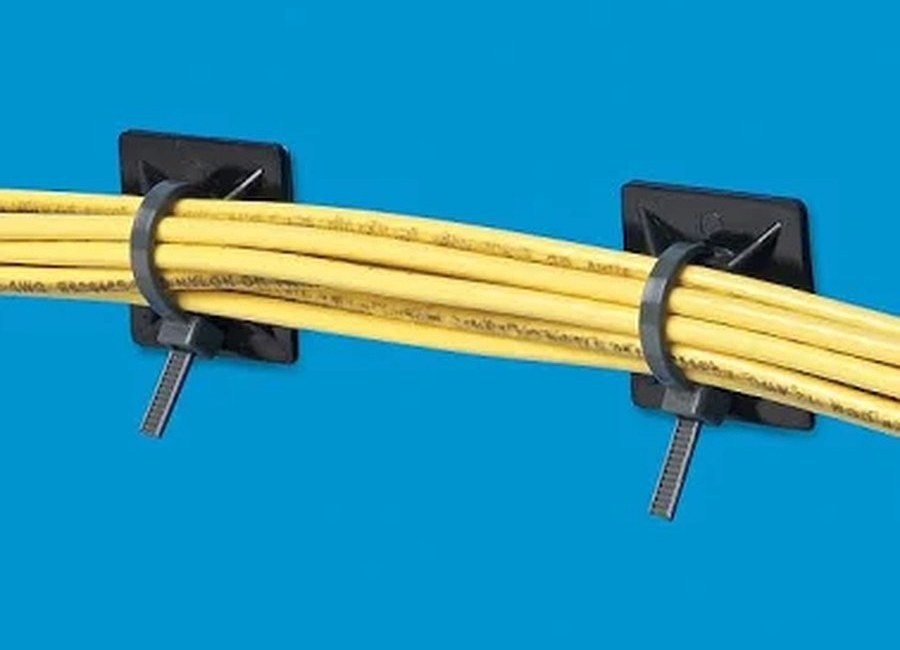
Mounting Base Set
For clean cable grouping, stable spacing, and inspection-friendly routing.
| Application Zone | Recommended Products | Purpose |
|---|---|---|
| Tower cable runs | UV-resistant heavy-duty nylon ties | Support vertical cable routes and prevent sagging |
| Nacelle / hub area | Screw-mount ties, mounting bases, high-vibration ties | Keep cables clear of moving and service areas |
| Control cabinets | Releasable ties, mounts, identification ties | Improve organization and future service access |
| Offshore or coastal sites | 316 stainless steel cable ties | Improve corrosion and severe-weather resistance |
Product Parameters
| Product Type | Material | Performance Focus | Typical Use |
|---|---|---|---|
| UV-resistant nylon tie | UV-stabilized PA66 / PA12 options | Outdoor sunlight and general wind routing | Tower and cabinet cable bundling |
| Heavy-duty wind tie | UV-stabilized nylon, wider body | Higher holding force and vibration resistance | Longer routes and larger cable bundles |
| Screw-mount tie / base | Nylon mount with integrated fixing point | Controlled spacing and bracket attachment | Nacelle, cabinet, sensor, and serviceable routes |
| Stainless steel tie | 304 / 316 stainless steel | Corrosion, moisture, and severe-duty resistance | Offshore, coastal, exterior, and high-vibration points |
Final product choice should consider cable diameter, vibration level, mounting surface, salt-spray risk, operating temperature, and inspection access.
Recommended SKU Set
| Suggested SKU | Product Role | Typical Spec Direction | Recommended Use |
|---|---|---|---|
| CT-WIND-UV-200 | Standard wind routing tie | Black UV-resistant nylon, 200 mm class | Cabinet and protected tower cable grouping |
| CT-WIND-UV-HD | Heavy-duty wind tie | Wider body, higher tensile outdoor grade | Tower runs and larger cable bundles |
| CT-WIND-MOUNT | Mounting accessory | Screw-mount tie or cable tie mounting base | Nacelle brackets and repeatable fixing points |
| CT-WIND-SS316 | Severe-environment tie | 316 stainless steel cable tie | Offshore, coastal, wet, or high-vibration exposed sites |
Installation Steps
- Confirm route zone: identify tower, nacelle, hub, cabinet, offshore, or exterior exposure.
- Choose material: match nylon, heavy-duty nylon, mountable tie, or stainless steel to the environment.
- Set spacing: use consistent support intervals to prevent sagging and rubbing.
- Avoid abrasion: keep cables away from sharp metal edges and moving service areas.
- Control tension: tighten enough to hold without crushing insulation or restricting cable movement.
- Inspect service access: verify labels, tail trimming, route clearance, and future maintenance access.
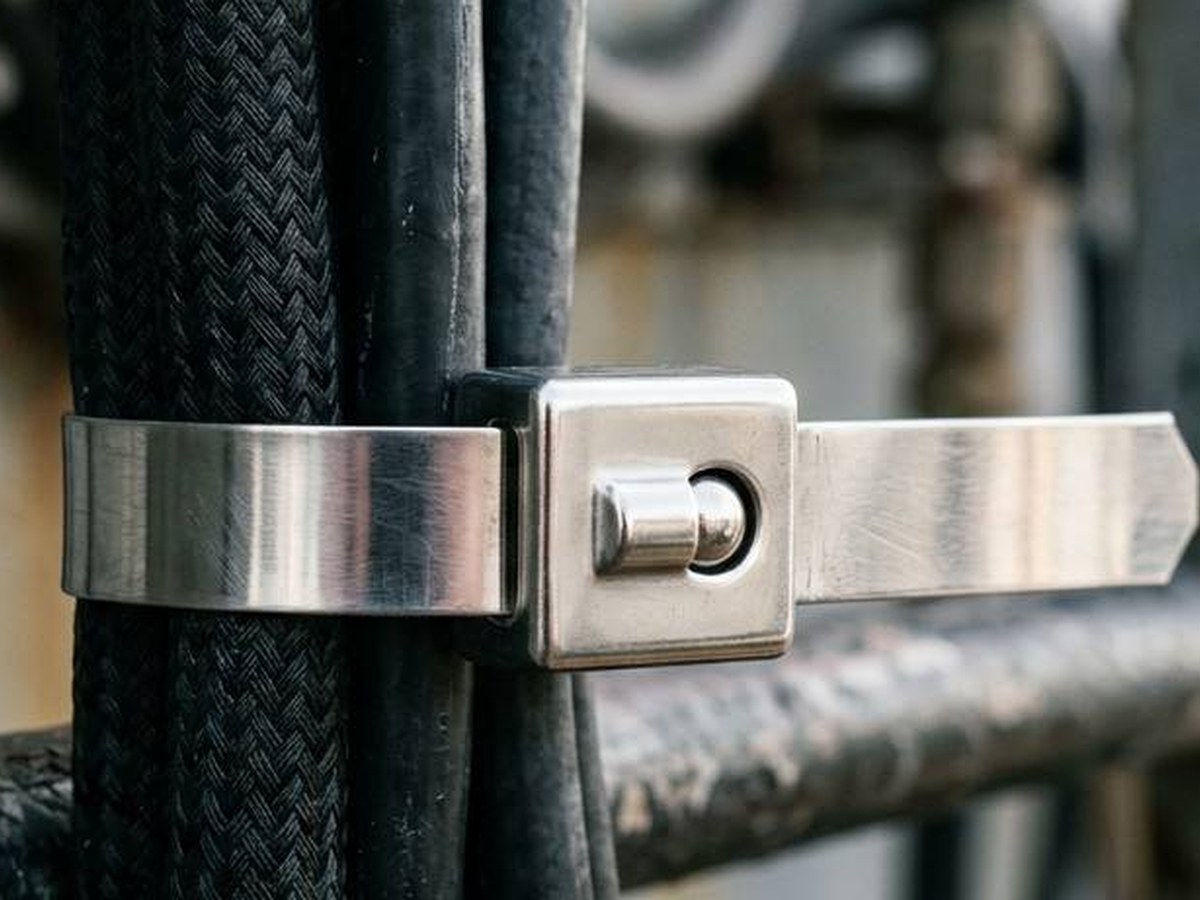
Installation reference: the tie must form a real closed loop around the cable route and be tightened without damaging the jacket.
Field Case
Reducing Cable Movement in a Wind Turbine Tower Route
Application: Tower and nacelle cable management for an onshore wind turbine project.
Problem: General-purpose ties loosened in high-vibration routes, creating cable movement and extra inspection work.
Solution: CableTiesMFG recommended heavy-duty UV-resistant nylon ties for protected tower routes, screw-mount fixing points near brackets, and stainless steel ties for exposed high-vibration locations.
Result: The project improved route consistency, reduced cable movement checks, and created clearer material rules for future turbine builds.
Why Choose CableTiesMFG
Wind Material Options
UV-resistant nylon, heavy-duty ties, screw-mount ties, releasable ties, stainless steel ties, and mounting bases.
Application Support
Recommendations by tower, nacelle, cabinet, offshore, vibration, and corrosion exposure zone.
Batch Consistency
Stable molding, tensile testing, dimensional checks, and documentation support for project procurement.
One-Stop Supply
Cable ties, mounts, clips, cable glands, heat shrink tubing, and installation accessories.
FAQ
What cable ties are best for wind turbines?
For protected tower and cabinet routes, UV-resistant nylon ties are commonly used. For offshore, coastal, wet, high-vibration, or severe-duty locations, stainless steel ties are often more suitable.
Can one cable tie be used across the whole turbine?
A single tie type may work in low-risk areas, but a zone-based selection is safer because tower routes, nacelle zones, cabinets, and offshore exposure have different requirements.
How do I prevent cable movement in high-vibration zones?
Use proper tie spacing, controlled mounting points, suitable tensile strength, and material grades matched to vibration and exposure level.
Do you supply wind turbine cable tie kits?
Yes. CableTiesMFG can recommend mixed wind kits with nylon ties, heavy-duty ties, screw-mount options, stainless steel ties, and documentation for procurement review.
Quality & Documentation
For wind projects, documentation helps procurement, installation teams, and maintenance teams keep material rules consistent across towers, nacelles, and exposed routes.
- Material and size chart
- Tensile and dimensional checks
- RoHS / REACH statement
- Salt-spray or corrosion guidance
- Batch and packing information
RFQ Information Needed
Application Zone
Tower, nacelle, hub, cabinet, offshore, exterior, or maintenance kit use.
Technical Needs
Cable diameter, bundle weight, vibration level, mounting method, material preference, and expected service life.
Commercial Details
Estimated quantity, sample needs, documentation needs, packaging, and delivery window.
Image Use Note
Wind application images on this page are used as severe-duty cable-management references for tower, nacelle, cabinet, and offshore exposure discussion. Product photos are used only for product identification. These images are not presented as verified customer case photos.
Contact Us
Send us your wind turbine zone, cable diameter, vibration level, outdoor or offshore exposure, mounting method, and expected quantity. Our team will recommend the right wind cable tie combination for your project.