
Automotive Solution
Automotive Cable Tie Solutions for Wire Harness and Vehicle Cable Management
Heat-stabilized, vibration-resistant, and production-ready cable tie solutions for automotive wire harnesses, engine compartments, EV battery routing, interior trim, and fluid line fixing.
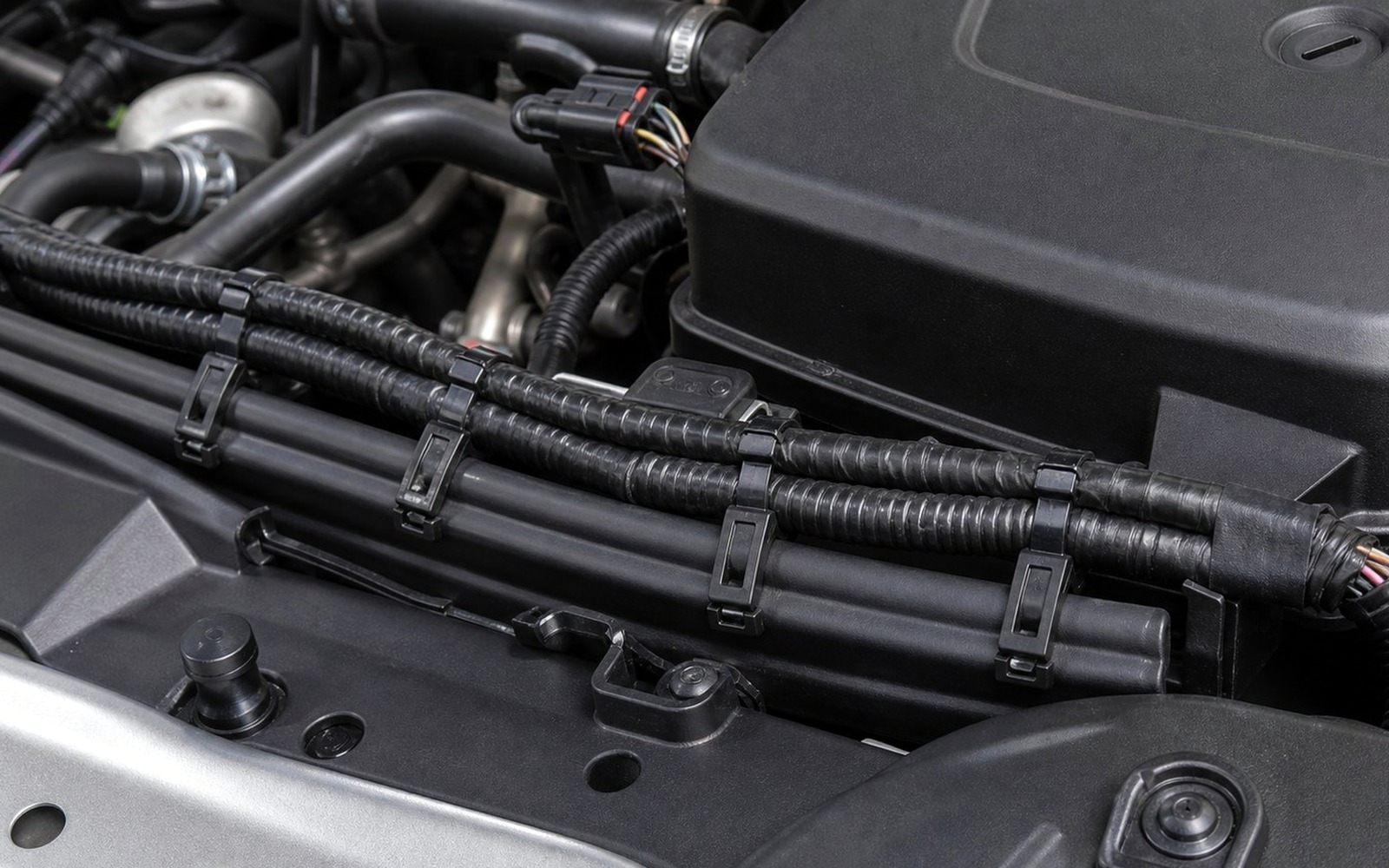
Procurement Snapshot
Best Fit Buyers
Automotive harness factories, EV system integrators, tier suppliers, and vehicle assembly maintenance teams.
Main Decision Factors
Heat rating, vibration retention, insertion consistency, tensile strength, color coding, and packaging format.
Documents to Request
Material data sheet, tensile test record, RoHS/REACH statement, sample approval sheet, and batch traceability.
Common Order Format
Bulk bags for field service, counted bags for assembly, or custom cartons with private label and part number.
Industry Introduction
Modern vehicles use dense wiring systems for power distribution, sensors, lighting, infotainment, safety systems, ADAS modules, and EV battery management. A single vehicle platform may require hundreds or even thousands of cable ties across harness assembly, body-in-white installation, engine bay routing, underbody fixing, and final trim.
For automotive buyers, a cable tie is not just a low-cost consumable. It affects harness quality, installation speed, rework rate, warranty risk, and long-term field reliability. Automotive cable ties must hold bundles securely while tolerating heat, vibration, oils, fuels, coolant, road salt, humidity, and repeated service access.
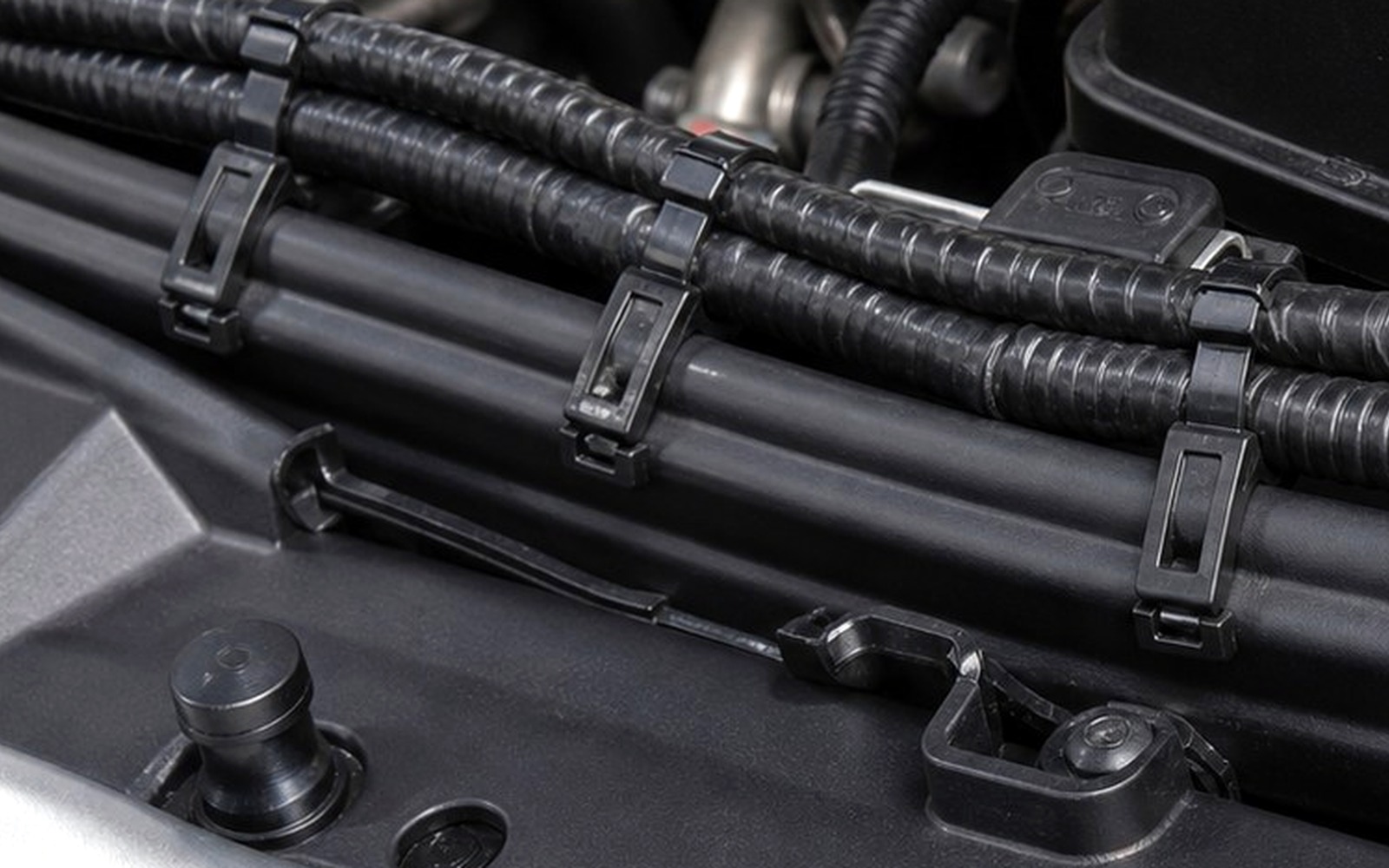
Application visual: automotive wire harness routing shown in vehicle context so buyers can evaluate tie spacing, loom support, and service clearance.
Industry Pain Points
Heat Aging
Standard PA66 ties can lose strength near engines, exhaust paths, and high-load electrical zones when the material is not heat stabilized.
Vibration Loosening
Road vibration and engine vibration can cause loose bundles, wire movement, insulation wear, and noise complaints.
Chemical Exposure
Oil, fuel, brake fluid, coolant, and cleaning chemicals can weaken unsuitable materials or cause cracking over time.
Slow Installation
Inconsistent tie dimensions, poor insertion feel, or non-compatible packaging can slow assembly and increase operator fatigue.
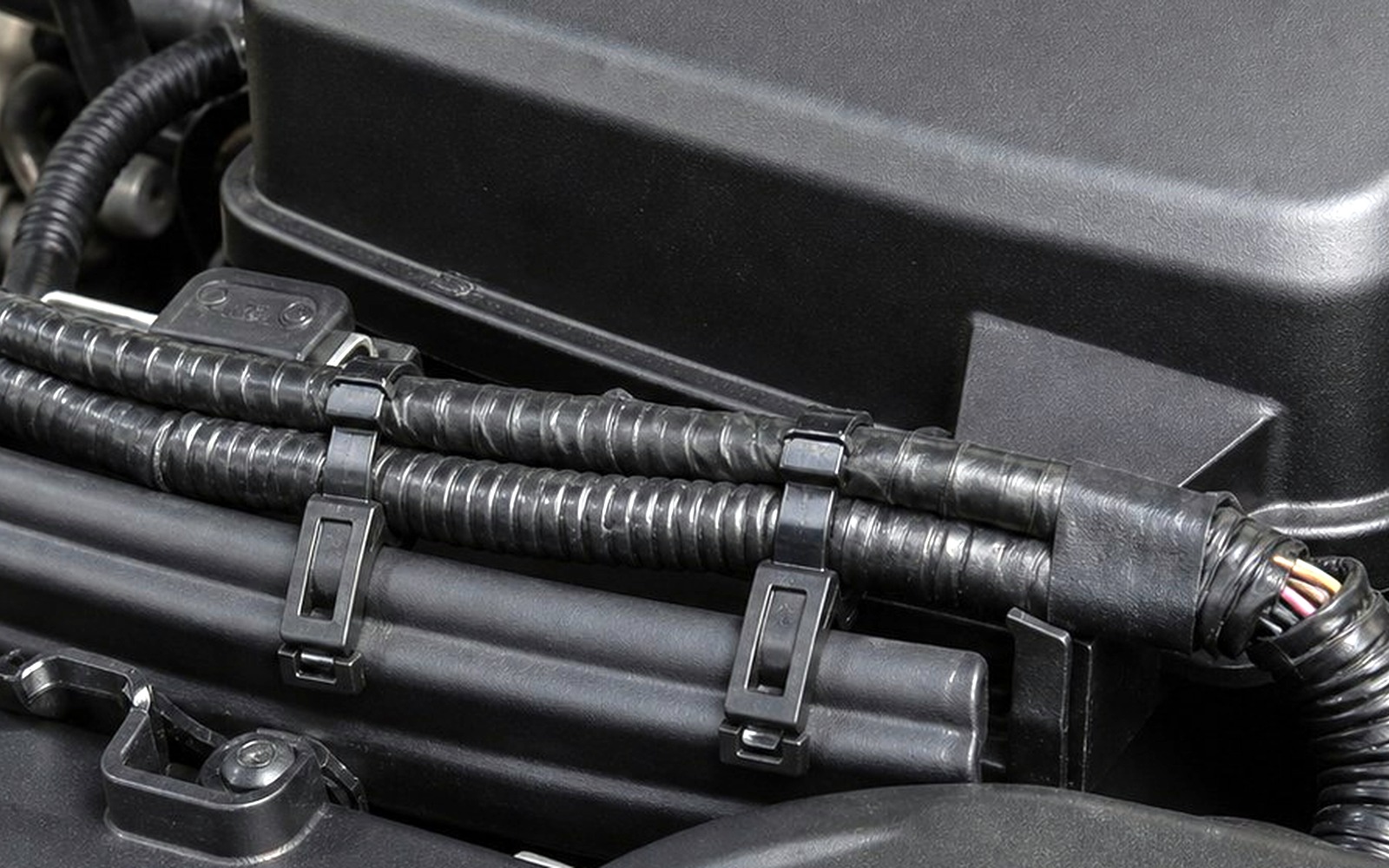
On-Site Problem Analysis
Automotive cable tie failures usually come from a mismatch between the tie material, installation method, and service environment. A tie that works on an interior dashboard harness may fail quickly in an engine compartment. A tie that holds a static bundle in storage may loosen after months of vibration on the road.
- Engine bay: heat-stabilized or high-temperature grades with resistance to automotive fluids.
- Wire harness assembly: stable tensile strength, smooth insertion, clean cut-off, and color options.
- EV battery and high-voltage cable routing: flame-retardant, heat-resistant, and controlled-tension fastening.
- Underbody and exterior zones: UV, salt spray, impact, and moisture resistance.
Recommended Solution
We recommend a zone-based automotive fastening system instead of one general-purpose tie for all vehicle areas. This reduces over-specification in low-risk zones and prevents field failures in high-risk zones.
Interior & General Harness
PA66 cable ties with consistent tensile strength, clean molding, and optional color coding for harness variants.
Engine Compartment
Heat-stabilized PA66 or high-temperature PA46 ties for elevated temperatures and automotive fluid exposure.
EV & Power Systems
Flame-retardant and heat-resistant ties for battery packs, high-voltage cable routes, charging modules, and power electronics.
Underbody & Exterior
UV-stabilized nylon, stainless steel ties, and mounting clips for exposed or high-vibration locations.
Solution Selector
Use this quick decision table before requesting samples or quotations. It converts field symptoms into a practical product starting point.
| Field Problem | Recommended Choice | When to Use |
|---|---|---|
| Engine bay heat aging | CT-AUTO-HS-200 heat-stabilized PA66 tie | Use when routing harnesses near warm engine areas or power modules. |
| EV battery and HV cable routes | CT-AUTO-V0-250 flame-retardant / controlled-tension tie | Use for protected EV electrical routes where fire-safety support matters. |
| Underbody or exterior vibration | CT-AUTO-SS316 stainless steel tie | Use for exposed, wet, high-vibration, or severe-duty fixing points. |
Product Combination
Application visuals below show typical automotive routing zones. Final product selection should still be confirmed against vehicle zone, bundle diameter, operating temperature, drawing requirements, and installation tension.
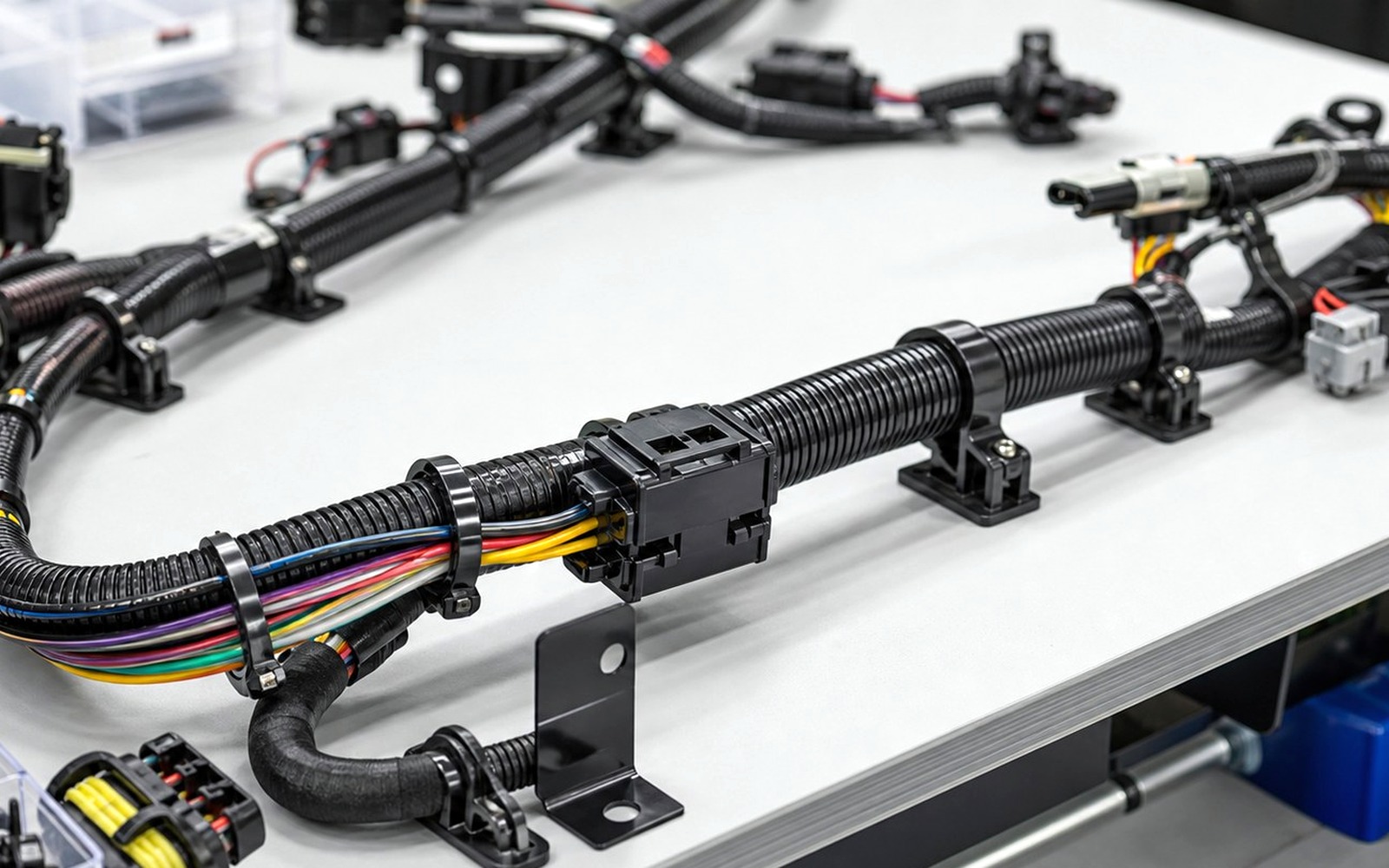
Engine Bay Loom Routing
Heat-stabilized PA66 ties for loom routing around warm engine-bay components.
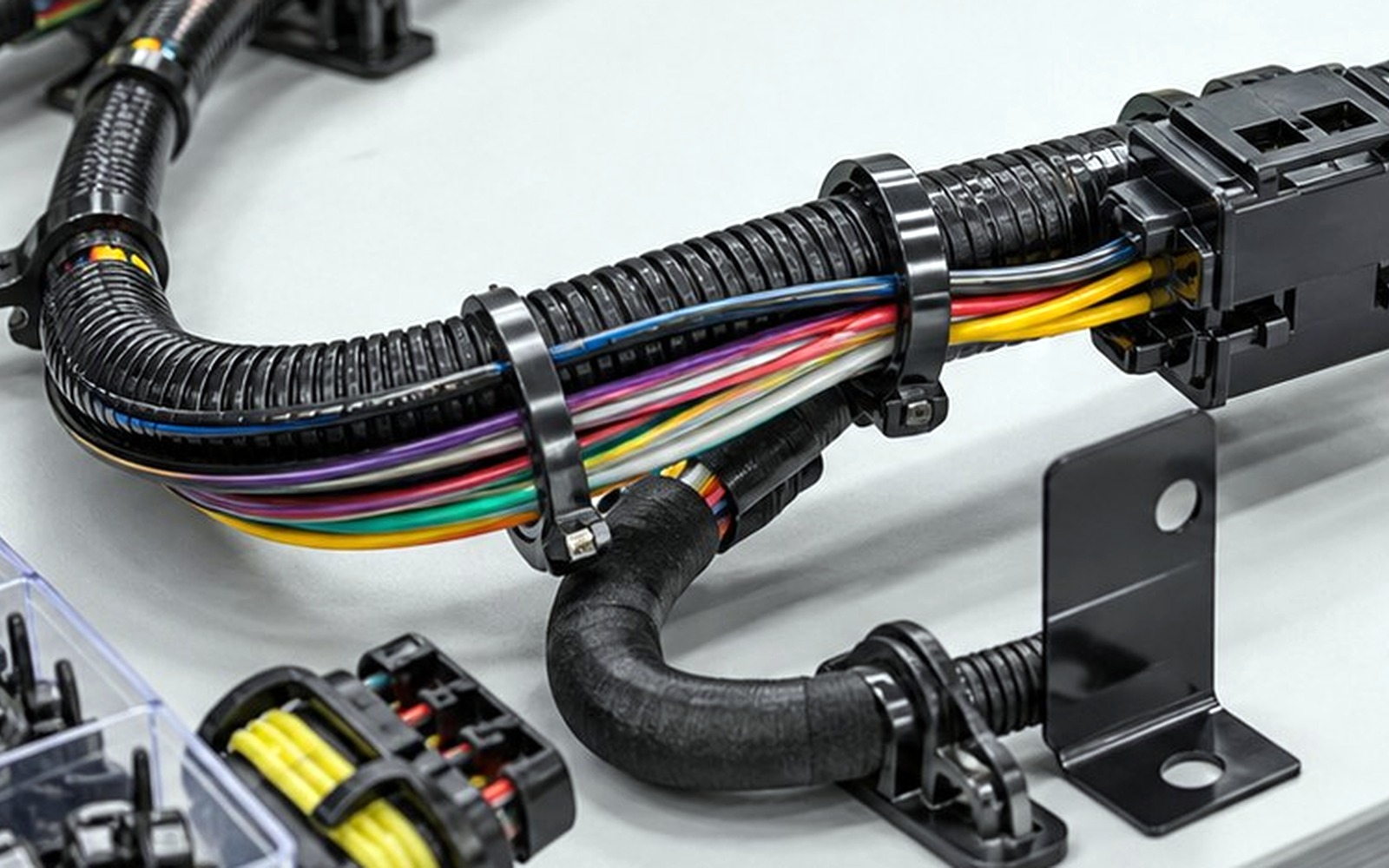
Harness Tie Detail
Controlled tie spacing and head position help reduce abrasion and service risk.
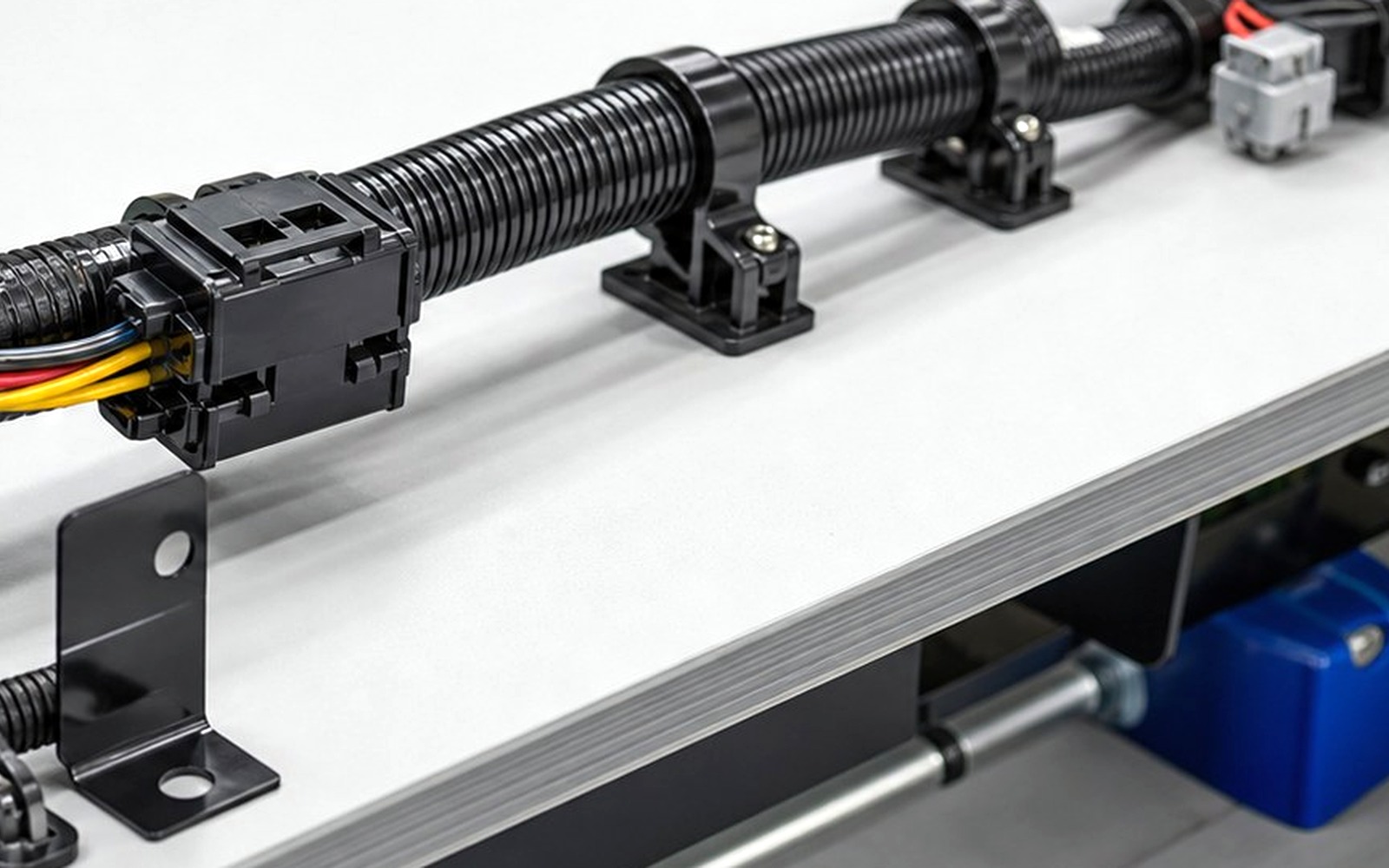
Mountable Fixing Point
Mountable ties and brackets keep harness routes repeatable near modules and panels.
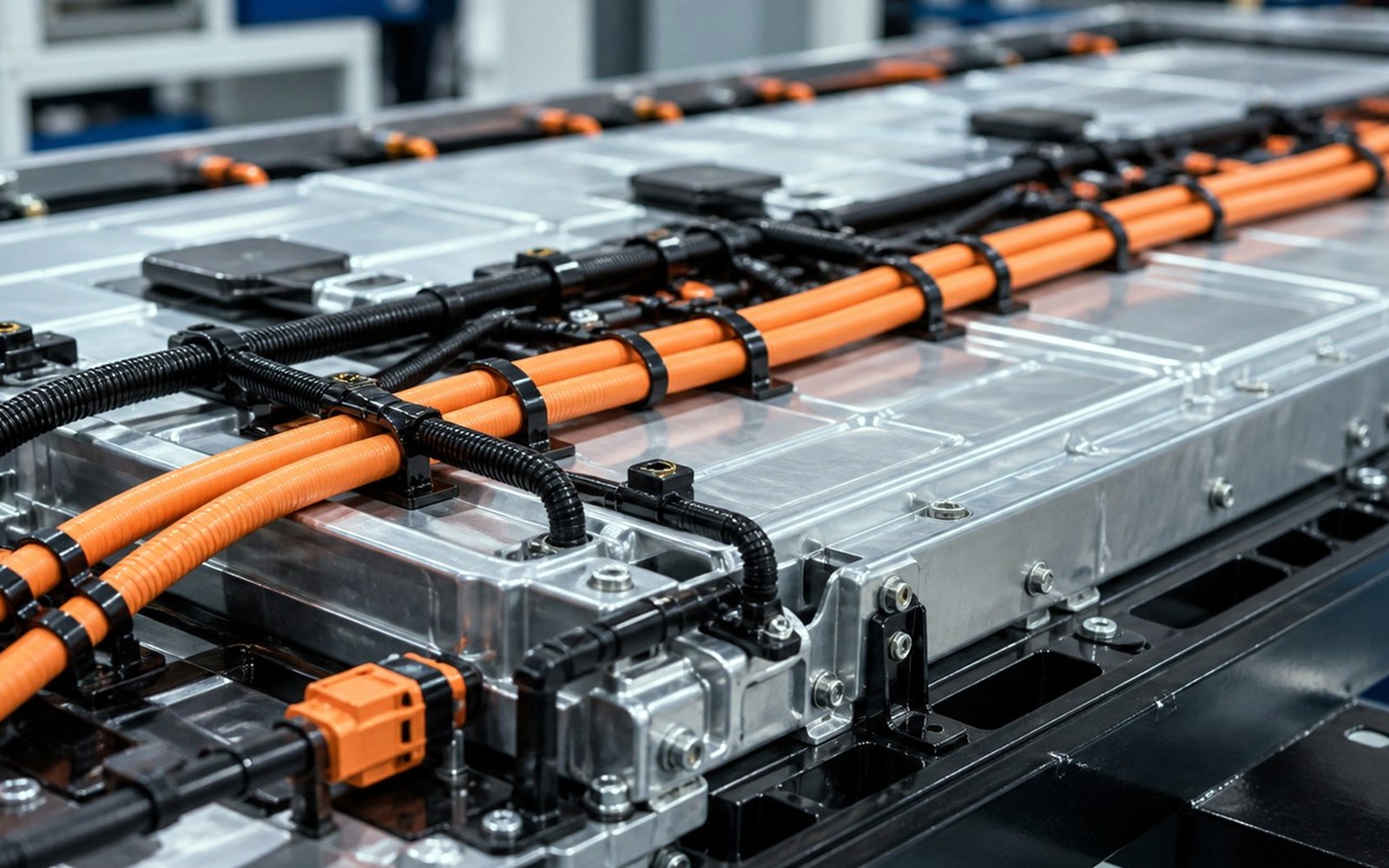
EV Battery Routing
Black ties and mounts organize orange HV cable routes across battery modules.
| Vehicle Zone | Recommended Products | Purpose |
|---|---|---|
| Interior harness | PA66 nylon cable ties | Standard harness bundling and assembly efficiency |
| Engine compartment | Heat-stabilized PA66 / higher-temperature ties | Resist heat aging near warm modules and pumps |
| EV / power electronics | Flame-retardant or controlled-tension ties, mounts | Support protected electrical routes and repeatable fixing |
| Underbody / exterior | UV-stabilized nylon or stainless steel ties | Resist vibration, moisture, road salt, and harsh service |
Product Parameters
| Product Type | Material | Typical Temperature Range | Typical Use |
|---|---|---|---|
| Standard cable tie | PA66 | -40°C to +85°C | Interior harness and general bundling |
| Heat-stabilized tie | PA66 HS | Up to +125°C typical continuous use | Engine compartment and warm zones |
| High-temperature tie | PA46 / PEEK options | Application-dependent high-temperature service | Exhaust-adjacent or power electronics areas |
| Stainless steel tie | 304 / 316 stainless steel | Extreme heat and outdoor exposure | Underbody, exterior, and severe-duty fixing |
Final product grade should be selected according to operating temperature, chemical exposure, bundle diameter, tensile requirement, and assembly method.
Recommended SKU Set
| Suggested SKU | Product Role | Typical Spec Direction | Recommended Use |
|---|---|---|---|
| CT-AUTO-PA66-200 | General harness tie | PA66, 200 mm class, medium tensile | Interior harness and standard wire bundling |
| CT-AUTO-HS-200 | Heat-stabilized tie | PA66 HS, engine bay grade | Warm zones near engines, pumps, and power modules |
| CT-AUTO-V0-250 | Flame-retardant tie | FR nylon option, controlled bundle fixing | EV battery, power electronics, and protected electrical routes |
| CT-AUTO-SS316 | Severe-duty fixing | 304 / 316 stainless steel options | Underbody, exterior, high-vibration, or harsh-service locations |
SKU names are project selection codes for RFQ discussion; final dimensions and material grade should be confirmed against drawings, bundle diameter, and operating conditions.
Installation Steps
- Confirm the vehicle zone: identify whether the tie is used in interior, engine bay, EV power system, underbody, or exterior location.
- Select the right material: match heat, UV, chemical, flame, and vibration requirements before choosing size.
- Measure bundle diameter: choose a tie length that leaves enough tail for tool tensioning without excessive waste.
- Set installation tension: use a cable tie gun where repeatability matters; avoid over-tightening that can damage insulation.
- Trim cleanly: use flush cutting to prevent sharp edges that can injure operators or abrade nearby wiring.
- Inspect after installation: check bundle movement, tie head position, edge clearance, and interference with panels or moving parts.
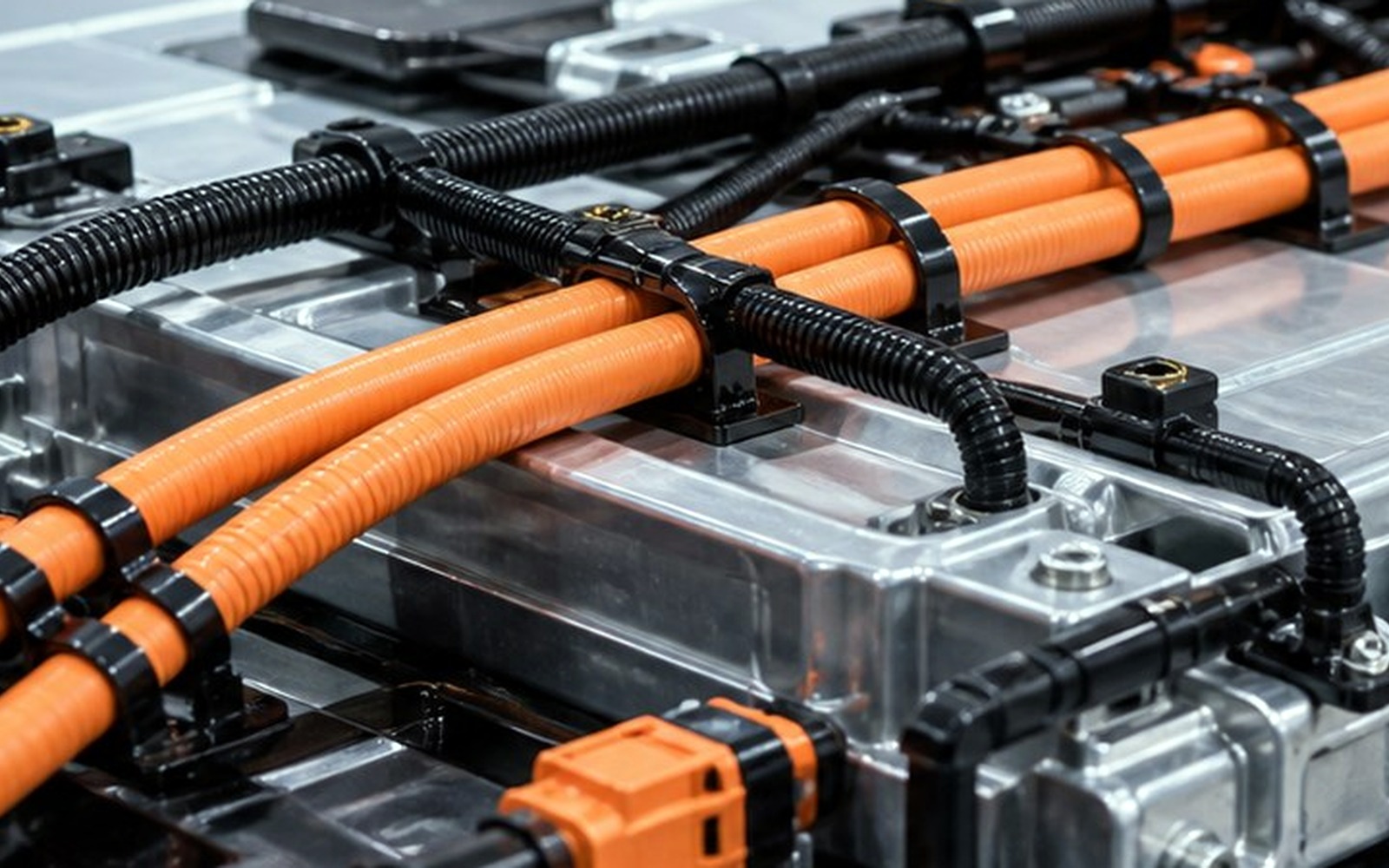
Application visual: cable ties should form closed loops around loom or harness routes without crushing insulation or blocking service access.
Field Case
Reducing Loose-Bundle Rework in Automotive Harness Routing
Application: Automotive wiring harness routing for a vehicle assembly supplier.
Problem: The customer used one standard cable tie across several vehicle zones. In warmer and higher-vibration areas, some bundles became loose during durability testing, increasing rework and inspection time.
Solution: CableTiesMFG separated the fastening plan by vehicle zone: standard PA66 ties for interior harnesses, heat-stabilized ties for warm zones, and stronger mounting options for exposed cable routes. The customer also introduced controlled tensioning tools on repeat installation points.
Result: The revised fastening plan improved installation consistency, reduced loose-bundle checks, and gave the engineering team clearer material rules for future vehicle programs.
Why Choose CableTiesMFG
Material Options
PA66, heat-stabilized PA66, high-temperature materials, UV-stabilized grades, and stainless steel options.
Project Support
Custom colors, lengths, packaging, private label options, and application-based engineering recommendations.
Batch Consistency
Stable molding, tensile testing, dimensional checks, and documentation support for purchasing and quality teams.
One-Stop Supply
Cable ties, mounts, clips, stainless steel ties, heat shrink tubing, cable glands, and installation tools.
FAQ
What cable tie material is best for automotive wire harnesses?
For general interior harnesses, PA66 is commonly used. For engine compartments or warmer zones, heat-stabilized PA66 or higher-temperature materials are recommended. For exposed or severe-duty areas, UV-stabilized nylon or stainless steel may be more suitable.
Can one cable tie be used across the whole vehicle?
It is possible in low-risk applications, but not ideal for full vehicle platforms. A zone-based selection reduces failure risk and avoids overpaying for high-grade materials where they are not needed.
How do I prevent cable ties from damaging wire insulation?
Use the correct width and tension, avoid over-tightening, trim the tail flush, and consider outside-serrated or wider-body designs for sensitive cable jackets.
Do you support custom automotive cable ties?
Yes. CableTiesMFG can support custom length, color, material, packaging, and project-based recommendations for harness assembly and vehicle cable management.
Quality & Documentation
For serious B2B sourcing, the product is only half of the decision. The documentation package should make sample approval, incoming inspection, and repeat ordering easier.
- Material data sheet for each selected resin or metal grade
- Tensile test record or batch inspection report
- RoHS / REACH statement for export compliance
- Sample approval sheet with dimensions and packaging format
- Private label packing specification when required
RFQ Information Needed
Application Data
Vehicle zone, bundle diameter, cable jacket material, maximum temperature, vibration level, and chemical exposure.
Product Requirements
Length, width, tensile strength, color, releasable or permanent locking, flame rating, and packaging preference.
Commercial Details
Annual volume, trial quantity, target delivery date, private label need, and required compliance documents.
Related Product and Technical Links
How to Specify Cable Management for an Automotive Project
Work through the points below for the vehicle program you are supplying. Confirm each item so the cable management matches the vehicle zone, the harness route and the operating conditions before a quote is prepared.
Wire-harness and vehicle context
Confirm the vehicle zone the route runs through, whether interior and general harness, engine compartment, EV and power systems, or underbody and exterior.
Material
Select from PA66 for general interior harnesses, heat-stabilized PA66 for warmer zones, and UV-stabilized nylon or stainless steel for exposed or severe-duty areas.
Temperature
State the operating temperature of the zone, since heat aging is reviewed separately for engine-compartment and interior routes.
Vibration and movement
Note where the route experiences continuous vibration or movement, because vibration loosening is reviewed separately from static interior looms.
Bundle dimensions
Provide the harness bundle diameter and the number of wires per bundle, together with the fixing points along the route.
Locking style
Confirm whether the tie must be releasable for service access or is a permanent fixing, and whether it is tied around the loom or fitted to a mount.
Mounting and routing method
Describe the route through the interior, engine bay, battery area or underbody, and whether ties are tied around the loom or fitted to a mountable fixing point.
Quantity, packaging and documentation
Confirm the components needed per build, the packing format required, and any compliance documents the program specifies.
Automotive Cable Management FAQ
What should I confirm before specifying cable management for an automotive project?
Confirm the vehicle zone the route runs through, whether interior harness, engine compartment, EV and power systems, or underbody and exterior, because each zone has different temperature, vibration and exposure conditions. Then confirm the harness dimensions, the locking style and the documents the program requires.
Which wire-harness or bundle dimensions should I provide?
Provide the harness bundle diameter and the number of wires per bundle, together with the fixing points along the route. These determine the tie length and width and the size of any mountable fixing point used.
How should temperature and vibration affect material selection?
Warmer zones such as the engine compartment call for heat-stabilized PA66 or higher-temperature materials, while exposed or severe-duty areas may need UV-stabilized nylon or stainless steel. Routes exposed to continuous vibration are reviewed for retention separately from static interior looms.
Which locking style should I confirm?
Confirm whether the tie needs to be releasable for service access or is a permanent fixing, and whether the bundle is tied around the loom or fixed to a mount. The locking style and the mounting detail are confirmed together for each fixing point.
How should routing and mounting requirements be described?
Describe whether the route runs through the interior, engine bay, battery area or underbody, and whether ties are tied around the loom or fitted to a mountable fixing point. Confirm the fixing point spacing along the route.
How can the specification support repeat vehicle programs?
A confirmed specification records the zone, material, dimensions, locking style and mountings used, so the same configuration can be referenced for later builds or model variants. Batch consistency and the required compliance documents can be listed per part number for repeat ordering.
Contact Us
Send us your vehicle zone, bundle diameter, operating temperature, exposure conditions, and expected annual volume. Our team will recommend the right automotive cable tie combination for your project.