
Product Kit Solution
Industrial Cable Tie Kit for Factory, Electrical and MRO Projects
A practical kit for industrial maintenance teams, electrical contractors, equipment builders and distributors who need heavy-duty nylon ties, stainless steel ties, mounting bases, marker ties, tools and sample cable-fixing components in one repeatable RFQ package.
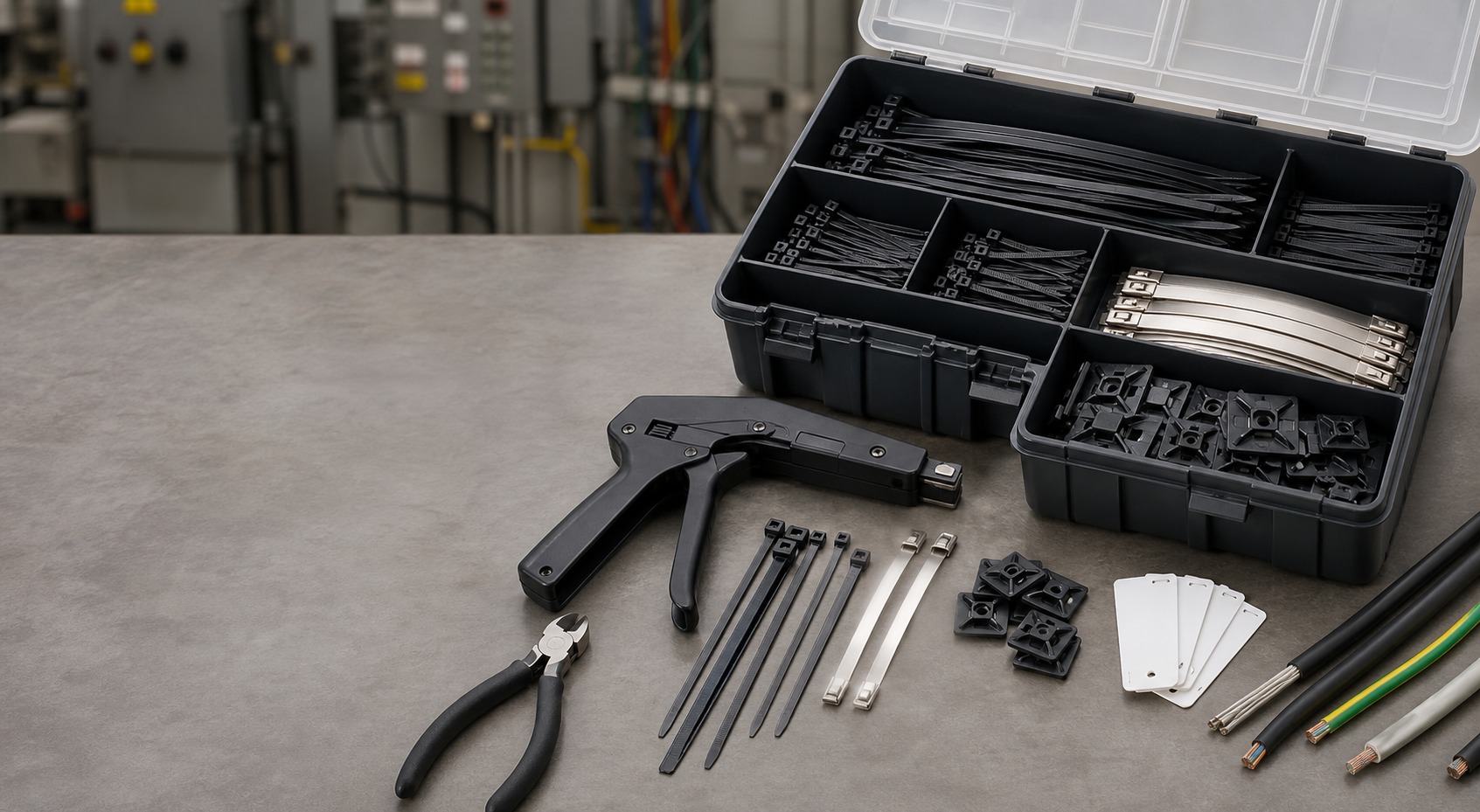
Kit Introduction
Industrial cable management is not solved by one cable tie size. A real factory kit needs common nylon ties for daily bundling, stainless steel ties for harsh points, mounting bases for controlled anchors, marker ties for maintenance identification and installation tools for clean, repeatable work.
The Industrial Kit is built for electrical cabinets, cable trays, production equipment, MRO repairs, machine wiring, conduit routes and distributor sample packs. It helps buyers test the right combination before placing volume orders.
Industrial Site Pain Points
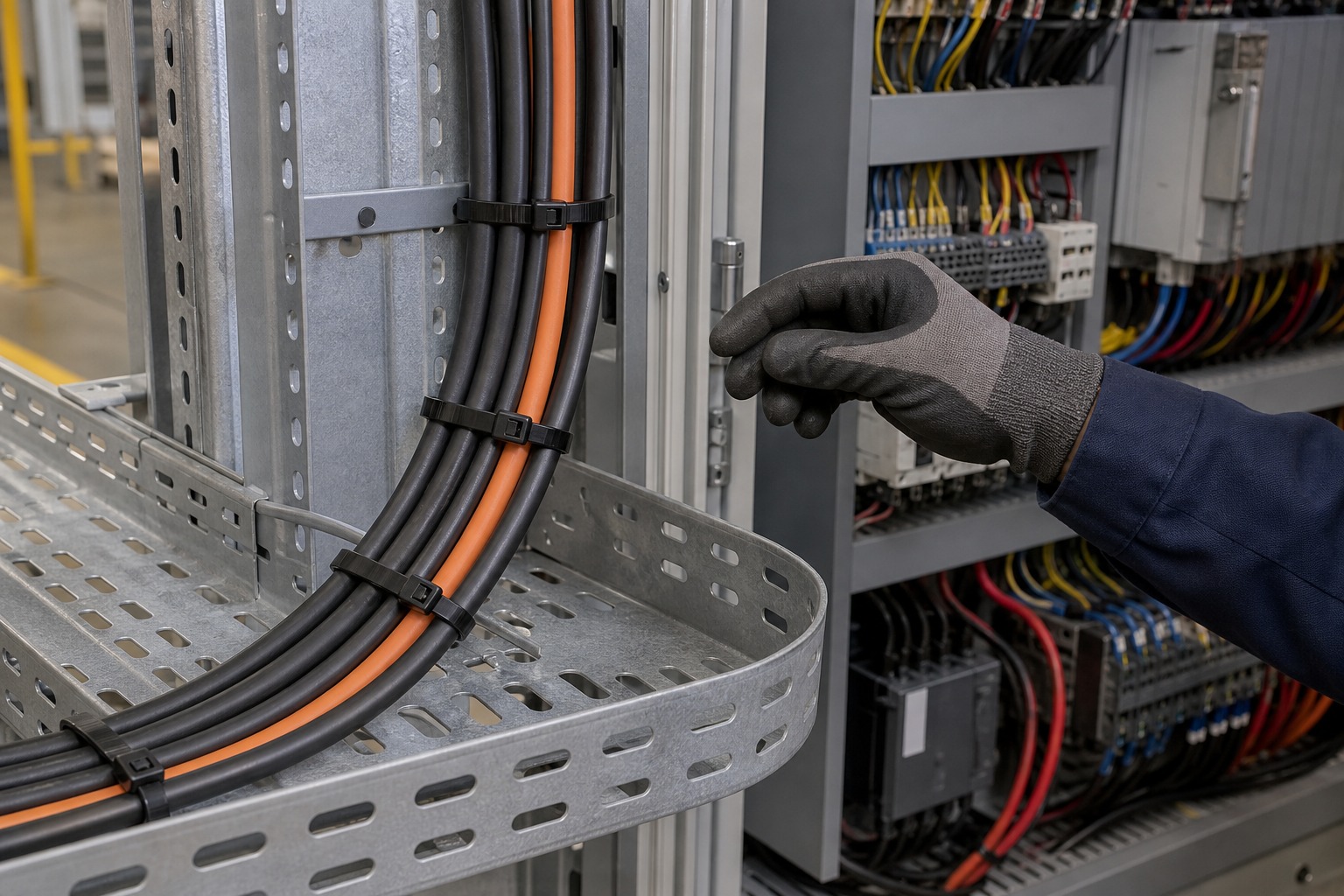
Loose Cable Bundles
Uncontrolled cable routes sag, shift under vibration and make inspection slower.
Mixed Environments
One facility may include control cabinets, outdoor runs, hot zones, oily areas and corrosion exposure.
Poor Identification
Unmarked routes make troubleshooting, maintenance and line changes harder for technicians.
Slow Installation
Wrong tie sizes, rough trimming and missing tools increase labor time and rework.
On-Site Problem Analysis
Before selecting an Industrial Kit, separate the route by environment and fixing point. Cabinet wiring, tray bundles, hot conduits, moving equipment and exposed pipework need different tie choices even when they are all inside the same plant.
- Cable tray routes: check bundle diameter, tray spacing, bend radius and maintenance access.
- Electrical cabinets: use compact ties, marker ties and mount bases where routing needs identification.
- Equipment frames: match tie strength to vibration, movement and contact with metal edges.
- Harsh zones: consider stainless steel ties for heat, corrosion, outdoor or chemical exposure.
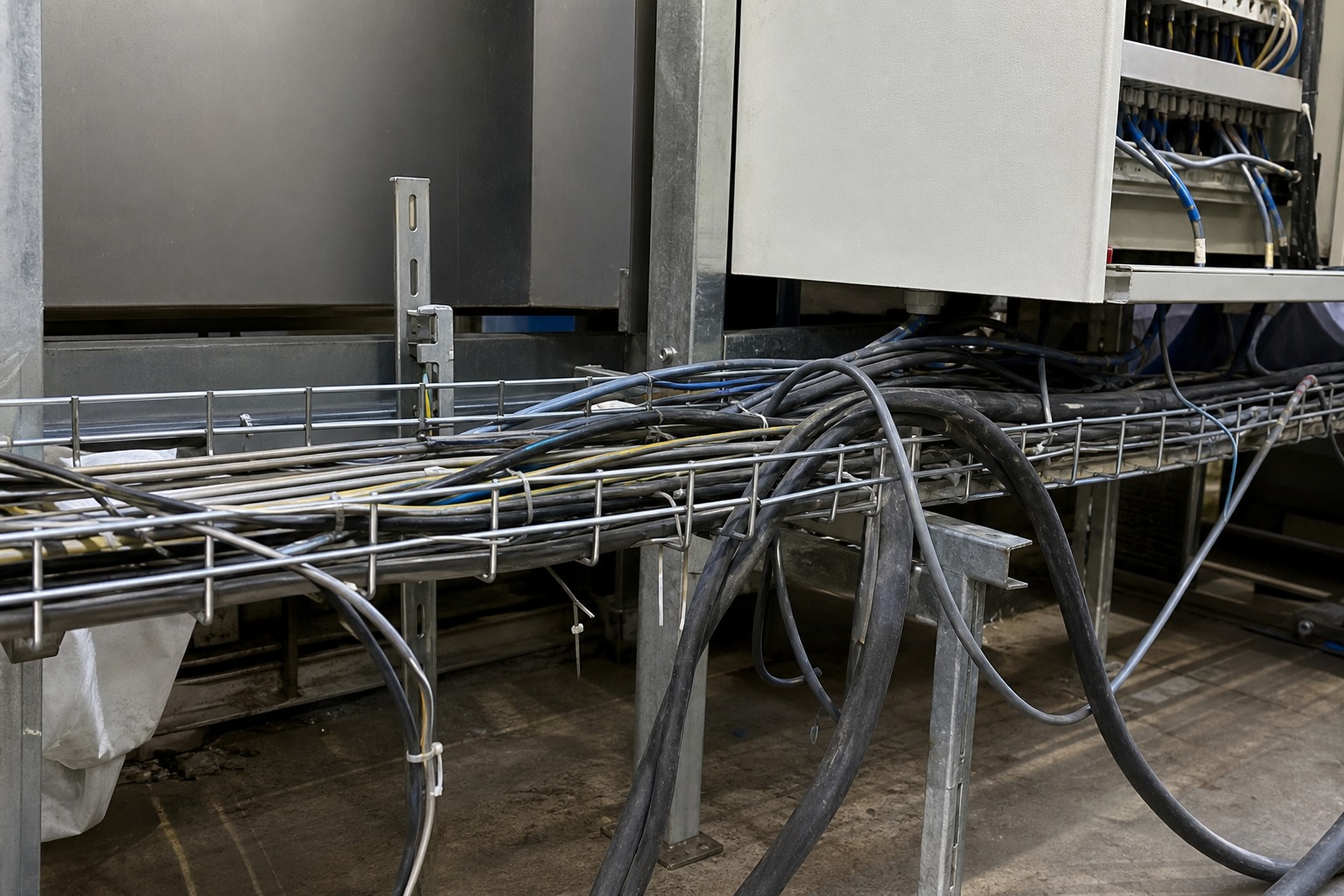
Recommended Industrial Kit Configuration
A useful kit combines fast everyday fastening with harsher-duty options. The goal is not to add every SKU, but to cover the field problems that maintenance, electrical and equipment teams meet most often.
| Kit Item | Main Function | When to Use |
|---|---|---|
| Heavy-duty black nylon cable ties | General bundling for industrial cable tray and machine wiring | Factory cable routes, control cabinet exits, equipment panels and routine MRO work. |
| Natural white nylon cable ties | Indoor bundling, temporary assembly and clean identification zones | Panel wiring, workshop assembly, packaging kits and low-exposure indoor use. |
| 304 / 316 stainless steel cable ties | High-temperature, corrosion-resistant or high-exposure fixing | Outdoor equipment, hot conduit, coastal sites, chemical areas and metal pipe routes. |
| Screw-mount bases and mountable ties | Create controlled anchor points on panels, brackets and rails | Equipment frames, cabinets, DIN rail areas, machine guards and service retrofit work. |
| Marker ties / identification tags | Improve route labeling and maintenance visibility | Electrical panels, test equipment, cabinet wiring and maintenance inspection routes. |
| Cable tie gun and flush cutter | Improve tension consistency and safe tail trimming | Assembly benches, contractors, line maintenance and distributor sample kits. |
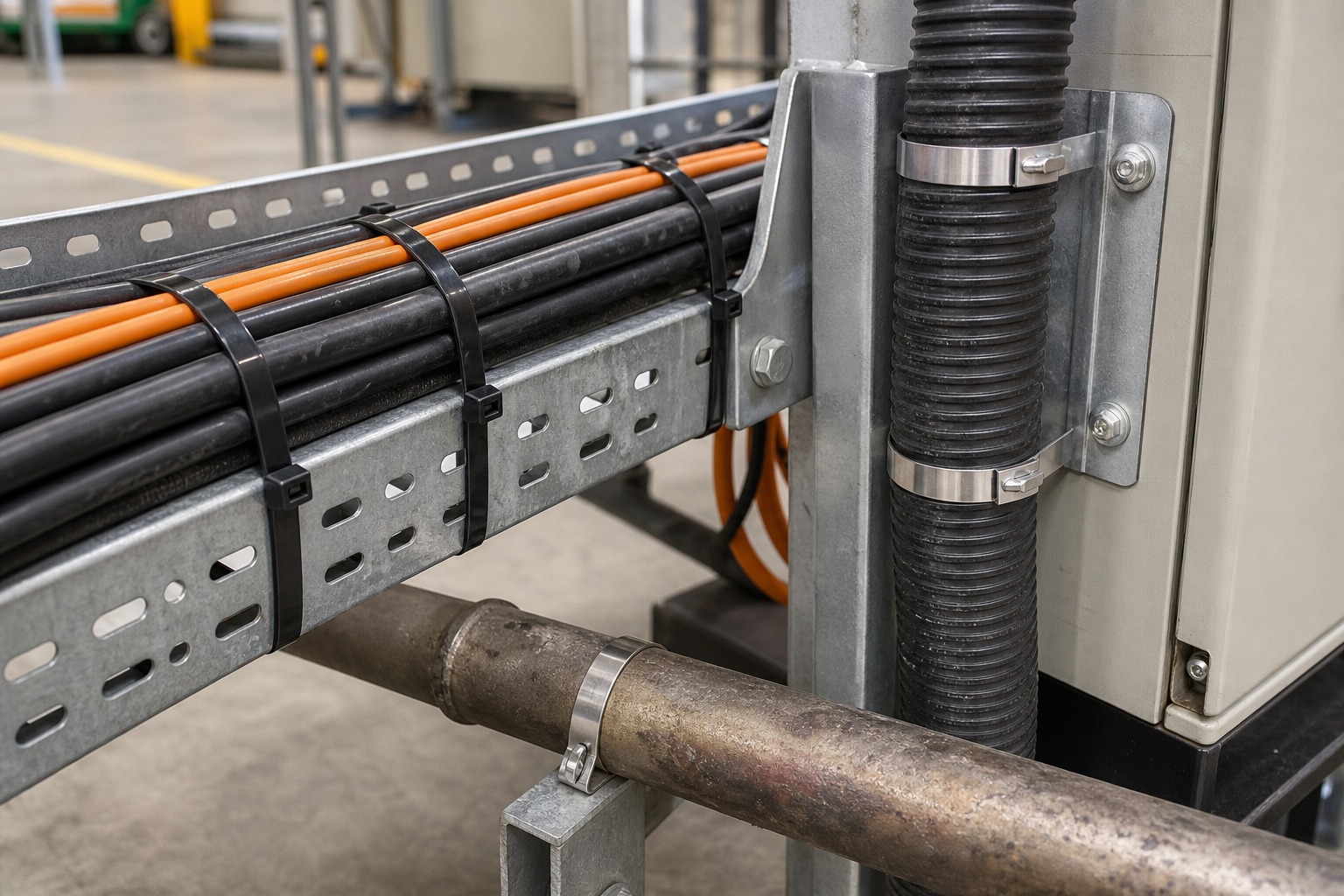
Selection Principle
Use nylon ties for fast cable bundling and stainless steel ties for exposure, heat or corrosion. Add mount bases and marker ties where the route must be controlled, labeled or repeatedly serviced.
The application images on this page are representative photo-style visuals, not claimed customer case photos.
Product Combination
An Industrial Kit can be configured as a factory maintenance starter pack, electrical contractor sample kit, equipment builder assembly kit or distributor mixed-SKU product bundle.
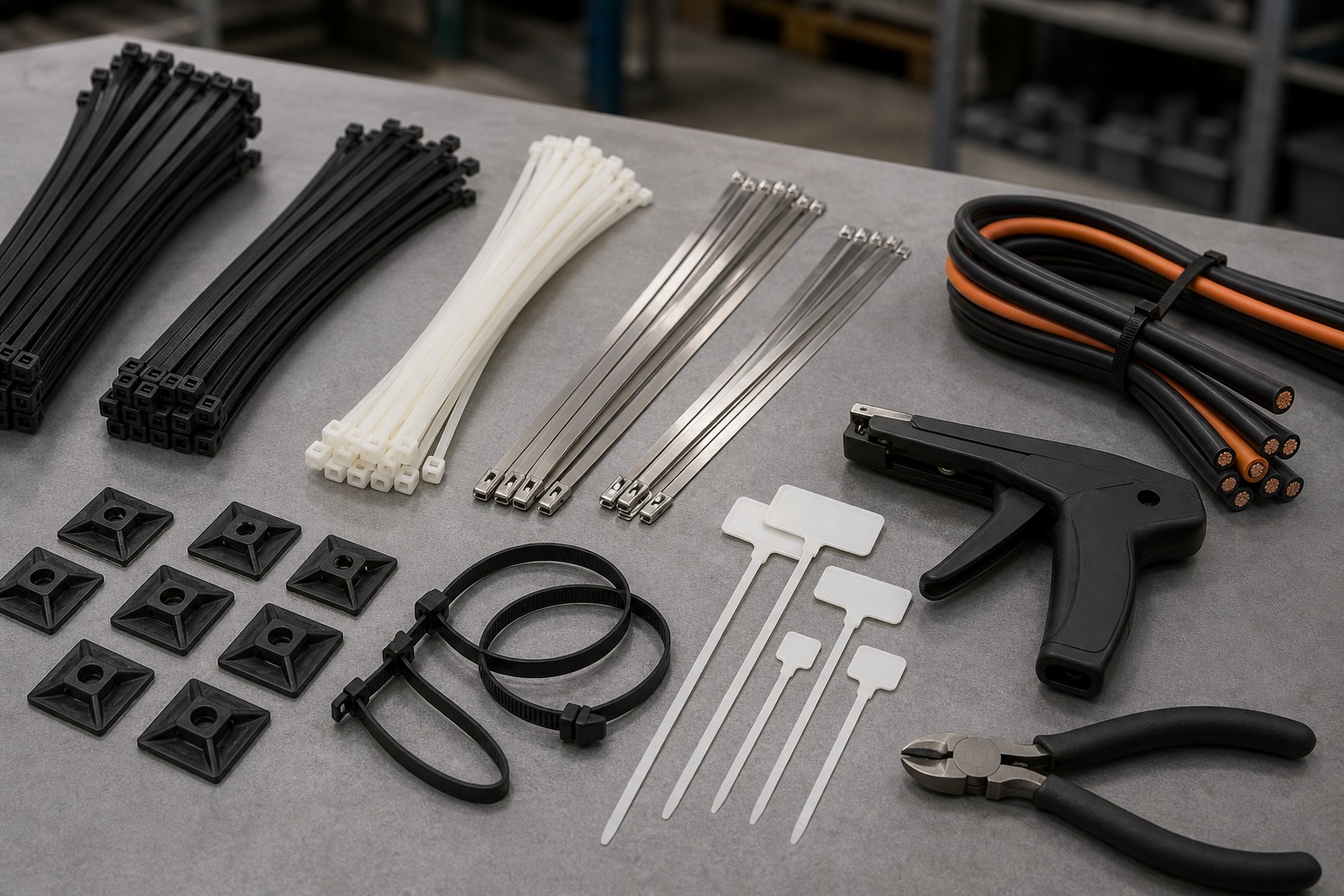
MRO Kit
Common black ties, stainless ties, cutter and mount bases for daily factory maintenance.
Electrical Kit
Nylon ties, marker ties and small bases for panels, cabinets and tray exits.
Harsh-Duty Kit
Stainless steel ties and UV black ties for exposed, hot or corrosion-prone routes.
Distributor Kit
Mixed sizes, materials and tools for customer testing before volume ordering.
Product Parameters
| Component | Key Parameters | Recommended Check | Typical Industrial Use |
|---|---|---|---|
| Heavy-duty nylon tie | PA66 grade, width, length, tensile strength, color and temperature range | Bundle diameter, cable weight, vibration level and indoor/outdoor exposure | Cable tray, machine wiring, control cabinet exits and general factory routes |
| Stainless steel tie | 304 or 316 grade, band width, length, coating option and locking style | Heat, corrosion, chemical exposure, edge contact and required holding force | Conduit, pipe, outdoor equipment, marine/coastal or high-exposure industrial sites |
| Mounting base | Base size, screw hole diameter, adhesive option and tie width range | Panel material, surface preparation, fixing load and maintenance access | Electrical cabinets, machine frames, equipment panels and retrofit wiring |
| Marker tie / tag | Label area, material, color, marking method and temperature range | Route ID requirement, readability, cleaning chemicals and inspection interval | Panel wiring, maintenance routes, test benches and service identification |
| Cable tie gun / cutter | Supported tie width, tension control, cut finish and hand-use frequency | Installation volume, tail safety, repeatability and operator comfort | Assembly benches, contractors, electrical teams and kit demonstration sets |
Installation Steps
- Classify the route by cable diameter, support point, environment and maintenance access.
- Select nylon ties for standard cable bundles and stainless ties for harsh exposed fixing points.
- Wrap the tie around the cable bundle and the support route where fixing is required.
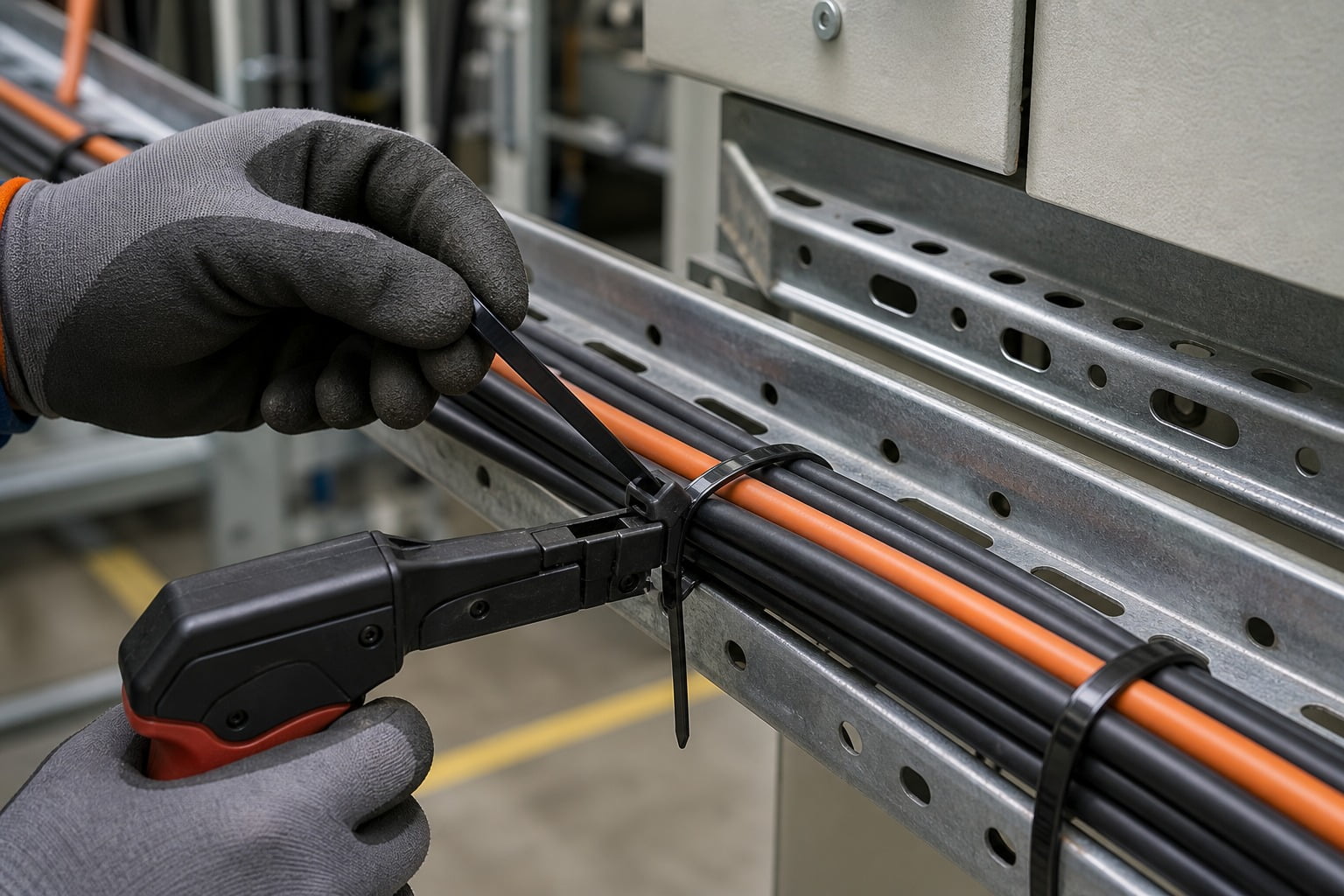
- Thread the tapered tail through the single locking head and apply controlled tension.
- Use a cable tie gun or flush cutter to trim tails cleanly without sharp edges.
- Inspect repeated spacing, bend radius, rubbing points and whether the route remains serviceable.
Field Case
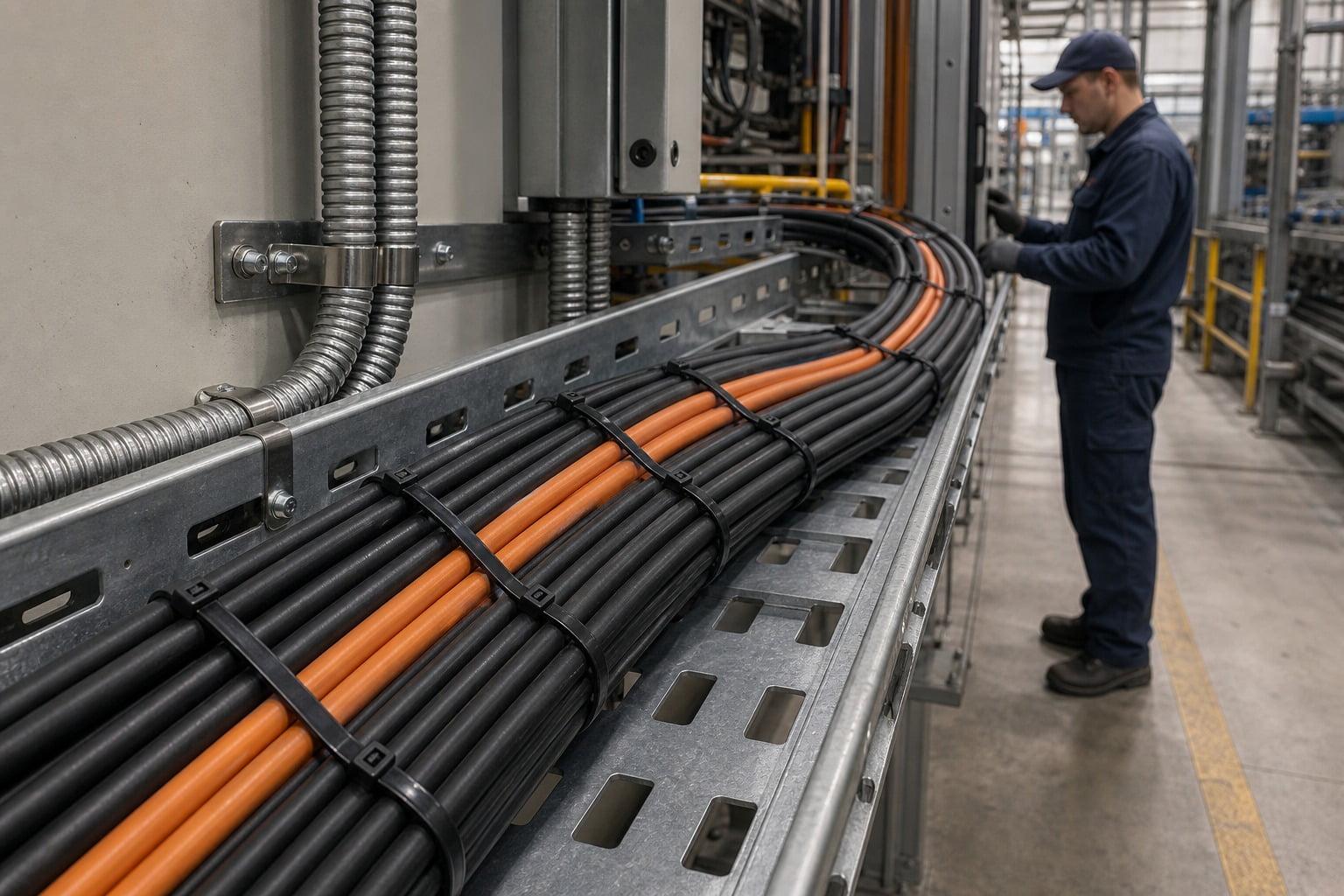
Representative factory cable tray after kit-based fixing
Application: Electrical cabinet exit and production-line cable tray route.
Problem: Cable bundles were uneven, hard to inspect and exposed to movement near equipment frames.
Solution: CableTiesMFG configured heavy-duty nylon ties for cable bundles, stainless steel ties for exposed conduit, marker ties for route identification and a cable tie gun for consistent finishing.
Result: The route becomes cleaner, easier to inspect and easier to convert into a repeatable purchasing kit.
Why Choose CableTiesMFG
Mixed Kit Support
Combine nylon ties, stainless ties, marker ties, bases and tools into one sample or project kit.
Material Matching
Support PA66, UV black, heat-stabilized and 304/316 stainless selections by environment.
OEM Packing
Configure bag, box, mixed-size set, contractor kit or distributor sample pack.
Factory RFQ
Quote by component mix, length, width, tensile strength, material, packing and target use.
FAQ
What should be included in an Industrial Kit?
A practical kit usually includes heavy-duty nylon ties, stainless steel ties, mounting bases, marker ties, a cable tie gun or cutter and sample cable-fixing components.
When should stainless steel ties be used?
Use stainless steel ties for higher heat, outdoor exposure, corrosion-prone areas, chemical zones or locations where nylon tie aging is a concern.
Can you customize the kit for distributors?
Yes. Kit composition, material grades, size mix, packing quantity and private-label packaging can be configured for distributor and project buyers.
How do we choose tie sizes?
Send the bundle diameter, cable weight, support spacing, environment and installation method. We can recommend length, width, material and tensile strength range.
How to Specify an Industrial Cable Tie Kit
Choose a kit by working through the points below for the installation you are equipping. Confirm each item so the kit composition, materials and packing match the application before a quote is prepared.
Application
Confirm where the kit is used — factory maintenance, electrical work, MRO or a product line — so the component mix matches the duty.
Material
Select PA66 nylon, UV black, heat-stabilized or 304/316 stainless to suit the environment.
Strength
State the tensile strength range required for the bundle and the support spacing.
Bundle size
Provide the bundle diameter and the length and width required for the cable run.
Temperature and environment
Note heat, outdoor exposure, chemical zones or corrosion-prone areas that affect material choice.
Installation method
Specify whether the ties are applied by hand or with a cable tie gun or cutter included in the kit.
Quantity and packaging
Confirm the component mix, packing quantity and whether a bag, box, mixed-size set, contractor kit or distributor sample pack is required.
Industrial Cable Tie Kit FAQ
What should an industrial cable tie kit include?
A practical kit usually includes heavy-duty nylon ties, stainless steel ties, mounting bases, marker ties and a cable tie gun or cutter, together with the cable-fixing components the application needs. The exact contents are confirmed against the application and duty.
How do I select material and strength?
Match the material to the environment: PA66 nylon, UV black or heat-stabilized ties for general duty, and 304 or 316 stainless where heat, outdoor exposure or corrosion are a concern. State the tensile strength range required and the support spacing so material and strength are confirmed together.
Which bundle dimensions should I confirm?
Provide the bundle diameter for the cable run, together with the cable weight and support spacing. These determine the length and width to recommend and the tensile strength range that suits the bundle.
How should temperature and environment affect selection?
Note heat, outdoor exposure, chemical zones and corrosion-prone areas. Stainless steel ties are used where higher heat, outdoor exposure, chemical zones or nylon aging are a concern; elsewhere the standard nylon and UV black options may be suitable.
What installation method should I specify?
State how the ties will be applied, by hand or with a cable tie gun and cutter, and whether those tools should be included in the kit. The installation method also informs the size and strength selected.
How can a kit specification support repeat purchasing?
A confirmed kit specification records the component mix, material grades, size mix, packing quantity and target use, so a repeat order can reference the same configuration. Kit composition and private-label packing can be configured for distributor and project buyers, and repeat enquiries can be quoted from the same specification.
Build an Industrial Kit for your factory, project or product line
Send your target application, cable bundle size, environment, preferred materials, required components and estimated quantity. We can help prepare a practical kit configuration for quotation.