Solar Solution
Solar Cable Tie Solutions for PV Cable Management and Outdoor Installations
UV-resistant, weather-stable, and installation-ready cable tie solutions for solar farms, rooftop PV systems, DC cable routing, combiner box wiring, and long-term outdoor cable fixing.
Procurement Snapshot
Best Fit Buyers
Solar EPCs, PV installers, solar farm operators, combiner box builders, and renewable energy distributors.
Main Decision Factors
UV resistance, outdoor life target, cable weight, rail fixing method, installation speed, and inspection access.
Documents to Request
UV/weathering data, material sheet, tensile test record, RoHS/REACH statement, and batch test report.
Common Order Format
Project cartons, installer bags, mixed solar kits, or private-label packing for EPC and distributor channels.
Industry Introduction
Solar PV projects rely on clean and secure cable routing from panel strings to combiner boxes, inverters, and power distribution equipment. Cable ties are used throughout the system to hold DC cables, communication cables, grounding wires, and auxiliary wiring in place.
Unlike indoor electrical work, solar cable management is exposed to strong UV radiation, heat cycles, rain, wind, dust, and mechanical movement from panel frames. A low-grade tie may look acceptable during installation but become brittle, loose, or broken after outdoor exposure.
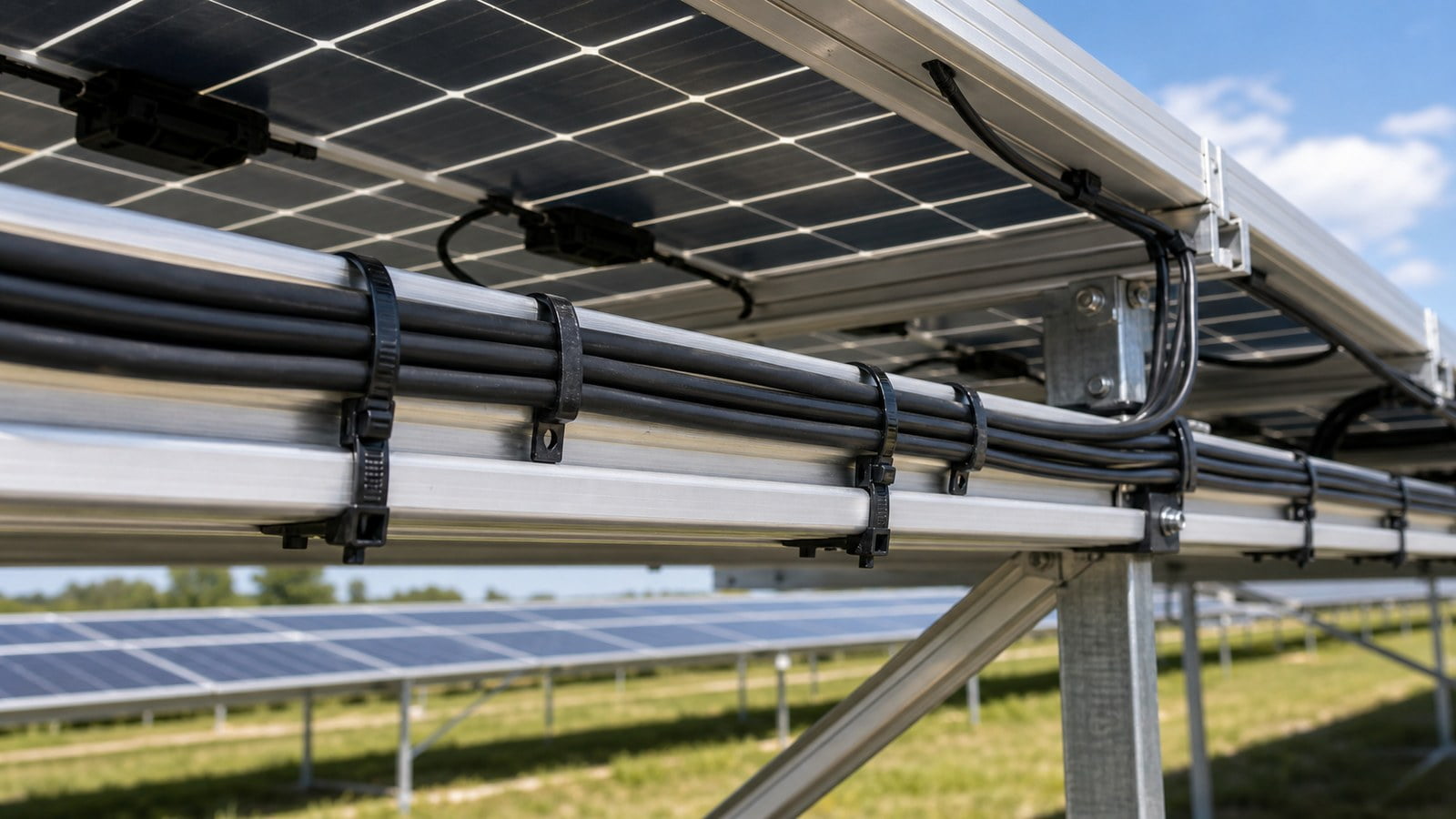
Application scene: PV cables should run close to the module frame or rail, with fixed spacing to prevent sagging under the array.
Industry Pain Points
UV Degradation
Standard nylon ties can embrittle, crack, and lose tensile strength when exposed to direct sunlight for long periods.
Cable Sagging
Loose or broken ties allow PV cables to sag, rub against sharp edges, or hang below the panel frame.
Heat Cycling
Daily temperature swings can weaken unsuitable materials and cause inconsistent holding force over time.
Slow Field Work
Large solar farms need repeatable fastening methods that reduce installer time without sacrificing long-term reliability.
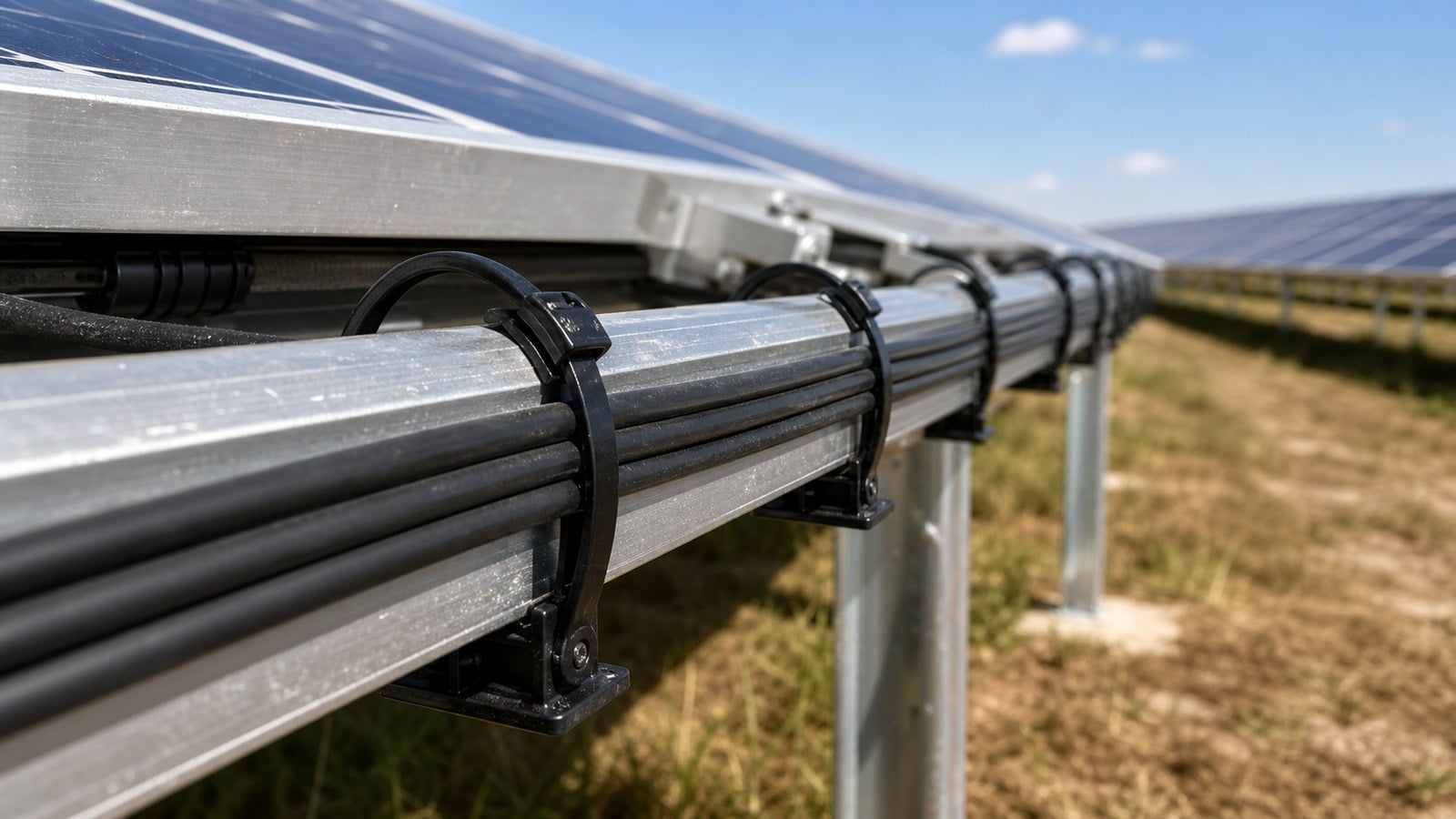
Application scene: black outdoor ties hold PV cable runs against the rail so cables do not hang below the module frame.
On-Site Problem Analysis
Solar cable tie failures often come from using indoor-grade ties in outdoor PV environments. The installer may focus on initial fixing strength, while the real risk appears later: UV aging, thermal cycling, frame abrasion, and cable movement in wind.
- Panel underside: requires UV-resistant ties and stable spacing to prevent sagging.
- Combiner box routes: require clean cable grouping and strain control near entries.
- Ground-mounted arrays: require resistance to dust, rain, wind movement, and long exposure.
- Coastal or corrosive zones: may require stainless steel ties or higher-corrosion-resistant options.
Recommended Solution
We recommend selecting solar cable ties according to exposure level, service life expectation, cable weight, and installation zone. For most outdoor PV cable routing, black UV-resistant nylon ties are the baseline. For coastal, high-wind, or severe-duty zones, stainless steel ties and mounting accessories should be considered.
PV Panel Cable Routing
UV-resistant black nylon ties for DC cable bundling under modules and along aluminum rails.
Combiner Box Wiring
Cable ties and mounts for organized wire grouping, strain relief, and service-friendly routing.
Outdoor Rail Fixing
Heavy-duty ties or mounting bases for repeatable rail attachment in ground-mounted arrays.
Severe Environment
316 stainless steel ties for coastal, high-UV, high-wind, or high-temperature exposure.
Solution Selector
Use this quick decision table before requesting samples or quotations. It converts field symptoms into a practical product starting point.
| Field Problem | Recommended Choice | When to Use |
|---|---|---|
| Panel underside cable sagging | CT-SOLAR-UV-200 black UV-resistant nylon tie | Use for standard PV cable routing under modules and along aluminum rails. |
| Ground-mounted array rail runs | CT-SOLAR-UV-HD heavy-duty outdoor tie | Use where cable weight, wind movement, or longer support intervals increase load. |
| Coastal or severe outdoor exposure | CT-SOLAR-SS316 stainless steel cable tie | Use for coastal, high-wind, high-heat, or long-life exposed solar sites. |
Product Combination
Product images below are used for material and product identification. Solar field installation should be confirmed against project drawings, tie spacing, cable diameter, and rail geometry.
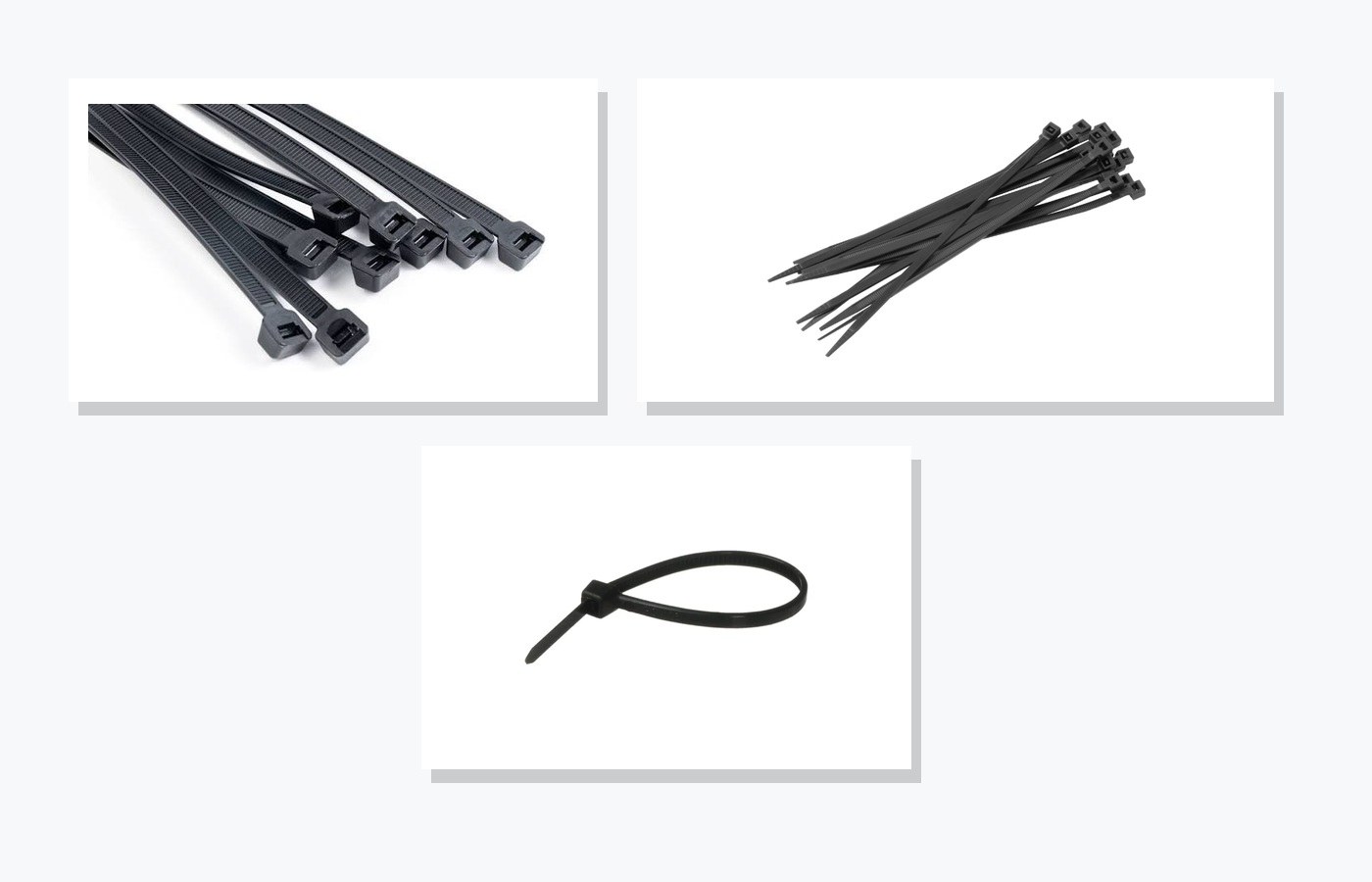
UV Black Nylon Tie
Baseline choice for outdoor PV cable routing under modules and along rails.
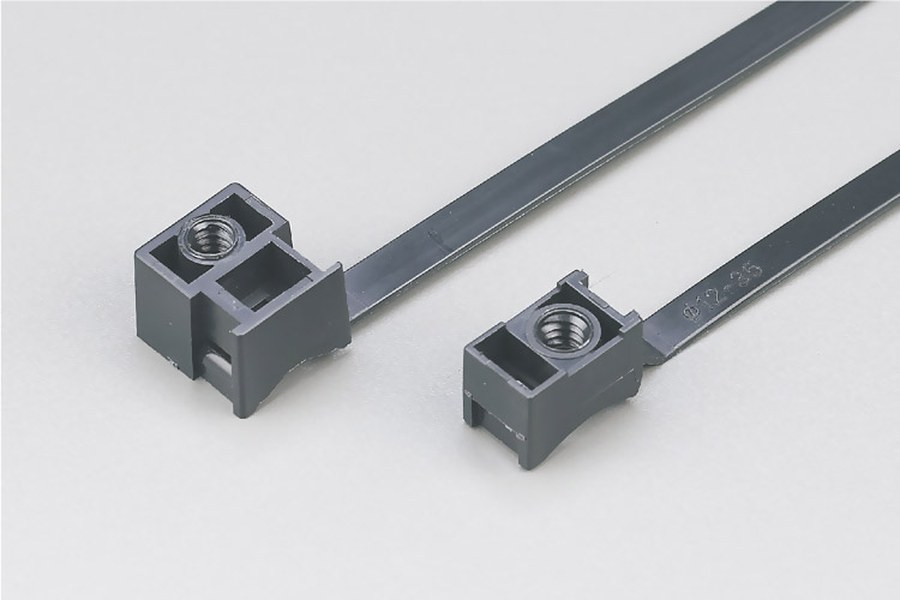
Screw-Mount Tie
For controlled fixing near brackets, combiner boxes, and serviceable cable paths.
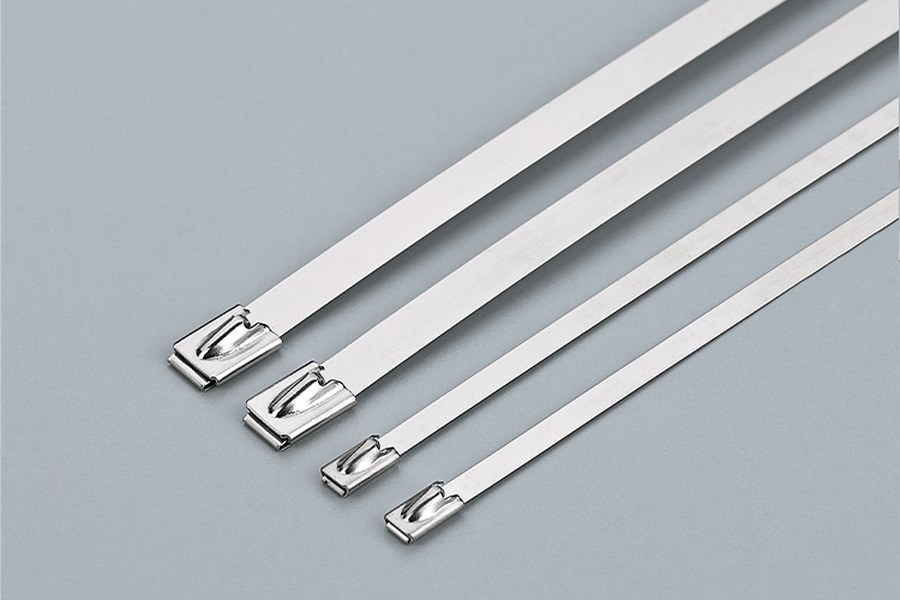
Stainless Steel Tie
For coastal, high-heat, high-wind, and long-life exposed solar sites.
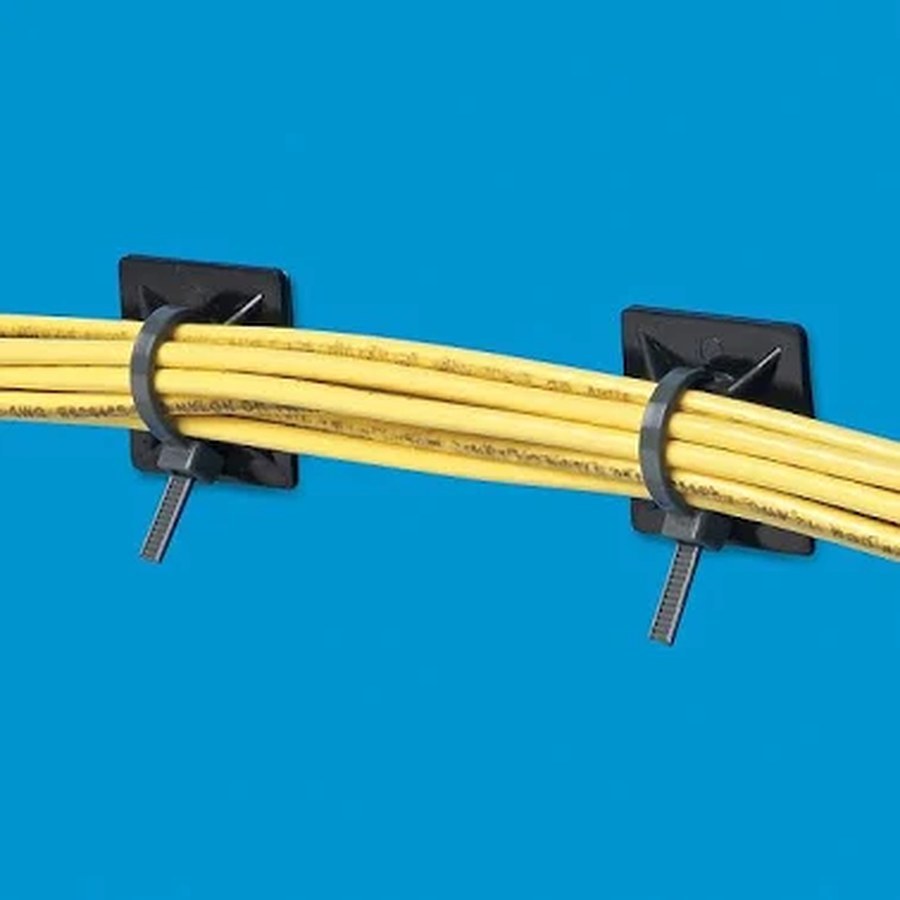
Mounting Base Set
For clean cable grouping, strain control, and repeatable installation points.
| Application Zone | Recommended Products | Purpose |
|---|---|---|
| Panel underside | UV-resistant black nylon ties | Secure DC cables under PV modules |
| Rail cable routing | UV cable ties, cable tie mounts, edge clips | Prevent cable sagging and frame abrasion |
| Combiner box area | Releasable ties, mounts, identification ties | Organized service access and cable grouping |
| Coastal or severe-duty sites | 316 stainless steel cable ties | Long-term corrosion and weather resistance |
Product Parameters
| Product Type | Material | Typical Performance Focus | Typical Use |
|---|---|---|---|
| UV-resistant cable tie | UV-stabilized PA66 / PA12 options | Outdoor sunlight resistance | PV cable bundling and panel underside fixing |
| Heavy-duty solar tie | UV-stabilized nylon | Higher tensile strength and wider cable support | Ground-mounted array cable routes |
| Releasable tie | UV-stabilized nylon | Maintenance access and temporary routing | Combiner boxes and service points |
| Stainless steel tie | 304 / 316 stainless steel | Corrosion, heat, and severe-weather resistance | Coastal solar farms and exposed structures |
Final selection should consider UV exposure, cable diameter, service life target, installation tension, salt spray risk, and inspection requirements.
Recommended SKU Set
| Suggested SKU | Product Role | Typical Spec Direction | Recommended Use |
|---|---|---|---|
| CT-SOLAR-UV-200 | Standard PV cable tie | Black UV-resistant nylon, 200 mm class | Panel underside DC cable routing |
| CT-SOLAR-UV-HD | Heavy-duty outdoor tie | Wider body, higher tensile outdoor grade | Ground-mount array rail cable runs |
| CT-SOLAR-MOUNT | Mounting accessory | Cable tie mount / edge clip option | Rail fixing where repeated spacing is required |
| CT-SOLAR-SS316 | Severe-environment tie | 316 stainless steel cable tie | Coastal, high-wind, high-heat, or long-life exposed sites |
SKU names are selection codes for RFQ discussion. Final material and size should be matched to cable diameter, rail profile, exposure level, and project service-life target.
Installation Steps
- Identify the cable route: map panel underside, rail runs, combiner box entry, and inverter-side cable paths.
- Select outdoor-rated material: use UV-resistant ties as the baseline for exposed PV installations.
- Set tie spacing: keep consistent support intervals to prevent cable sagging and movement.
- Avoid sharp contact: keep cables away from frame edges and abrasive metal surfaces.
- Control tension: tighten enough to hold the cable without crushing insulation or restricting thermal movement.
- Inspect after installation: check tail trimming, tie head orientation, cable clearance, and future service access.
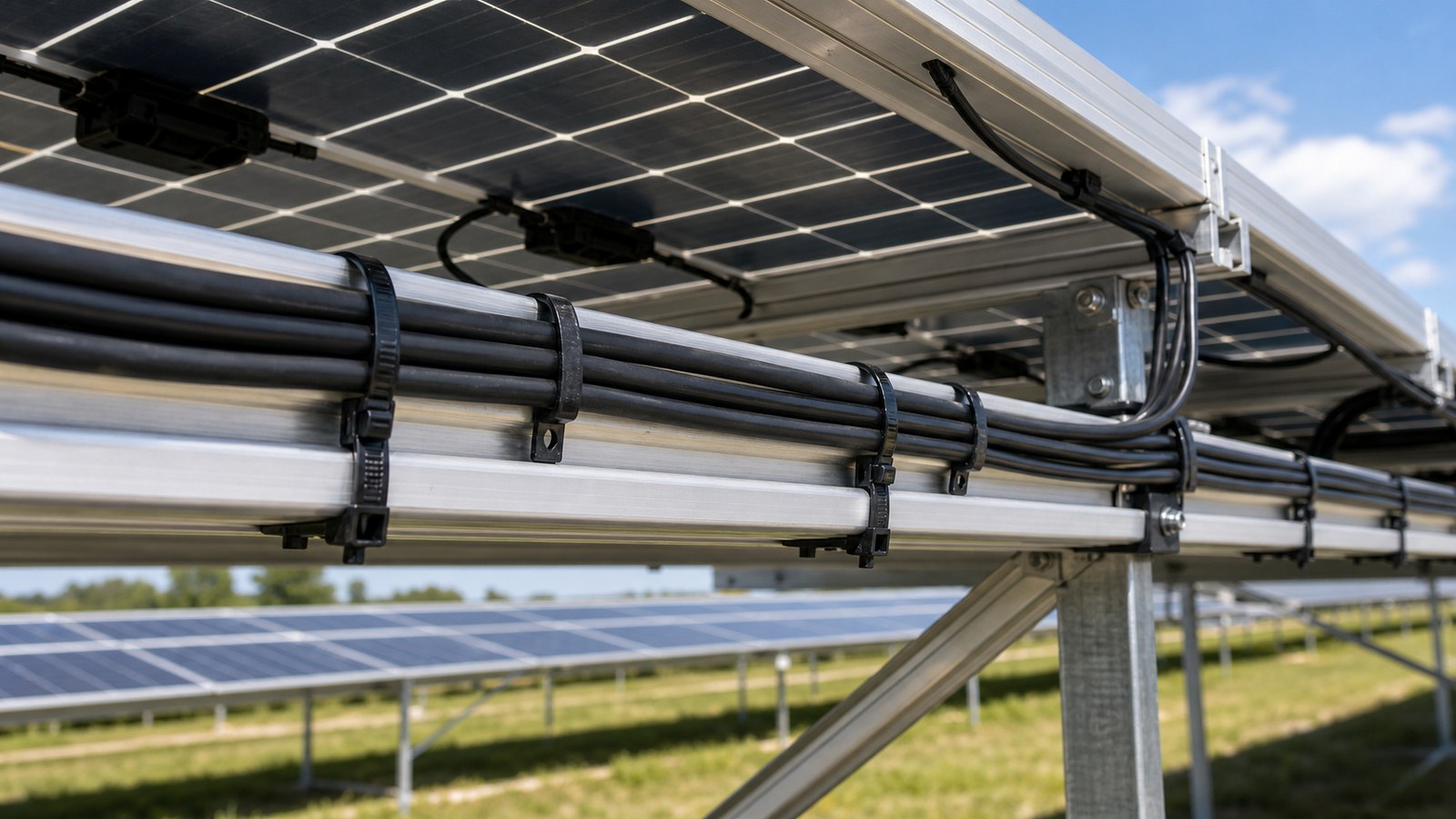
Application visual: ties should close around the cable route and rail fixing point, with controlled tension and no sharp-edge contact.
Field Case
Reducing Cable Sagging in a Ground-Mounted Solar Farm
Application: PV string cable management for an outdoor ground-mounted solar project.
Problem: The original fastening plan used standard indoor cable ties. After sun exposure and wind movement, some ties became brittle and cables started to sag below the module frame.
Solution: CableTiesMFG recommended UV-resistant black nylon ties for normal panel routes, tighter spacing at direction changes, and stainless steel ties for exposed perimeter runs.
Result: The revised fastening plan improved cable retention, reduced inspection rework, and gave the EPC team clearer material rules for future PV projects.
Why Choose CableTiesMFG
Solar Material Options
UV-resistant nylon, heavy-duty ties, releasable ties, stainless steel ties, and mounting accessories.
Outdoor Application Support
Recommendations based on panel layout, cable weight, climate, and installation environment.
Batch Consistency
Stable molding, tensile testing, dimensional checks, and documentation support for project procurement.
One-Stop Supply
Cable ties, mounts, clips, cable glands, heat shrink tubing, and installation tools for PV cable management.
FAQ
What cable ties are best for solar panels?
For most outdoor solar installations, black UV-resistant nylon cable ties are recommended. For coastal, high-wind, or severe-duty locations, stainless steel ties may be a better choice.
Can standard nylon cable ties be used outdoors?
Standard indoor nylon ties are not ideal for long-term solar exposure. UV-resistant grades are designed to better withstand sunlight, heat cycling, and outdoor weathering.
How do I prevent PV cables from sagging?
Use proper tie spacing, avoid sharp frame contact, select outdoor-rated ties, and inspect cable routes after installation. Direction changes and heavier cable runs need closer support.
Do you supply solar cable tie kits?
Yes. CableTiesMFG can recommend solar cable tie kits based on project type, cable diameter, installation environment, and expected volume.
Quality & Documentation
For serious B2B sourcing, the product is only half of the decision. The documentation package should make sample approval, incoming inspection, and repeat ordering easier.
- UV/weathering data or outdoor-use material statement
- Material data sheet and tensile test record
- RoHS / REACH compliance statement
- Project packing list and carton label specification
- Sample approval before large EPC or distributor orders
RFQ Information Needed
Site Conditions
Ground or rooftop system, climate, UV exposure, coastal risk, wind condition, panel mounting style, and maintenance interval.
Cable Route
Cable diameter, tie spacing, rail profile, combiner box route, and whether mounts or edge clips are required.
Order Details
Project MW size, estimated tie quantity, packaging preference, delivery schedule, and required test documents.
Related Product and Technical Links
Contact Us
Send us your PV project type, cable diameter, exposure environment, installation method, and expected quantity. Our team will recommend the right solar cable tie combination for your site.