
Industry Solution
Data Center Cable Tie Solutions for Server Racks, Patch Cords and Cable Trays
Build a clean cable management system for server racks, network patch cords, power cable groups and overhead trays. Use soft hook-and-loop straps where cables need flexibility, and controlled nylon or releasable cable ties where support and retention matter.

Application visual: rear rack cable management with soft straps, clear airflow and separated power and network routes.
Industry Introduction
Data center cable management is not just about making a rack look tidy. The real goals are airflow, bend radius, service access, port traceability and predictable maintenance work.
Patch cords, fiber jumpers and high-density network cables need flexible grouping that can be opened during moves, adds and changes. For these routes, soft hook-and-loop straps are usually safer than hard nylon ties because they reduce compression and are easier to reopen.
Power cables, overhead tray bundles, grounding routes and non-sensitive support points may still need nylon cable ties, releasable ties, mounting bases or marker ties. The key is selecting each product by cable type and service zone rather than using one tie everywhere.

Application visual: patch cords are grouped with soft hook-and-loop straps while bend radius remains open.
Industry Pain Points
Over-Tightened Cables
Hard ties pulled too tightly can compress patch cords, increase bend stress and make troubleshooting harder.
Blocked Airflow
Uncontrolled cable loops behind racks can obstruct fans, reduce cooling efficiency and make hot spots harder to diagnose.
Poor Traceability
Unlabeled or tangled routes slow down audits, cable replacement and port-level maintenance.
Slow Maintenance
Permanent ties in high-change areas force technicians to cut and replace ties during routine rack work.
On-Site Problem Analysis
Start by separating the route into patch-cord zones, power-cable zones, overhead tray zones and identification points. Each zone has a different service frequency and cable sensitivity.
For patch cords and fiber jumpers, the first question is whether the cable can be moved later without cutting the fastener. For power cable groups and cable tray routes, the first question is whether the bundle is fixed to a real support point with controlled tension.
Audit rule: a fastener is not acceptable just because it looks tight. It must preserve bend radius, avoid jacket compression, support the intended route and remain serviceable for future changes.

Problem visual: a hard nylon tie can be a risk on patch cords if it is used where a soft strap is more appropriate.

Traceability visual: blank marker ties and color-coded ties support rack audits without hiding the cable route.
What To Check Before Ordering
- Which cable groups are patch cords, fiber, power cables or tray routes?
- Which areas need to reopen during moves, adds and changes?
- Where does the bundle need a real support point instead of loose grouping?
- Which identification points need marker ties or color separation?

Solution visual: soft straps, releasable ties and blank marker tags are assigned to different cable zones.
Recommended Solution
Use a mixed fastening schedule instead of a single fastener type. Soft hook-and-loop straps belong in high-density patch-cord and fiber areas. Releasable nylon ties are useful where a stronger hold is needed but future service access still matters. Standard nylon ties and mounting bases are better suited for non-sensitive bundles and defined support points.
Marker ties, color-coded ties and blank label plates help organize cable routes without hiding the support relationship. For overhead trays, select tie width and spacing according to cable weight, tray geometry and maintenance access.
Patch Cords
Soft hook-and-loop straps for repeatable access, gentle grouping and preserved bend radius.
Power Routes
Releasable or controlled-tension nylon ties for thicker cable groups and side-rack routes.
Identification
Marker ties and color-coded ties for route recognition, audits and maintenance planning.
Product Combination
A reliable data center cable management kit usually combines soft straps, releasable ties, marker ties, colored identification ties, mounting bases and reusable clips.
Product photos are used here for material and shape selection. Application sections above and below show where these items belong in a real rack or tray route.
- Hook-and-loop straps for patch cords and fiber jumper grouping.
- Releasable nylon ties for power cables, side routes and serviceable support points.
- Marker ties and colored ties for blank identification points and route separation.
- Mounting bases and reusable clips for stable support without relying on loose bundles.
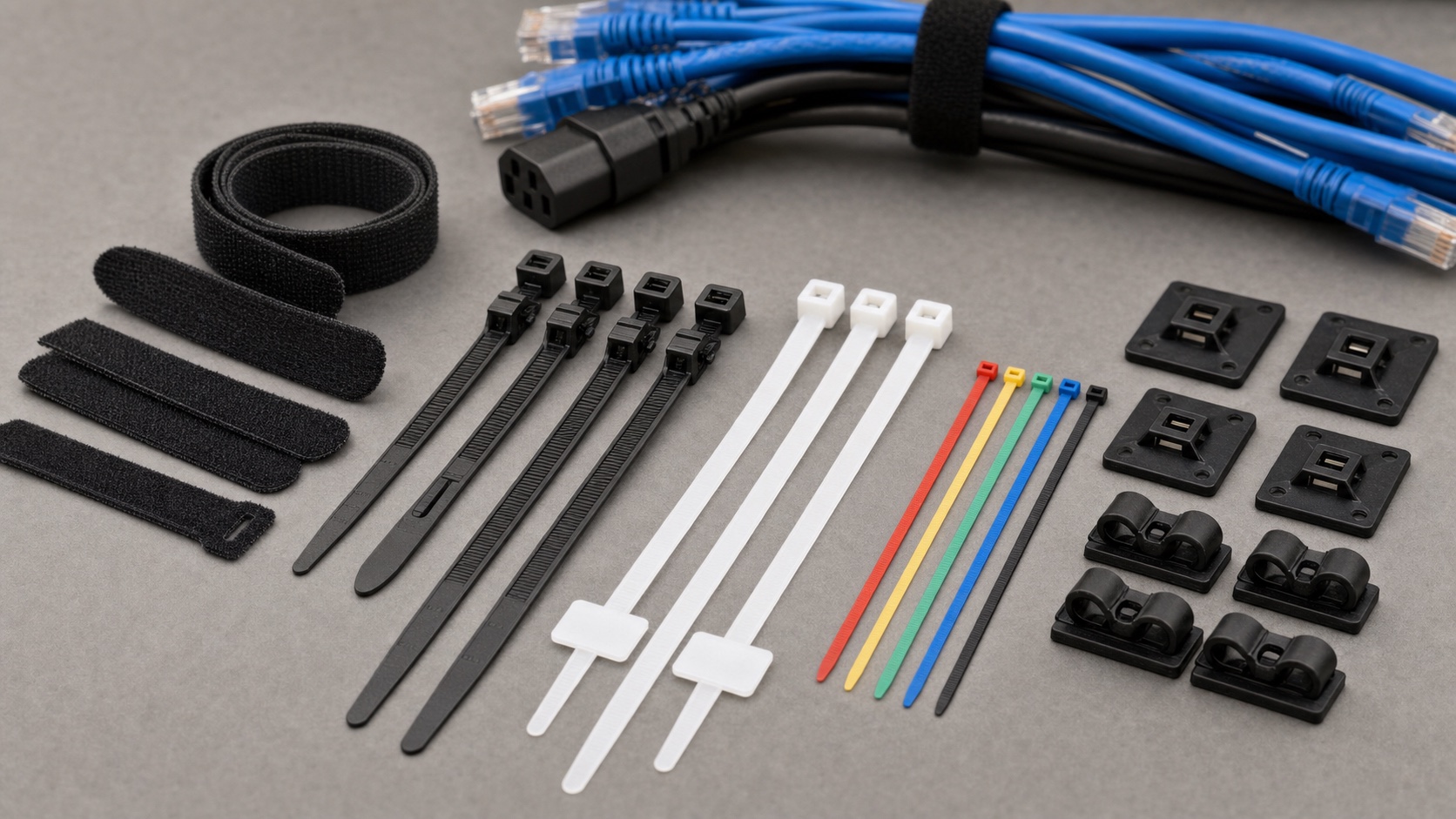
Product visual: data center cable management kit for rack routing, identification and support-point fixing.
Product Parameters
For data center use, the safest selection starts with cable type and service frequency. A part that works for a power bundle may be the wrong choice for a fiber jumper or a high-change patch panel.
Confirm tie width, length, tensile strength, material, release function, label area, installation tension and whether the route will need to be opened during future maintenance.
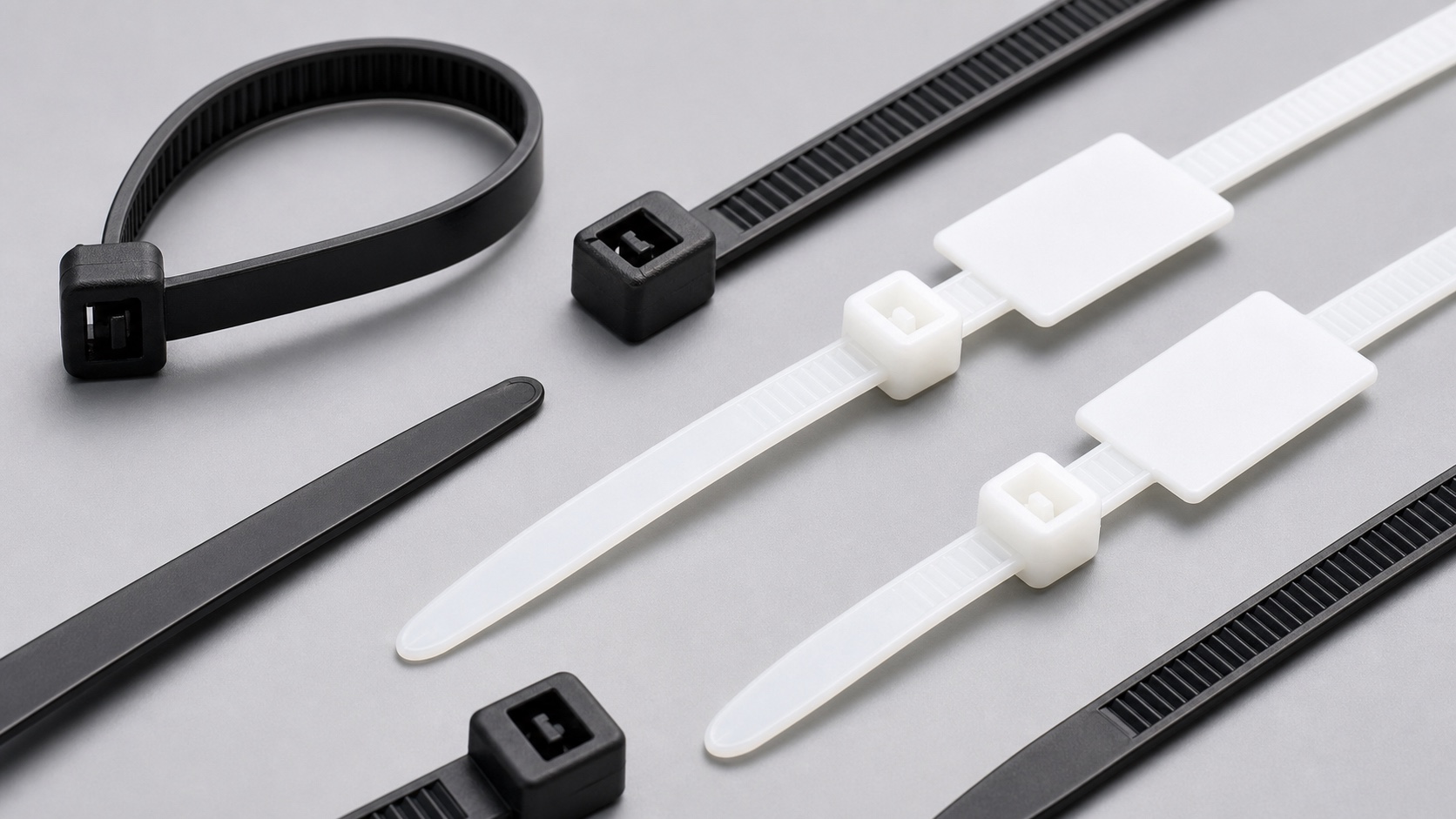
Product detail: releasable locking heads, blank marker plates, inner teeth and flat straps must remain structurally accurate.
| Product Type | Best Use Zone | Key Parameters | Selection Notes |
|---|---|---|---|
| Hook-and-loop cable strap | Patch cords, fiber jumpers, high-change rack areas | Width, length, fabric strength, reusability, color | Use where the bundle should be reopened and cable compression must be minimized. |
| Releasable nylon cable tie | Power cable groups, side rack routes, serviceable support points | Length, width, tensile strength, release tab design, material | Good where retention is needed but technicians may need to reopen the route. |
| Standard nylon cable tie | Non-sensitive bundles, mounting bases, controlled tray support | Bundle diameter, tensile strength, PA66 material, flame rating request | Avoid over-tightening network patch cords and fiber jumpers. |
| Marker cable tie | Route identification, rack zones, cable grouping labels | Label plate size, tie length, color, printable surface | Use blank or printed labels according to project labeling rules. |
| Mounting base / cable clip | Rack side rails, panels, tray exits, defined support points | Screw hole, adhesive option, base size, material, cable diameter | Creates a stable fixing point instead of letting cable bundles float. |

Installation visual: a soft hook-and-loop strap is adjusted by hand so patch cords remain grouped without crushing.
Installation Steps
- Classify the cable group: patch cords, fiber jumpers, power cables, tray route or identification point.
- Choose hook-and-loop straps for patch cords and fiber; choose releasable or nylon ties only where the cable type and support point allow it.
- Preserve bend radius before tightening any strap or tie.
- Wrap the fastener around the actual bundle and support point where support is required.
- Apply controlled tension. The bundle should be stable, not crushed.
- Keep labels, marker plates and color ties visible from the service side of the rack.
- After installation, confirm airflow, service clearance and future access for moves, adds and changes.
Field Scenario
Application: rear rack patch-cord management, power cable grouping and overhead tray routing in a clean data center aisle.
Problem: the site used one fastening method for all cables, creating over-tightened patch cords, blocked rack access and difficult tracing during maintenance.
Solution: CableTiesMFG separates the route into zones: hook-and-loop straps for patch cords, releasable nylon ties for serviceable power routes, marker ties for identification and mounting bases for stable support points.
Result: the cable route becomes easier to audit, easier to reopen and safer for airflow and bend radius control.
Note: page visuals are photo-style application and product visuals for solution explanation, not customer-submitted field photos.

Field scenario visual: overhead tray and rack aisle cable management with repeated support points and service access.
Why Choose CableTiesMFG
Application-Based Selection
We separate patch cords, fiber, power routes and tray support instead of treating every data center cable as the same fixing problem.
Product Geometry Control
We focus on real fastener structure: one locking head, correct tail path, flat nylon strap, soft fabric strap texture and blank marker plates.
Export Project Support
Sample packs, specification matching, private label packaging and bulk supply are available for contractors, distributors and rack installers.
FAQ
Should nylon cable ties be used on Ethernet patch cords?
Use caution. Soft hook-and-loop straps are usually better for patch cords and fiber because they are reusable and reduce compression risk.
Where are nylon cable ties suitable in data centers?
They are suitable for controlled support points, non-sensitive bundles, power cable groups, mounting bases and tray routes when tension is controlled.
Why use releasable cable ties?
Releasable ties help when a route needs stronger retention than hook-and-loop but still may require future changes or inspection.
Can marker ties replace cable labels?
Marker ties can support route identification, but the final labeling method should match the data center documentation and port-tracing standard.
Contact Us
Tell us your rack type, cable bundle diameter, patch-cord density, tray route and required material. We can help build a cable tie and strap selection list for your data center project.