
Problem Solution
Cable Falling Prevention Solutions for Secure Cable Routes
Prevent sagging cable loops, falling bundles, and route failure by matching cable ties, mounting bases, tray support points, and tie spacing to the actual cable load and site environment.
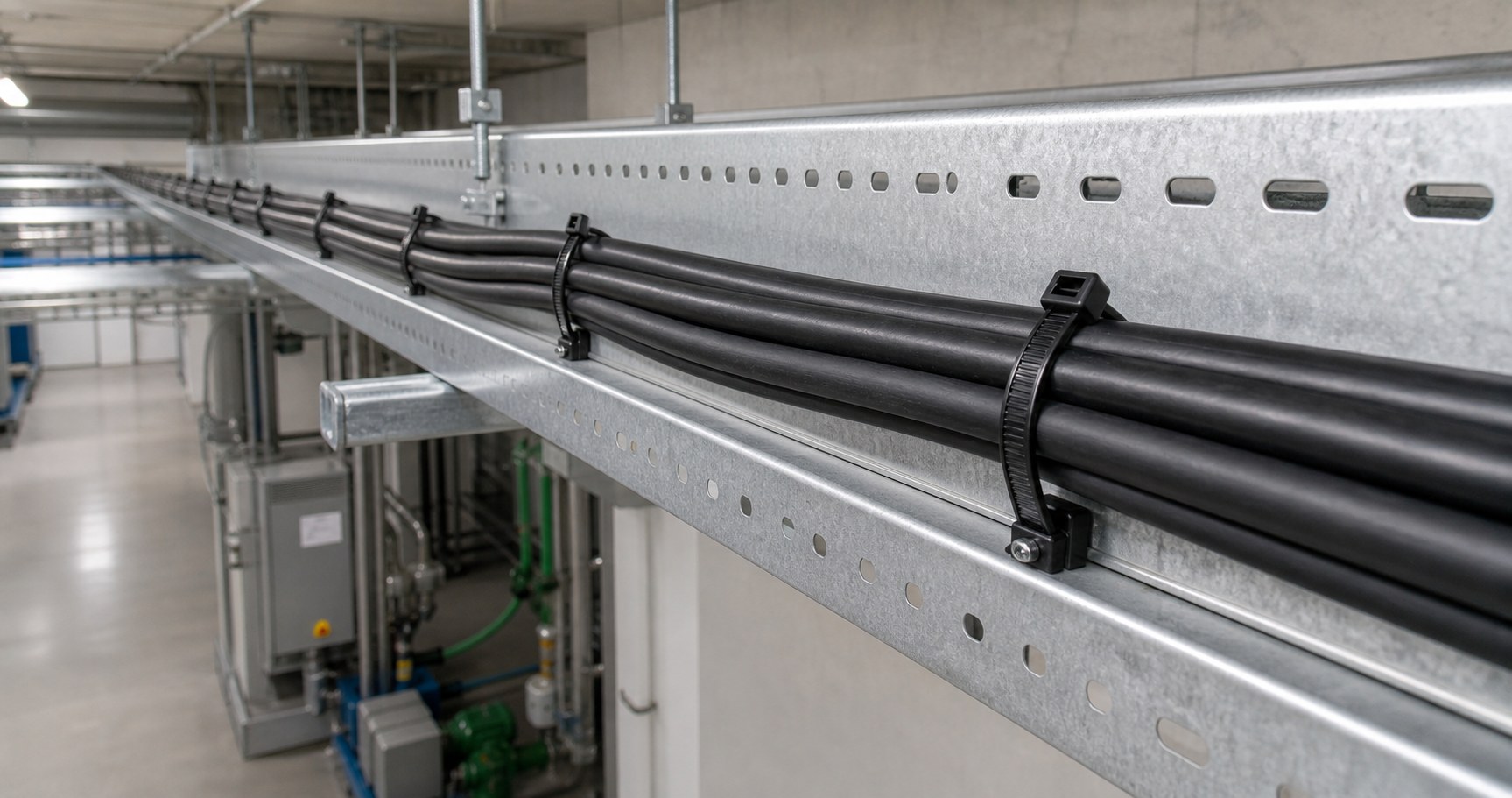
Application Introduction
Where Cable Falling Happens
Cable falling usually starts when a cable route has too much unsupported span, weak tie material, missing fixing points, or vibration that gradually loosens the bundle. The visible symptom may be a hanging loop, a cable rubbing on an edge, or a bundle pulling away from a tray or equipment frame.
For industrial, rooftop, telecom, HVAC, equipment, and utility routes, the solution is not only a stronger tie. The tie must create a clear load path between the cable bundle and a stable support.
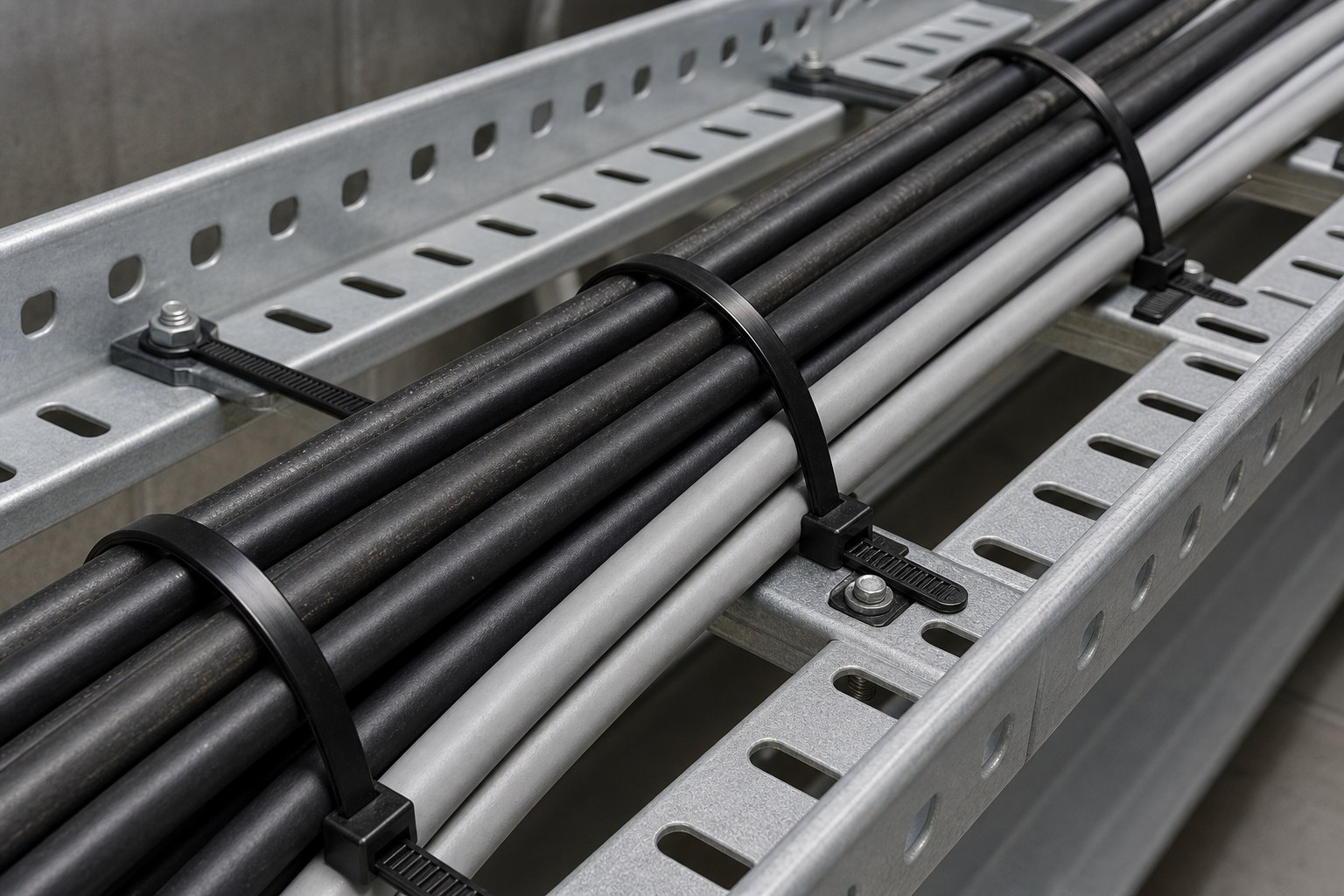
Common Field Pain Points
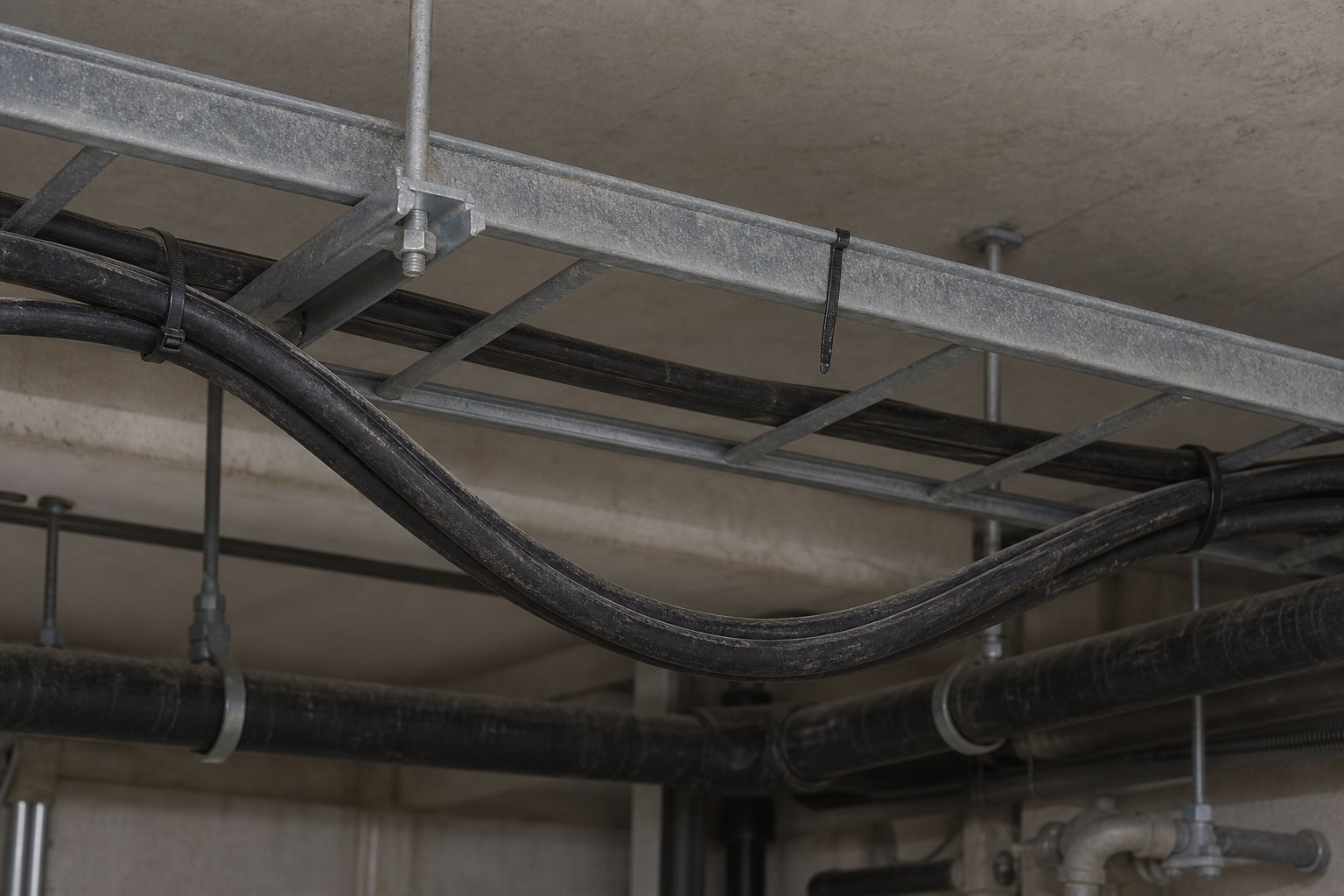
Sagging Loops
Wide span between tie points allows cable weight to form hanging loops under the tray or frame.
Weak Fixing Points
Thin ties, adhesive-only bases, or loose supports can fail under vibration, heat, UV, or cable movement.
Cable Wear
Falling cable routes often rub against metal edges, floor surfaces, equipment corners, or other moving parts.
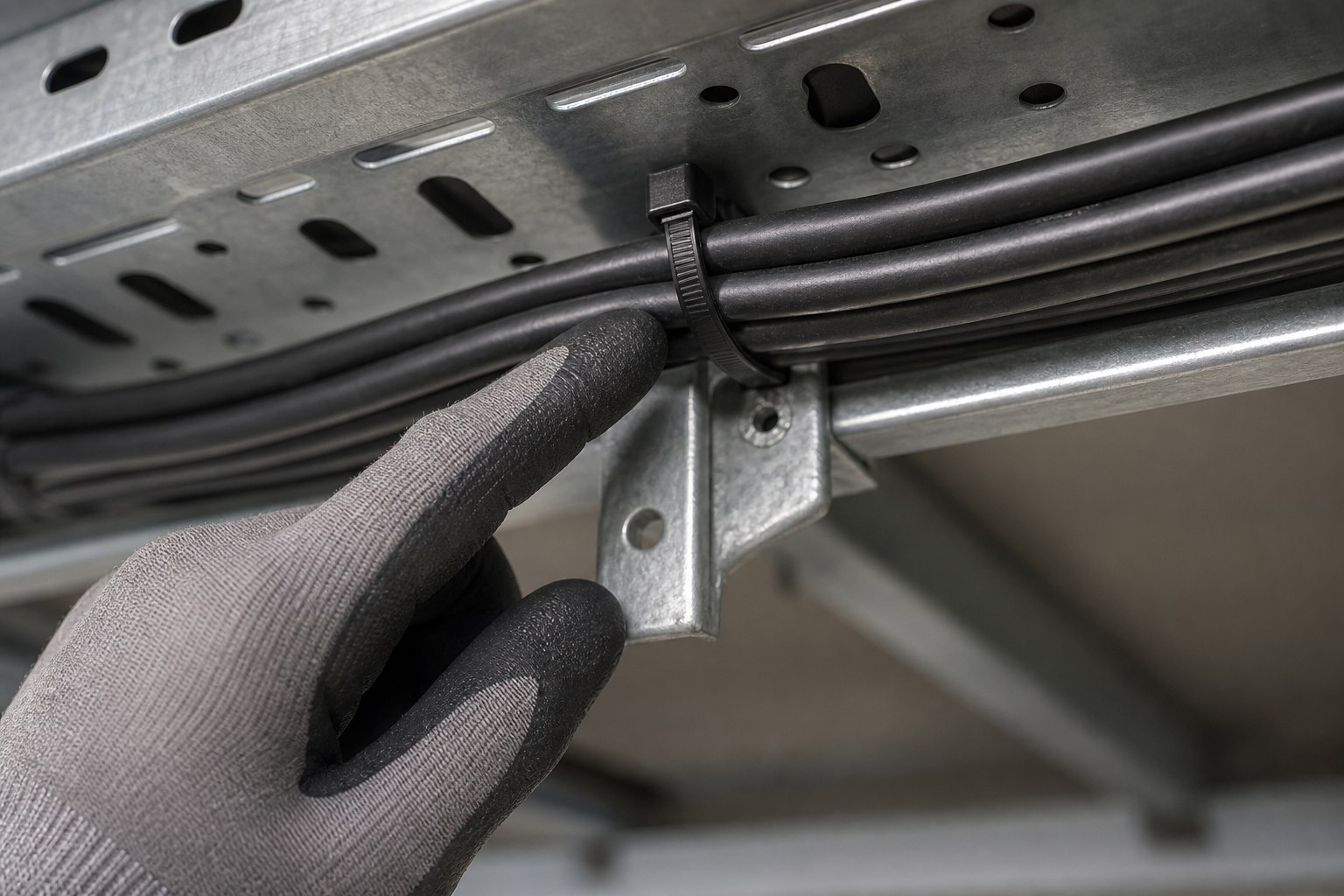
Recommended Solution
Start by identifying cable diameter, bundle weight, route length, environment, and available support structure. Then select cable ties and mounts that hold the bundle and transfer load to the tray, rail, frame, or surface.
- General indoor tray routes: standard or heavy-duty PA66 nylon cable ties with proper spacing.
- Outdoor and rooftop routes: UV-resistant black nylon ties and mechanically fixed mounting bases.
- Heavy or vibration-prone bundles: wide heavy-duty ties, double tie points, saddle mounts, or screw-mount bases.
- Hot, chemical, coastal, or high-risk areas: 304/316 stainless steel ties or stainless tie systems.
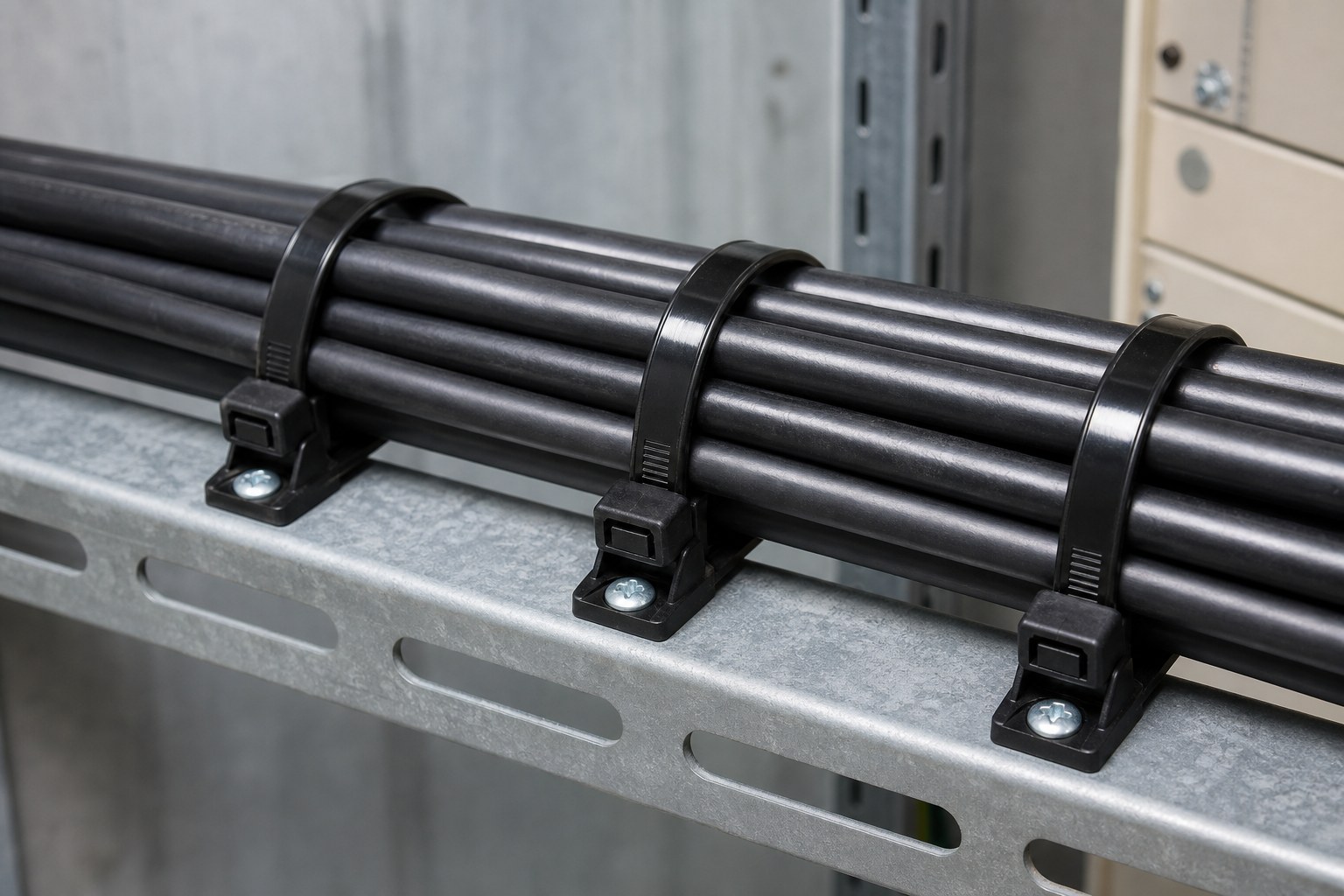
Product Combination
Use the product mix below as a starting point, then adjust tie width, length, material, and mounting method for the cable load and site exposure.
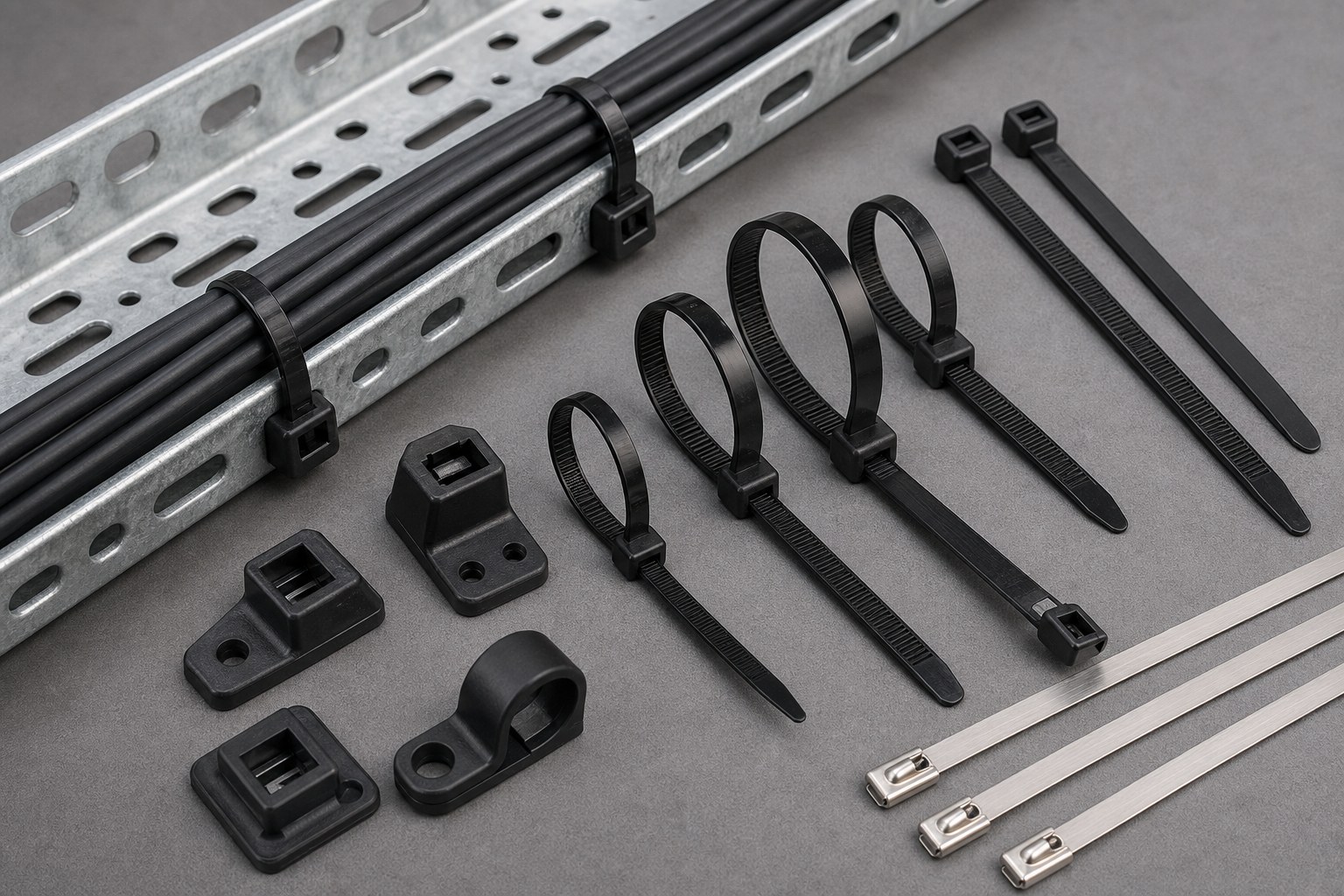
UV Nylon Ties
For outdoor and rooftop routes where sunlight exposure weakens ordinary ties.
Heavy-Duty Ties
For large cable bundles, wider contact area, and stronger tensile performance.
Mounting Bases
For fixed tie points on trays, panels, rails, and equipment frames.
Stainless Steel Ties
For heat, chemical exposure, coastal corrosion, and higher fire-safety requirements.
Product Parameters To Confirm
To prevent falling routes, do not select cable ties by length alone. The fastening point and operating environment decide whether the route will stay secure.
| Parameter | What To Check | Why It Matters |
|---|---|---|
| Tie length | Bundle diameter plus support diameter or base path | The tie must wrap both cable and support without over-stretching. |
| Tie width | Standard, heavy-duty, or extra-wide range | Wider ties spread load and reduce cable jacket stress. |
| Tensile strength | Bundle weight, vibration, and safety factor | Low tensile strength can lead to gradual loosening or breakage. |
| Material | PA66, UV PA66, heat-resistant nylon, stainless steel | Material must match sunlight, temperature, chemical, and corrosion exposure. |
| Mounting method | Tray rung, screw base, saddle mount, adhesive base, bracket | The tie point must transfer load into a stable structure. |
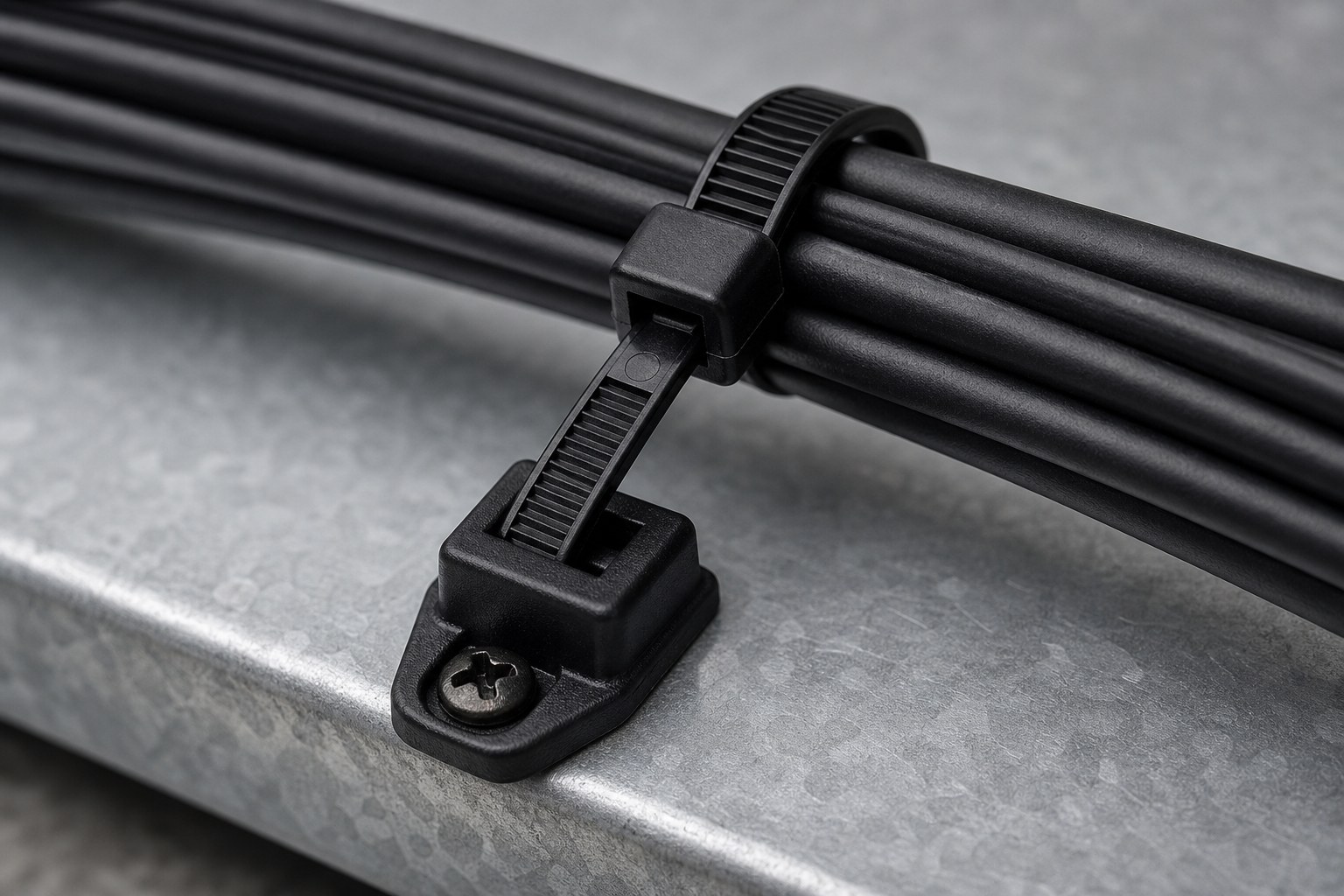
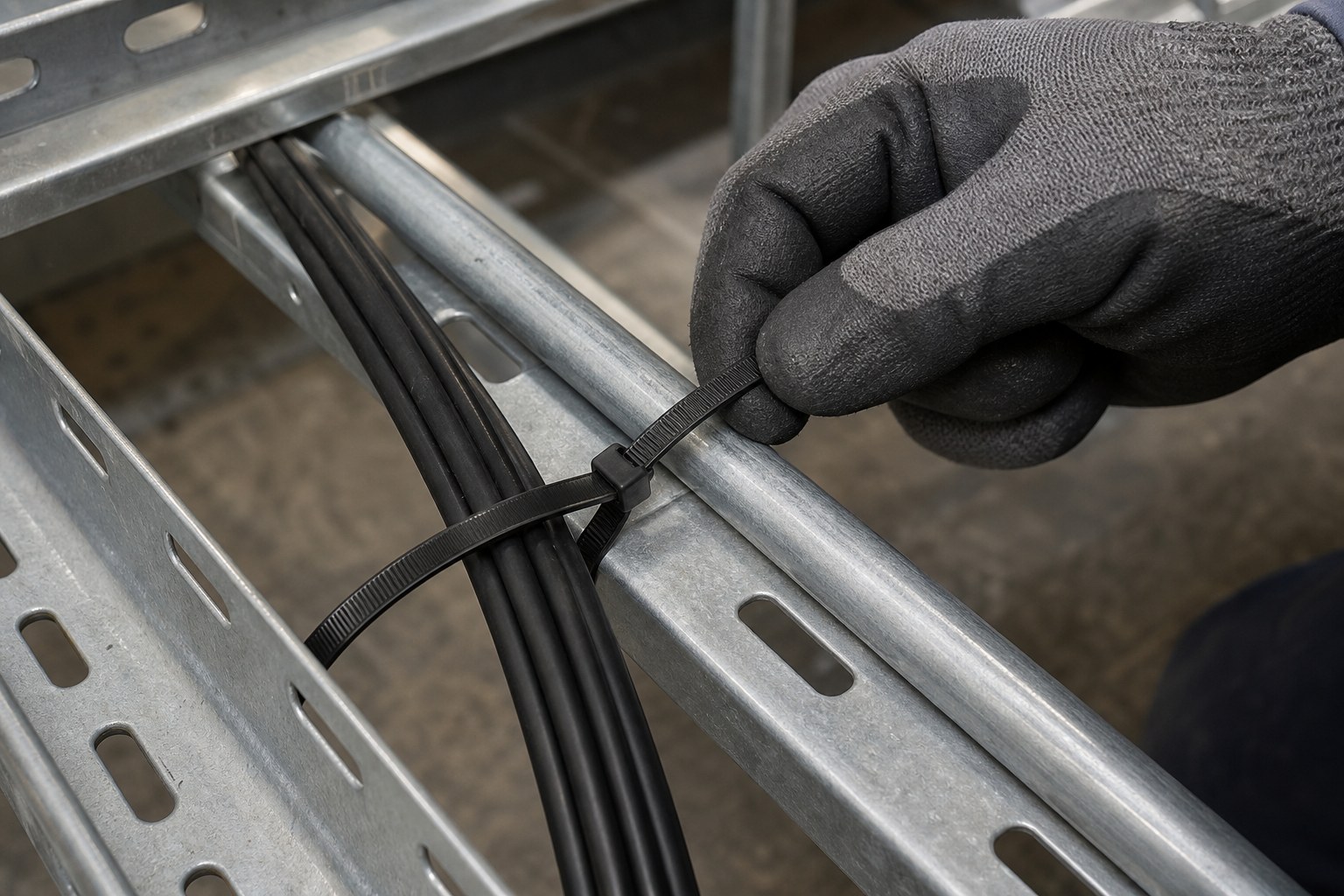
Installation Steps
- Trace the cable route and mark points where the bundle starts to sag or move.
- Choose a support point: cable tray rung, perforated sidewall, rail, bracket, equipment frame, or installed mounting base.
- Select a tie length and width that can wrap the cable bundle and support without forcing a sharp bend.
- Feed the tie tail through the head and tighten until the bundle is secure but not crushed.
- Trim excess tail if required and inspect nearby spans for additional support points.
Field Scenario
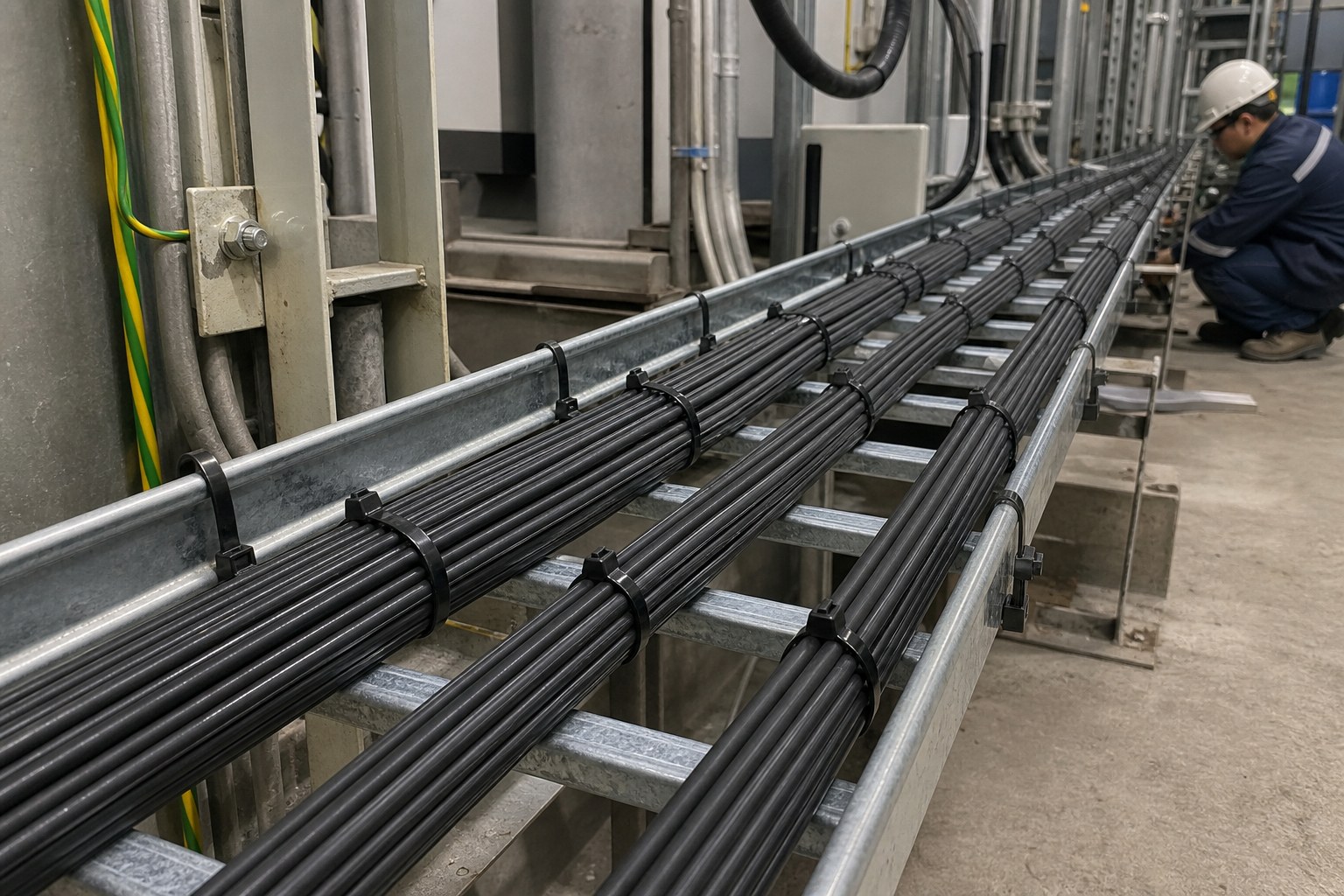
From Hanging Cable Loops To Supported Routes
Application: industrial equipment room cable tray and service route management.
Problem: cable weight and long unsupported spans created sagging loops below the tray, making inspection harder and increasing abrasion risk.
Solution: repeated support points using heavy-duty nylon ties, fixed bases, and adjusted spacing along the tray.
Result: cable routes became easier to inspect, less likely to fall, and better protected against vibration and jacket wear.
Why Choose CableTiesMFG
Product Matching
We help match tie length, width, tensile strength, material, and mounting method to the actual cable route.
Industrial Materials
Options include standard PA66, UV-resistant nylon, heat-resistant ties, releasable ties, mounting bases, and stainless steel ties.
Application Focus
We evaluate support spacing, load path, and environment so the solution is more than a tidy bundle.
FAQ
Can a cable tie alone prevent cable falling?
Only if it connects the cable bundle to a stable support. A tie around cables without a support point mainly organizes the bundle.
When should I use a mounting base?
Use a base when the route lacks a tray rung, rail, bracket, or other reliable structure at the required spacing.
Are UV ties necessary outdoors?
Yes. Outdoor sunlight can weaken ordinary natural nylon. Black UV-resistant ties are usually the first choice for exposed routes.
When are stainless steel ties better?
Use stainless steel ties for high heat, chemical exposure, coastal corrosion, fire-safety needs, or heavy-duty fixed routes.
Need Help Preventing Cable Falling?
Tell us your cable diameter, bundle weight, route length, environment, and available support points. We can recommend tie material, size, mounting base, and installation spacing.