
Product Kit Solution
Telecom Cable Tie Kit for Base Stations, Towers and Cabinets
A practical kit for telecom installers, tower contractors and network maintenance teams who need UV-resistant cable ties, stainless steel ties, marker ties, mounting bases and clean trimming tools for rooftop, tower and cabinet cable routes.
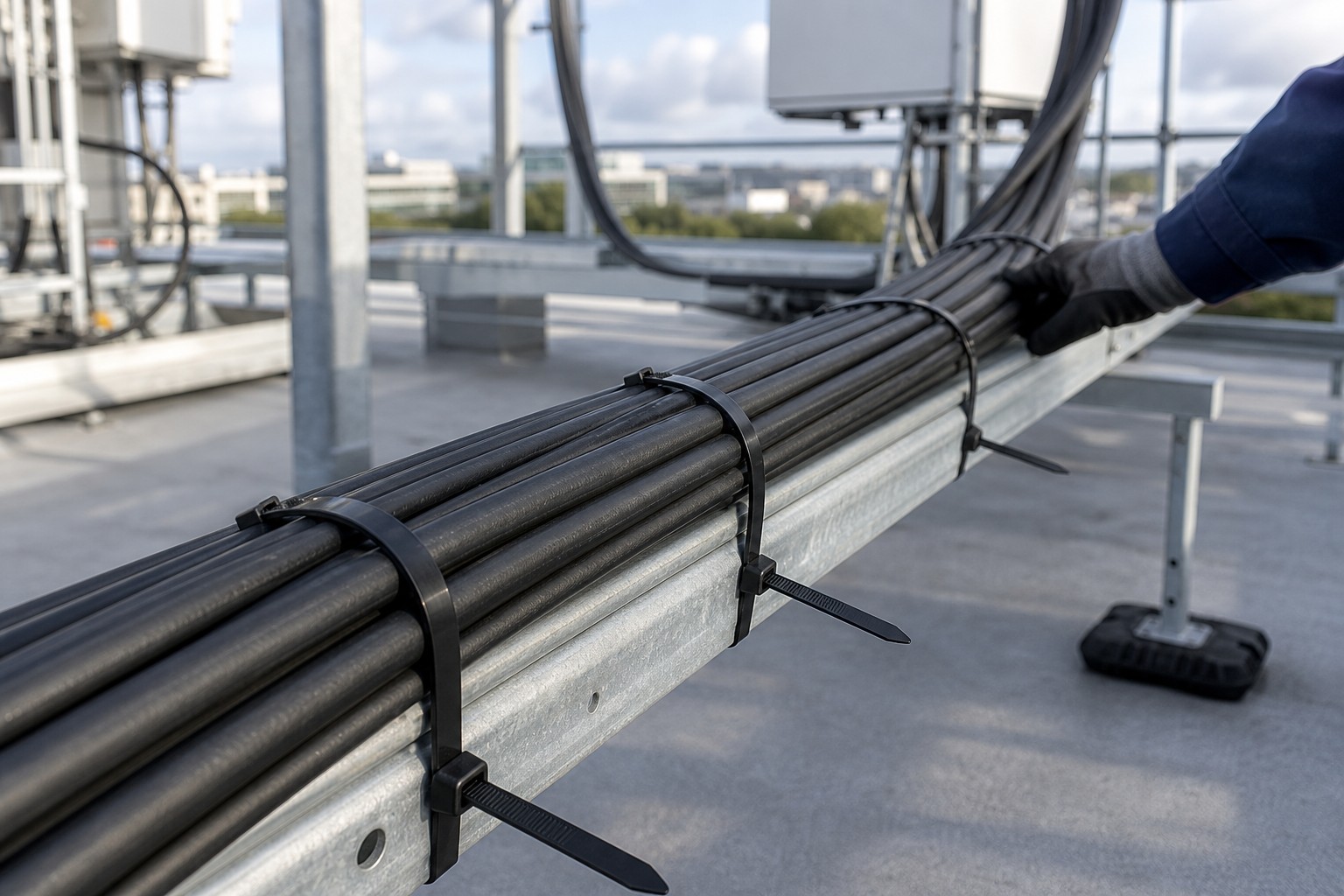
Kit Introduction
Telecom sites combine outdoor cable exposure, dense cabinet routing and repeated maintenance work. One cable tie SKU is rarely enough. A useful Telecom Kit combines UV-resistant black nylon ties, stainless steel ties, marker ties, mounting bases, push-mount or screw-mount options and a flush cutter.
The goal is to keep feeder cables, fiber routes, power cables and cabinet wiring controlled without slowing inspection. For buyers, a kit also makes it easier to test the right mix before ordering by tower, rooftop or cabinet project volume.
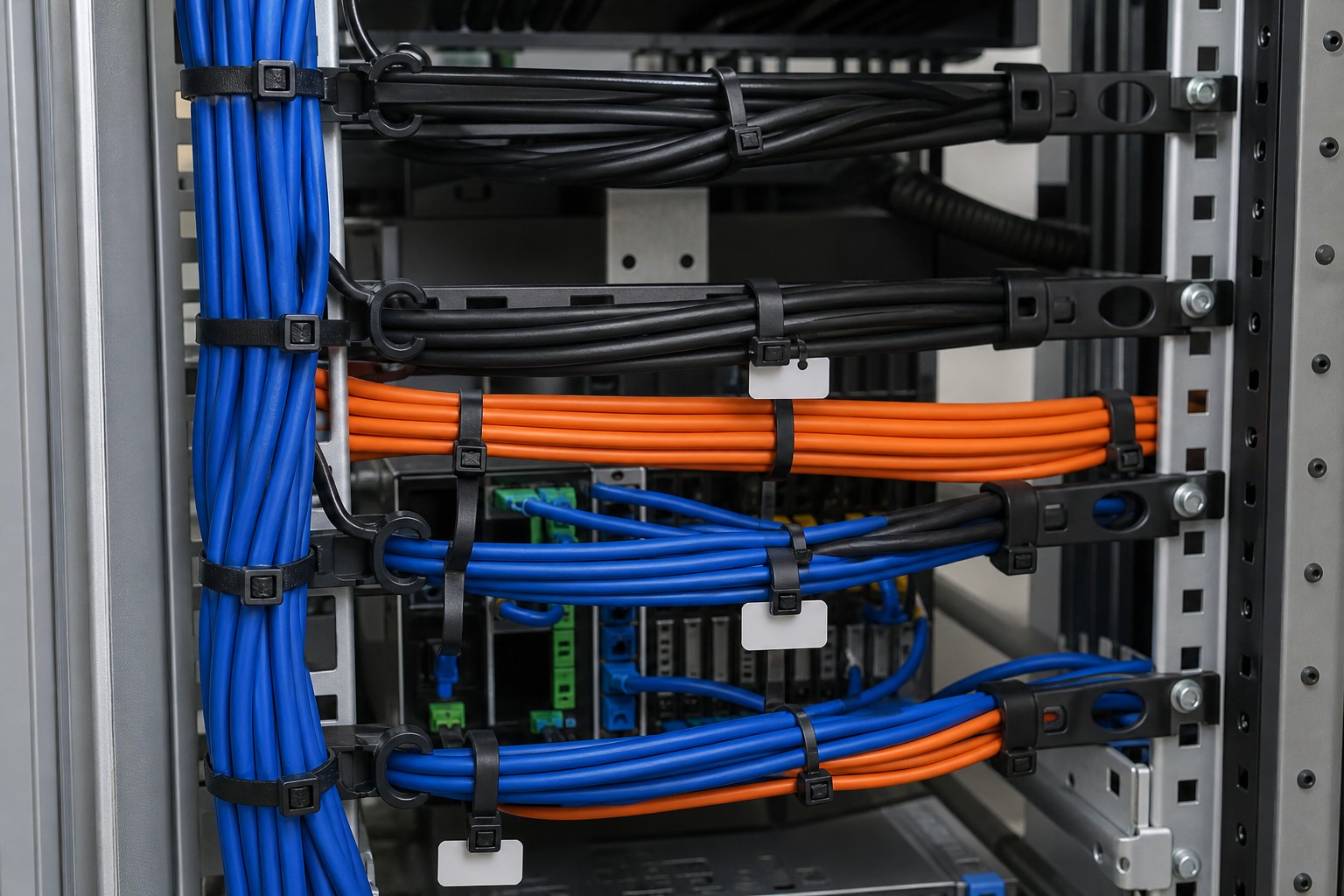
Field Pain Points
Loose Feeder Runs
Unsupported feeder cables can sag, spread across tray edges or move under wind and vibration.
UV Aging
Indoor-grade cable ties can become brittle outdoors, especially on rooftops and tower platforms.
Corrosion Risk
Coastal, rooftop and exposed metal brackets may require stainless steel ties at high-risk points.
Poor Identification
Unlabeled cabinet routes slow maintenance and increase the chance of tracing or service mistakes.
On-Site Problem Analysis
Before selecting a Telecom Kit, check the site type, bundle diameter, cable weight, fixing spacing, UV exposure, corrosion level and whether maintenance teams need to reopen or identify the route. The kit should support both outdoor feeder retention and indoor cabinet organization.
- Rooftop trays: black UV-stabilized nylon ties keep feeder cables close to galvanized tray or rail routes.
- Tower routes: heavier cable runs may need wider ties, closer spacing or stainless steel ties at exposed points.
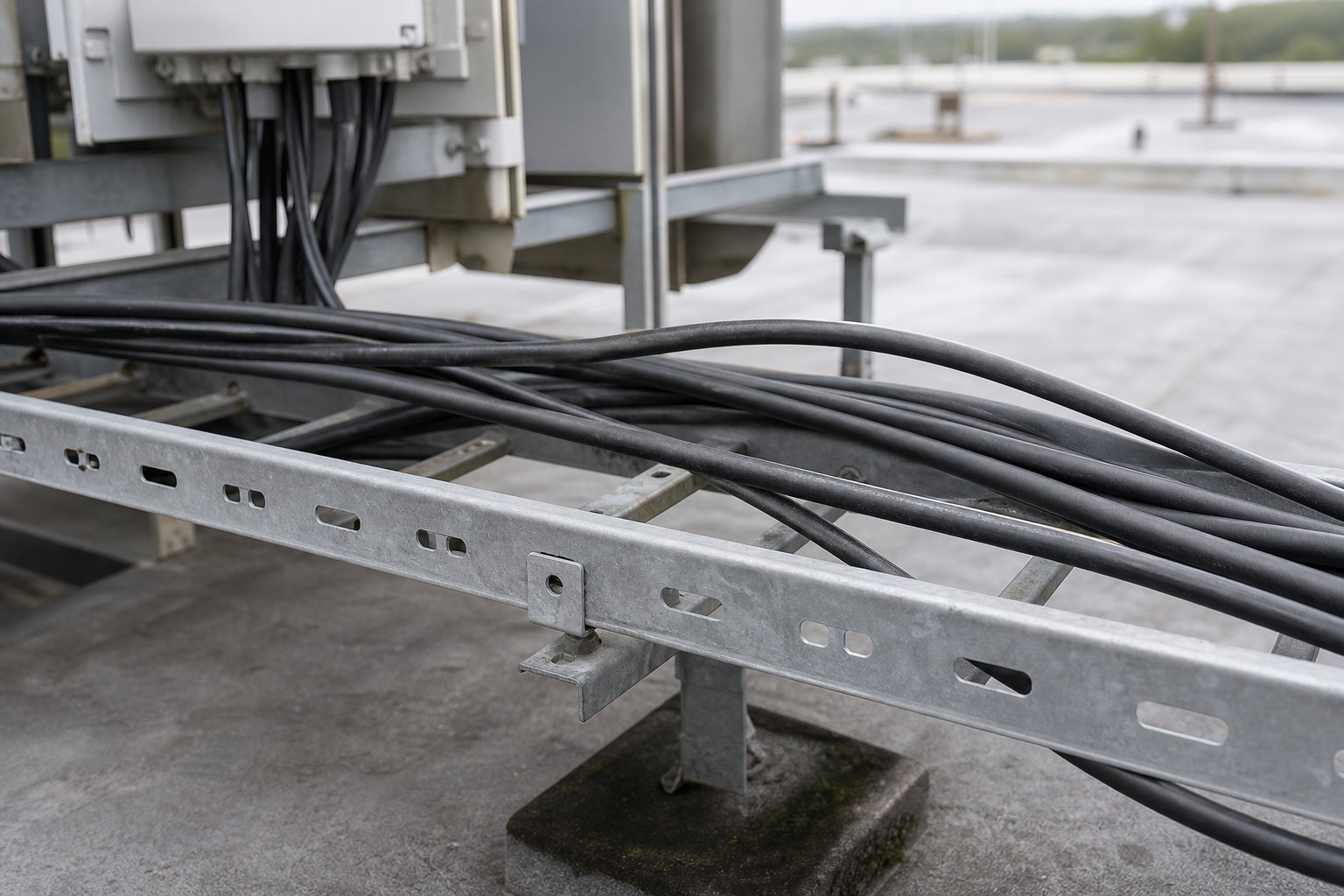
- Cabinet wiring: standard ties and marker ties improve cable grouping, tracing and service access.
- Equipment transitions: screw-mount bases, push mounts or tie mounts create controlled anchor points near cabinets and brackets.
Recommended Telecom Kit Configuration
Start with UV-resistant nylon ties for common outdoor cable routing, then add stainless steel ties, marker ties and mounts where the site environment or maintenance workflow requires them.
| Kit Item | Main Function | When to Use |
|---|---|---|
| UV-resistant black nylon cable ties | General bundling and outdoor feeder route control | Rooftop cable trays, tower supports, base-station frames and outdoor equipment routes. |
| Heavy-duty nylon ties | Higher tensile strength for larger cable bundles | Thicker feeder groups, heavier power cable routes and longer unsupported spans. |
| Stainless steel cable ties | Corrosion-resistant and high-retention fixing at severe exposure points | Coastal sites, exposed brackets, high-heat rooftops and high-vibration cable tray sections. |
| Marker ties / blank tags | Route identification for maintenance and service tracing | Cabinet wiring, fiber routes, feeder identification and inspection points. |
| Mounting bases and screw-mount ties | Create controlled anchor points on brackets, frames or equipment plates | Cabinet sides, transition points, equipment frames and serviceable cable exits. |
| Flush cutter / tensioning tool | Clean tail trimming and repeatable installation quality | Installer kits, field maintenance teams and distributor sample packs. |
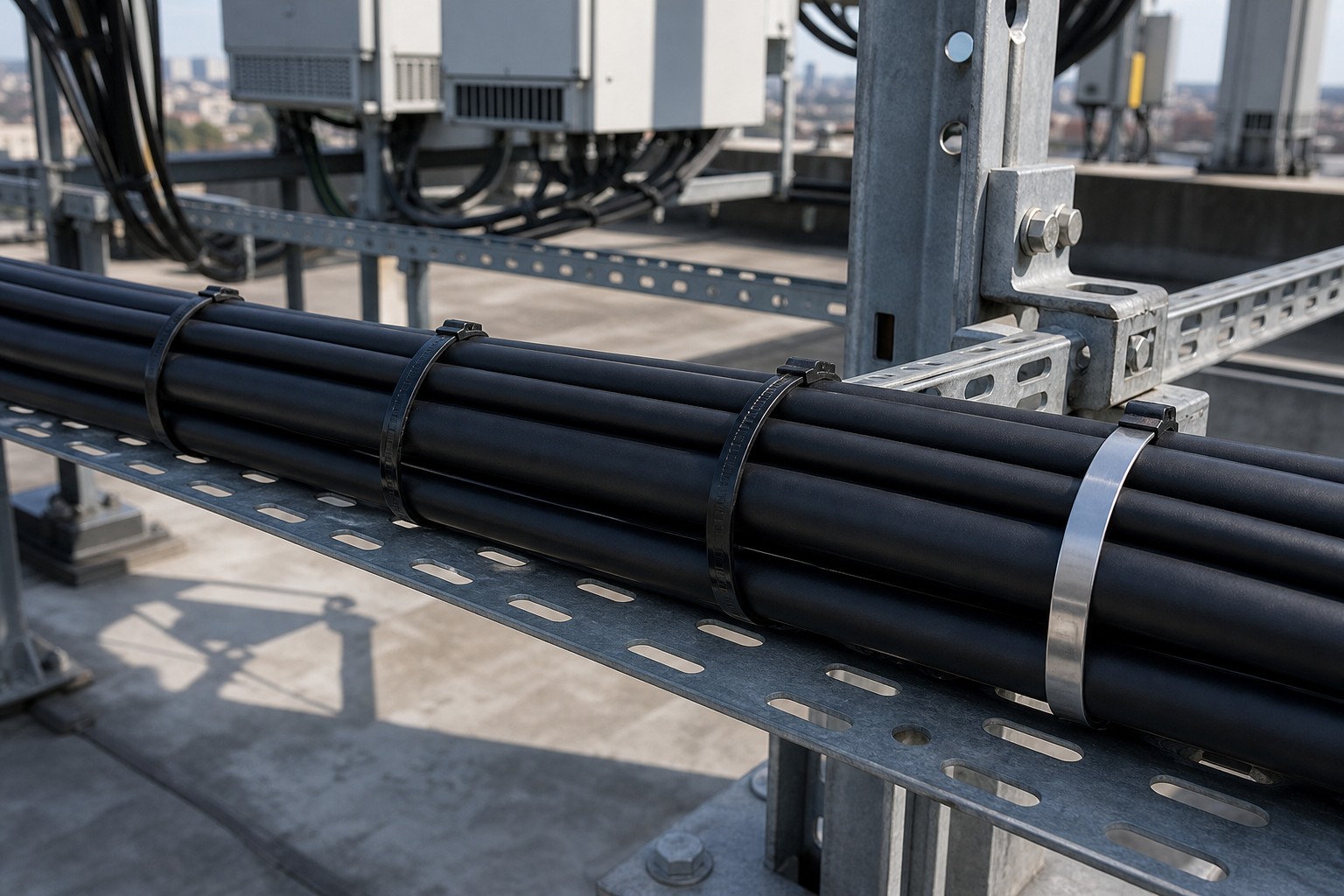
Selection Principle
Use UV nylon ties for most outdoor cable grouping, stainless steel ties for harsh exposed brackets, marker ties for traceability, and mounting bases where the route needs a fixed anchor point.
The application images on this page are representative photo-style visuals, not claimed customer case photos.
Product Combination
A Telecom Kit can be configured as an installer starter kit, tower maintenance kit, cabinet organization kit or distributor sample pack. The mix should match the site type and cable route instead of forcing one universal component.
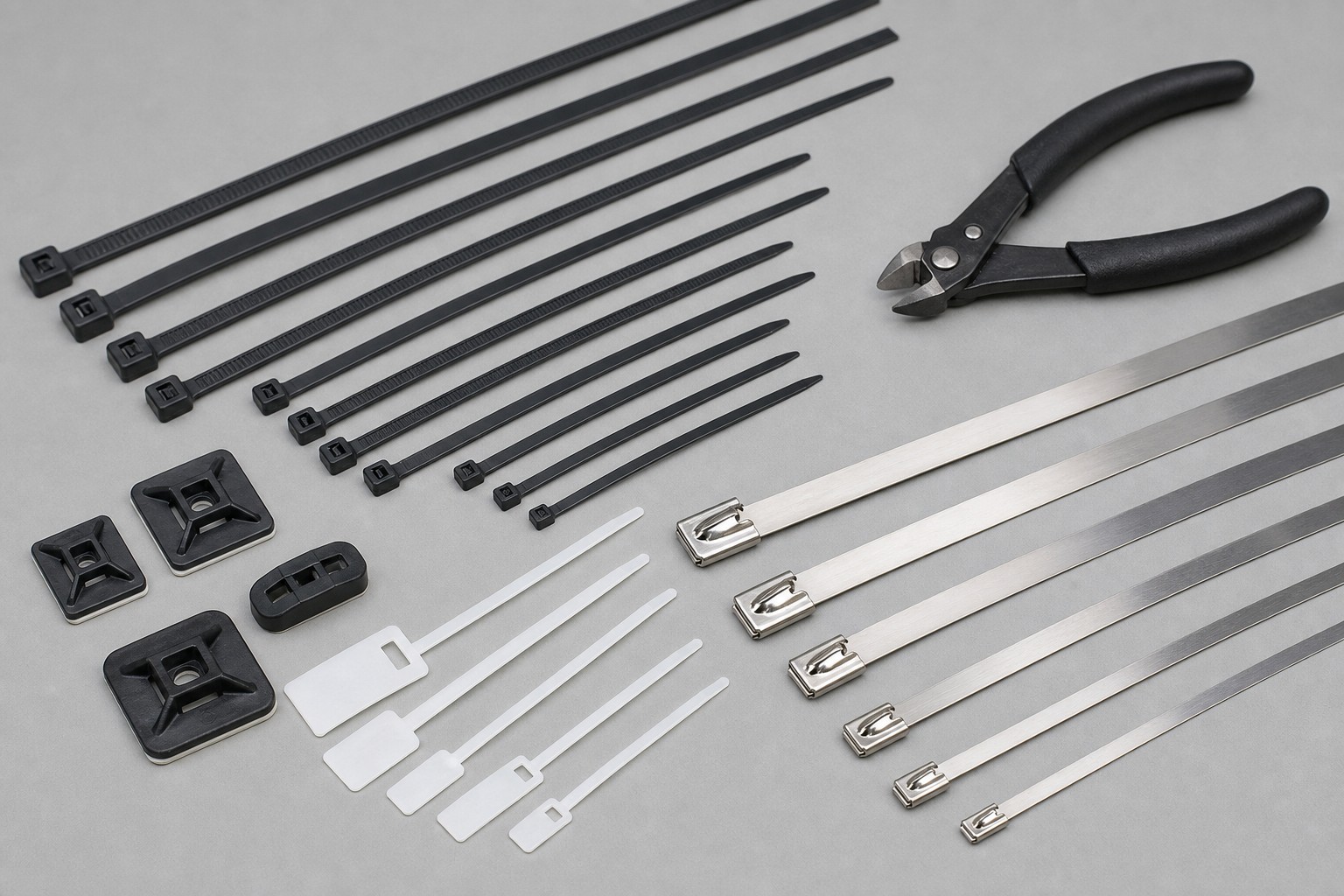
Outdoor Feeder Kit
UV black nylon ties, heavier lengths and stainless add-ons for rooftop or tower cable routes.
Cabinet Routing Kit
Standard ties, marker ties and smaller mounting bases for organized rack wiring.
Severe Exposure Kit
Stainless steel ties and stronger retention options for coastal or high-exposure sites.
Distributor Sample Kit
Mixed lengths, materials and mounting parts for customer testing and repeatable RFQs.
Product Parameters
| Component | Key Parameters | Recommended Check | Typical Telecom Use |
|---|---|---|---|
| UV black PA66 cable tie | Length, width, tensile strength, UV grade, temperature range | Outdoor exposure, bundle diameter, fixing spacing and expected service life | Rooftop feeder cable and base-station cable tray routing |
| Heavy-duty nylon tie | Higher width, tensile strength and bundle diameter capacity | Cable weight, support spacing and vibration risk | Large feeder bundles, power cables and heavier tray sections |
| Stainless steel cable tie | SS304 or SS316, width, thickness, locking type and tool compatibility | Salt spray, corrosion risk, heat exposure and required retention | Coastal towers, exposed brackets and severe rooftop fixing points |
| Marker tie / blank tag | Label area, material, color, tie size and marking method | Route ID system, maintenance workflow and UV exposure | Cabinet cables, feeder route ID and service traceability |
| Mounting base / screw-mount tie | Base size, screw hole diameter, tie width range and surface type | Bracket material, drilling permission and cable load | Cabinet exits, support frames and equipment transition points |
Installation Steps
- Confirm the cable route, fixing spacing and maintenance access before tightening any tie.
- Select the tie length and material according to cable diameter, UV exposure and cable weight.
- Wrap the flat strap around the cable bundle and the tray, rail or anchor point where fixing is required.
- Thread the tapered tail through the single locking head and pull to controlled tension.
- Keep the locking head away from sharp tray edges, service connectors and high-stress bend points.
- Use marker ties or blank tags where route identification is required.
- Trim the tail cleanly so the cut end does not scratch cable jackets or technicians.
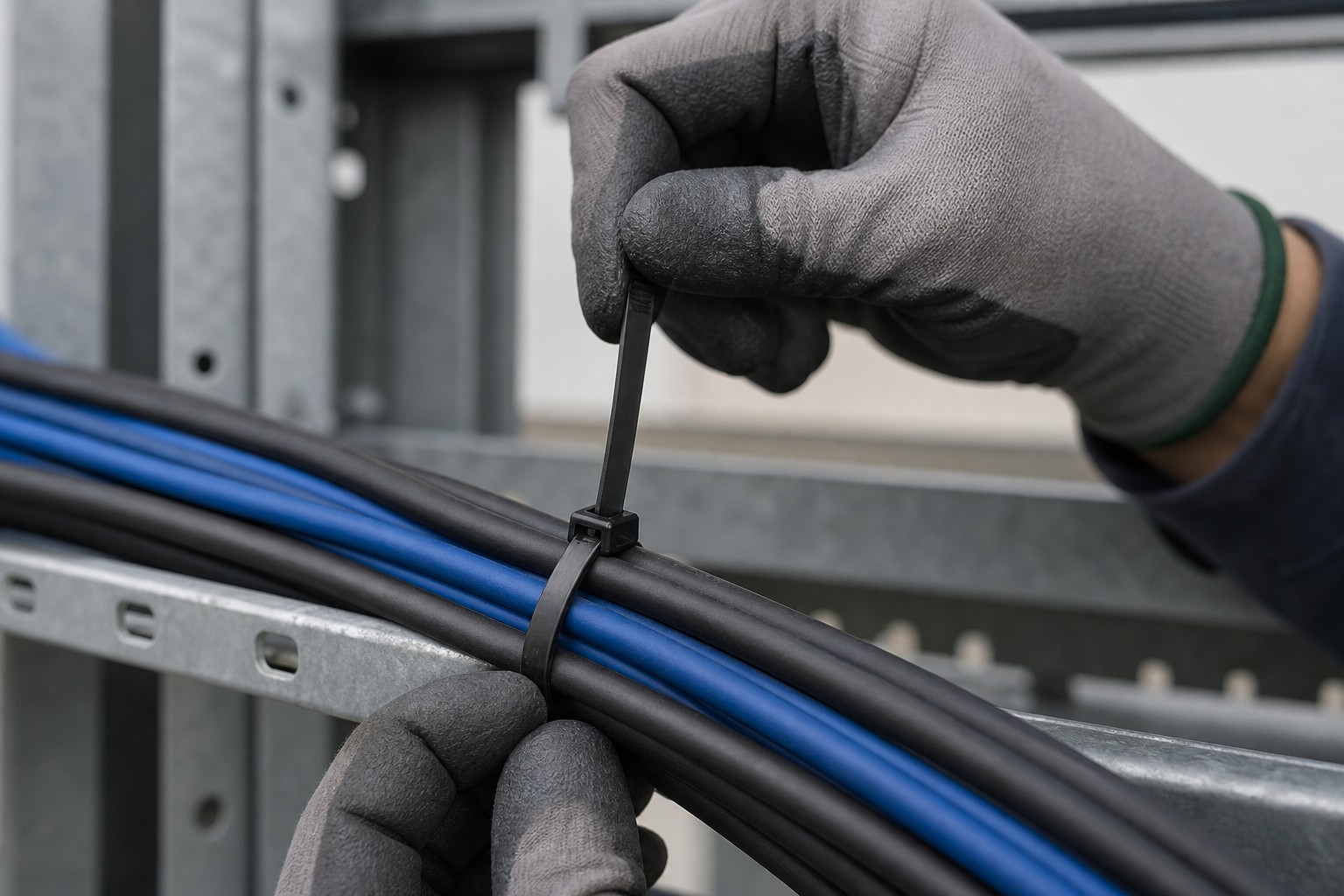
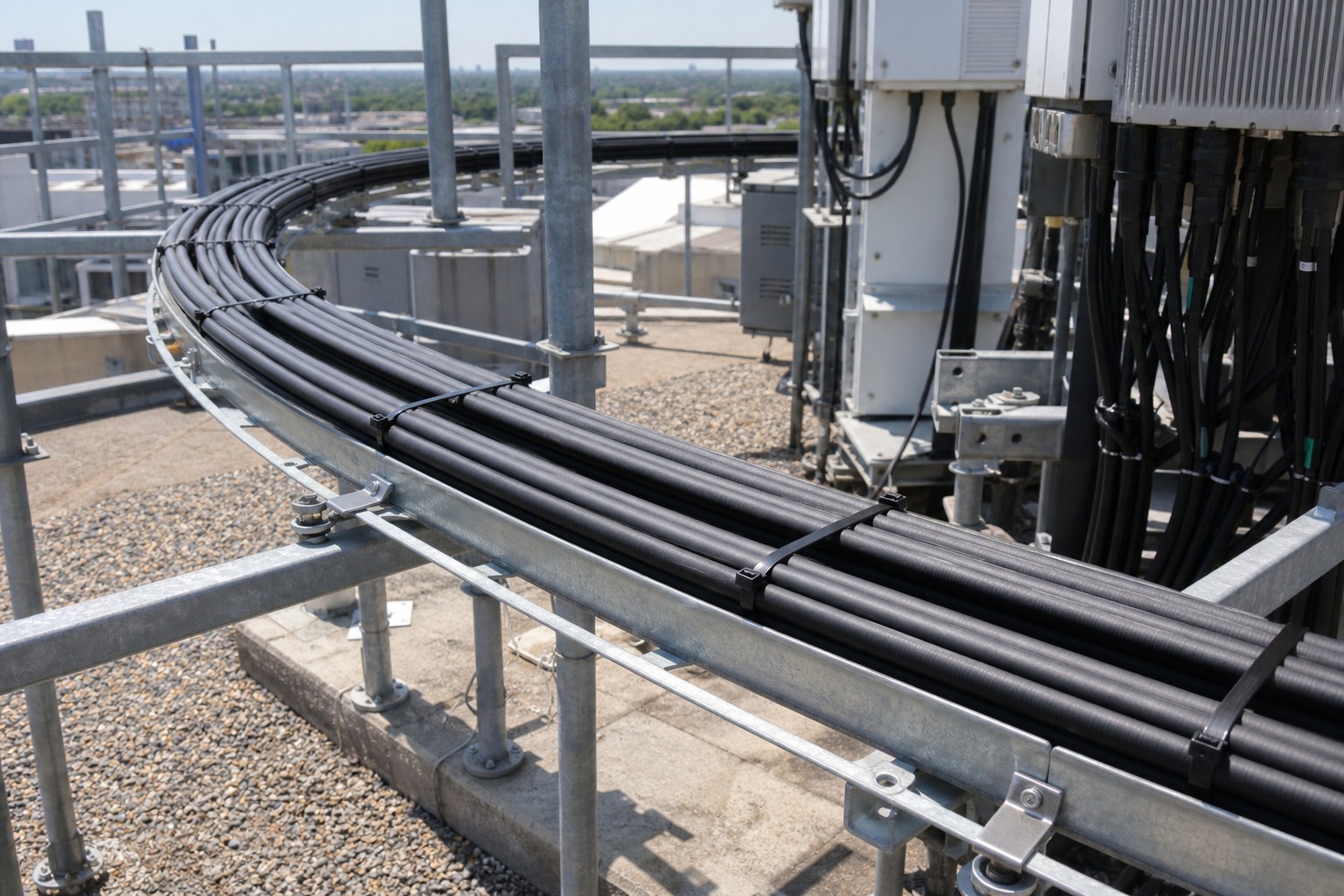
Field Case
Representative base-station route after kit-based selection
Application: Outdoor rooftop feeder cable route and telecom equipment transition area.
Problem: Cable runs were loose in some sections, while cabinet areas needed clearer identification for maintenance.
Solution: CableTiesMFG configured UV nylon ties for routine outdoor fixing, stainless steel ties for severe exposure points, marker ties for ID and mounts for controlled anchor points.
Result: The route becomes cleaner, easier to inspect and easier for buyers to convert into a repeatable project kit.
Why Choose CableTiesMFG
Application-Based Kits
We help buyers map rooftop, tower and cabinet requirements into a practical cable tie kit instead of a random SKU list.
Material Options
UV-resistant nylon, heavy-duty nylon, stainless steel and marker tie options support different telecom environments.
OEM and Bulk Supply
Custom packing, sample kits, length combinations and distributor-friendly assortments can support repeat orders.
FAQ
What should a basic Telecom Kit include?
Start with UV black nylon ties in common lengths, heavier ties for larger bundles, marker ties for ID, mounting bases and a flush cutter.
When should stainless steel ties be added?
Add stainless steel ties for coastal sites, exposed brackets, high heat, high vibration or locations where stronger long-term retention is required.
Are marker ties useful outdoors?
Yes, but the material and marking method should match UV exposure and the maintenance team’s identification process.
Can the kit be customized?
Yes. Cable length, tie size, stainless grade, marker style, packing quantity and sample mix can be adjusted for distributors or project buyers.
Build a Telecom Cable Tie Kit for Your Project
Tell us your site type, cable diameter range, environment and packing preference. We can help turn it into a practical sample kit or bulk order list.