Application Solution
Equipment Fixing Cable Tie Solutions for Panels, Frames and Machine Supports
Cable tie and mounting-base solutions for fixing wire routes, sensor leads, small hoses, conduit and light equipment to control cabinets, machine frames, perforated backplates and industrial support rails.
Application Introduction
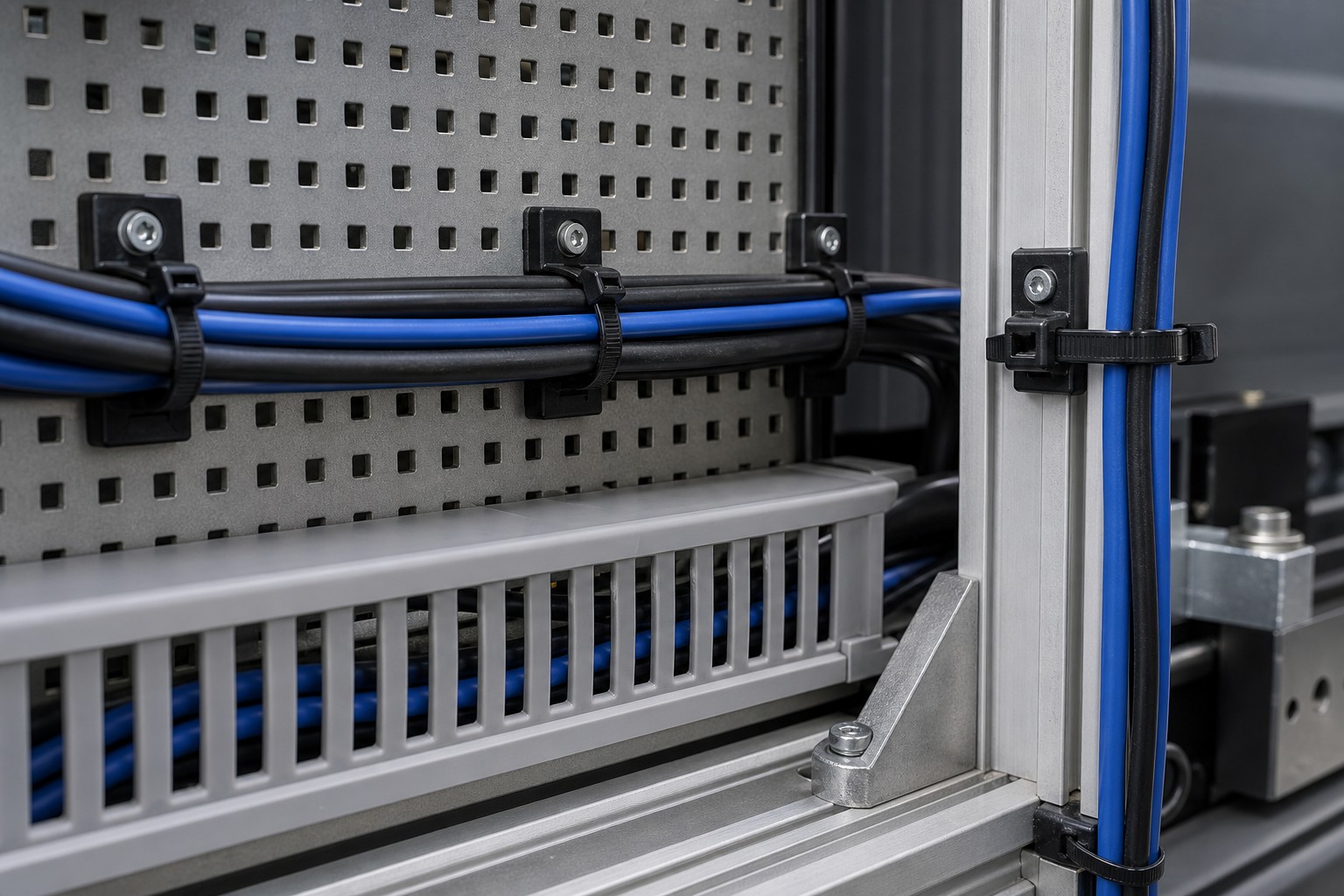
Equipment fixing is different from simple cable bundling. In machinery, cabinets and automation systems, the cable tie usually needs to hold a route to a fixed surface, such as a backplate, frame rail, bracket, panel edge or machine support.
The goal is to keep cables, sensor leads, air hoses and small conduit away from moving parts, heat sources, sharp edges and service openings. A correct solution combines the tie with the right fixing base or mounting style.
Industry Pain Points
Loose Sensor Leads
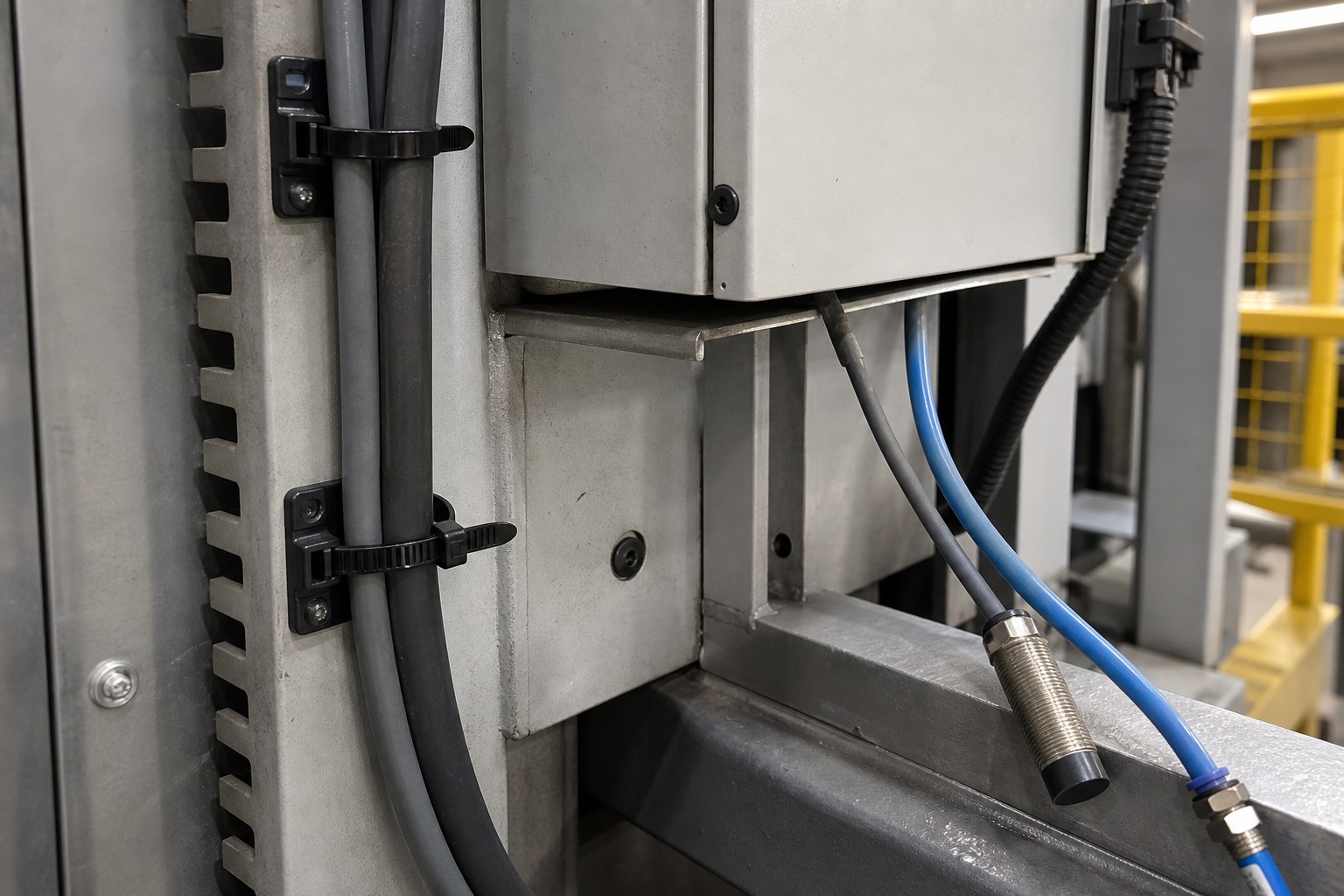
Loose leads can move under vibration, rub against cabinet edges, touch hot surfaces or interfere with inspection doors.
Wrong Fixing Point
A tie wrapped only around a cable bundle does not control the route unless it is also fixed to a panel, frame or bracket.
Hard Maintenance
Unplanned cable paths slow troubleshooting because technicians cannot quickly trace where a line runs or where it should be released.
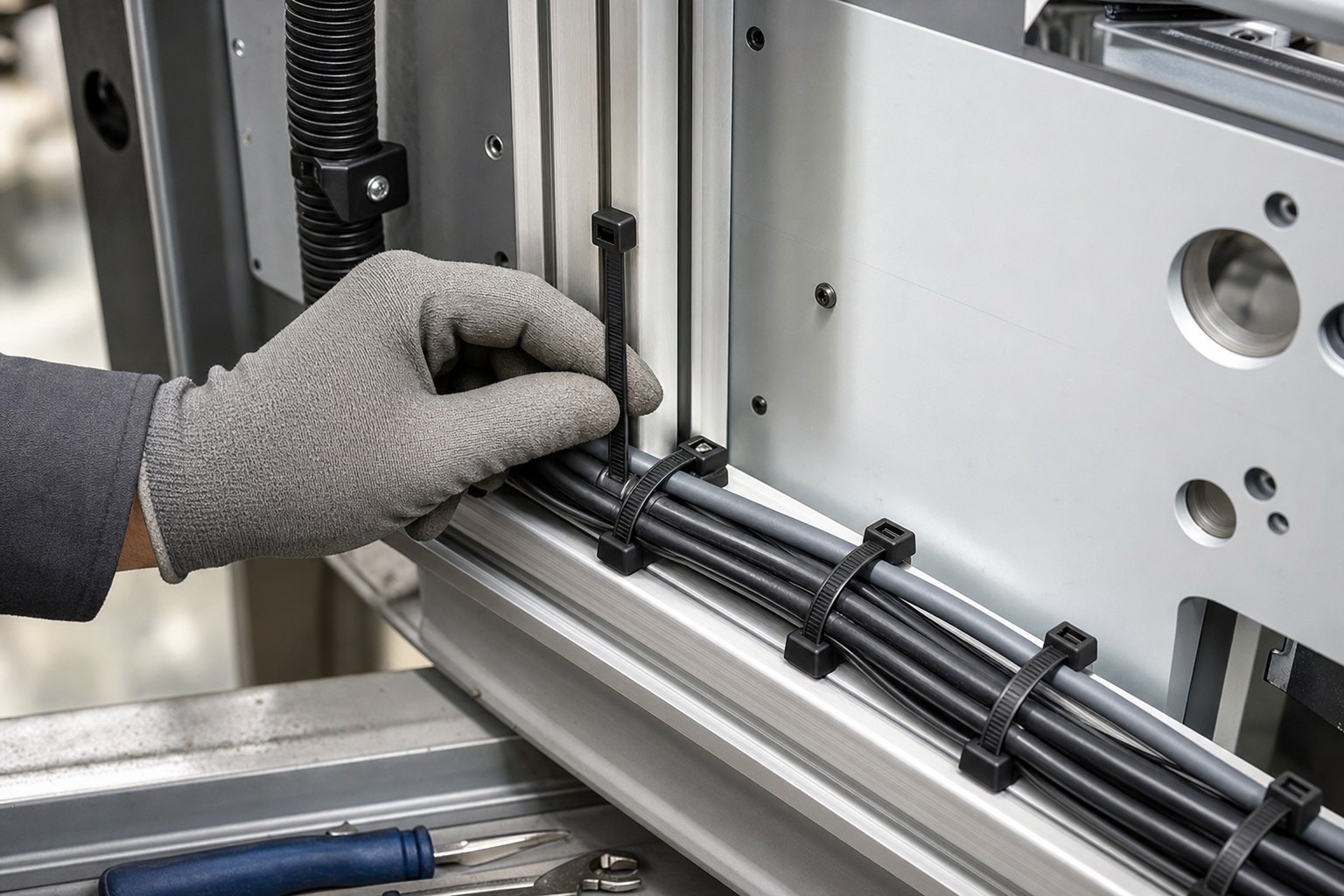
On-Site Problem Analysis
Before selecting a tie, inspect the support surface and the route. A cabinet backplate may accept screw-mounted bases. A pre-drilled frame may accept push-mount ties. A machine edge may need an edge clip. Painted panels may use adhesive bases only when the surface is clean, flat and protected from heat and oil.
- Identify the support: panel, backplate, frame rail, cable tray, bracket or machine guard.
- Check vibration, oil mist, heat, UV exposure, washdown, and service frequency.
- Confirm cable bundle diameter, bend radius and whether the route needs to be releasable.
- Keep ties close enough to prevent sagging but avoid over-tightening small sensor cables.
Decision rule
If the tie does not connect the cable route to a real support, it is only bundling. Equipment fixing requires an anchor point.
For heavy vibration or heat, prefer mechanical fixing such as screw-mount, push-mount or stainless-steel options instead of relying only on adhesive bases.
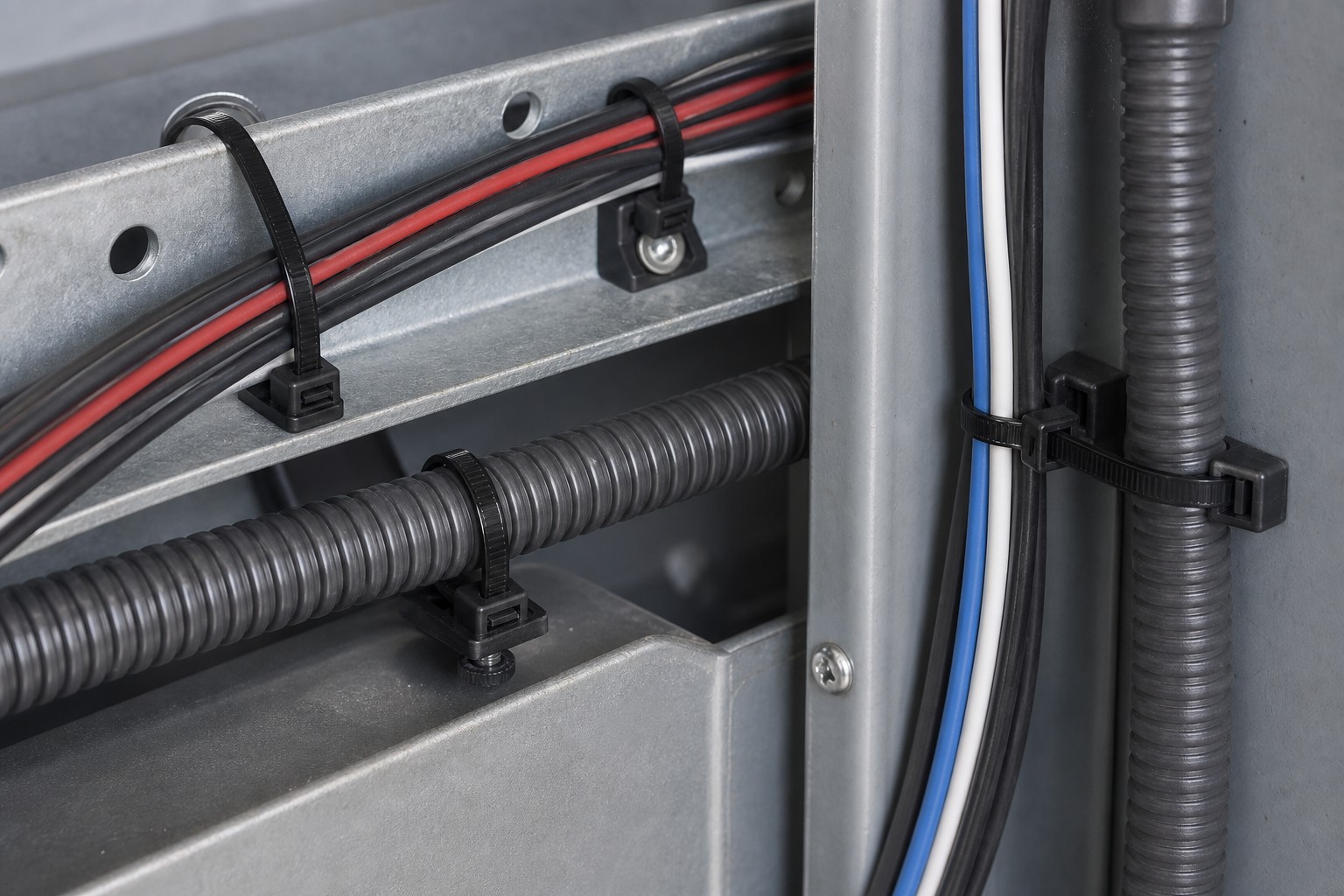
Recommended Solution
Use a layered selection instead of one universal tie. Match the cable tie and base to the surface, bundle weight, installation method and service conditions.
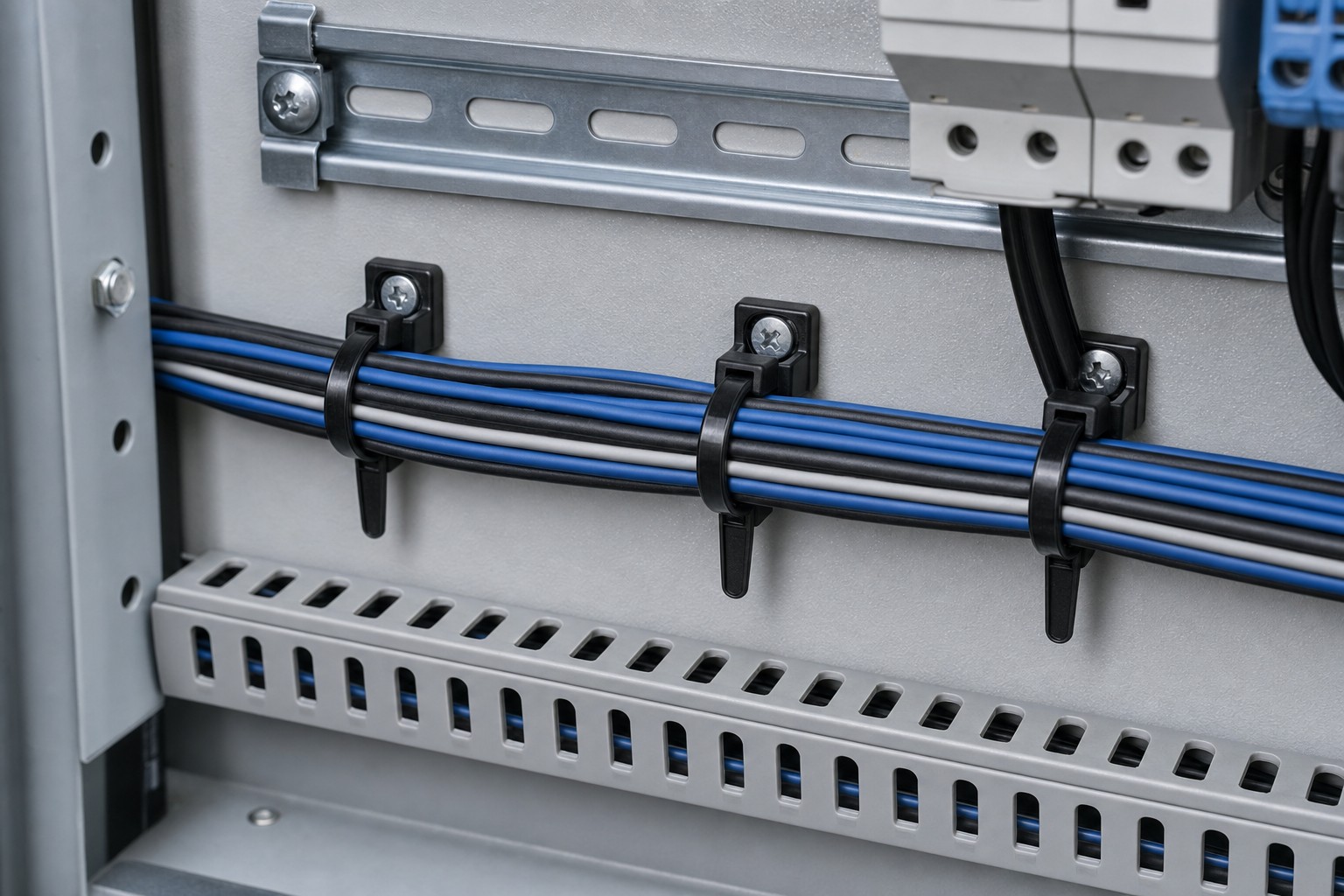
Screw-Mount Bases
Best for cabinet backplates, brackets and machine panels where mechanical retention is required.
Push-Mount Ties
Useful for pre-drilled holes in sheet metal, frames and molded equipment housings.
Edge Clips
Fix wire routes along sheet-metal edges without drilling when the edge thickness is suitable.
Releasable Ties
Good for routes that need planned inspection, replacement or future wiring changes.
Product Combination
Product images below are for product identification and material selection. Application visuals above show installed use; product photos are not presented as customer case photos.
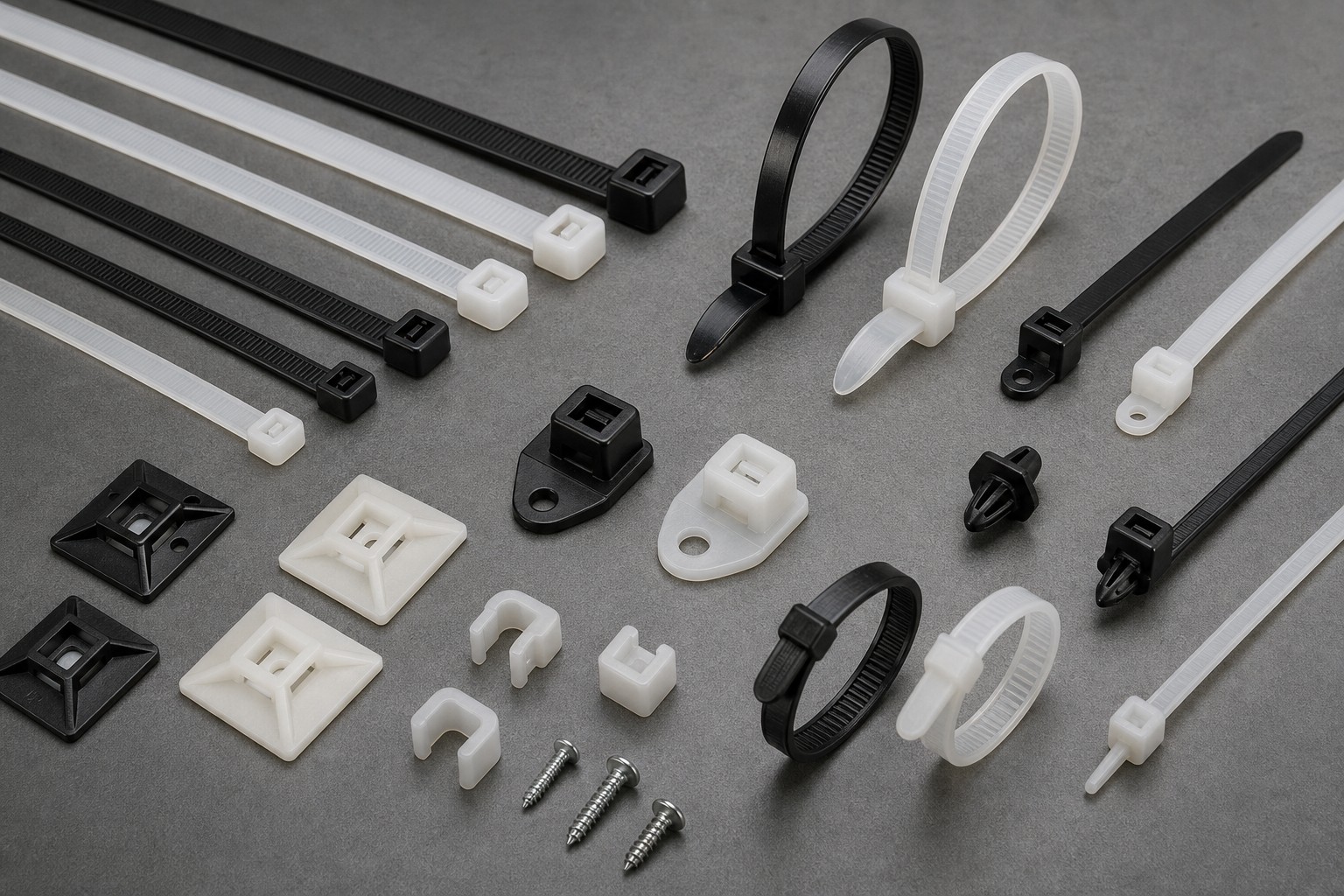
Mounting Base Kit
Standard ties, screw bases, push-mount ties, edge clips and releasable options for mixed equipment routes.
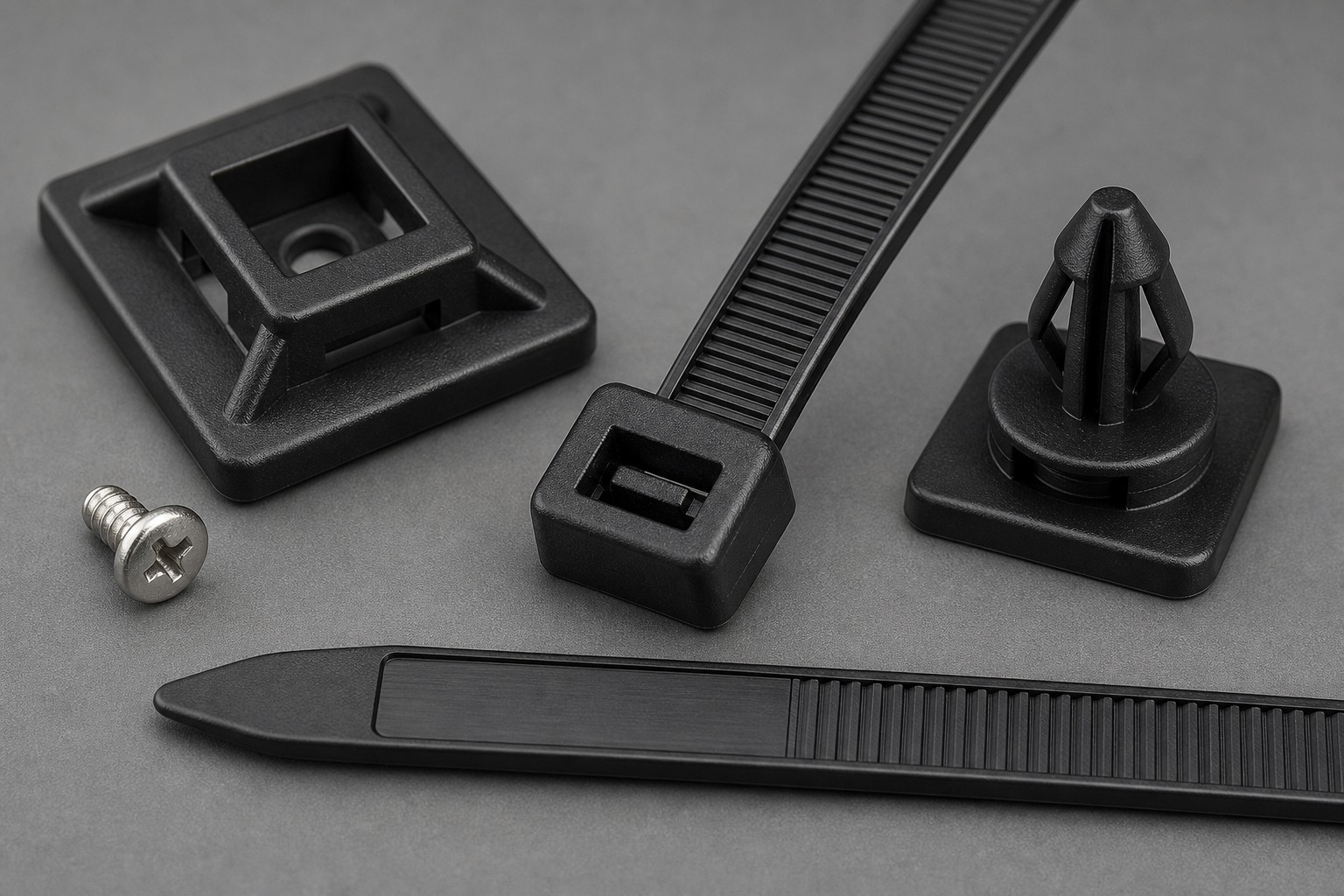
Locking And Mount Detail
Inspect locking head shape, strap teeth, screw hole, mounting base height and push-mount geometry.
Typical Materials
- PA66 natural or black nylon for indoor equipment.
- UV-resistant black nylon for exposed outdoor machinery.
- Heat-stabilized nylon for warm cabinet or engine-adjacent areas.
- Stainless steel for high heat, corrosion or heavy-duty fixing.
Product Parameters
| Field Condition | Recommended Product | Selection Notes |
|---|---|---|
| Control cabinet backplate | Screw-mounted cable tie base + standard PA66 tie | Use when holes or screws are acceptable and the route needs stable retention. |
| Pre-drilled machine frame | Push-mount or fir-tree cable tie | Match hole diameter, panel thickness and pull-out requirement. |
| Sheet-metal edge | Edge clip with tie channel | Avoid drilling; confirm edge thickness and vibration load. |
| Frequent service route | Releasable cable tie or reusable mount | Allows inspection and cable replacement without cutting every tie. |
| Heat, oil or outdoor exposure | UV-resistant, heat-stabilized or stainless steel tie | Select material after confirming temperature, chemical and corrosion exposure. |
Installation Steps
- Clean the fixing surface and confirm the cable route does not block doors, fans, guards or maintenance points.
- Select a base or mount that matches the support surface and load.
- Install the base with screw, push-mount, clip or adhesive according to the site condition.
- Route the cable bundle with the required bend radius and service slack.
- Thread the tie through the base, wrap the bundle, pull to firm tension and trim excess tail if required.
- Recheck clearance after the equipment door or moving guard is closed.
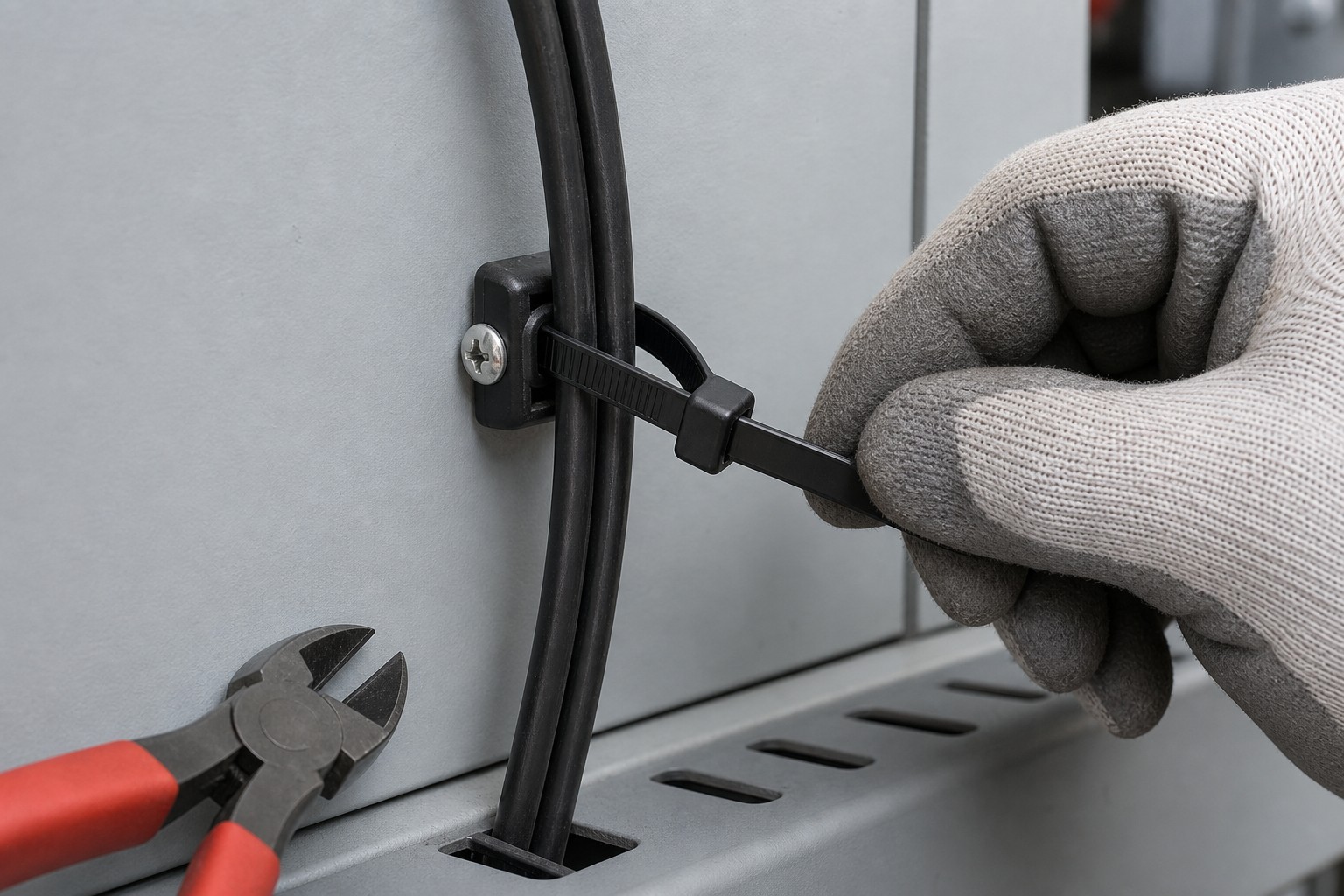
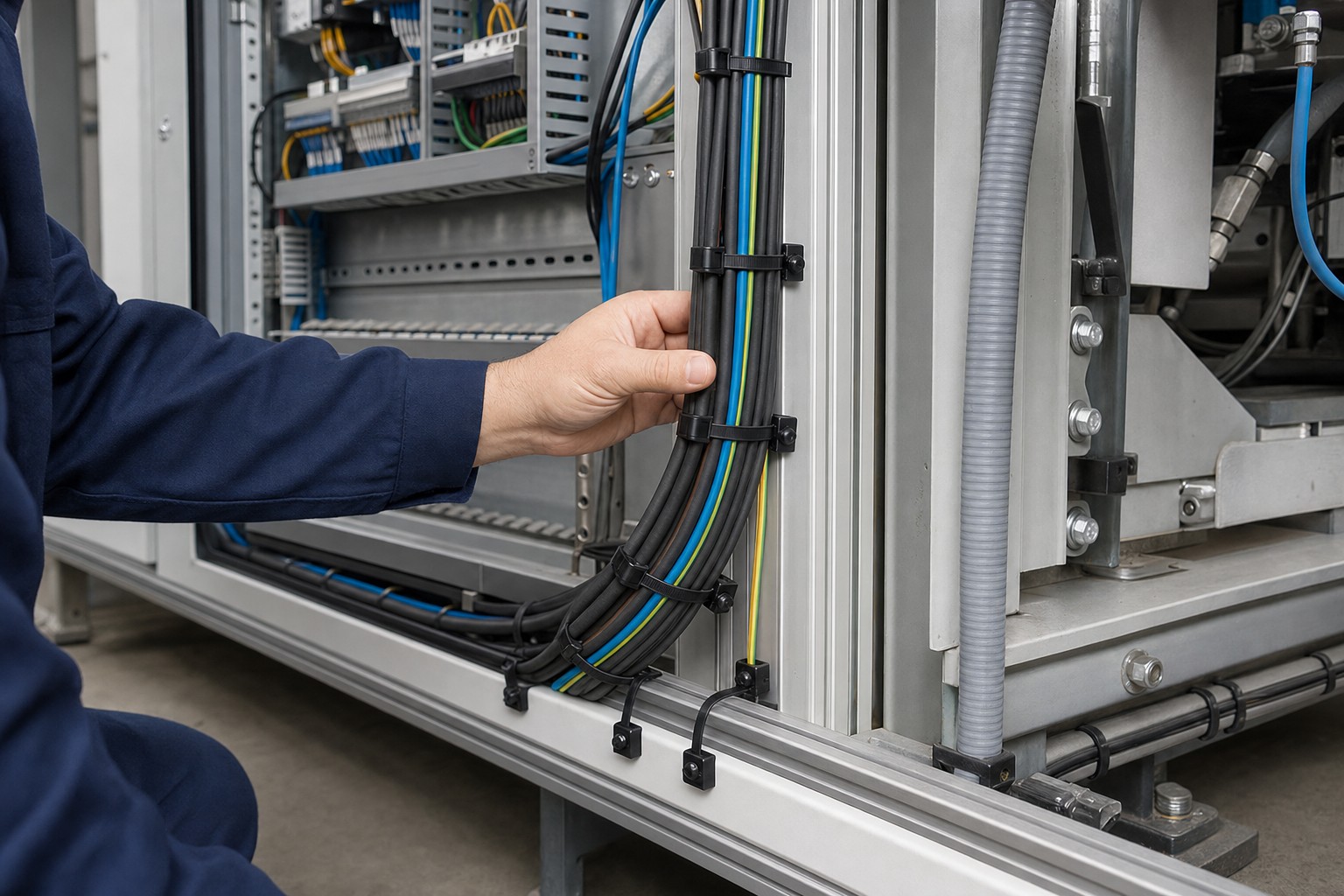
Field Scenario
Application: Cable routing around an equipment cabinet and machine frame.
Problem: Sensor leads and conduit had to be kept clear of service openings, moving guards and vibration-prone frame areas.
Solution: CableTiesMFG recommended mounted bases for panels, push-mount ties for drilled frame points, and releasable ties for inspection routes.
Result: The route became easier to trace, fixed points were more repeatable, and maintenance teams could replace lines without rebuilding the whole cable path.
Why Choose CableTiesMFG
Application Matching
We match the tie to the support surface, not only to bundle diameter.
Material Options
PA66, UV-resistant, heat-stabilized and stainless-steel choices for different equipment conditions.
OEM Flexibility
Size, color, packing and product combination can be adjusted for distributors and equipment builders.
Practical QA
We check locking head, strap teeth, material, tensile strength and application fit before recommendation.
FAQ
Can adhesive bases be used on equipment panels?
Yes, but only on clean, flat surfaces with suitable temperature and oil exposure. For high vibration, screw or push-mount fixing is safer.
When should I choose push-mount ties?
Use push-mount ties when the frame or panel already has a compatible hole and you want fast installation without separate bases.
How tight should the tie be?
The tie should hold the route firmly without crushing insulation, small pneumatic hose, fiber line or sensor cable.
Can one kit cover multiple equipment areas?
Yes. Many equipment builders use a combination of standard ties, screw bases, push mounts, releasable ties and edge clips.
Contact Us
Send your equipment photo, drawing, support surface, cable diameter and environment. We can recommend a cable tie and mounting-base combination for your panel, frame or machine support.