Environment Solution
High Temperature Cable Tie Solutions for Hot Equipment and Industrial Areas
Choose heat-stabilized nylon ties, stainless steel ties and controlled fixing methods for cable routes near engines, hot pipes, machinery, ovens, heaters and industrial process equipment.
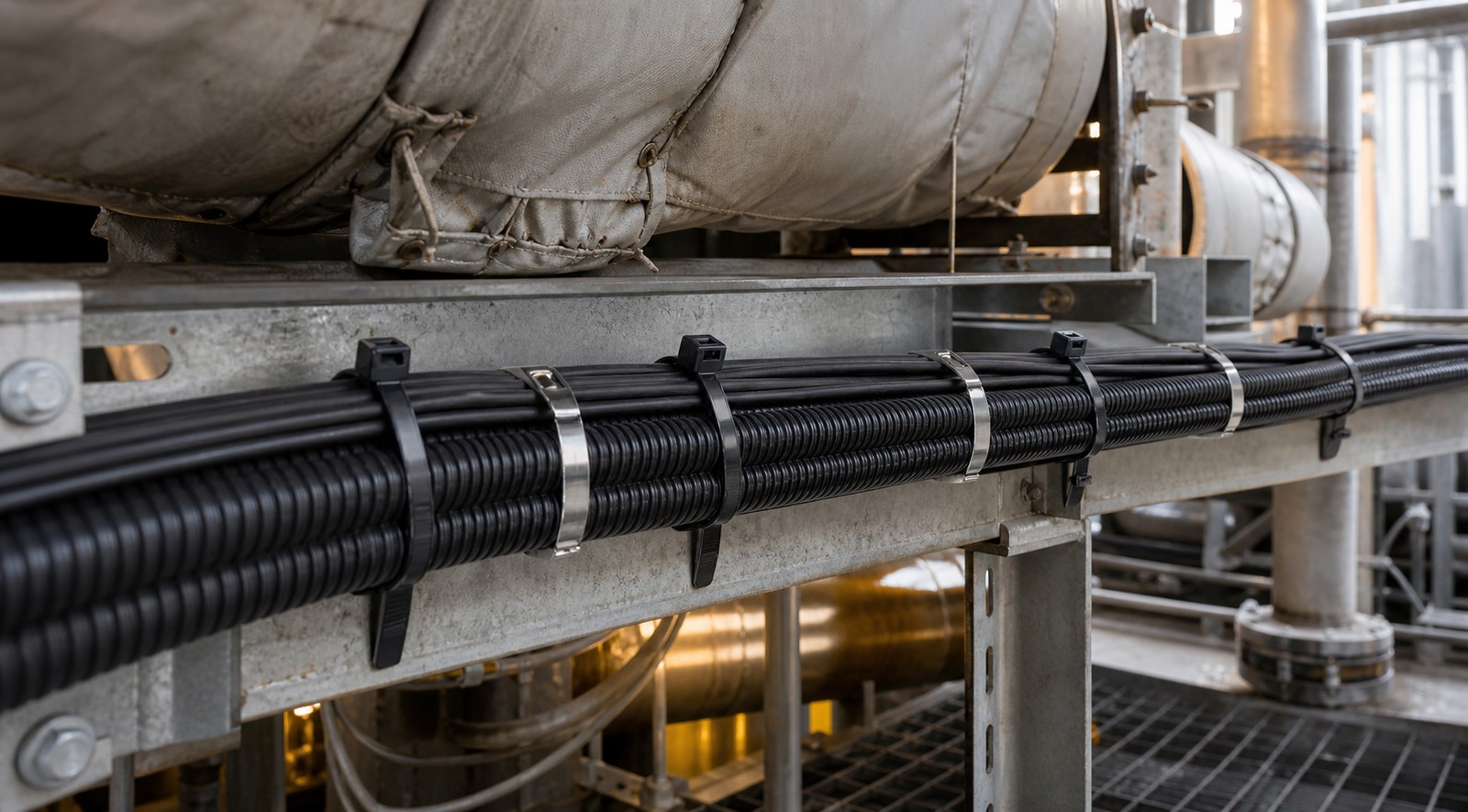
Application visual: high-temperature cable routes need material choice and real contact with the cable bundle and support.
High Temperature Environment Introduction
High-temperature cable tie applications appear in engine compartments, industrial equipment, HVAC units, lighting fixtures, appliance interiors, cable trays near hot process pipes and maintenance areas with temperature cycling.
The risk is not only whether the tie survives a short hot moment. Heat changes the long-term behavior of nylon, cable jackets and mounting points. A cable route that looks secure during installation can loosen after thermal cycling, vibration and service exposure.
The practical solution is to define the heat source, distance from hot surfaces, cable load, support spacing, required life and inspection method before selecting the tie material.
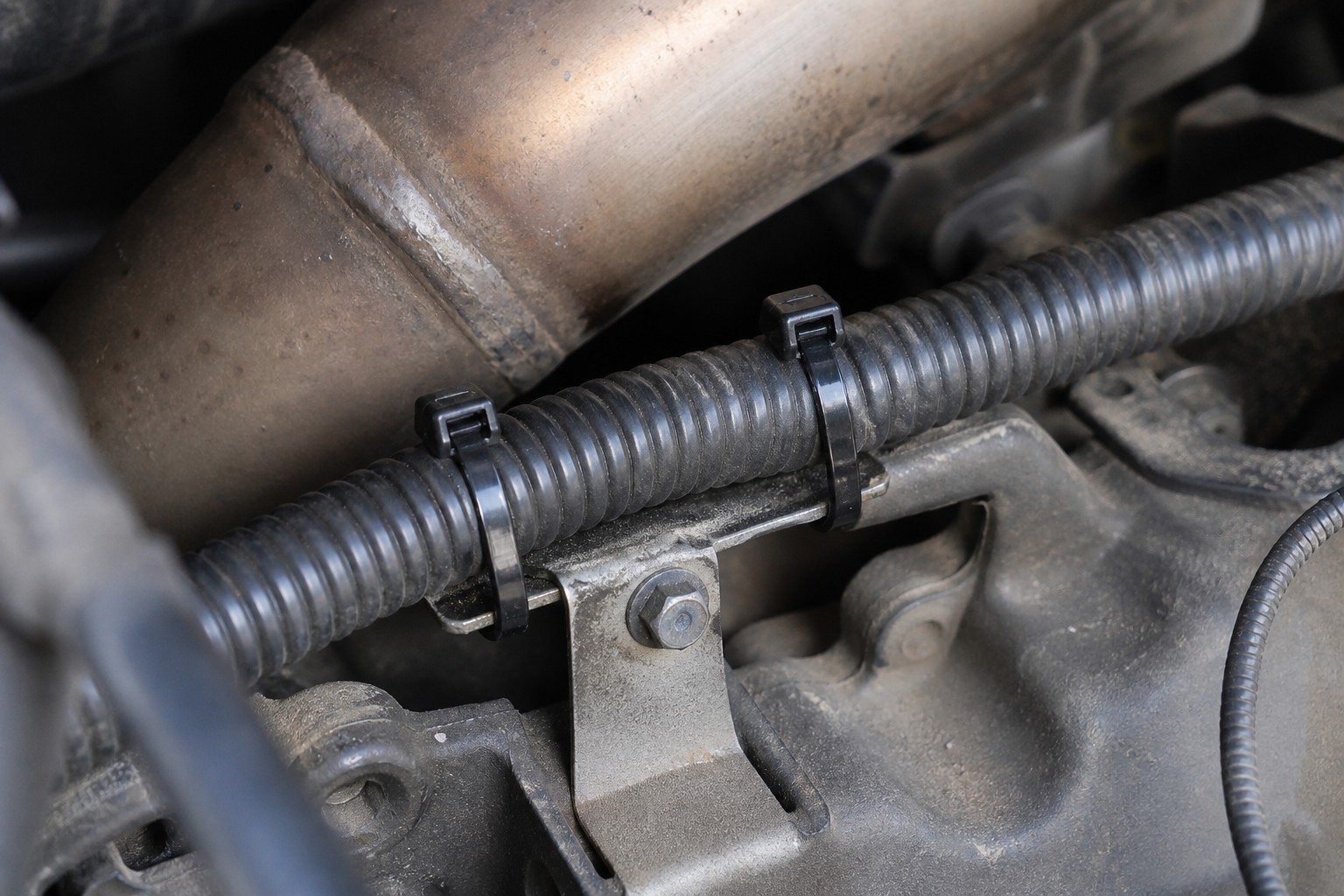
Application visual: engine-bay and machinery routes require heat-resistant material and correct routing away from hot surfaces.
High Temperature Pain Points
Plastic Embrittlement
Ordinary nylon ties can harden and crack faster when exposed to elevated temperature for long periods.
Loose Cable Routes
Thermal cycling and vibration can loosen bundles, creating sagging, rubbing and maintenance problems.
Wrong Material Choice
A standard tie, heat-stabilized tie and stainless tie solve different problems and should not be treated as interchangeable.
Unsafe Placement
Even a good tie fails when the cable route sits against hot surfaces, sharp tray edges or unsupported spans.
Field Problem Analysis
Start by inspecting the failed fixing point, not only the broken tie. Look for heat discoloration, brittle snap marks, missing tails, sagging conduit, tight bends, abrasion marks, support spacing, direct contact with pipes and incorrect tie material.
If the cable route is near hot equipment, the decision may shift from ordinary nylon to heat-stabilized nylon, stainless steel, coated stainless or specialty polymer ties. The right answer depends on exposure time, load, cable jacket sensitivity and maintenance access.
Important: do not publish a temperature rating unless it is tied to a verified product, test basis and use condition. A material family name alone is not a finished-tie specification.
Problem visual: heat aging can show up as brittle ties, loose loops and cable movement before a full route failure occurs.
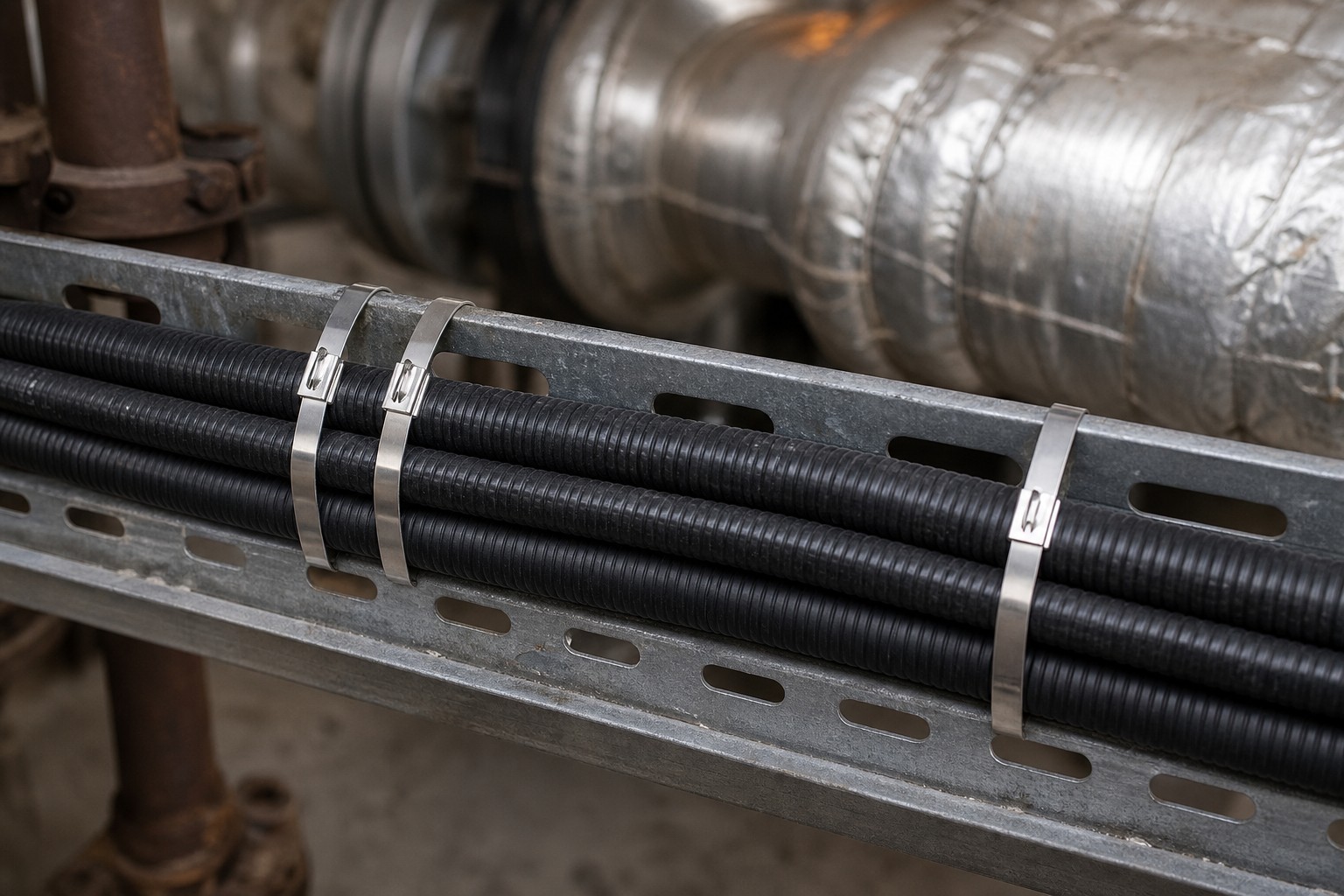
Solution visual: stainless steel ties are used where heat, load or severe exposure exceeds ordinary plastic tie capability.
Recommended Solution
For moderate heat exposure and protected cable routing, heat-stabilized nylon ties can be a practical starting point. Use a wider tie when bundle weight, vibration or spacing requires stronger retention.
For high radiant heat, severe industrial exposure, metal brackets, hot pipe routes or locations where plastic aging is unacceptable, use stainless steel cable ties or coated stainless ties. When cable jackets are sensitive, confirm compatibility and avoid sharp edges or excessive tension.
Heat-Stabilized Nylon
General hot-equipment cable routing where verified polymer capability is enough.
Stainless Steel Ties
High heat, heavy retention, severe-duty cable tray and pipe-adjacent routes.
Route Hardware
Mounting bases, brackets and tray supports keep cables off hot or sharp surfaces.
Product Combination
A high-temperature fixing package should include more than one tie type. The best set depends on the real thermal profile, route load and cable jacket requirements.
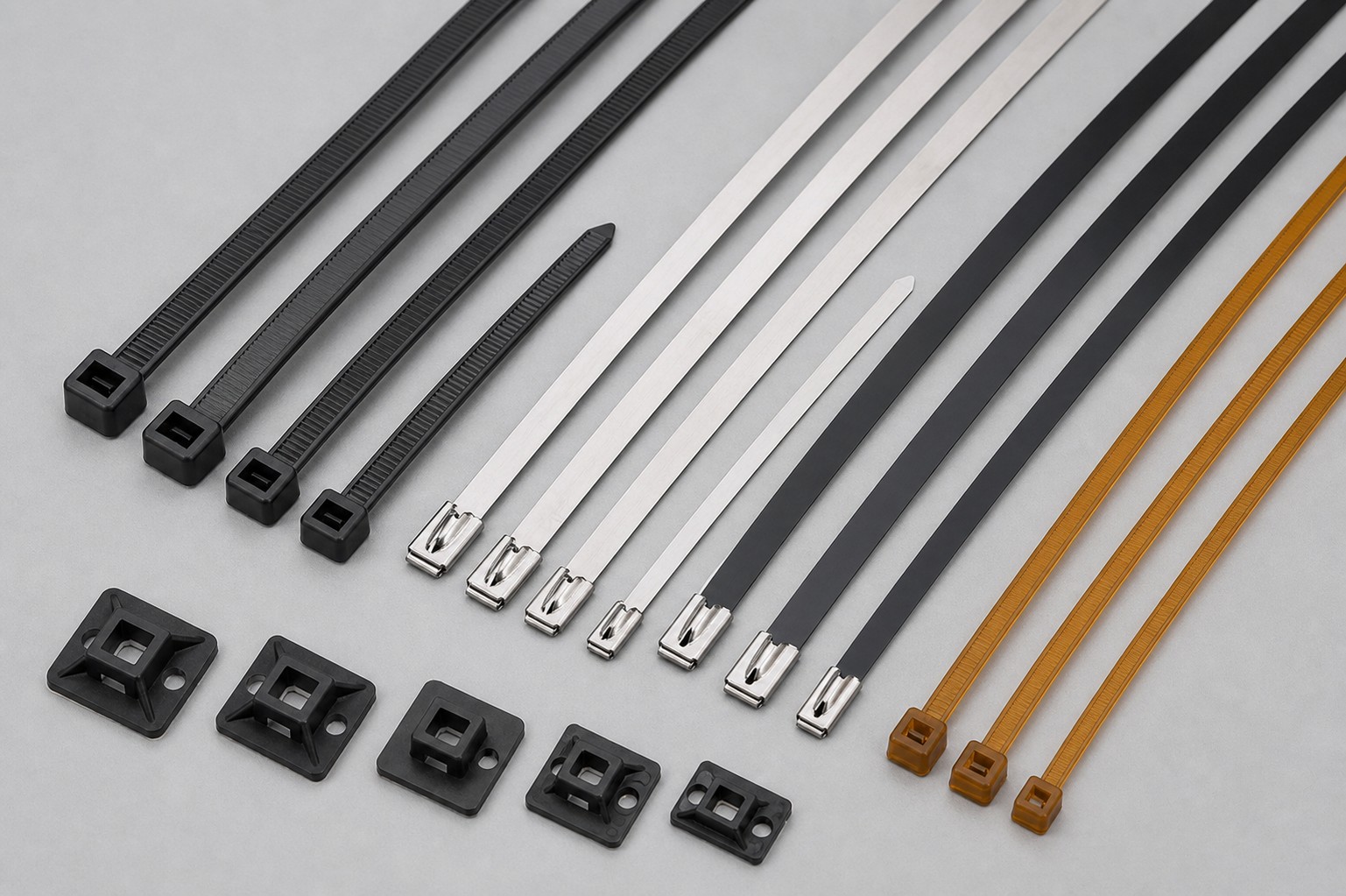
Product visual: heat-stabilized nylon ties, stainless ties, coated options and mount bases belong to different heat-risk zones.
Heat-Stabilized Nylon Ties
For controlled heat exposure where nylon is still suitable and procurement needs efficient installation.
Stainless Steel Cable Ties
For hot cable trays, pipe-adjacent routes, heavy bundles and severe retention points.
Coated Stainless Ties
For additional cable jacket protection where metal tie edges or galvanic contact need control.
Mounting Bases and Supports
For keeping cables away from hot surfaces and creating a repeatable fixing point.
Product Parameters
High-temperature selection should be based on finished-product evidence and installed conditions. Avoid treating short peak exposure, continuous service temperature and flame rating as the same claim.
Use this table as a quotation checklist. Exact values should be confirmed by SKU, material grade, test basis and project condition before publishing or ordering.
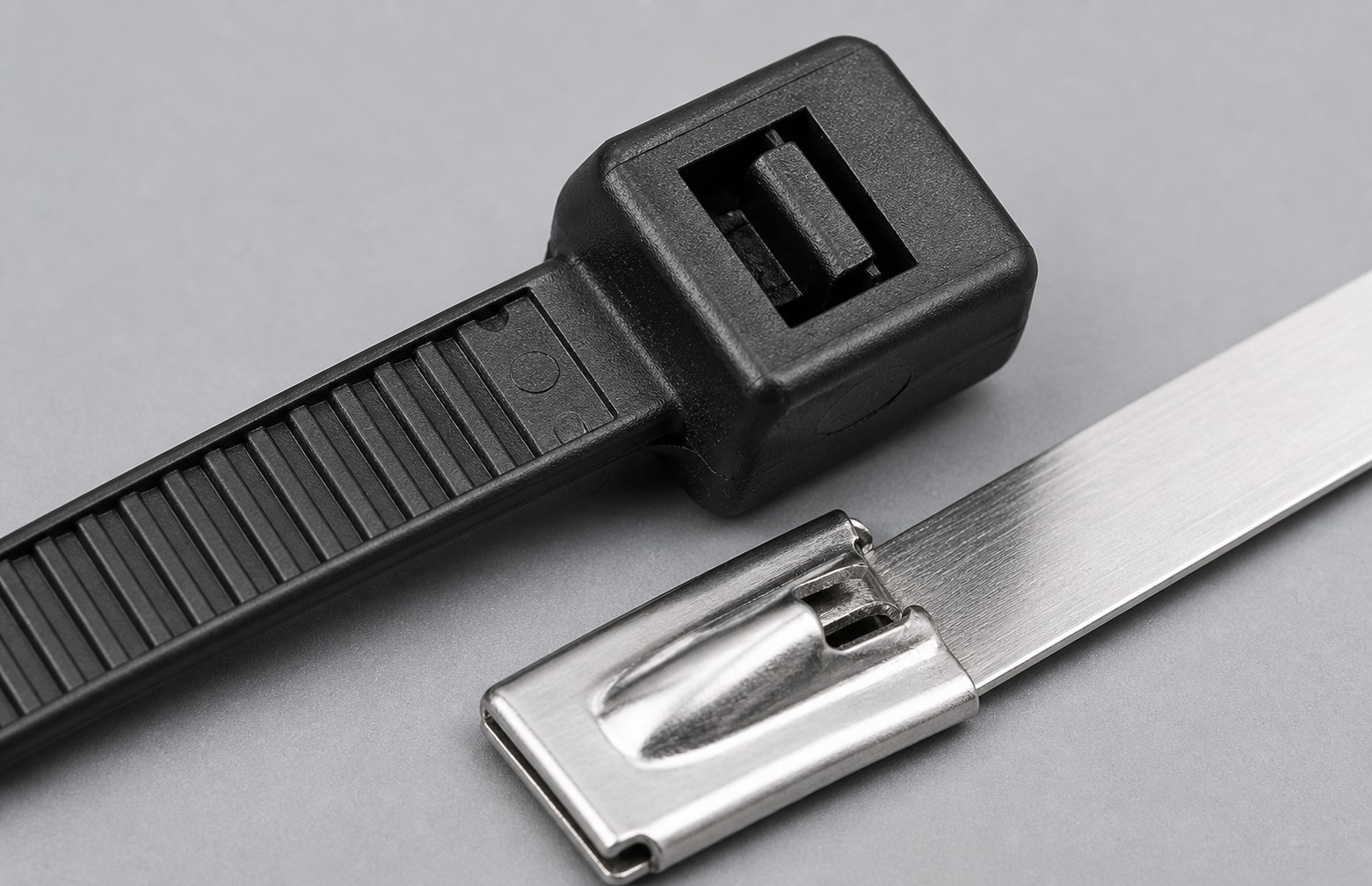
Product detail: structure and material must match the application, not only the word “high temperature.”
| Selection Item | What To Confirm | Why It Matters |
|---|---|---|
| Thermal Profile | Continuous temperature, peak temperature, exposure time and distance from heat source | A short peak does not prove long-term performance. |
| Material | Heat-stabilized PA66, stainless steel, coated stainless steel or specialty polymer | Each material handles heat, flexibility and cable contact differently. |
| Bundle Load | Cable diameter, weight, vibration and support spacing | Heat reduces safety margin when the route is under mechanical load. |
| Cable Jacket | Jacket material, softness, abrasion risk and edge sensitivity | Metal ties may need coating or protective routing for jacket safety. |
| Installation Tool | Hand tension, cable tie gun setting or stainless tie tool | Over-tightening can damage the cable; under-tightening allows movement. |
| Documentation | Part number, drawing, material statement, testing basis and inspection plan | Procurement needs evidence, not generic marketing claims. |
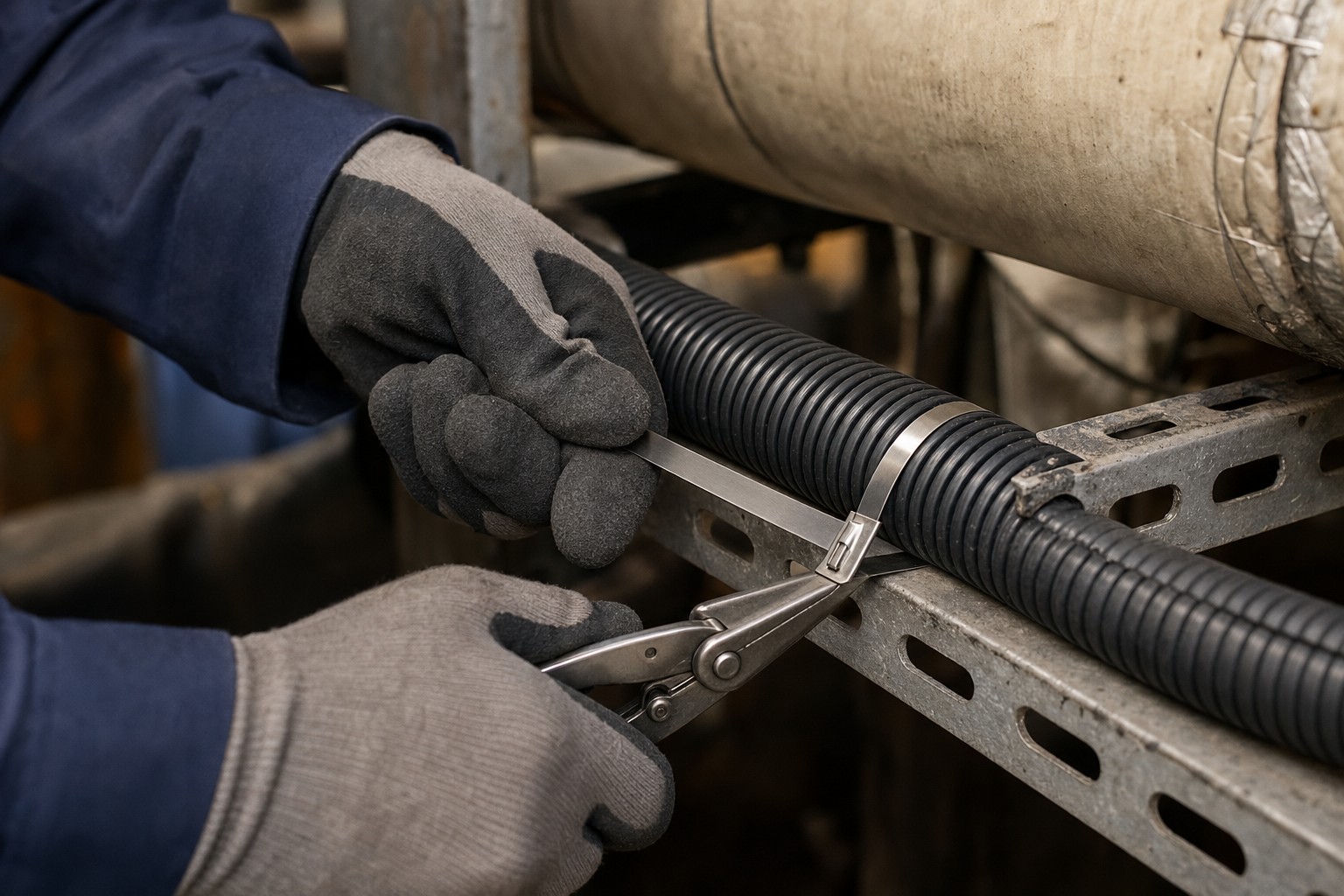
Installation visual: stainless ties require controlled tension and correct clasp orientation around the conduit and support.
Installation Steps
- Map the heat source, radiant exposure, cable route and maintenance access before placing ties.
- Keep cables away from direct contact with hot pipes, sharp tray edges and moving equipment.
- Select heat-stabilized nylon, stainless steel or coated stainless ties according to exposure and cable jacket needs.
- Use a real support point such as a tray, bracket, frame or mount base; do not only bundle cables without route control.
- Wrap the tie around the cable or conduit and support, then tension it with the correct hand tool or cable tie gun setting.
- For stainless ties, keep the band flat and the clasp seated; avoid twisting the band or crushing the cable jacket.
- Trim excess tail cleanly and orient sharp ends away from technicians and cable movement paths.
- Inspect after thermal cycling for looseness, cracking, jacket marks and support movement.
Field Case
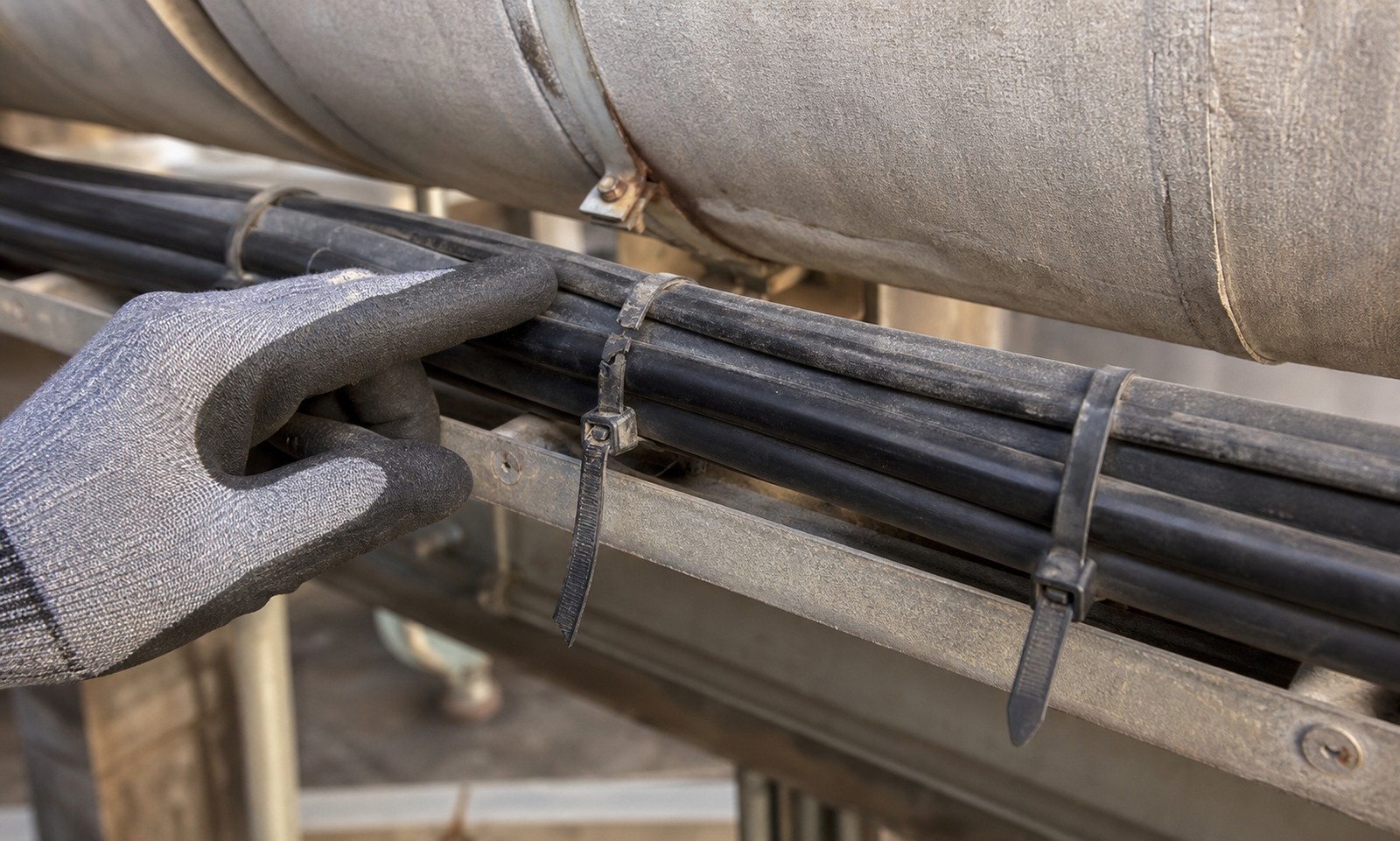
Application: industrial equipment cable route near insulated process pipework and a galvanized cable tray.
Problem: ordinary ties and wide spacing allowed conduit movement after repeated heat cycles and maintenance vibration.
Solution: CableTiesMFG recommended heat-stabilized nylon ties in moderate zones, stainless steel ties at hotter support points, and controlled routing away from direct pipe contact.
Result: the route gained clearer support spacing, better retention and easier inspection of high-heat fastening points.
Note: page visuals are photo-style application and product visuals for solution explanation, not customer-submitted field photos.
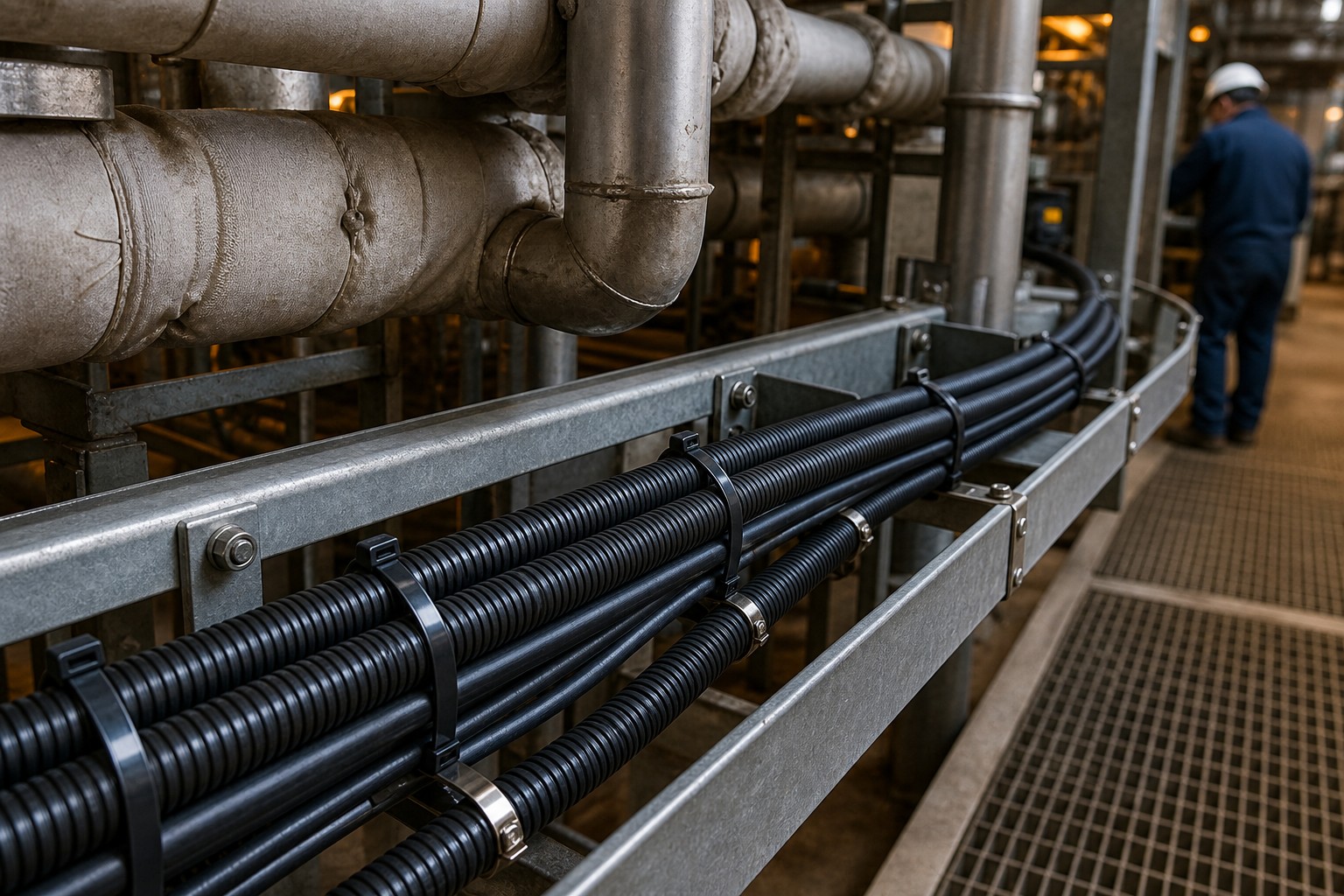
Field visual: repeated fixing points keep cable routes organized in hot industrial equipment areas.
Why Choose CableTiesMFG
Material Matching
We help separate ordinary nylon, heat-stabilized nylon, stainless steel and coated stainless choices.
Structure Control
Samples and product images focus on real locking heads, strap teeth, tails and usable installation geometry.
Application Review
Send route photos, temperature profile and cable details so the recommendation matches the real environment.
Export Support
Bulk packaging, labeling, sampling, commercial quotation and documentation can be prepared for B2B orders.
FAQ
Are high-temperature nylon ties the same as flame-retardant ties?
No. Heat aging and flame behavior are different requirements. Confirm both only when product-specific evidence exists.
When should stainless steel ties replace nylon ties?
Use stainless when heat, load, chemical exposure or retention risk exceeds the verified capability of the selected nylon tie.
Can high-temperature ties touch hot pipes directly?
Do not assume direct contact is acceptable. Route cables away from hot surfaces and validate the installed assembly.
What information should I send for a quote?
Send temperature profile, exposure time, cable diameter, support type, load, vibration, chemicals, required documents and quantity.
Related Solutions
HVAC Cable Tie SolutionsEquipment wiring, fan/motor vibration, heaters and serviceable cable routing.
Outdoor Cable Tie SolutionsUV, weather, rain, dust and exposed cable route control.
Corrosion-Resistant Cable Tie SolutionsStainless and coated options for harsh or exposed industrial environments.
Need Help Selecting High Temperature Cable Ties?
Send your temperature profile, route photos, cable size, support type and quantity. We can help match nylon, stainless or coated stainless options for sampling and quotation.