Environment Solution
Marine Cable Tie Solutions for Salt Spray, Shipboard and Offshore Routes
Specify stainless, coated stainless and UV-resistant ties for coastal, shipboard and offshore cable tray routes exposed to salt, moisture and vibration.
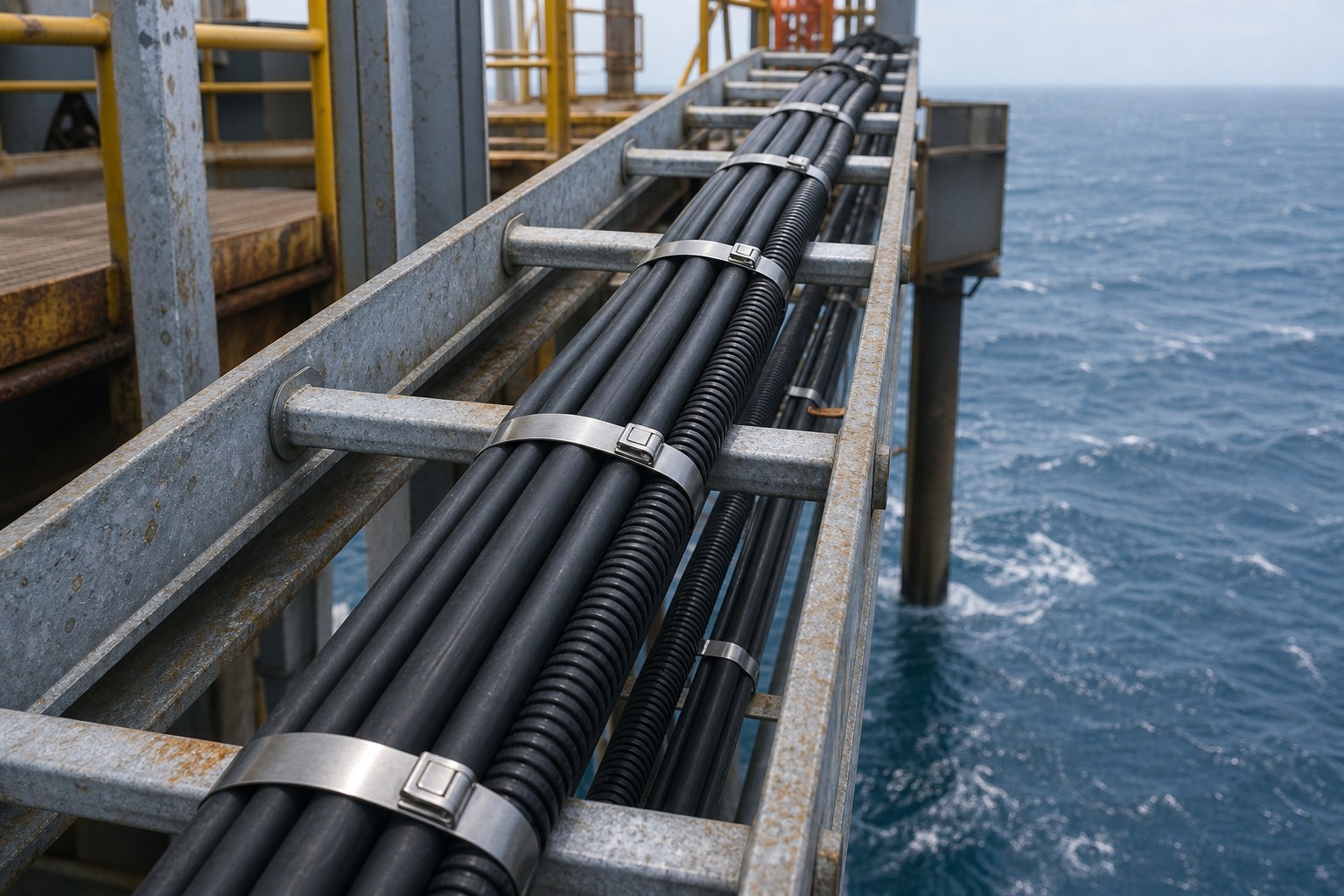
Application visual: offshore cable tray route using flat stainless steel ties to control black marine cable bundles in a salt-exposed environment.
Environment Introduction
Marine cable routes face a combination of salt, moisture, vibration, UV, washdown water, oil mist and difficult inspection access. A tie that works in a dry cabinet can become the weak point on a ship deck, coastal platform or offshore cable tray.
The right specification starts by separating the route into exposure zones: dry enclosure, ship engine room, deck-side junction box, open cable tray, coastal outdoor rack and offshore splash area. These zones should not automatically use the same tie.
In low-exposure areas, UV black nylon may be enough. In salt spray and exposed support routes, SS316 stainless or coated stainless ties are usually the safer starting point.
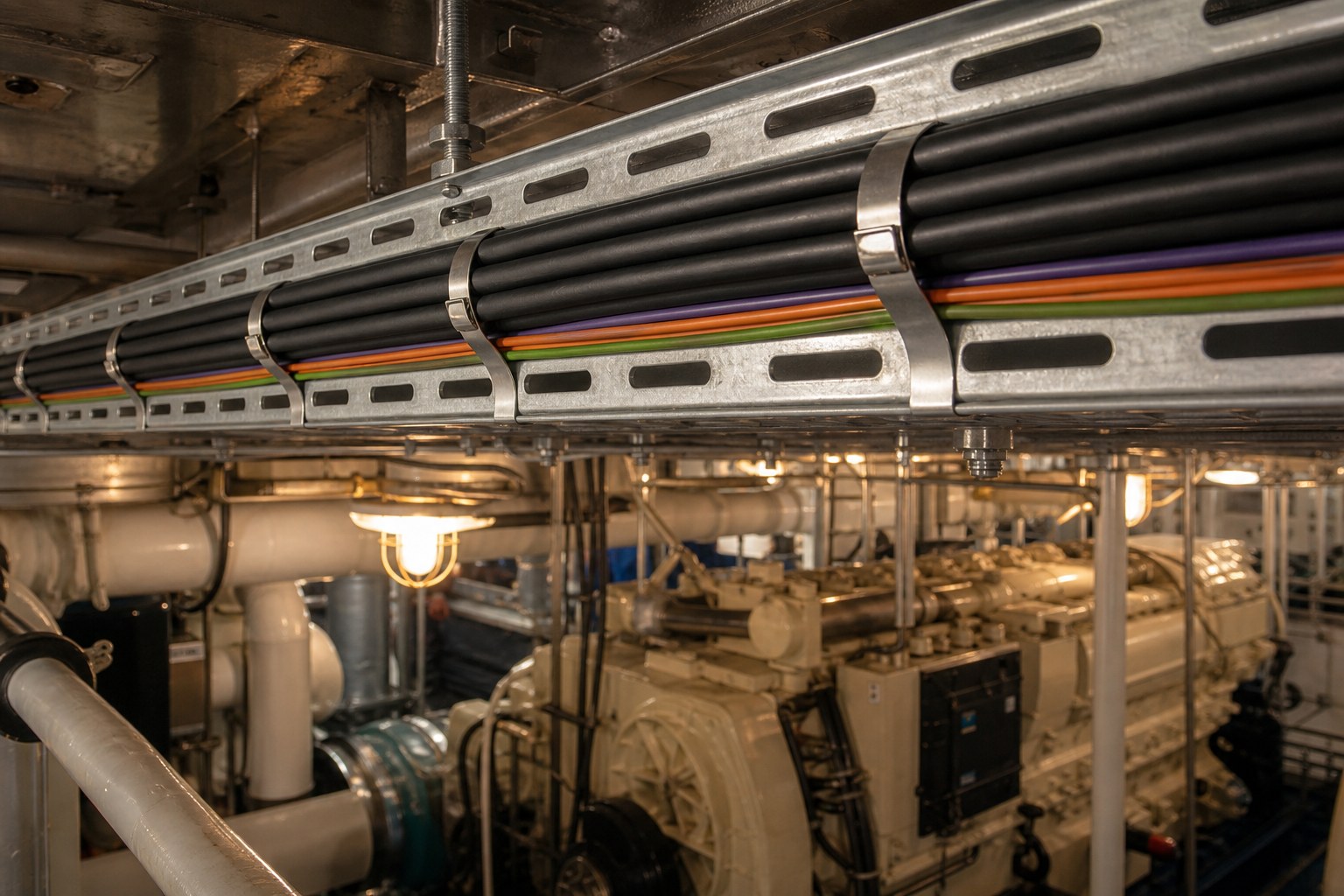
Application visual: ship engine room overhead cable tray with stainless ties holding dense black cable routes.
Marine Environment Pain Points
Salt Spray Corrosion
Salt and moisture attack exposed hardware, tray edges and low-grade metal fasteners, shortening service life.
Plastic Tie Aging
Standard nylon can lose retention faster under UV, wet heat, oil mist and repeated washdown cycles.
Vibration Movement
Shipboard and offshore routes experience vibration, cable movement and maintenance disturbance.
Cable Jacket Wear
Sharp tray edges or bare metal contact can abrade cable jackets if tie selection and tension are wrong.
On-Site Problem Analysis
Inspect the route before choosing the part number. Look for corrosion around tray holes, water collection points, cracked plastic ties, loose cable bundles, sharp metal edges, over-tensioned ties and areas where maintenance hands or tools can snag the clasp.
The practical question is: does the tie only wrap the cable bundle, or does it also create a clear support path to the tray, rail, rung, bracket or post? In marine work, a neat bundle that still moves in the tray is not a complete fixing solution.
Engineering note: stainless ties improve corrosion and retention, but they must be tensioned correctly. Over-tightening can mark cable jackets, especially on soft conduit or rubber-sheathed marine cables.
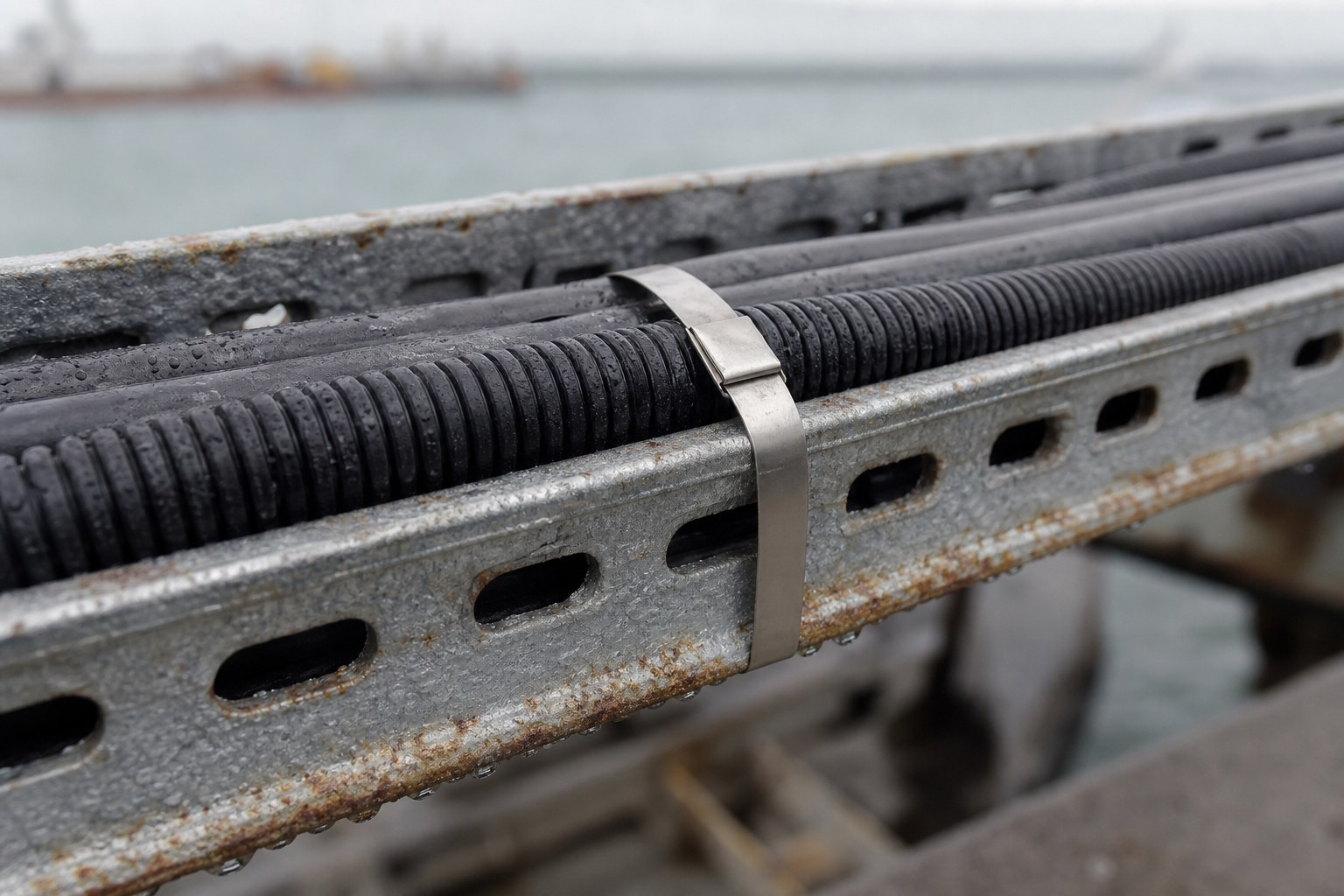
Problem visual: salt, water and tray corrosion make material selection more important than simple bundle diameter.
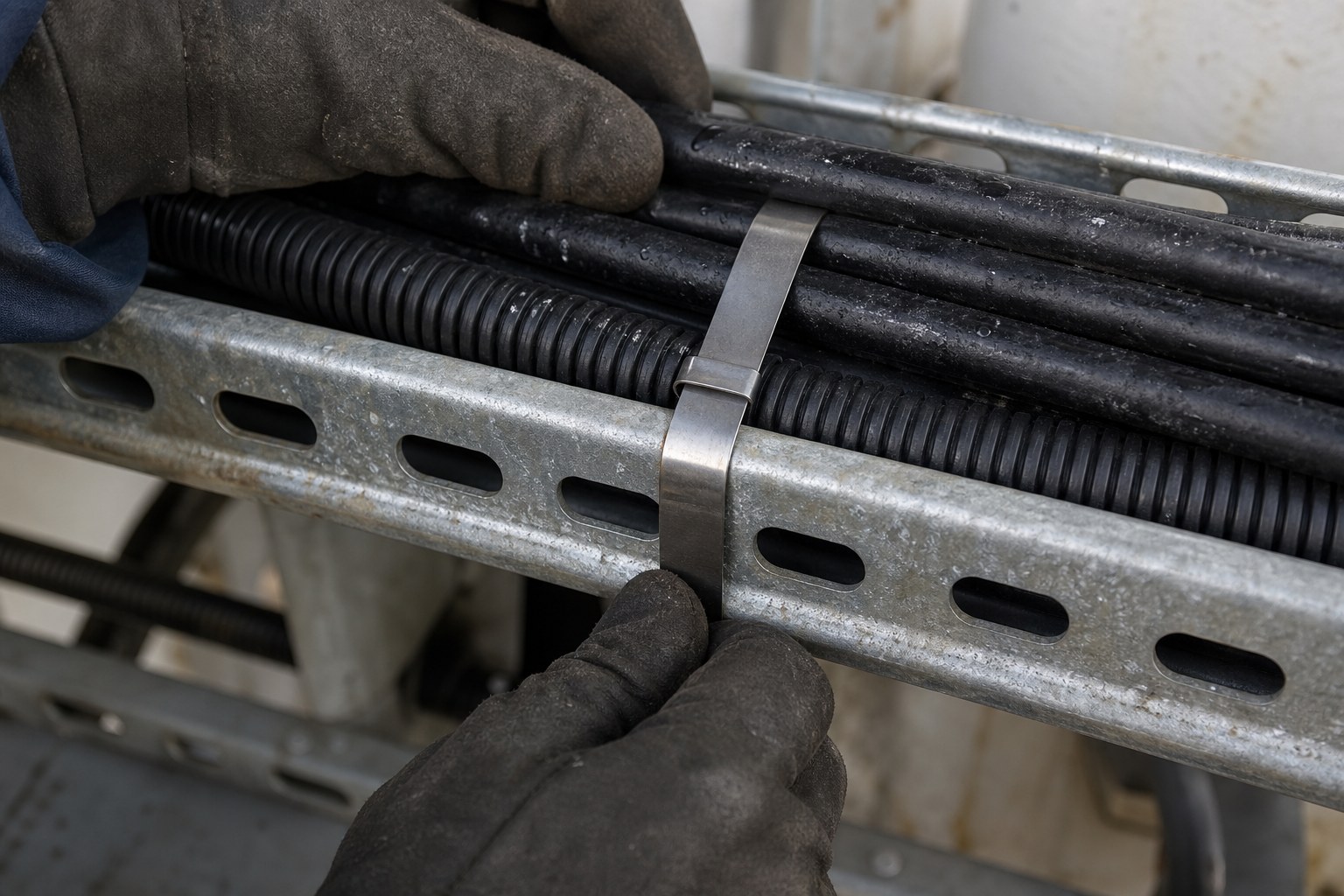
Inspection visual: maintenance teams need visible support, correct tie material and a fastening point that can be checked later.
Recommended Solution
Use nylon only where the route is protected and the risk is low. Move to stainless steel when salt, vibration, heat, outdoor exposure or long service intervals make plastic ties a weak link.
For offshore platforms, wet decks and exposed coastal racks, SS316 stainless steel ties are the preferred starting point. For soft cable jackets, corrugated conduit or areas where abrasion is a concern, coated stainless ties can combine metal retention with a smoother contact surface.
Protected Route
UV black nylon or heat-stabilized nylon for dry cabinets and low-salt internal bundles.
Salt Exposure
SS316 stainless ties for open tray, ship deck, offshore platform and coastal rack routes.
Jacket Protection
Coated stainless ties where cable jackets, conduit or vibration zones need a softer interface.
Route Selection Workflow
- Classify the route: dry enclosure, engine room, open deck, coastal rack or offshore platform.
- Identify salt spray, standing water, UV, heat, oil mist, vibration and washdown exposure.
- Check whether the tie will only bundle cables or also secure them to a real support point.
- Select UV nylon, SS304, SS316 or coated stainless according to exposure and cable jacket sensitivity.
- Confirm tie width, band thickness, tensile strength, clasp type and installation tool before bulk supply.
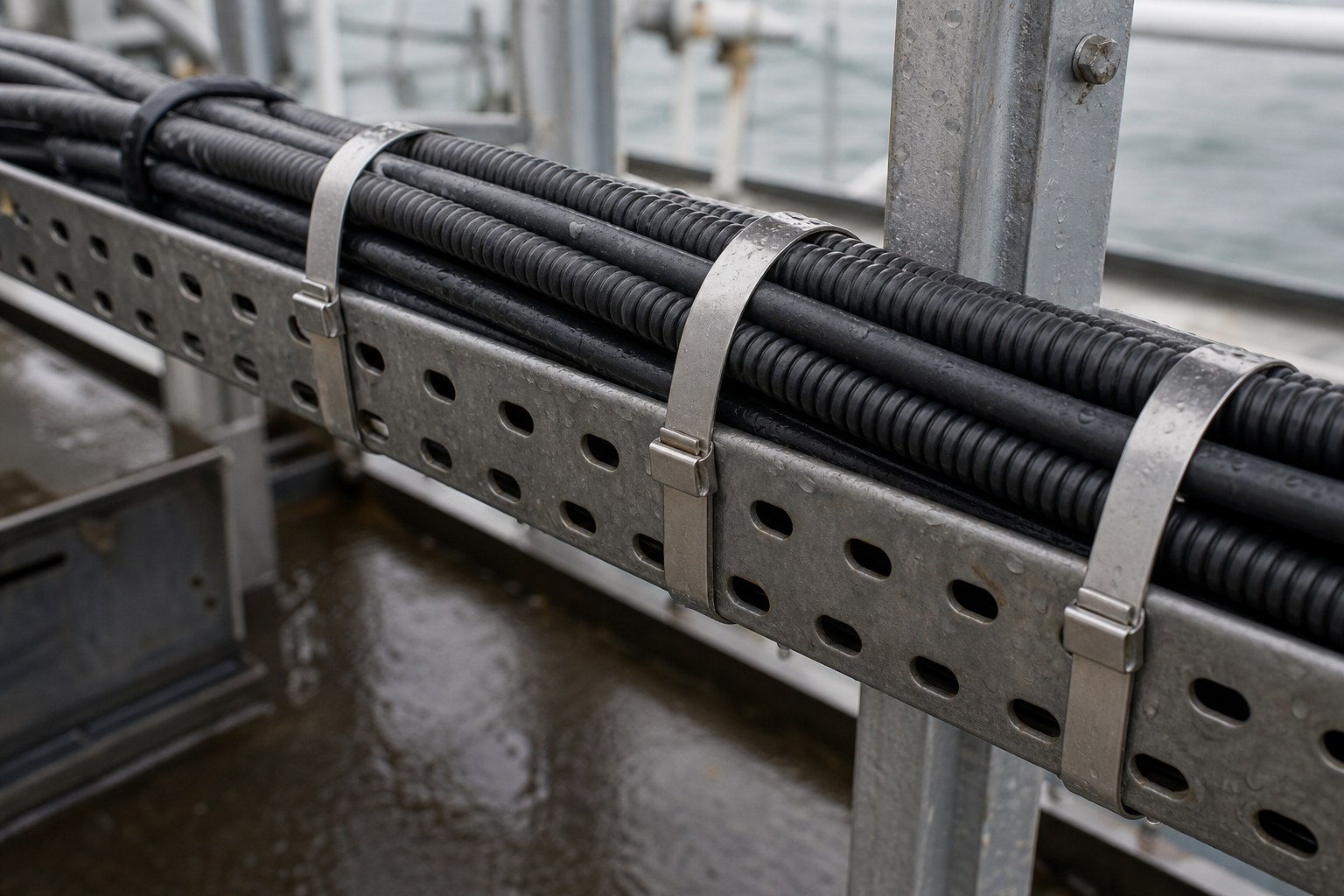
Solution visual: multiple stainless ties control conduit and cable bundles along a wet marine tray route.
Product Combination
A marine project rarely needs only one tie type. Use nylon ties where the route is protected, stainless ties where corrosion and retention are critical, and coated stainless ties where cable jacket protection is part of the requirement.
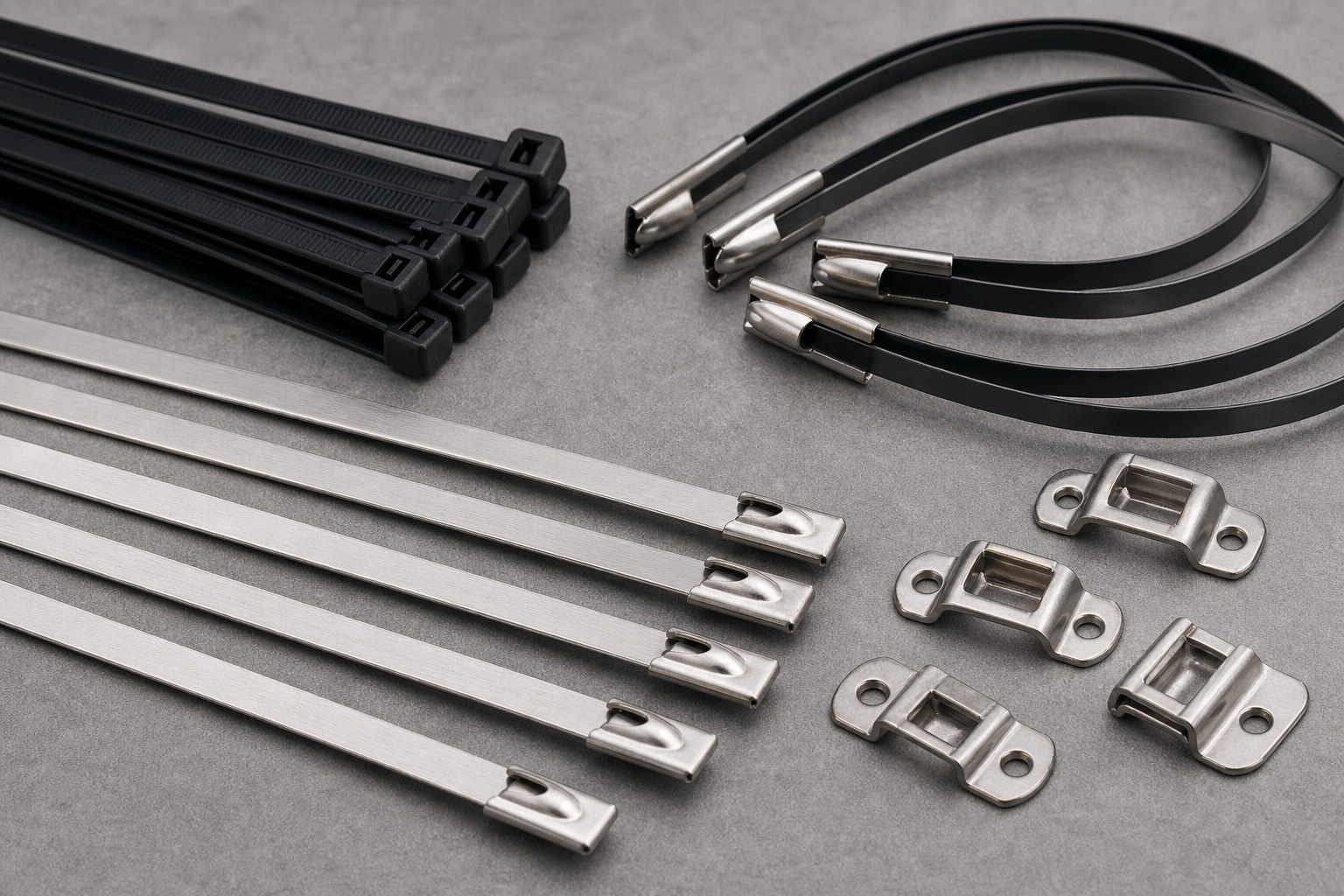
Product visual: product photos help identify materials and structures; application sections still need real route context.
UV Black Nylon Ties
For protected cabinets, internal bundles and non-splash routes where salt exposure is low.
SS304 Stainless Ties
For moderate corrosion requirements and general industrial metal cable routes.
SS316 Stainless Ties
For offshore, shipboard, coastal and salt spray exposure where corrosion resistance is the core requirement.
Coated Stainless Ties
For black cable jackets, conduit, vibration zones and routes where abrasion reduction matters.
Product Parameters
Use this checklist when preparing samples, RFQs or drawings for marine cable tie projects. The buyer should see both material compatibility and mechanical fixing requirements.
For critical routes, confirm grade, tie width, coating type, cable jacket material and installation tension before bulk installation.
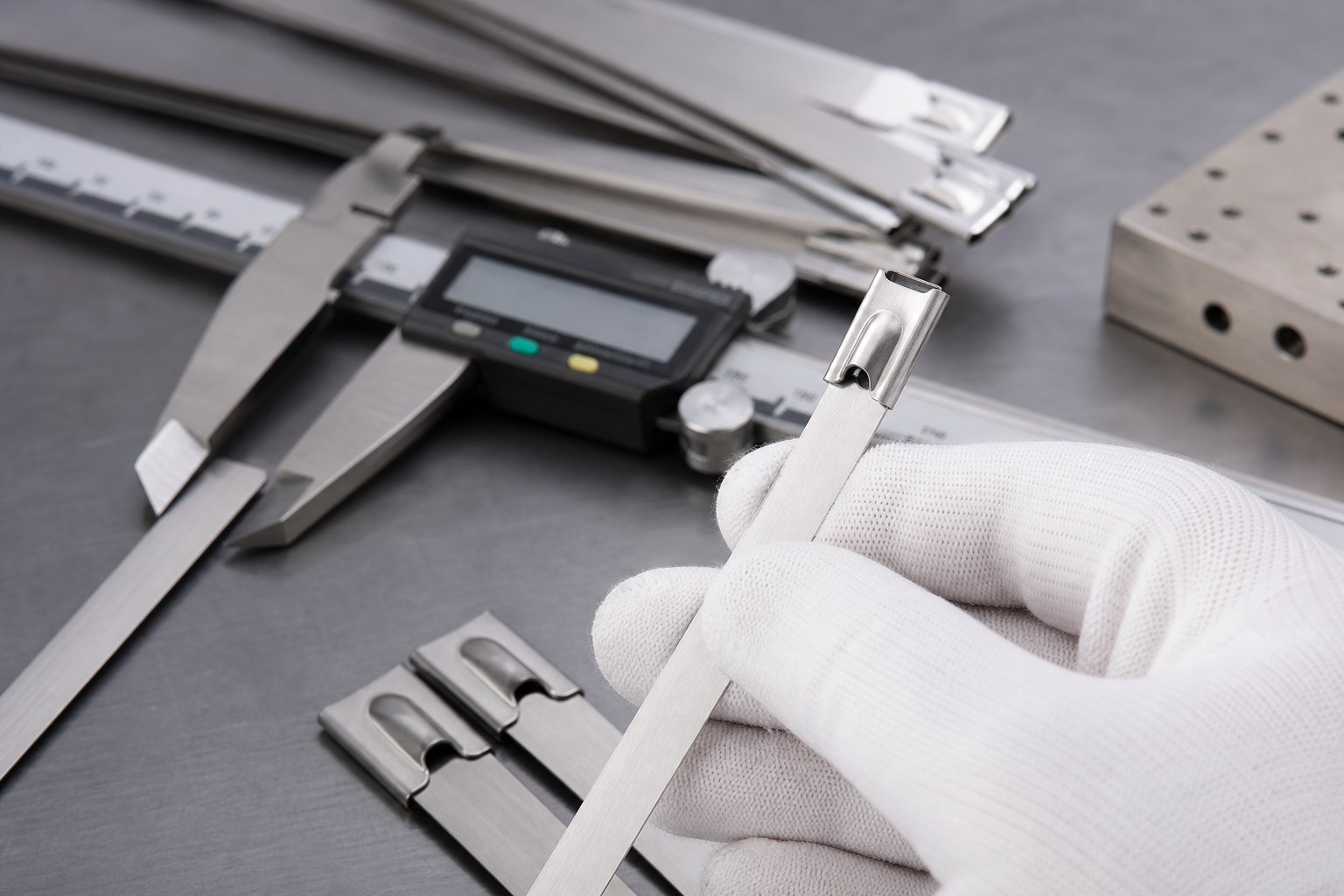
Product detail: flat band, folded clasp, band width and edge finish are important checks for stainless steel ties.
| Product Type | Key Material | Important Parameters | Typical Marine Use |
|---|---|---|---|
| UV black nylon cable tie | PA66 UV stabilized | Length, width, tensile strength, temperature, UV resistance | Protected shipboard cabinets and low-salt indoor bundles |
| Stainless steel cable tie | SS304 / SS316 | Grade, width, thickness, tensile strength, buckle style, tool compatibility | Open deck, offshore tray, coastal racks and severe-duty retention |
| Coated stainless steel tie | SS316 with protective coating | Coating thickness, width, grade, jacket compatibility, temperature | Cable jackets, conduit bundles and vibration-prone support routes |
| Mounting base or support clip | Stainless or compatible plastic | Mounting hole, screw type, surface prep, corrosion resistance | Cabinets, deck-side junction boxes, panels and controlled fixing points |
| Installation tool | Manual or tension-and-cut tool | Tension control, cutting finish, operator access, tool size | Consistent tension for stainless ties without damaging cable jackets |
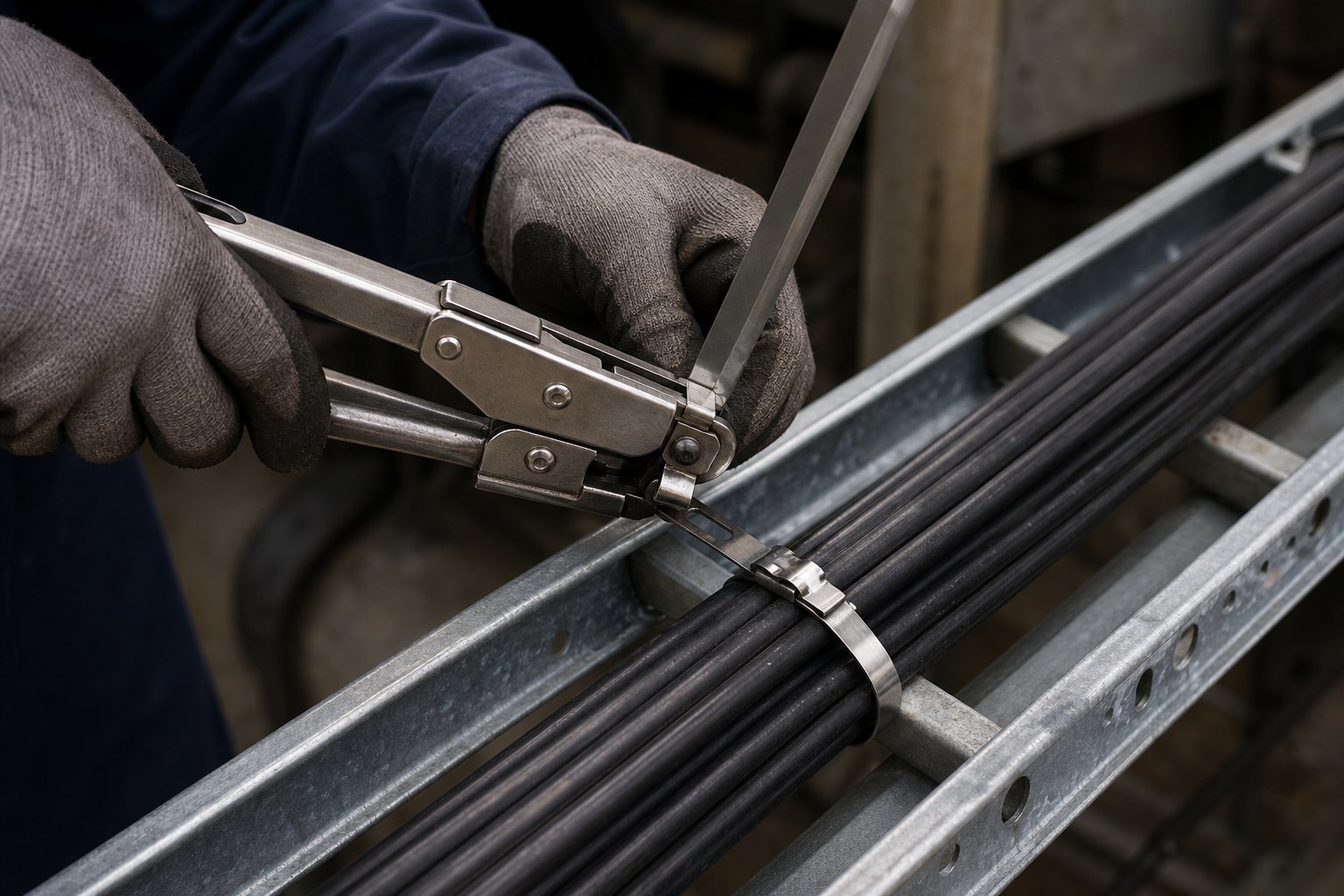
Installation visual: a stainless tie should be tensioned around the cable route and support without crushing the jacket.
Installation Steps
- Remove sharp burrs, loose corrosion and debris from the tray or support point before installation.
- Wrap the tie fully around the cable bundle and support route; the tie should not float around cables without support.
- Feed the flat band through the single folded clasp and confirm the band lies flat against the bundle.
- Use controlled tension, especially on rubber-sheathed cable or corrugated conduit.
- Trim the excess tail cleanly and orient the clasp away from maintenance contact points.
- Inspect after washdown, vibration exposure or sea spray cycles and replace any tie with mechanical damage or coating failure.
Field Scenario
Application: black power and control cable bundles routed along coastal platform trays and shipboard machinery spaces.
Problem: standard plastic ties may be acceptable in protected enclosures but are risky on open tray sections exposed to salt, moisture, vibration and long inspection intervals.
Solution: separate the project into material zones: UV black nylon for protected cabinet bundles, SS316 stainless ties for exposed salt spray routes, and coated stainless ties where cable jacket protection is required.
Result: the buyer receives a clearer material schedule, fewer mismatched ties and better long-term route security in corrosion-prone marine environments.
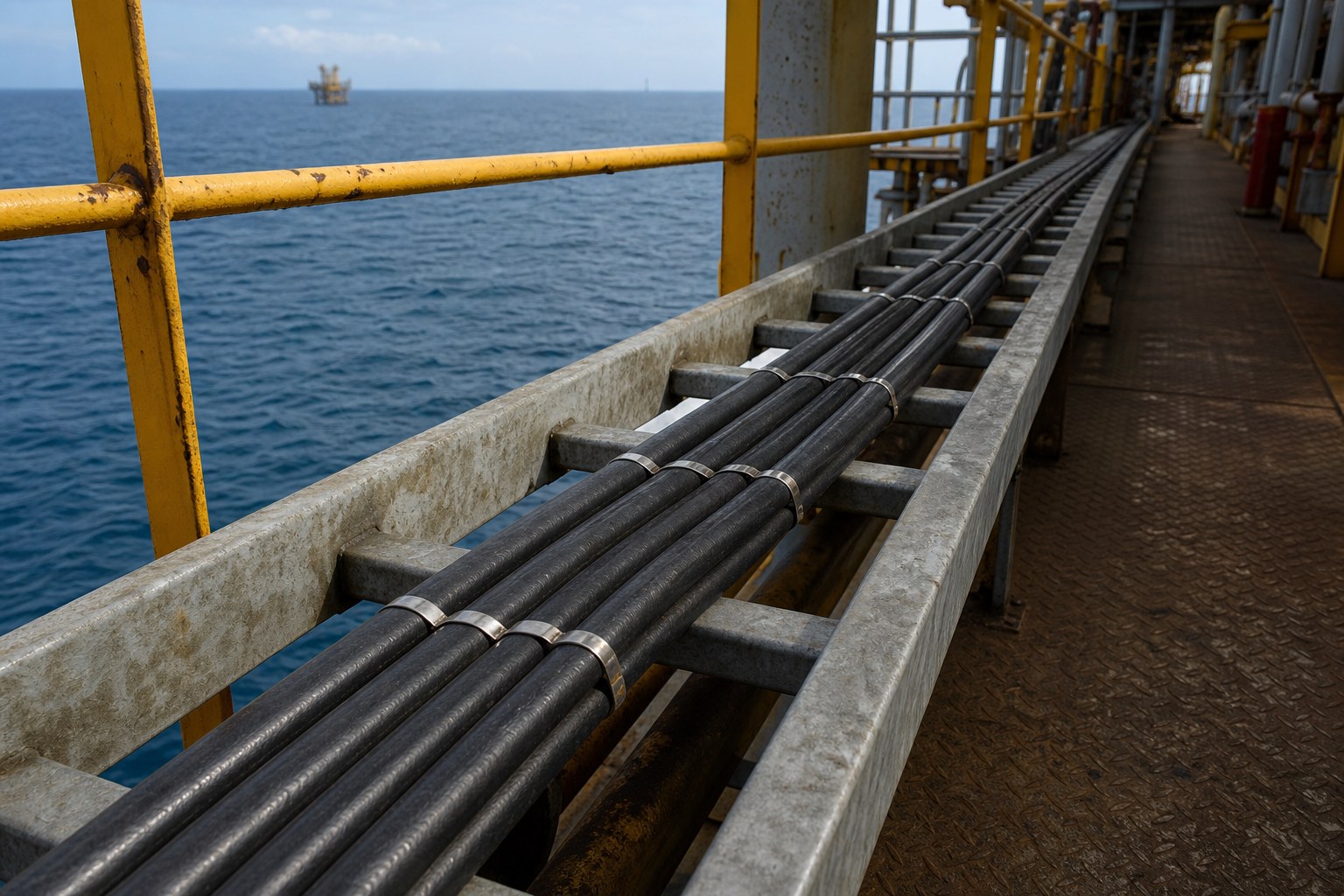
Application visual: offshore walkway tray route using stainless ties at repeated support intervals.
Note: page visuals are photo-style application visuals for solution explanation, not customer-submitted field photos.
Why Choose CableTiesMFG
Material-Based Selection
We help buyers separate nylon, stainless and coated stainless ties by route exposure instead of using one generic product everywhere.
Marine Project Support
Product combinations can support shipboard, offshore, coastal, deck-side cabinet and severe-duty cable tray requirements.
Bulk Supply and Samples
Sample kits, private label packing, bulk export supply and project quotations are available for distributors and contractors.
FAQ
Are stainless steel cable ties always required in marine environments?
No. Protected internal routes may use UV nylon or heat-stabilized nylon. Open deck, salt spray and offshore routes usually need stainless, especially SS316.
When should coated stainless ties be used?
Use coated stainless where the route needs corrosion resistance but the cable jacket or conduit surface also needs protection from bare metal contact.
Can nylon cable ties be used near the sea?
Yes, but only in suitable protected zones. For exposed salt, moisture, UV and vibration, stainless options are usually safer.
What information is needed for a marine cable tie quotation?
Share route location, exposure type, cable diameter, bundle size, required material grade, tie width, coating requirement, packaging and annual quantity.
Need a Marine Cable Tie Selection?
Send your cable tray photos, exposure zone, cable diameter and expected order quantity. We can suggest stainless, coated stainless and nylon tie combinations for your marine project.