Environment Solution
Chemical Resistant Cable Tie Solutions for Oils, Fuels, Washdown and Corrosive Areas
Select nylon, specialty polymer and stainless steel cable tie options for chemical plants, pump skids, food washdown rooms, fuel and oil exposure, corrosive cable trays and harsh industrial cable routing.
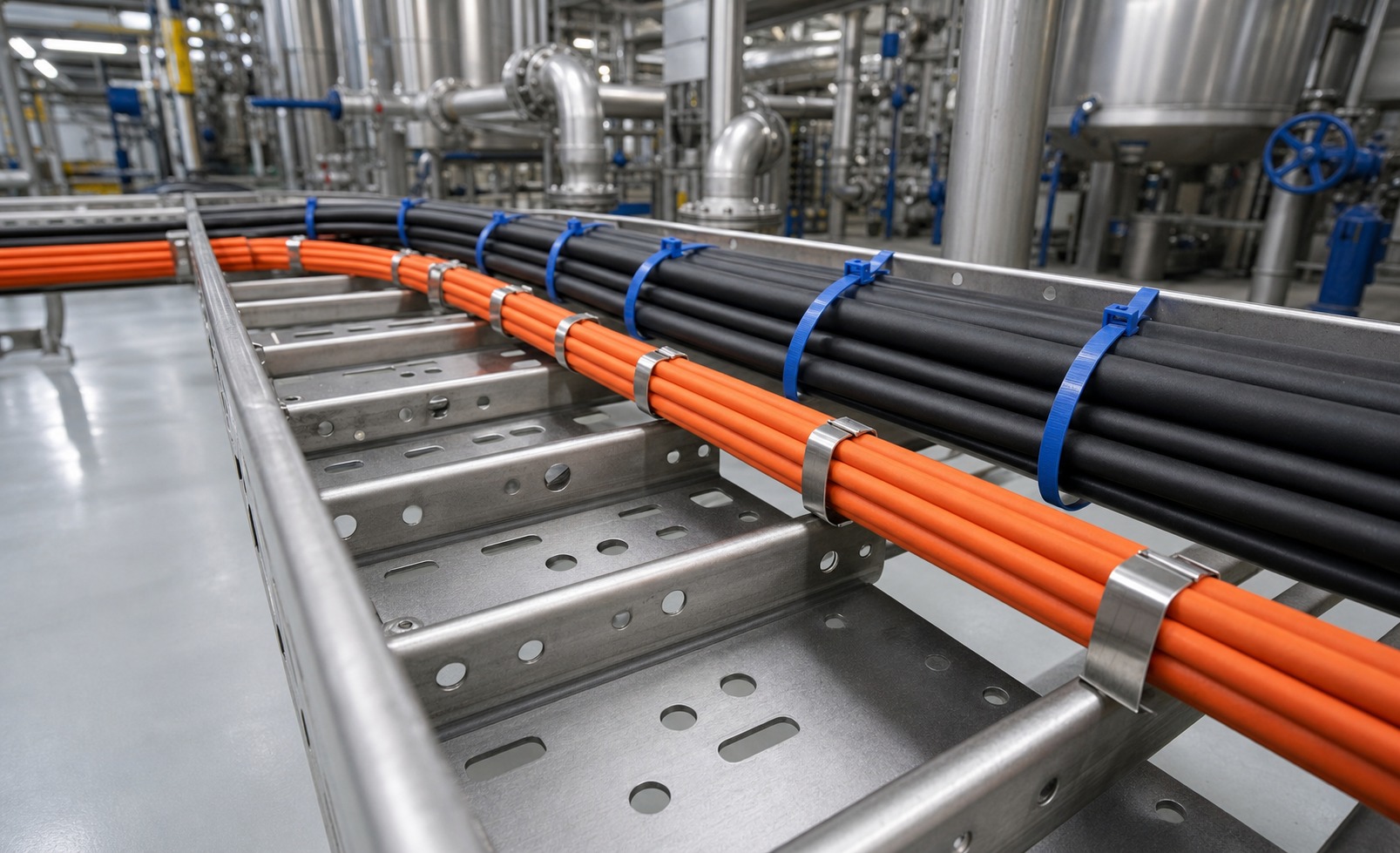
Application visual: chemical plant cable tray route using blue polymer and stainless steel ties at different exposure points.
Environment Introduction
Chemical-resistant cable tie selection starts with the environment, not the part number. A cable route near cleaning chemicals, oil mist, fuel lines, process vapors or corrosive cable trays needs a different review from a dry control cabinet.
Standard PA66 ties can be suitable for dry industrial wiring, but they should not be treated as universal chemical ties. In washdown, food processing, pump skid and chemical plant areas, the buyer should confirm exposure type, concentration, temperature, contact time and mechanical load before selecting the material.
The practical solution is often a mixed specification: economical ties inside dry cabinets, blue detectable or compatible polymer ties in clean washdown zones, and stainless steel ties for corrosive, hot or severe-duty support points.
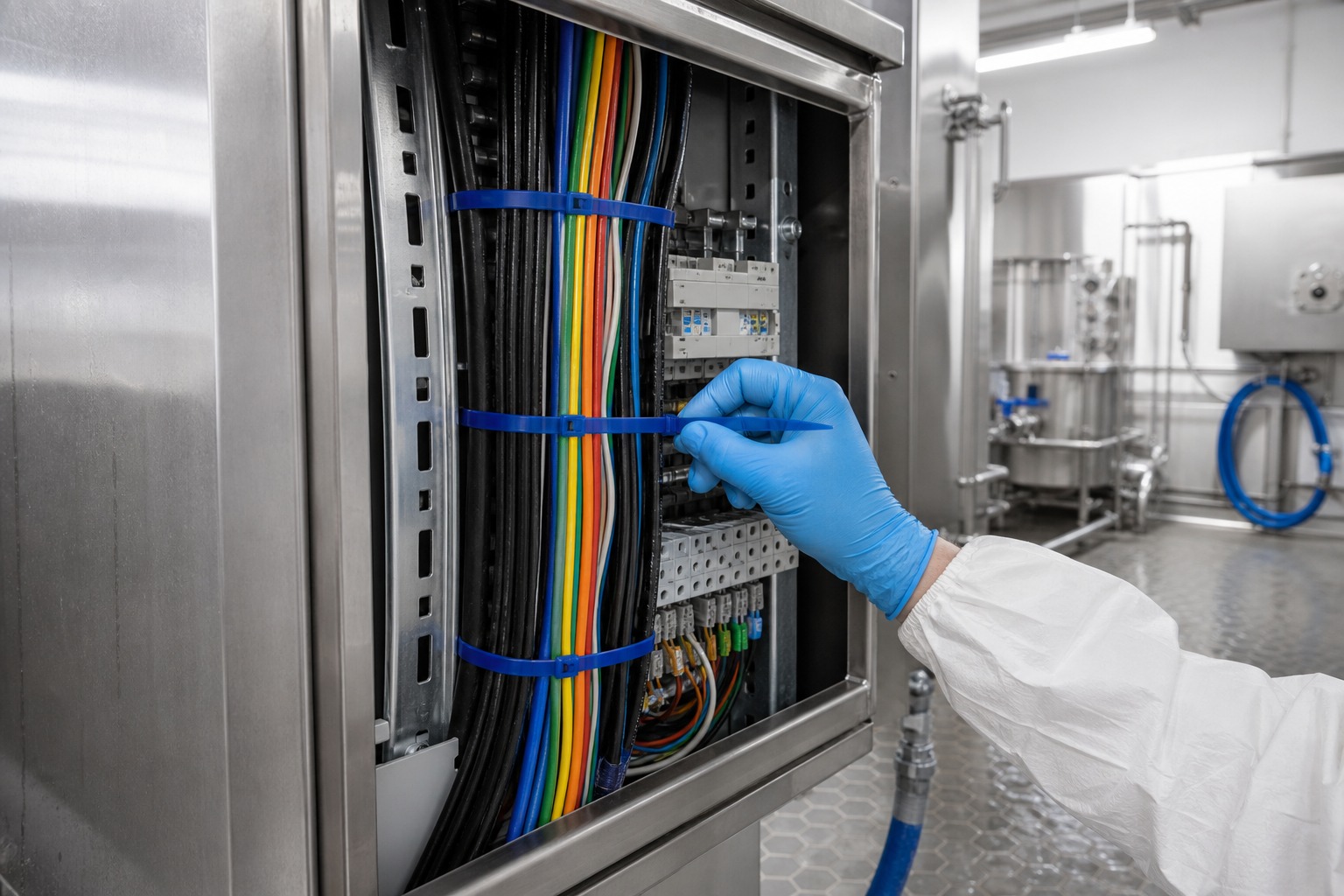
Application visual: washdown cabinet wiring requires clean routing, compatible tie material and repeatable support points.
Chemical Exposure Pain Points
Material Softening
Some plastics can soften, swell or lose retention after repeated contact with oils, fuels, solvents or cleaning agents.
Brittle Tie Failure
Wrong material may become brittle after chemical exposure, heat cycling, moisture or UV combined with process conditions.
Corrosive Tray Areas
Metal trays, pipes and brackets may hold moisture or fumes, creating corrosion-prone zones where stainless options are safer.
Hidden Mismatch
A tie can look acceptable at installation but fail later because nobody checked the chemical list and real support method.
On-Site Problem Analysis
Begin by dividing the route into exposure zones: dry cabinet, oily machine area, splash zone, washdown room, outdoor chemical storage, corrosive tray route and high-temperature process area. Each zone may need a different tie material.
Inspect failed or risky routes for staining, swelling, cracking, loose loops, over-tightening, cable jacket marks, sharp tray edges and missing support points. The question is not only “which tie survives chemicals,” but also “does the tie actually restrain the cable to the tray, rail or frame?”
Selection note: chemical compatibility depends on chemical type, concentration, temperature, contact time and mechanical load. Treat all material suggestions as starting points until the actual site condition is confirmed.
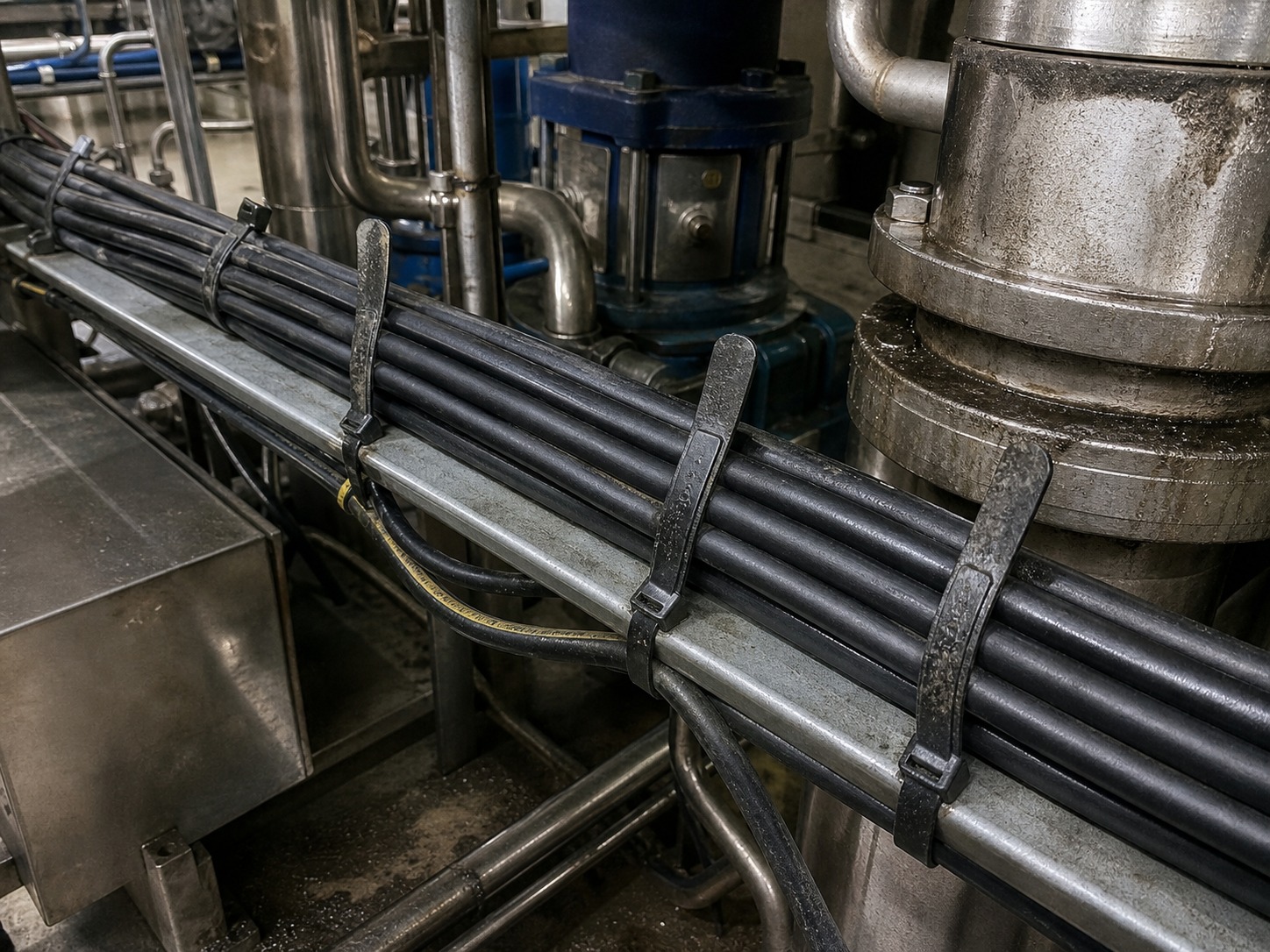
Problem visual: oil and process residue can turn a normal-looking cable tie into a long-term retention risk.
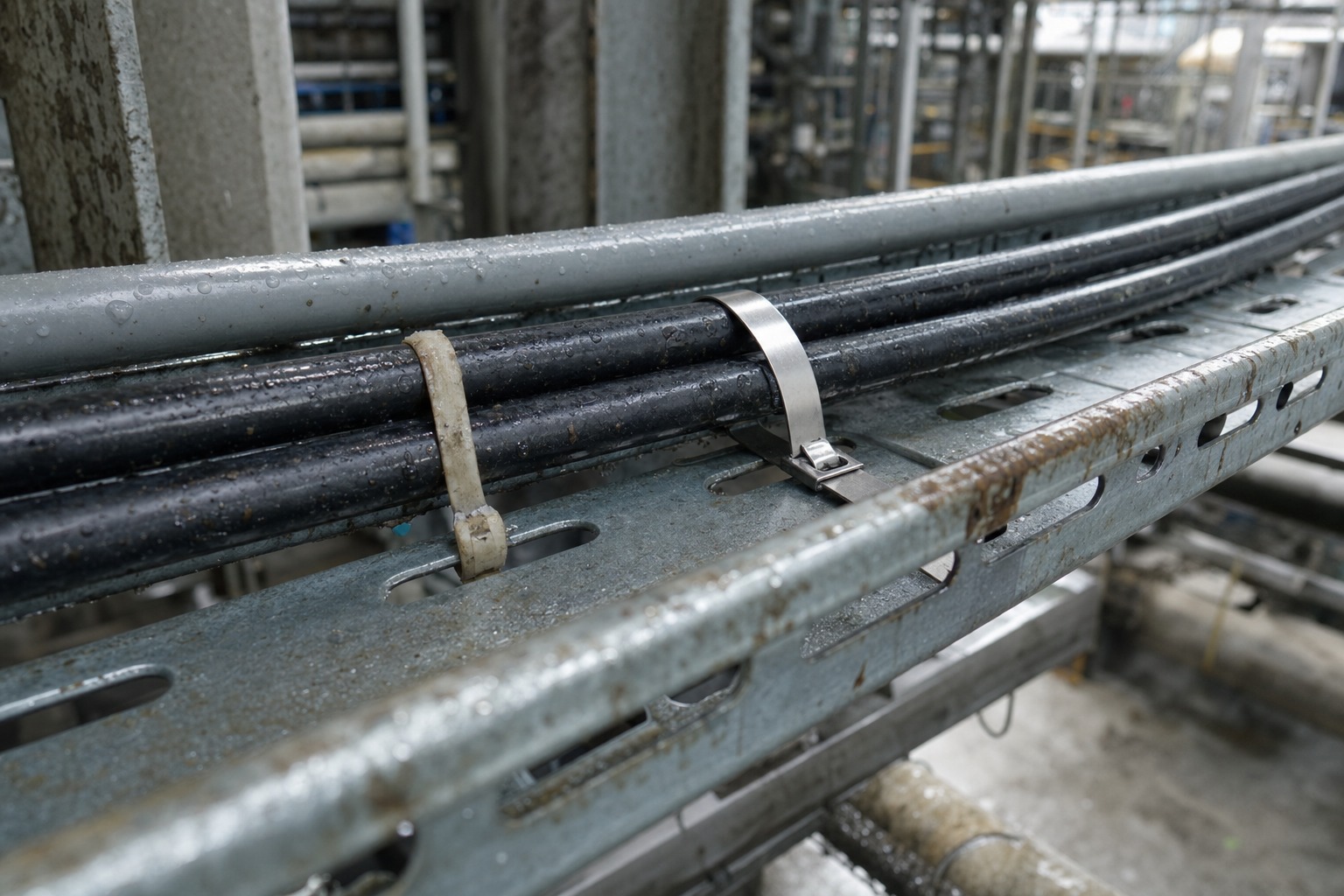
Field analysis visual: stained plastic and stainless steel tie choices can appear on the same route when exposure zones differ.
Recommended Solution
For dry wiring and low exposure, standard nylon ties may be the economical choice. For washdown, food processing and selected chemical exposure, review compatible polymer ties such as blue detectable or specialty material options. For severe corrosion, high heat, outdoor chemical areas or heavy cable retention, review stainless steel ties.
Do not select only by tensile strength. The best choice is the tie that matches the chemical exposure, installation tension, support point, cable jacket and inspection interval.
Dry Industrial Zones
Use standard PA66 where the route is protected from chemical splash, vapor and washdown.
Washdown Zones
Use compatible polymer ties, often blue detectable options where food or clean processing rules apply.
Corrosive Routes
Use SS304/SS316 or coated stainless ties where plastic materials are not the best retention choice.
Material Selection Workflow
- List the actual chemical, concentration, temperature and contact method.
- Separate dry cabinet, splash, washdown, vapor, outdoor and corrosive tray zones.
- Confirm cable diameter, bundle weight, tie spacing, support structure and installation tension.
- Choose the starting material: PA66, compatible polymer, blue detectable, stainless or coated stainless.
- Sample-test the candidate tie when exposure is severe or the chemical list is uncertain.
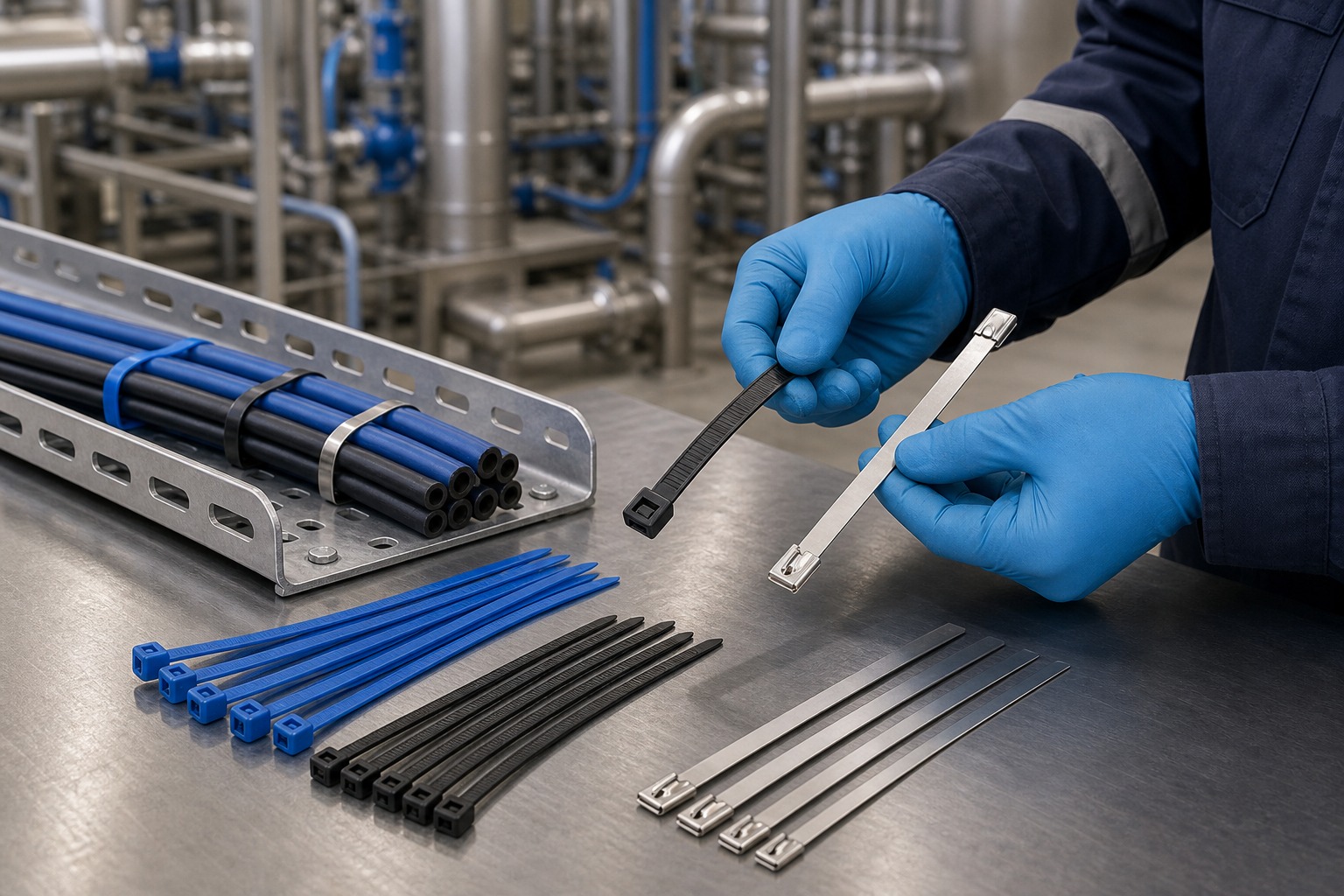
Solution visual: compare polymer and stainless options against the cable route, not as isolated products.
Product Combination
A chemical-resistant cable tie package usually combines several materials. The goal is to avoid over-specifying every tie while still protecting the high-risk zones.
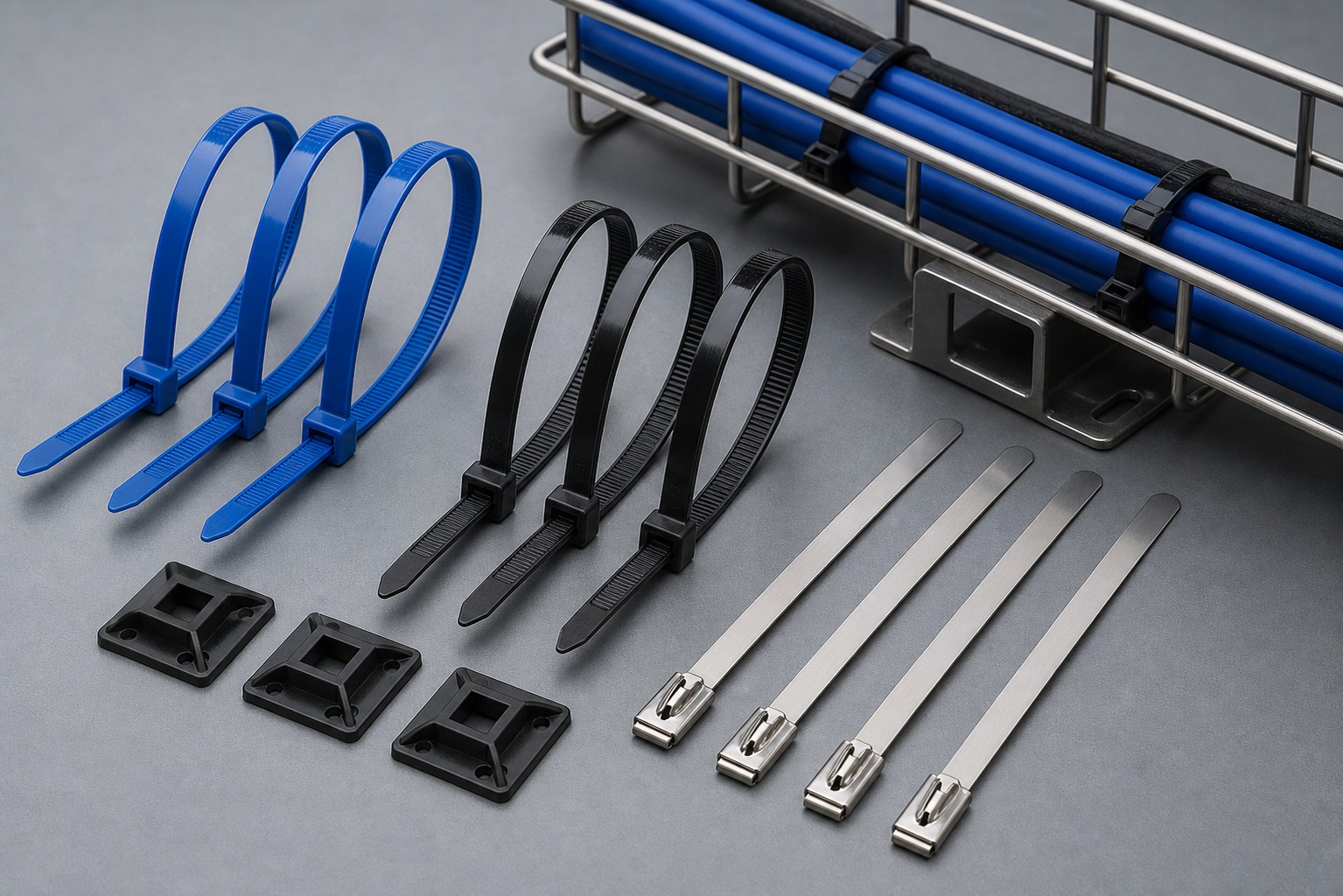
Product visual: product photos help identify materials and structures; application sections still need real route context.
PA66 Cable Ties
For protected dry wiring, cabinet interiors and low-exposure industrial routes.
Blue Detectable Ties
For food processing, washdown and clean-area identification where applicable.
Specialty Polymer Ties
For selected chemical exposure after compatibility review and sample testing.
Stainless Steel Ties
For corrosive cable trays, hot areas, outdoor process units and severe-duty retention.
Product Parameters
Use this checklist when preparing samples, RFQs or drawings for chemical-resistant cable tie projects. The buyer should see both material compatibility and mechanical fixing requirements.
Never approve a harsh-environment tie based only on color or a generic “chemical resistant” label. The site exposure and finished product structure both matter.
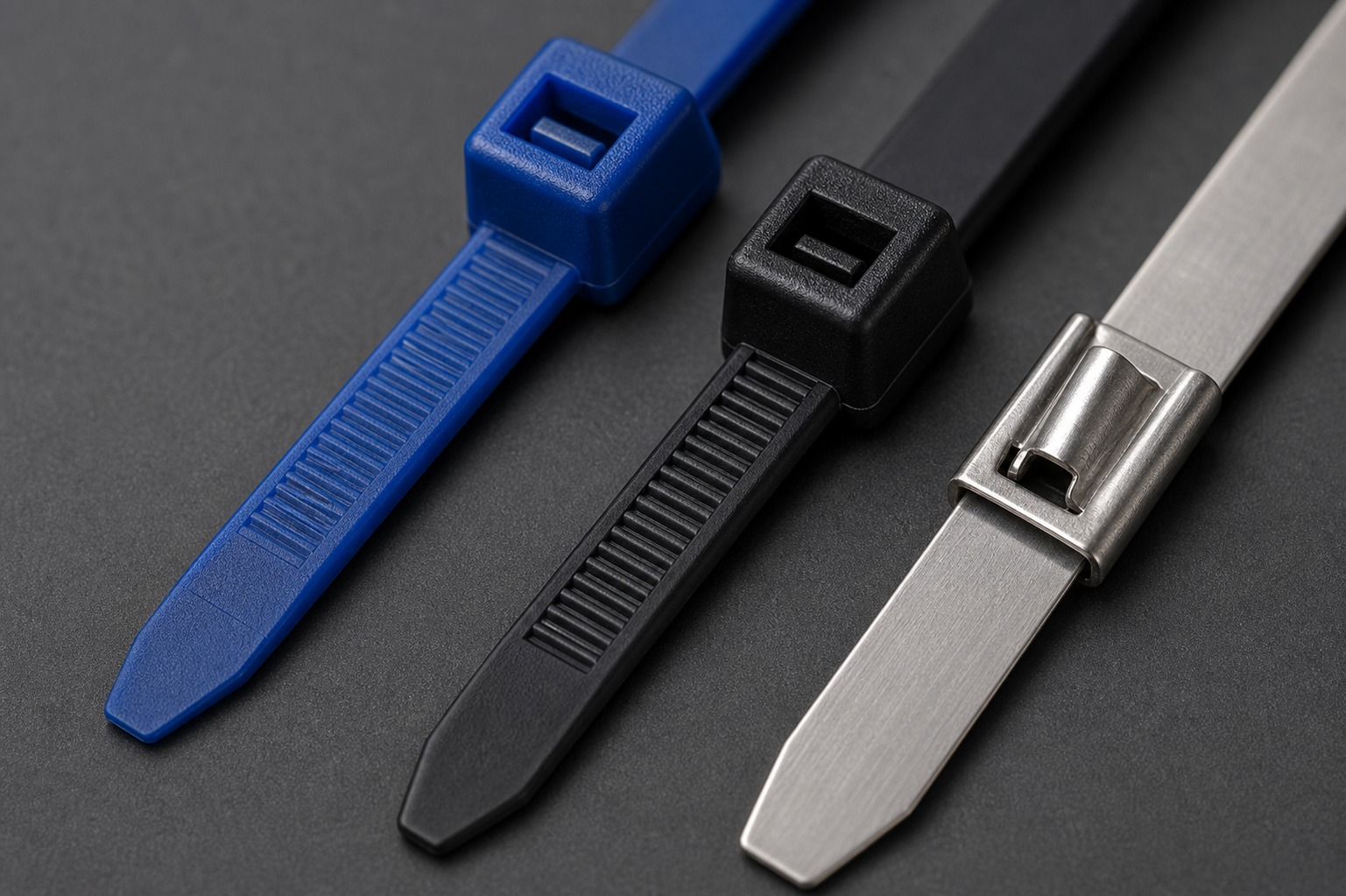
Product detail: square head, rectangular pass-through hole, inner teeth, flat strap and stainless clasp are basic structure checks.
| Product Type | Key Checks | Typical Starting Use |
|---|---|---|
| Standard PA66 tie | Length, width, tensile strength, color, temperature and indoor exposure | Dry cabinets, protected bundles and low-risk plant wiring |
| Blue detectable tie | Detectability, cleanliness requirement, washdown exposure and food-area rules | Food processing, clean washdown rooms and inspection-sensitive routes |
| Specialty polymer tie | Chemical list, concentration, temperature, exposure time and sample result | Selected chemical splash, vapor or process-adjacent routes |
| SS304 / SS316 tie | Steel grade, width, thickness, buckle style, coating and installation tool | Corrosive trays, severe-duty outdoor units and hot chemical areas |
| Mount base or tie mount | Base material, screw/adhesive method, surface prep and support load | Cabinets, pump skids, wall routing and defined cable support points |
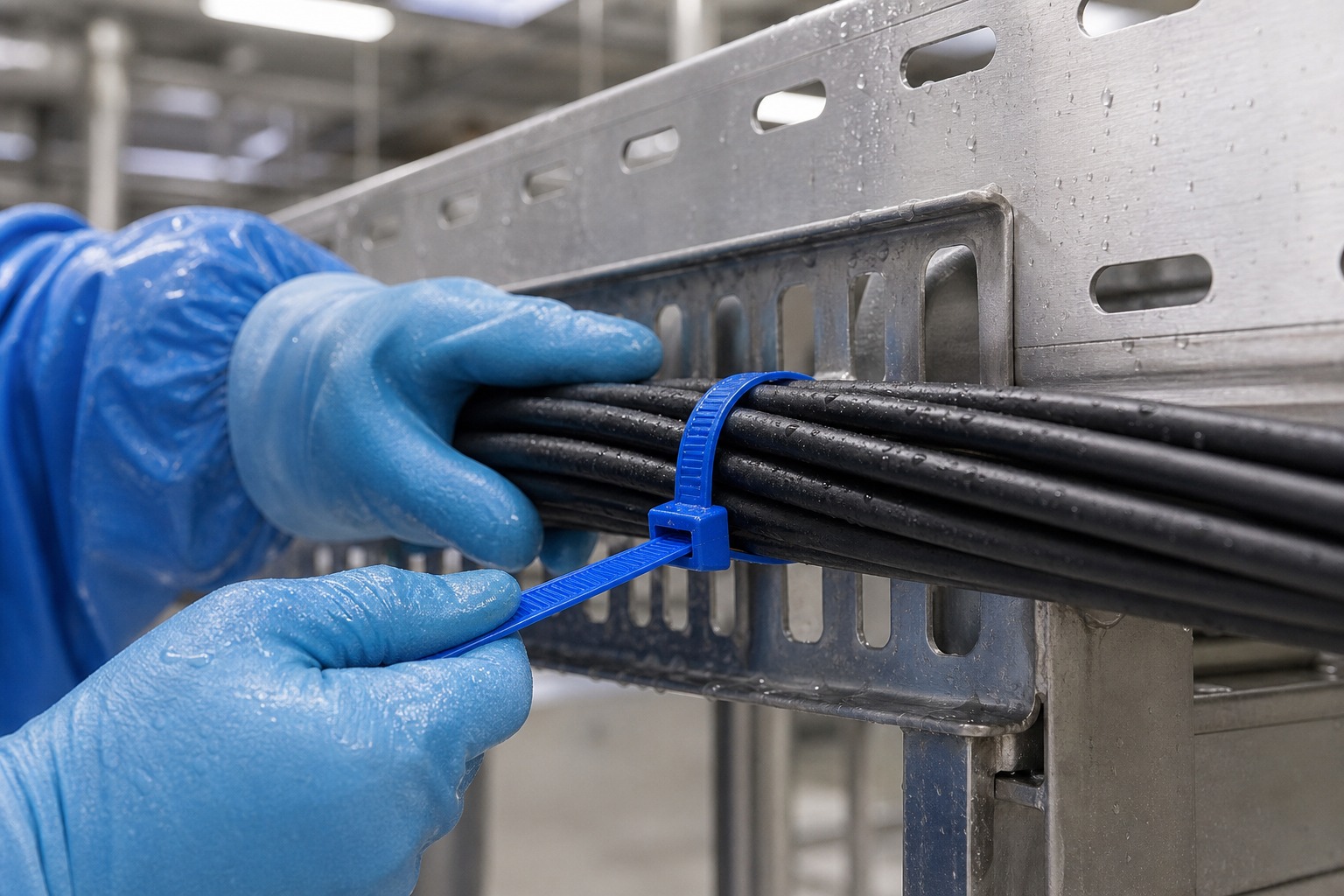
Installation visual: the tie tail passes through one locking head while the loop controls both cable bundle and tray support.
Installation Steps
- Confirm the chemical, concentration, temperature and whether contact is splash, vapor, washdown or continuous exposure.
- Select the candidate material and confirm cable diameter, bundle weight, tie width and tie spacing.
- Clean the support area if using a mount base in oily or washdown locations.
- Route the tie around the cable bundle and through the tray, mount or rail support so the load path is clear.
- Pull the tapered tail through the single square locking head; avoid crushing cable jackets or hoses.
- Trim the tail cleanly and orient the cut end away from cables, hoses and technician contact points.
- Inspect high-risk areas after washdown, maintenance shutdowns or chemical process changes.
- For severe chemical routes, run sample exposure checks before bulk installation.
Field Case
Application: washdown processing room and adjacent chemical utility route with stainless equipment, cable tray and pipework.
Problem: one material was being used across dry cabinet wiring, wet cleaning zones and corrosive tray sections, creating hidden mismatch risk.
Solution: CableTiesMFG separates the route by exposure: PA66 for dry internal wiring, compatible polymer or blue detectable ties for washdown areas, and stainless steel ties for corrosive or severe-duty tray points.
Result: the specification becomes easier to audit, risky zones receive stronger material choices and installers can identify which tie belongs in each route condition.
Note: page visuals are photo-style application visuals for solution explanation, not customer-submitted field photos.
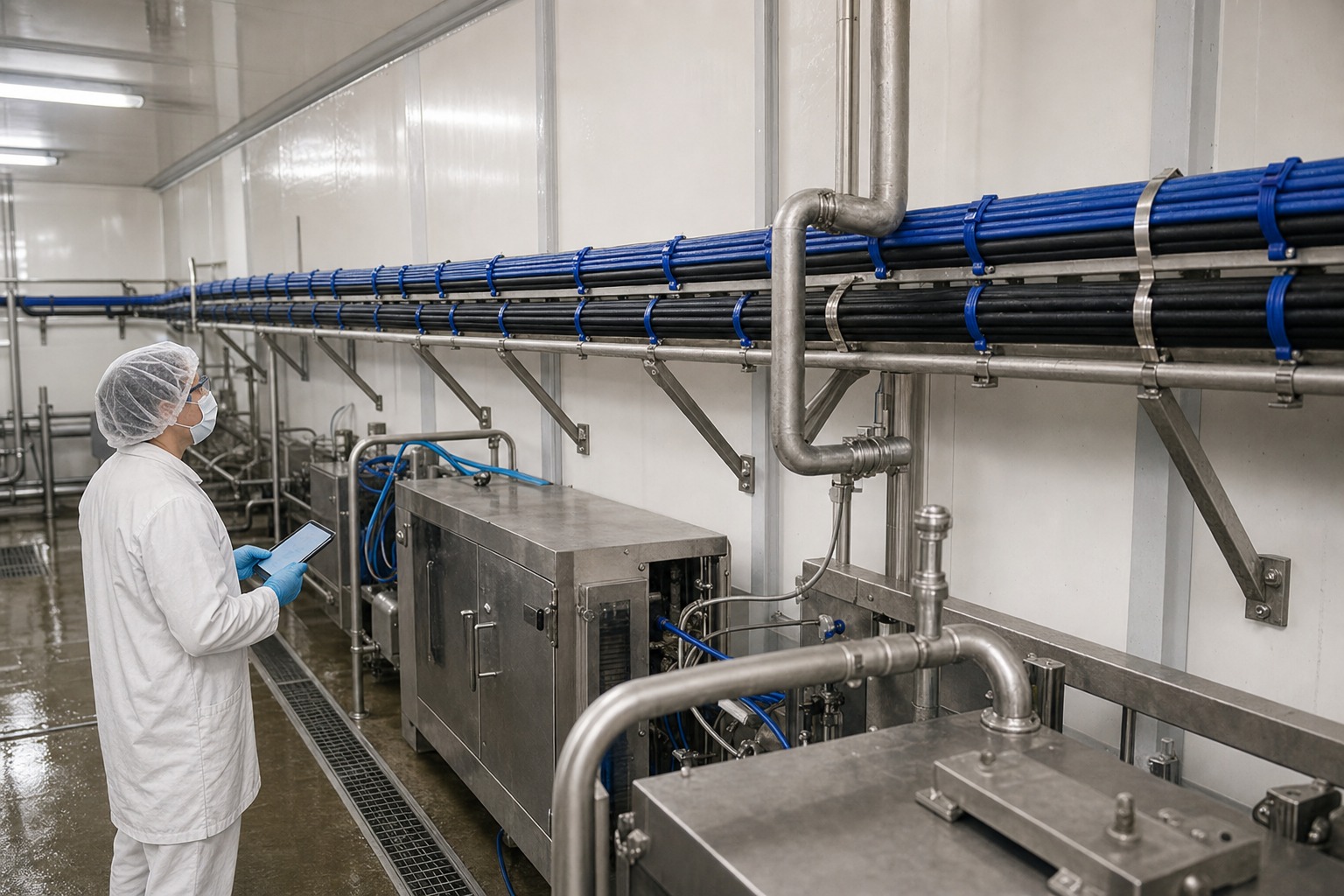
Field visual: washdown routes often combine clean polymer ties and stainless steel ties in different exposure zones.
Why Choose CableTiesMFG
Exposure-Based Selection
We help classify dry, washdown, oil, fuel, corrosive and severe-duty routes before recommending a material.
Structure Review
Images and samples are checked for realistic locking heads, closed loops, support contact and manufacturable cable tie geometry.
Mixed Project Kits
PA66, blue detectable, specialty polymer, stainless ties and mounts can be combined for different plant zones.
Export RFQ Support
Bulk packaging, samples, drawings, material notes and project quotations can be prepared for distributors and OEM buyers.
FAQ
Are nylon cable ties chemical resistant?
Some nylon ties work well in dry industrial use, but chemical suitability depends on the specific chemical, concentration, temperature and exposure time.
When should stainless steel ties be used?
Use stainless steel ties for corrosive trays, hot zones, outdoor chemical units or severe-duty retention where plastic is not the best choice.
Why are blue ties common in washdown areas?
Blue is often used for visual identification in food and clean processing environments; suitability still depends on the finished tie material and site rules.
Can one tie material cover the whole plant?
Usually no. Dry cabinets, wet washdown areas, oily machinery and corrosive trays often need different product choices.
Related Solutions
High TemperatureHeat-stabilized nylon, stainless ties and hot equipment cable routing.
CorrosionTroubleshooting material and installation choices in corrosion-prone cable routes.
Equipment FixingMount bases, cable ties and hardware for equipment frames and panels.
Need a chemical-resistant cable tie recommendation?
Send the chemical name, concentration, exposure method, temperature, cable diameter, support type, required material grade, packaging and annual volume. We will help convert the field condition into a practical RFQ.